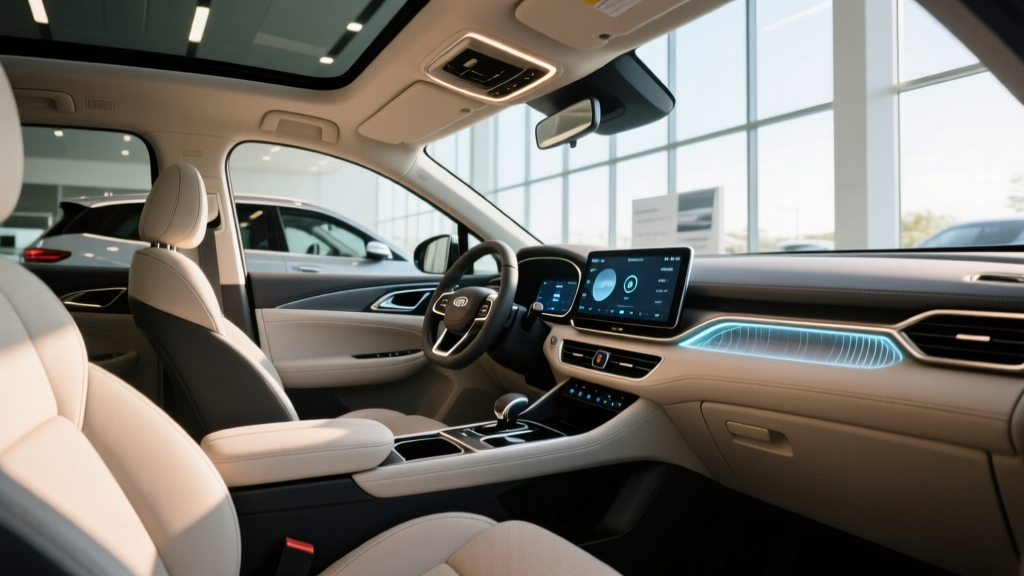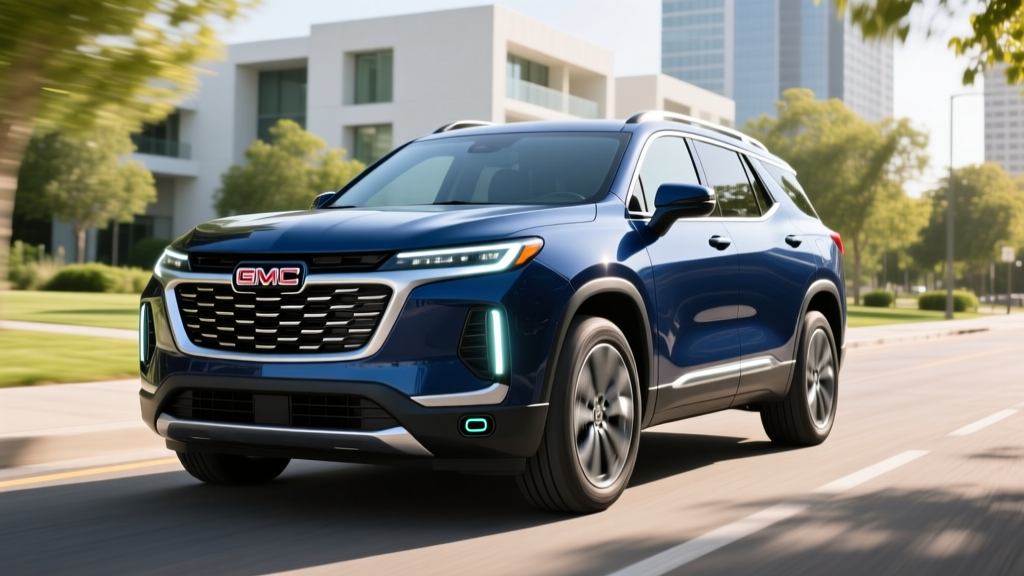
The 2026 GMC Terrain arrives with a significant powertrain shift: a mild-hybrid 1.5-liter turbocharged four-cylinder now powers every trim, replacing the previous generation's conventional turbo engine. For shoppers specifically searching for a GMC Terrain hybrid, understanding what "hybrid" means in this context is essential before you visit a dealer — because GMC's electrification strategy here differs sharply from the plug-in hybrid or full-hybrid setups found in competitors like the Toyota RAV4 Hybrid or Ford Escape PHEV.
This guide breaks down the 2026 Terrain's hybrid system, real-world fuel economy expectations, battery warranty coverage, pricing, and whether this compact SUV fits your electrified-vehicle needs — or if you should look at a full EV or a more robust hybrid alternative.
What Kind of Hybrid Is the 2026 GMC Terrain?
The 2026 GMC Terrain uses a 48-volt mild-hybrid system paired with a 1.5-liter turbocharged inline-four engine. This is not a conventional full hybrid (HEV) like the Toyota RAV4 Hybrid, nor is it a plug-in hybrid (PHEV) like the Ford Escape PHEV. It's a fundamentally different approach to electrification.
HEV vs PHEV vs Mild Hybrid — Where the Terrain Fits
| System Type | Battery Size | Electric-Only Driving? | Plug In to Charge? | Typical MPG Gain |
|---|---|---|---|---|
| Mild Hybrid (MHEV) — 2026 GMC Terrain | ~0.5–1.0 kWh (48V) | No (assists engine only) | No | 1–3 MPG combined |
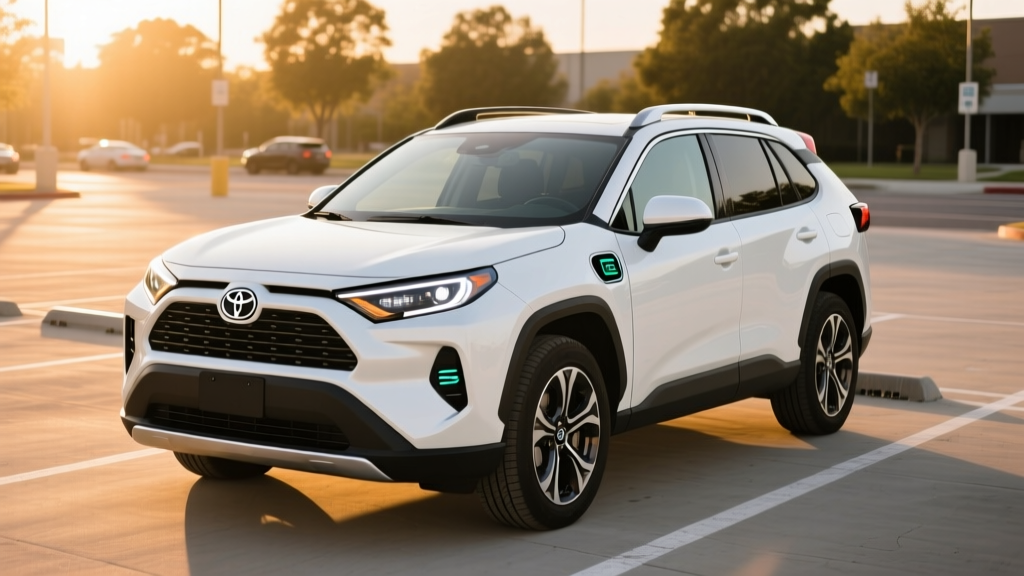
| Full Hybrid (HEV) — e.g., RAV4 Hybrid | ~1.0–1.6 kWh | Brief, low-speed only | No | 10–15 MPG combined |
| Plug-In Hybrid (PHEV) — e.g., Escape PHEV | ~14–18 kWh | Yes (25–40 miles) | Yes (Level 1/2) | Varies; 37+ miles electric |
The Terrain's 48V system recovers energy during braking and provides torque assist during acceleration. It cannot propel the vehicle on electric power alone.
The 48-volt system in the Terrain serves three functions: it enables smoother stop-start operation, provides modest torque fill during initial acceleration (reducing turbo lag), and recovers kinetic energy during deceleration. The result is a marginal fuel-economy improvement over a non-hybrid turbo engine, plus noticeably improved refinement at idle and low-speed driving. If you're expecting Prius-level MPG or electric-only commuting, this is not that vehicle.
2026 GMC Terrain Hybrid MPG: EPA Ratings and Real-World Expectations
The 2026 GMC Terrain with the 1.5L turbo mild-hybrid powertrain is rated by the EPA as follows:
| Drivetrain | City MPG | Highway MPG | Combined MPG |
|---|---|---|---|
| FWD (Elevation, AT4 trims) | 26 | 29 | 27 |
| AWD (all trims available) | 24 | 28 | 26 |
Source: fueleconomy.gov — EPA estimates. Your mileage will vary based on driving conditions, climate, and habits.
Real-World MPG vs EPA Sticker
The mild-hybrid system's primary benefit manifests in stop-and-go city traffic, where the 48V motor's torque assist and improved stop-start reduce fuel consumption during idling and low-speed acceleration. In real-world suburban commuting with frequent stops, owners of GM's 48V mild-hybrid systems have reported matching or slightly exceeding the EPA city figure — expect 26–28 MPG in mixed city driving with FWD.
On the highway, the mild-hybrid system provides minimal benefit since the engine operates at steady state without frequent stop-start cycles. Highway cruising at 70–75 MPH will likely yield 27–29 MPG with FWD, close to the EPA estimate. In cold weather (below 30°F), expect a 2–4 MPG drop across the board due to richer fuel mixtures, increased accessory load (heater, defroster), and reduced battery efficiency.
For comparison, the Toyota RAV4 Hybrid AWD achieves an EPA-estimated 41 city / 38 highway / 39 combined MPG — a gap of roughly 13 MPG combined that illustrates the difference between a mild-hybrid assist and a full hybrid powertrain.
Powertrain Specs: Engine, Motor, and Performance
| Specification | 2026 GMC Terrain Mild-Hybrid |
|---|---|
| Engine | 1.5L turbocharged inline-4 |
| Hybrid System | 48-volt mild-hybrid (belt-integrated starter-generator) |
| Combined Horsepower | 175 HP @ 5,600 RPM |
| Combined Torque | 203 lb-ft @ 2,000–4,000 RPM |
| Electric Motor Assist | ~10 kW (13 HP) peak torque fill |
| Transmission | CVT (continuously variable) |
| 0–60 MPH (est.) | ~8.2 seconds (FWD) |
| Drivetrain | FWD standard; AWD available |
| Towing Capacity | 1,500 lbs (max) |
| Fuel Tank | 15.6 gallons |
| Total Driving Range (est.) | ~405–420 miles (FWD) |
The 48V motor adds a subtle but perceptible improvement in low-end responsiveness. Where the previous-generation Terrain's turbo engine could feel sluggish from a stop, the mild-hybrid's electric torque fill smooths out the initial acceleration. The CVT is tuned for efficiency rather than sportiness — it holds engine RPM in the optimal torque band during acceleration but can drone under hard throttle, a common CVT characteristic.
Performance is adequate for daily driving and highway merging but won't excite anyone. The 175 HP output places the Terrain in the middle of the compact crossover segment, though well behind hybrid competitors like the Honda CR-V Hybrid (204 HP) or the Toyota RAV4 Hybrid (219 HP).
Pricing, Trims, and Tax Credit Eligibility
The 2026 GMC Terrain is offered across several trim levels, all with the same 1.5L mild-hybrid powertrain:
| Trim | MSRP (FWD) | MSRP (AWD) |
|---|---|---|
| Elevation | ~$31,200 | ~$33,200 |
| AT4 | ~$35,900 | ~$37,900 |
| Denali | ~$40,500 | ~$42,500 |
Prices are approximate MSRPs including destination charge. Dealer pricing may vary. Source: GMC.com
Does the GMC Terrain Hybrid Qualify for a Federal Tax Credit?
No. The 2026 GMC Terrain's mild-hybrid system does not qualify for the federal §30D Clean Vehicle Credit. Under current IRS rules, the §30D credit (up to $7,500) requires a vehicle to be a plug-in electric vehicle (BEV) or plug-in hybrid (PHEV) with a battery capacity of at least 7 kWh that can be recharged from an external power source. The Terrain's 48V mild-hybrid battery is far below this threshold and cannot be plugged in.
Federal Tax Credit Eligibility Checklist (§30D)
- ❌ Vehicle type: Must be BEV or PHEV — mild hybrids do NOT qualify
- ❌ Battery capacity: Minimum 7 kWh — Terrain's 48V battery is ~0.5 kWh
- ❌ External charging: Must accept charge from a plug — Terrain cannot
- ✅ MSRP cap: SUVs must be under $80,000 (Terrain qualifies on price)
- ✅ Assembly: Final assembly in North America (Terrain qualifies)
Bottom line: No federal tax credit is available for the 2026 GMC Terrain. Some states may offer minor incentives for hybrid vehicles, but these are uncommon for mild hybrids. Check your state's energy office for local programs.
Battery Warranty, Reliability, and Replacement Cost
2026 GMC Terrain Hybrid Battery Warranty
| Component | Warranty Coverage |
|---|---|
| 48V Hybrid Battery | 8 years / 100,000 miles (whichever comes first) |
| Hybrid System Components (motor, inverter) | 8 years / 100,000 miles |
| Powertrain (engine, transmission) | 5 years / 60,000 miles |
| Bumper-to-Bumper | 3 years / 36,000 miles |
GM's hybrid-component warranty aligns with the industry standard for electrified powertrains. The 48V battery is covered for capacity and function under the 8-year/100,000-mile hybrid warranty.
Is the 48V Mild-Hybrid System Reliable?
GM's 48V mild-hybrid architecture has been in production since the early 2020s across multiple models (Chevrolet Silverado, GMC Sierra, Cadillac XT4). The system is mechanically simpler than a full hybrid or PHEV — the belt-integrated starter-generator replaces the traditional alternator and starter motor, and the 48V lithium-ion battery pack is small and operates within a narrow state-of-charge window that minimizes degradation.
Because the 48V battery is never deeply discharged or fully charged (the system manages it between roughly 20% and 80% state of charge at all times), degradation is minimal over the vehicle's lifetime. There is no meaningful capacity-loss concern comparable to what PHEV or BEV owners monitor.
Battery Replacement Cost
If the 48V battery does require replacement outside of warranty coverage, expect a parts cost of approximately $800–$1,500, with labor adding another $200–$400. This is dramatically lower than full-hybrid battery replacements ($2,000–$4,000) or BEV battery replacements ($8,000–$20,000+). The belt-integrated starter-generator, if it fails, typically costs $1,200–$2,000 to replace including labor.
For context, the 48V battery in the Terrain is a relatively simple lithium-ion pack — not the large, complex module found in a Prius or RAV4 Hybrid. Most owners will never need to replace it during the vehicle's useful life.
Who Should Choose the Terrain Hybrid vs a Full EV or Gas Car?
Choose the 2026 GMC Terrain If:
- You want a premium-branded compact SUV with the smoothest stop-start experience in its class
- You drive primarily in suburban or urban environments where the 48V assist provides its greatest benefit
- You're not ready to commit to plug-in charging (no home charging access or charging-desert area)
- You value GMC's Denali luxury positioning and want an electrified-adjacent vehicle without EV complexity
- You plan to keep the vehicle 5–8 years and want minimal new-technology risk
Look at a Full Hybrid (HEV) Instead If:
- Fuel economy is your top priority — the RAV4 Hybrid (39 MPG combined) saves ~$500–$700/year in fuel vs the Terrain
- You drive 15,000+ miles annually and want maximum MPG without plugging in
- You want more horsepower from a hybrid system (RAV4 Hybrid: 219 HP; CR-V Hybrid: 204 HP)
Look at a PHEV Instead If:
- You have home Level 2 charging and a commute under 35 miles — a PHEV lets you drive on electricity daily
- You want to qualify for the $7,500 federal tax credit (requires eligible BEV or PHEV meeting §30D sourcing rules)
- You want 25–40 miles of electric-only range before the gas engine engages
Look at a Full EV Instead If:
- You have reliable home charging and want zero tailpipe emissions and the lowest per-mile fuel cost
- You want to access the full $7,500 federal tax credit (subject to income, MSRP, and battery-sourcing requirements)
- You drive under 250 miles daily and want 250–350 miles of range with minimal maintenance
How the Terrain Compares to Hybrid and PHEV Competitors
| Vehicle | Type | Combined MPG / MPGe | Combined HP | Starting MSRP | Federal Tax Credit |
|---|---|---|---|---|---|
| 2026 GMC Terrain (MHEV) | Mild Hybrid | 26–27 MPG | 175 HP | ~$31,200 | None |
| 2026 Toyota RAV4 Hybrid | Full Hybrid (HEV) | 39 MPG | 219 HP | ~$33,500 | None |
| 2026 Honda CR-V Hybrid | Full Hybrid (HEV) | 37 MPG | 204 HP | ~$35,400 | None |
| 2026 Ford Escape PHEV | Plug-In Hybrid | 37 miles electric; 40 MPG gas | 210 HP | ~$39,500 | Up to $7,500* |
| 2026 Hyundai Tucson PHEV | Plug-In Hybrid | 33 miles electric; 35 MPG gas | 261 HP | ~$39,200 | Up to $7,500* |
* Tax credit eligibility depends on buyer income, battery sourcing, and MSRP caps per IRS §30D rules. Verify current eligibility at fueleconomy.gov.
The Terrain's advantage is not fuel economy — it's brand positioning, interior refinement, and GMC's Denali luxury trim. If premium materials and a quiet cabin matter more than MPG, the Terrain (especially in Denali trim) offers an experience that the RAV4 and CR-V hybrids can't match. But if fuel savings are the priority, the Terrain's mild-hybrid system delivers only a fraction of the efficiency gains of a full hybrid.
Frequently Asked Questions
How many MPG does the GMC Terrain hybrid get?
The 2026 GMC Terrain with its 1.5L mild-hybrid powertrain achieves an EPA-estimated 26 MPG city / 29 MPG highway / 27 MPG combined with FWD, and 24/28/26 MPG with AWD. Real-world results typically track close to these figures, with slight improvements possible in stop-and-go city driving where the 48V system provides the most benefit.
Can the GMC Terrain drive on electric power alone?
No. The Terrain's 48-volt mild-hybrid system cannot propel the vehicle using electricity alone. The electric motor assists the gas engine during acceleration and enables smoother stop-start operation, but the gasoline engine is always running when the vehicle is moving. For electric-only driving, you need a PHEV (like the Ford Escape PHEV with 37 miles of electric range) or a full BEV.
Do I need to plug in the GMC Terrain hybrid to charge it?
No. The Terrain is a mild hybrid — it charges its small 48V battery exclusively through regenerative braking and the engine. There is no plug, no charging port, and no need for any external charging infrastructure. You fuel it exactly like a conventional gas vehicle.
Is the GMC Terrain eligible for any federal or state tax credits?
The 2026 GMC Terrain does not qualify for the federal §30D Clean Vehicle Credit because it is a mild hybrid, not a plug-in vehicle. The IRS requires a minimum 7 kWh battery and external charging capability for the credit. Some states may offer minor hybrid incentives, but these are increasingly rare for mild-hybrid systems. Check your state's energy office or IRS.gov for current rules.
How long will the 48V hybrid battery last, and what does replacement cost?
GM covers the 48V hybrid battery under an 8-year/100,000-mile warranty. Because the battery operates in a narrow state-of-charge window (never fully charged or deeply discharged), degradation is minimal and the battery should last the vehicle's lifetime under normal use. If replacement is needed outside warranty, expect $800–$1,500 for parts plus $200–$400 in labor — significantly less than full-hybrid or BEV battery replacements.
Is the 2026 GMC Terrain a good choice for fuel savings?
If fuel savings are your primary goal, no — the Terrain's mild-hybrid system provides only a 1–3 MPG improvement over a comparable non-hybrid turbo engine. A full hybrid like the RAV4 Hybrid (39 MPG combined) will save approximately $500–$700 per year in fuel costs compared to the Terrain for a driver covering 15,000 miles annually. The Terrain's value lies in its premium interior, brand cachet, and refined driving experience — not fuel economy leadership.
Hybrid vs PHEV vs EV — which should I choose?
It depends on your charging access and driving pattern. If you have no home charging and want simplicity, a conventional hybrid (HEV) like the RAV4 Hybrid offers excellent MPG with no behavior change. If you have home Level 2 charging and a short commute, a PHEV gives you electric-only daily driving with a gas engine for road trips. If you have reliable home charging and drive under 250 miles daily, a full EV offers the lowest operating cost and strongest tax incentives. The Terrain's mild hybrid sits below all three in terms of electrification benefit — it's best for buyers who want a premium SUV with marginal efficiency gains and zero lifestyle change.
Pros
- Premium interior quality, especially in Denali trim
- Smooth stop-start and low-speed refinement from 48V system
- No charging infrastructure required — operates like a gas car
- 8-year/100,000-mile hybrid component warranty
- Low battery replacement cost if needed ($800–$1,500)
- Competitive starting price for the premium compact SUV segment
Cons
- MPG (26–27 combined) trails full-hybrid competitors by 10–13 MPG
- No federal tax credit eligibility
- No electric-only driving capability
- 175 HP is modest for the segment; acceleration is unremarkable
- CVT can drone under hard acceleration
- AWD reduces fuel economy further (26 combined → 24 city)