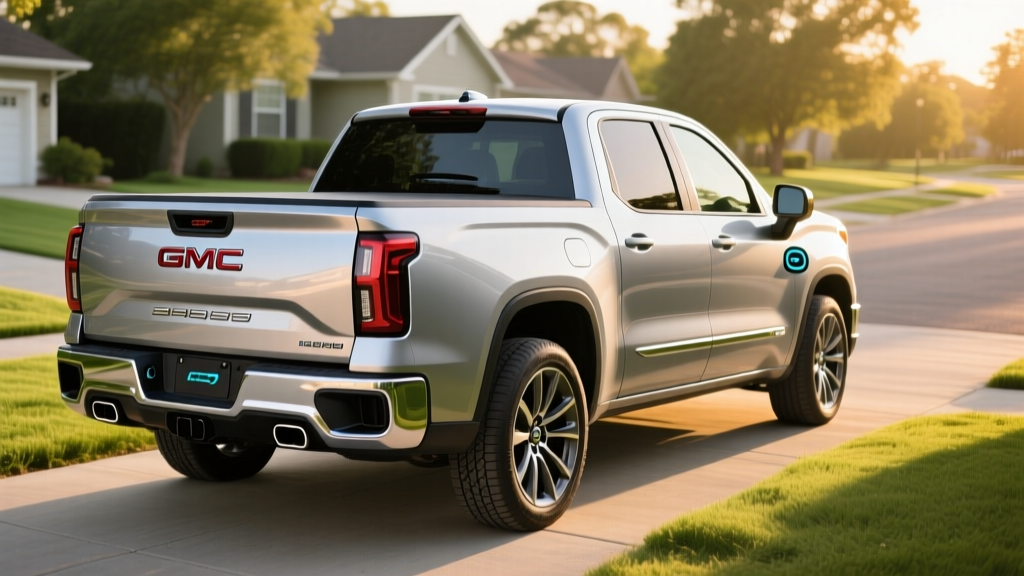
The GMC Sierra 1500 has long been a staple of the American full-size truck market, but as fuel prices fluctuate and emissions standards tighten, buyers are asking a critical question: does the GMC Sierra 1500 hybrid deliver meaningful fuel savings without sacrificing the capability a truck buyer demands?
For 2026, GMC continues to offer the Sierra 1500 with its 3.0L Duramax turbo-diesel inline-six — the most efficient engine in the lineup — alongside the 5.3L and 6.2L V8 options and the turbocharged 2.7L four-cylinder. However, GMC does not currently sell a conventional hybrid (HEV) or plug-in hybrid (PHEV) version of the Sierra 1500. This is a common source of confusion, driven by the popularity of the Ford F-150 PowerBoost hybrid and the Ram 1500 eTorque mild-hybrid system.
In this guide, we clarify exactly what's available, compare the Sierra 1500's most efficient powertrain against true hybrid competitors, and help you decide whether a hybrid truck, a full EV like the GMC Sierra EV, or a conventional gas/diesel Sierra is the right fit for your driveway.
HEV vs PHEV vs Mild Hybrid: What Truck Buyers Need to Know
Before evaluating the Sierra 1500, it's essential to distinguish the types of electrified powertrains available in the full-size truck segment. Misunderstanding these categories leads to incorrect expectations about fuel savings and charging requirements.
| Type | How It Works | Plug In? | Electric-Only Range | Example Trucks (2026) |
|---|---|---|---|---|
| Conventional Hybrid (HEV) | Gas engine + electric motor; battery charges via regenerative braking and engine | No | 0–1 mi at low speed | Ford F-150 PowerBoost |
| Plug-in Hybrid (PHEV) | Larger battery + motor; can drive on electricity alone, then switches to hybrid mode | Yes (Level 1 or 2) | 20–50 mi typical | None in full-size trucks (2026) |
| Mild Hybrid (MHEV) | Small 48V system assists engine start/stop and torque fill; cannot drive on electric alone | No | 0 mi | Ram 1500 eTorque (discontinued 2024) |
| Battery Electric (BEV) | Fully electric; no gas engine | Yes (Level 1/2/DC) | 250–400+ mi | GMC Sierra EV, Ford F-150 Lightning, Rivian R1T |
The GMC Sierra 1500 does not offer any of the above electrified systems in its standard 1500 lineup for 2026. The GMC Sierra 1500 relies on conventional internal combustion engines, including the highly efficient 3.0L Duramax diesel. The fully electric GMC Sierra EV is a separate, dedicated-electric platform — not a hybrid variant.
2026 GMC Sierra 1500 Powertrain Options and Efficiency
Since there is no GMC Sierra 1500 hybrid, the most relevant comparison is the Sierra's most fuel-efficient engine — the 3.0L Duramax turbo-diesel — against the Ford F-150 PowerBoost hybrid, which is the Sierra's closest hybrid competitor.
| Specification | 2026 GMC Sierra 1500 (3.0L Duramax Diesel) | 2026 Ford F-150 PowerBoost Hybrid |
|---|---|---|
| Powertrain | 3.0L turbo-diesel I6 | 3.5L PowerBoost V6 + electric motor (HEV) |
| Horsepower | 305 hp | 430 hp combined |
| Torque | 495 lb-ft | 570 lb-ft combined |
| EPA City MPG | 23 mpg | 25 mpg |
| EPA Highway MPG | 29 mpg | 26 mpg |
| EPA Combined MPG | 26 mpg | 25 mpg |
| Max Towing Capacity | ~13,200 lbs | ~12,700 lbs |
| Drivetrain | RWD / 4WD | RWD / 4WD |
| Starting MSRP (base trim) | ~$43,000 | ~$56,000 (PowerBoost requires higher trims) |
| Hybrid System | None | Full HEV (no plug-in) |
Sources: fueleconomy.gov, manufacturer specifications. Actual EPA ratings vary by trim, cab configuration, and drivetrain.
How Many MPG Does the Sierra 1500 Actually Get?
The 2026 GMC Sierra 1500 with the 3.0L Duramax diesel achieves an EPA-estimated 23 city / 29 highway / 26 combined mpg in 2WD configuration. Four-wheel-drive models drop slightly to approximately 22/27/24 mpg.
Diesel engines tend to match or slightly exceed EPA highway estimates in real-world driving, particularly on flat interstate routes at steady speeds. In mixed driving with frequent stops, expect results closer to the city rating. Owners of the Duramax Sierra consistently report 25–28 mpg combined in real-world conditions — close to or slightly above the EPA combined figure. Highway-only trips at 65–70 mph can yield 30+ mpg. This contrasts with hybrid trucks, which typically exceed EPA city ratings (regenerative braking helps in stop-and-go traffic) but fall short on the highway.
For comparison, the Sierra 1500 with the 5.3L V8 and cylinder deactivation achieves roughly 16/21/18 mpg — a significant drop from the diesel. The turbocharged 2.7L four-cylinder sits around 19/23/20 mpg.
GMC Sierra EV vs. Sierra 1500: The Electric Alternative
If your goal is maximum efficiency and zero tailpipe emissions, GMC's answer is the Sierra EV, a dedicated battery-electric truck built on GM's Ultium platform. It is not a variant of the Sierra 1500 — it's an entirely different vehicle with its own chassis, interior, and capability profile.
| Specification | 2026 GMC Sierra EV (Denali Edition 1) |
|---|---|
| Powertrain | Dual-motor AWD (BEV) |
| Horsepower | 754 hp |
| Torque | 785 lb-ft |
| Battery Capacity | ~200 kWh (usable) |
| EPA Range | ~440 miles (est.) |
| Max DC Fast Charge | 350 kW peak |
| 10–80% DC Charge Time | ~12 minutes (at 350 kW charger) |
| Max Towing | ~10,000 lbs |
| Starting MSRP | ~$99,495 (Edition 1); lower trims expected ~$55,000–$80,000 |
| Federal Tax Credit (§30D) | Up to $7,500 (subject to MSRP cap, income limits, battery sourcing — see IRS rules) |
The Sierra EV is a compelling option for buyers who want truck utility with EV economics, but it starts at a significantly higher price point than the Sierra 1500 and requires access to charging infrastructure. For buyers who tow heavy loads frequently or drive in remote areas with limited charging, the diesel Sierra 1500 remains the more practical choice.
Hybrid vs PHEV vs EV vs Diesel: Which Truck Fits You?
Choosing between an electrified truck and a conventional one depends on your driving patterns, budget, and access to charging. Here's a practical decision framework:
Choose the GMC Sierra 1500 (Duramax Diesel) if:
- You tow more than 10,000 lbs regularly
- You drive in rural areas or regions with sparse charging infrastructure
- You want proven long-term reliability with widely available service
- You want the best highway fuel economy without plugging in
- Your budget is under $60,000
Choose the Ford F-150 PowerBoost Hybrid if:
- Most of your driving is city or suburban (stop-and-go traffic)
- You want hybrid fuel savings without changing your fueling habits
- You value the onboard generator feature (Pro Power Onboard) for job-site or camping use
- You don't want to plug in — HEVs charge themselves through regenerative braking
Choose the GMC Sierra EV or Ford F-150 Lightning if:
- You have reliable home Level 2 charging (240V)
- Your daily driving is under 200 miles round-trip
- You want the lowest per-mile fuel cost (electricity vs. diesel/gas)
- You want maximum torque and instant acceleration
- You qualify for the federal §30D tax credit (up to $7,500) and/or state incentives
Tax Credits: Does the Sierra 1500 Qualify?
The conventional GMC Sierra 1500 — whether equipped with the Duramax diesel, 5.3L V8, or 2.7L turbo — does not qualify for the federal §30D clean vehicle tax credit. That credit is reserved for battery electric vehicles (BEVs) and plug-in hybrid electric vehicles (PHEVs) that meet specific requirements.
- Vehicle must be a new BEV or PHEV (conventional HEVs and diesel do not qualify)
- MSRP cap: $80,000 for vans/SUVs/trucks; $55,000 for sedans
- Buyer income cap: $300,000 joint / $225,000 head of household / $150,000 single (modified AGI)
- Battery components must meet North American manufacturing thresholds (phasing in annually)
- Critical minerals must meet sourcing requirements (increasing percentages each year)
- Credit can be transferred to the dealer at point of sale for an upfront price reduction
Source: IRS §30D Clean Vehicle Credit. Eligibility rules change annually. Consult a tax professional before relying on credit estimates.
The GMC Sierra EV may qualify for the full or partial $7,500 credit depending on the buyer's income, the specific trim's MSRP, and the battery sourcing compliance for the 2026 model year. State-level incentives (such as those in California, Colorado, and Massachusetts) may stack on top — check your state's energy office for current programs.
Reliability, Battery Warranty, and Long-Term Costs
Since the GMC Sierra 1500 does not have a hybrid battery, buyers don't face the battery degradation concerns associated with HEVs and PHEVs. The 3.0L Duramax diesel engine is well-proven, with GM's HD trucks using earlier generations of this engine family for years without major systemic issues.
GM's powertrain warranty covers the Sierra 1500 for 5 years / 60,000 miles (bumper-to-bumper) and 5 years / 60,000 miles (powertrain). Diesel-specific components including the turbocharger and emissions systems are covered under the powertrain warranty.
Ford covers the PowerBoost hybrid battery for 8 years / 100,000 miles (whichever comes first), consistent with federal requirements for hybrid battery components. Hybrid battery replacement cost, if needed out of warranty, typically ranges from $3,000–$6,000 including labor, though most hybrid batteries last well beyond the warranty period with minimal degradation. Toyota and Ford hybrid systems have demonstrated strong longevity records, with many exceeding 150,000+ miles on original batteries.
Pros and Cons: GMC Sierra 1500 (Duramax Diesel) vs. Hybrid Competitors
- Best highway MPG in the Sierra 1500 lineup (29 mpg EPA)
- 495 lb-ft of torque for strong towing performance
- No charging infrastructure needed
- Proven diesel durability and resale value
- Available across multiple trims and configurations
- Lower starting price than hybrid or EV competitors
- No hybrid or electrified powertrain option available
- Diesel fuel is more expensive per gallon than regular unleaded in most markets
- DEF (diesel exhaust fluid) adds minor ongoing maintenance cost
- City MPG (23) trails the Ford F-150 PowerBoost hybrid (25)
- No federal tax credit eligibility
- Diesel emissions systems can be costly to repair out of warranty
Frequently Asked Questions
Does GMC make a hybrid Sierra 1500?
No. As of the 2026 model year, GMC does not offer a hybrid (HEV) or plug-in hybrid (PHEV) version of the Sierra 1500. The most efficient Sierra 1500 uses the 3.0L Duramax turbo-diesel engine. GMC's electrified truck offering is the fully electric Sierra EV, which is a separate vehicle platform.
How many MPG does the GMC Sierra 1500 get?
The 2026 Sierra 1500 with the 3.0L Duramax diesel and 2WD achieves an EPA-estimated 23 city / 29 highway / 26 combined mpg. The 5.3L V8 gets approximately 16/21/18 mpg, and the 2.7L turbo four-cylinder gets around 19/23/20 mpg. Real-world results for the diesel often match or slightly exceed EPA estimates, especially on highway drives.
Is the GMC Sierra EV a hybrid?
No. The GMC Sierra EV is a fully battery-electric vehicle (BEV) with no gasoline engine. It offers an estimated 440 miles of EPA range on the Denali Edition 1 trim and requires plug-in charging. It is not based on the Sierra 1500 platform.
Which full-size truck has the best hybrid system?
The Ford F-150 PowerBoost is the only true full hybrid (HEV) available in the 2026 full-size truck segment. It delivers 430 hp, 570 lb-ft of torque, and an EPA-estimated 25 mpg combined. It does not require plug-in charging — the hybrid battery recharges through regenerative braking and the gasoline engine.
Does the Sierra 1500 qualify for any tax credit?
The conventional Sierra 1500 (gas or diesel) does not qualify for the federal §30D clean vehicle tax credit. Only the fully electric Sierra EV may qualify, subject to MSRP caps ($80,000 for trucks), buyer income limits, and battery sourcing requirements. Always verify current-year eligibility on IRS.gov before purchasing.
Will GMC release a Sierra 1500 hybrid in the future?
GMC has not announced a conventional hybrid or plug-in hybrid Sierra 1500. GM's electrification strategy for trucks has focused on the Ultium-based Sierra EV platform. If a hybrid Sierra is developed, it would likely arrive after GM evaluates the Sierra EV's market reception and as CAFE standards continue to tighten. We'll update this article if an official announcement is made.
Editorial note: This article was written from a 2026 model-year perspective. EPA ratings, pricing, and tax credit rules are subject to change. Always verify current specifications on GMC.com and fueleconomy.gov before making a purchase decision.