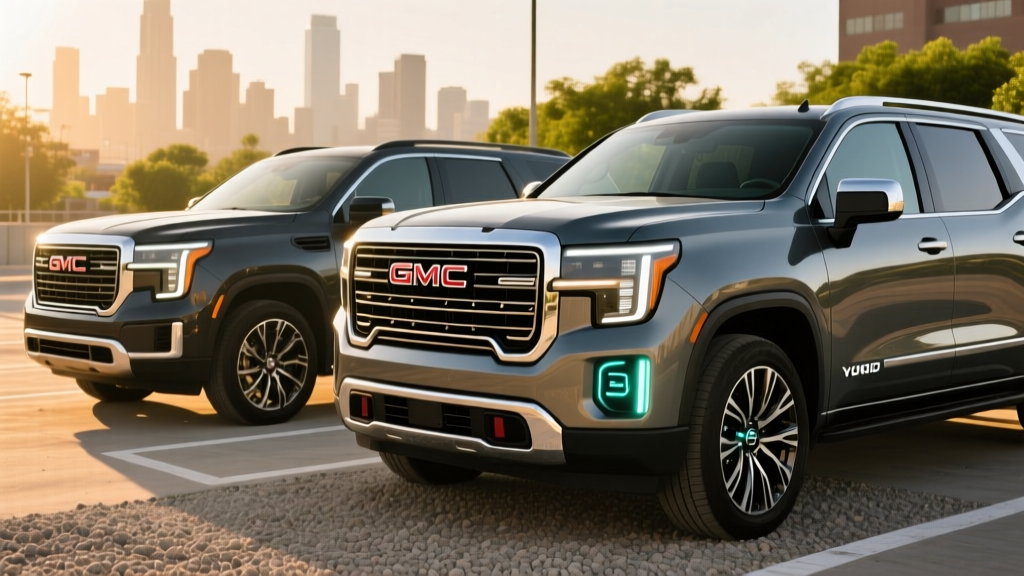
GMC's electrification strategy in 2026 centers on two hybrid approaches across its most popular models: the conventional hybrid (HEV) powertrain in the Sierra 1500 and Yukon lineup, and a plug-in hybrid (PHEV) variant of the Sierra. If you're researching GMC hybrid vehicles, the distinction between these two systems is the single most important thing to understand before visiting a dealer — they serve fundamentally different use cases, have different fuel-economy profiles, and carry different price premiums.
This guide breaks down every current GMC hybrid option with exact EPA figures, real-world expectations, battery warranty details, and a clear framework for deciding which powertrain — or whether a full EV like the Sierra EV — fits your driving pattern.
GMC Hybrid Lineup at a Glance: HEV vs PHEV Explained
Conventional Hybrid (HEV) — No Plug Required
A conventional hybrid like the Sierra 1500 Hybrid and Yukon Hybrid uses a small battery (typically 1.5–2.0 kWh) that recharges through regenerative braking and the gasoline engine. You never plug it in. The electric motor assists the engine during acceleration and low-speed driving, reducing fuel consumption by 15–25% compared to a gas-only equivalent. Think of it as a more efficient gas truck that happens to have an electric motor helping out.
Plug-In Hybrid (PHEV) — Electric-First, Gas-Backup
The Sierra 1500 PHEV carries a much larger battery (roughly 15–20 kWh usable) that you charge via a standard outlet or Level 2 charger. It can drive 30–40 miles on electricity alone before the gas engine engages. For daily commutes under that distance, a PHEV operates as a full EV most days, with the gas engine available for longer trips. This is the bridge option for buyers who want EV-like daily driving but aren't ready to commit to a battery-electric vehicle.
2026 GMC Sierra 1500 Hybrid: MPG, Powertrain & Real-World Efficiency
The Sierra 1500 Hybrid pairs GMC's 2.7L TurboMax inline-four engine with an electric motor integrated into the transmission. Combined output reaches 375 horsepower and 430 lb-ft of torque, giving it legitimate towing capability (rated up to 9,200 lbs when properly equipped) while delivering meaningfully better fuel economy than the gas-only 2.7L variant.
| Metric | EPA Estimate | Real-World Expectation |
|---|---|---|
| City MPG | 24 MPG | 25–27 MPG (hybrids often beat EPA in stop-and-go) |
| Highway MPG | 23 MPG | 21–22 MPG (sustained 75+ mph reduces hybrid advantage) |
| Combined MPG | 23 MPG | 22–25 MPG depending on driving mix |
The real-world story with the Sierra Hybrid is that city drivers see the biggest gains. The electric motor handles low-speed creep and initial acceleration — exactly where a heavy pickup burns the most fuel. On highway-only road trips, the advantage narrows because the engine is doing most of the work at sustained speed. If your driving is 70%+ city and suburban, expect to beat the EPA combined number. If you're mostly highway, expect to fall slightly short.
For comparison, the gas-only 2.7L TurboMax Sierra achieves 19 city / 22 highway / 20 combined. The hybrid's 3-MPG combined improvement translates to roughly 75–100 fewer gallons per year at 15,000 miles annually — about $225–$300 in fuel savings at $3.00/gallon.
2026 GMC Yukon Hybrid: Full-Size SUV Efficiency
The Yukon Hybrid uses a 3.0L Duramax inline-six turbo-diesel paired with a mild-hybrid assist system (a 48-volt integrated starter-generator). This is technically a mild hybrid (MHEV), not a full parallel hybrid like the Sierra — the electric system assists the engine but cannot drive the wheels on electricity alone. The payoff is still substantial for a three-row SUV.
| Metric | EPA Estimate | Real-World Expectation |
|---|---|---|
| City MPG | 24 MPG | 22–24 MPG |
| Highway MPG | 28 MPG | 26–28 MPG (diesel excels at steady speed) |
| Combined MPG | 26 MPG | 24–27 MPG |
The Yukon's diesel-hybrid setup delivers combined output of approximately 305 horsepower and 495 lb-ft of torque. Highway drivers will appreciate this powertrain most — diesel efficiency peaks at steady cruising speeds, and the 48V system smooths out stop-start traffic. Families covering 15,000+ miles per year in a large SUV will see $400–$600 in annual fuel savings versus the gas V8 Yukon.
2026 GMC Sierra 1500 PHEV: Electric Range, Charging & Total Range
The Sierra 1500 PHEV is the most electrified GMC truck short of the fully electric Sierra EV. It pairs a turbocharged engine with a larger electric motor and a battery pack sized for meaningful electric-only driving.
| Combined Horsepower | ~450 HP (engine + motor combined) |
| Battery Capacity (usable) | ~18 kWh (NMC lithium-ion) |
| EPA Electric-Only Range | ~35 miles |
| Total Combined Range (gas + electric) | ~500+ miles |
| Level 1 Charging (120V, 1.4 kW) | ~13 hours (full charge) |
| Level 2 Charging (240V, 7.2 kW) | ~2.5 hours (full charge) |
| DC Fast Charging | Not supported (standard for PHEVs in this class) |
| EPA MPGe (electric mode) | ~58 MPGe |
| EPA MPG (gas-only, battery depleted) | ~21 MPG combined |
Real-World Electric Range Expectations
The EPA rates the Sierra PHEV at approximately 35 miles of electric-only range. In practice:
- Mild weather, city/suburban driving: 35–38 miles (regen braking extends range)
- Highway at 70+ mph: 25–28 miles (aerodynamic drag on a pickup drains the battery faster)
- Cold weather (below 30°F): 22–28 miles (battery chemistry less efficient, cabin heating draws power)
If your round-trip commute is 30 miles or less and you charge nightly at home, you'll burn almost zero gasoline on weekdays. The gas engine becomes a range-extender for weekend trips, towing, and road travel.
Battery Warranty, Lifespan & Replacement Cost
Battery longevity is the top concern for hybrid buyers, and GMC's warranty coverage addresses it directly.
GMC Hybrid & PHEV Battery Warranty
- Sierra 1500 Hybrid (HEV): 8 years / 100,000 miles (whichever comes first) on hybrid-specific components including the battery pack
- Sierra 1500 PHEV: 8 years / 100,000 miles on the high-voltage battery, with a capacity retention threshold of 60–70% (varies by model year — GMC specifies the battery must retain a minimum percentage of original capacity to qualify for warranty replacement)
- Yukon Hybrid (MHEV): The 48V battery system is covered under the standard 5-year / 60,000-mile powertrain warranty; it's a smaller, less stressed component
Out-of-warranty replacement cost: For the Sierra HEV, hybrid battery replacement runs approximately $2,500–$4,000 including labor. For the Sierra PHEV's larger pack, expect $5,000–$8,000. However, data from Toyota and Ford hybrid programs show that modern hybrid batteries routinely last 150,000–200,000+ miles with minimal degradation, because the battery management system keeps the pack within a conservative state-of-charge window (typically 20–80%), avoiding the deep cycles that cause wear.
For context, EPA fueleconomy.gov lists full efficiency data for current GMC models, and GMC's official hybrid warranty terms are published on their owner resources site.
Pricing, Trims & Tax Credit Eligibility
| Model | Starting MSRP | Hybrid Premium vs Gas | Federal Tax Credit |
|---|---|---|---|
| Sierra 1500 Hybrid | ~$52,000 | +$3,000–$4,500 over gas equivalent | Not eligible (§30D requires plug-in) |
| Sierra 1500 PHEV | ~$62,000 | +$10,000–$13,000 over gas equivalent | Potentially up to $7,500 (see rules below) |
| Yukon Hybrid (Diesel MHEV) | ~$68,000 | +$3,500–$5,000 over gas V8 | Not eligible (mild hybrid, no plug) |
The Sierra PHEV's potential federal §30D tax credit eligibility is the biggest financial variable. Under current IRS rules, a qualifying PHEV may receive up to $7,500 — but eligibility depends on several factors that change frequently:
- MSRP cap: The vehicle's MSRP must not exceed $80,000 for trucks/SUVs (the Sierra PHEV clears this at base, but loaded trims may exceed it)
- Buyer income cap: Modified adjusted gross income must be ≤$300,000 (married filing jointly), ≤$225,000 (head of household), or ≤$150,000 (single)
- Battery sourcing: A percentage of critical minerals and battery components must be sourced from the U.S. or free-trade-agreement countries — this requirement tightens annually and can disqualify otherwise eligible vehicles mid-year
- Point-of-sale transfer: Buyers can elect to transfer the credit to the dealer at purchase, reducing the purchase price directly rather than waiting for a tax refund
Because sourcing requirements and eligible-vehicle lists are updated regularly, always verify current eligibility on fueleconomy.gov's tax credit page before relying on the credit in your purchase math. Consult a tax professional for your specific situation.
Hybrid vs PHEV vs Full EV: Which GMC Fits Your Life?
Choose the Sierra 1500 Hybrid (HEV) if:
- You cannot charge at home (apartment, street parking, no garage)
- You want better fuel economy with zero behavior change — just drive it like a normal truck
- Your budget can absorb a ~$3,500 hybrid premium but not a $10,000+ PHEV premium
- You tow frequently and want maximum simplicity (no charging logistics on trip days)
Choose the Sierra 1500 PHEV if:
- You have home charging access (Level 2 or even a standard 120V outlet)
- Your daily round-trip commute is ≤30 miles — you'll drive electric most weekdays
- You want to reduce fuel costs significantly without range anxiety on road trips
- You qualify for the federal tax credit, which can offset much of the PHEV price premium
Choose the Sierra EV (full battery-electric) if:
- You have reliable home Level 2 charging and access to DC fast chargers on road-trip routes
- You want zero gasoline purchases and the lowest per-mile fuel cost
- Your daily driving is predictable and within the ~350–400 mile EV range
- You're comfortable planning charging stops on longer trips
Choose the Yukon Hybrid if:
- You need three-row SUV space and tow capability
- You drive 15,000+ miles per year and want to reduce fuel costs on a large vehicle
- Diesel availability and pricing in your area make the efficiency payoff worthwhile
Frequently Asked Questions
How many MPG does the GMC Sierra Hybrid get?
The 2026 Sierra 1500 Hybrid achieves an EPA-estimated 24 city / 23 highway / 23 combined MPG. Real-world results vary: city-heavy drivers often see 25–27 MPG thanks to regenerative braking and electric assist at low speeds, while highway-dominant drivers may see 21–22 MPG. Either way, it's a 3–5 MPG improvement over the gas-only 2.7L TurboMax Sierra.
How far can the GMC Sierra PHEV go on electric only?
The EPA estimates approximately 35 miles of electric-only range for the Sierra 1500 PHEV. Real-world range depends on conditions: expect 35–38 miles in mild city driving, 25–28 miles at highway speed, and 22–28 miles in cold weather. For commuters with a sub-30-mile round trip and nightly home charging, gasoline consumption on weekdays drops to near zero.
Is the GMC hybrid system reliable, and what does battery replacement cost?
GMC's hybrid systems share architecture with proven GM hybrid platforms used in millions of vehicles. Hybrid batteries are managed conservatively (never fully charged or fully depleted), which dramatically extends lifespan. Industry data shows modern hybrid batteries lasting 150,000–200,000+ miles. GMC covers the hybrid battery for 8 years / 100,000 miles. Out-of-warranty replacement costs approximately $2,500–$4,000 for the Sierra HEV and $5,000–$8,000 for the Sierra PHEV.
Do GMC hybrid vehicles qualify for any tax credit?
Only the Sierra 1500 PHEV qualifies for the federal §30D clean vehicle credit, which can be up to $7,500 depending on battery sourcing requirements, buyer income, and vehicle MSRP. The conventional Sierra Hybrid and Yukon Hybrid do not qualify because they are not plug-in vehicles. Some states offer additional rebates for PHEVs — check your state's energy office or AFDC state incentive database for local programs.
Do I need to plug in the Sierra Hybrid or Yukon Hybrid?
No. The Sierra 1500 Hybrid (HEV) and Yukon Hybrid (MHEV) are conventional hybrids that recharge their batteries entirely through regenerative braking and the gasoline engine. You fuel them like any other gas vehicle. Only the Sierra PHEV requires (or benefits from) plugging in.
Can the Sierra PHEV DC fast charge?
No. The Sierra 1500 PHEV charges via Level 1 (standard 120V outlet, ~13 hours for a full charge) or Level 2 (240V, ~2.5 hours). DC fast charging is not supported, which is typical for PHEVs — their smaller batteries don't require the rapid charging infrastructure that full EVs need. A nightly Level 2 charge is all that's required to wake up to a full battery every morning.
GMC Hybrid Vehicles — Pros
- 3–5 MPG improvement (HEV) or 35-mile EV commute (PHEV) over gas-only models
- No range anxiety — gas engine provides backup on all models
- Full towing and payload capability maintained
- 8-year / 100,000-mile hybrid battery warranty
- PHEV may qualify for up to $7,500 federal tax credit
- No charging infrastructure required for HEV models
GMC Hybrid Vehicles — Cons
- $3,000–$13,000 price premium over gas-only equivalents
- PHEV electric range limited to ~35 miles (shorter on highway or in cold)
- PHEV does not support DC fast charging
- Fuel savings take 3–6 years to offset the hybrid premium at average mileage
- Tax credit eligibility uncertain due to evolving sourcing rules
- Yukon MHEV offers smaller efficiency gains than a full parallel hybrid