Genesis Electrified SUVs in 2026: What You Can Actually Buy
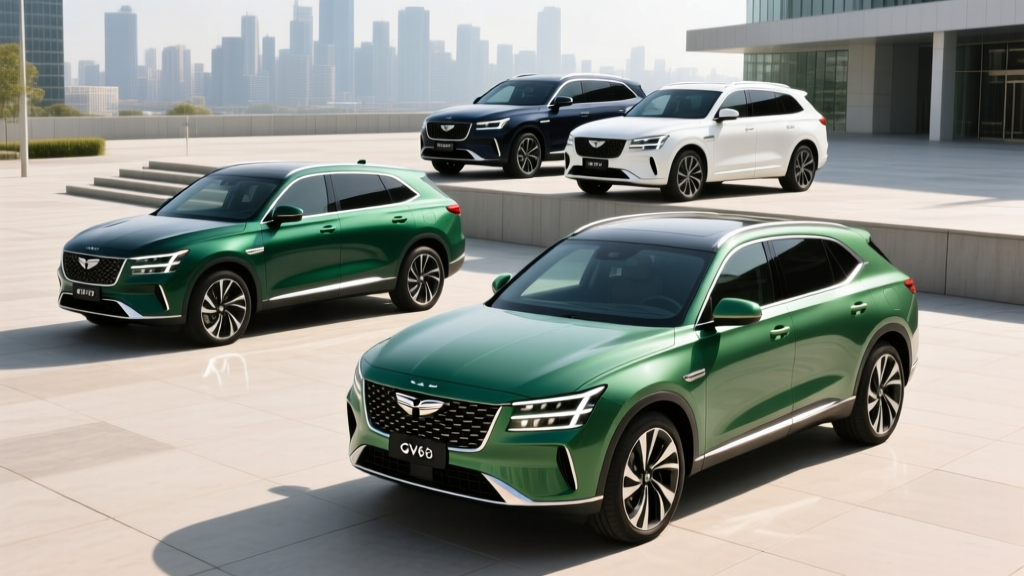
Genesis has carved out a distinct position in the luxury electrified SUV segment. Unlike rivals that offer a single token hybrid, the brand fields three distinct approaches across its SUV lineup: the fully electric GV60, the plug-in hybrid (PHEV) GV70 Electrified, and the mild-hybrid GV80. For buyers searching for Genesis SUV hybrid models, the choices can be confusing — especially since Genesis uses "Electrified" branding across both BEVs and PHEVs. This guide breaks down exactly what each model offers, how they compare on efficiency and cost, and which one fits your driving life.
Quick Primer: HEV vs PHEV vs BEV in the Genesis Lineup
| Type | Genesis Model | Needs a Plug? | Electric-Only Range | Best For |
|---|---|---|---|---|
| BEV (Battery Electric) | GV60 | Yes — always | 248 mi (EPA) | Home chargers, daily EV driving |
| PHEV (Plug-In Hybrid) | GV70 Electrified | Yes — for EV range | ~27 mi (EPA est.) | Short EV commutes + gas road trips |
| Mild Hybrid (MHEV) | GV80 2.5T/3.5T | No | None | Luxury SUV buyers wanting slight efficiency bump |
2026 Genesis GV70 Electrified: The Plug-In Hybrid SUV
The GV70 Electrified is the closest thing to a traditional "Genesis hybrid SUV" that plugs in. It pairs a turbocharged gasoline engine with a meaningful electric motor and a battery you can charge at home or at a public station. This is the model that bridges the gap for buyers who want electric daily driving without committing fully to a BEV.
| Spec | Value |
|---|---|
| Powertrain | 2.5L turbo I4 + electric motor (PHEV) |
| Combined Horsepower | ~305 hp (est.) |
| Battery Capacity | ~17.8 kWh (usable, est.) |
| Electric-Only Range | ~27 mi (EPA est.) |
| Total Combined Range | ~380 mi (gas + electric) |
| EPA Fuel Economy (hybrid mode) | ~28 MPG combined (est.) |
| Level 2 Charging (240V) | ~2.5 hours (0–100%) |
| DC Fast Charging | Not available |
| 0–60 mph | ~6.5 sec (est.) |
| Base MSRP | ~$60,000 (est.) |
| Federal Tax Credit (§30D) | Up to $3,750 (battery sourcing dependent) |
| Powertrain Warranty | 10 yr / 100,000 mi |
| Hybrid Battery Warranty | 10 yr / 100,000 mi |
Real-World Electric Range vs. EPA Sticker
The GV70 Electrified's estimated 27-mile EPA electric range is achievable in mild weather at city speeds. Expect 20–23 miles in highway driving at 70 mph, and as low as 16–18 miles in freezing temperatures where cabin heating and battery resistance cut into usable capacity. For a 15-mile round-trip commute, this PHEV can handle most days on electricity alone — but a 40-mile commute will require the gas engine for the latter half.
How the GV70 PHEV Charges
Unlike many European PHEV rivals, the GV70 Electrified does not support DC fast charging. You are limited to Level 2 (240V AC) charging, which tops up the battery in roughly 2.5 hours using a home wall connector or public Level 2 station. On a standard 120V household outlet (Level 1), expect 8–10 hours for a full charge — essentially overnight. This is a deliberate trade-off: the smaller PHEV battery doesn't justify the added cost and weight of DC fast-charge hardware, but it does mean you cannot quickly top up on a road trip.
Driving Impressions and Efficiency
In EV mode, the GV70 Electrified is whisper-quiet and delivers smooth, linear acceleration — the hallmark of electric torque. When the battery depletes, the 2.5L turbo four-cylinder seamlessly takes over. The transition is among the smoothest in the PHEV segment, with no lurching or obvious handoff. In blended hybrid mode (battery partially depleted), real-world fuel economy typically lands between 26–30 MPG combined depending on driving style and terrain. Genesis's hybrid system recovers energy aggressively during deceleration, which helps in stop-and-go traffic where hybrids consistently beat their EPA highway numbers.
2026 Genesis GV80: Mild-Hybrid Luxury, No Plug Required
The GV80 is Genesis's flagship SUV, and for 2026 it continues with a 48-volt mild-hybrid system (MHEV) on both the 2.5T and 3.5T powertrains. This is not a plug-in hybrid. You never charge it. The small 48V battery assists the engine during acceleration, enables smoother stop-start, and powers a mild regenerative braking system. The efficiency gains are modest but real.
| Powertrain | City MPG | Highway MPG | Combined MPG |
|---|---|---|---|
| 2.5T I4 Turbo (MHEV) — AWD | 21 | 25 | 23 |
| 3.5T V6 Twin-Turbo (MHEV) — AWD | 18 | 23 | 20 |
Real-world testing shows the 2.5T mild-hybrid can nudge 24–25 MPG combined in mixed suburban driving, slightly above its EPA sticker. The 3.5T V6, while more powerful at 375 hp, will typically return 19–21 MPG in real-world use. Neither figure is exceptional for the segment — competitors like the BMW X5 xDrive45e PHEV or the Volvo XC90 Recharge offer dramatically better efficiency if you can plug in. The GV80's mild-hybrid system is best understood as a refinement tool (smoother acceleration, quieter idle restart) rather than a fuel-economy play.
2026 Genesis GV60: The Full EV Alternative
While not a hybrid, the GV60 deserves mention for any buyer cross-shopping Genesis SUV hybrid models. It shares its E-GMP platform with the Hyundai Ioniq 5 and Kia EV6, and it is the most efficient and lowest-cost-to-run SUV in the Genesis lineup.
| Spec | Standard Range (RWD) | Advanced (AWD) | Performance (AWD) |
|---|---|---|---|
| Battery (usable) | 77.4 kWh (NMC) | 77.4 kWh (NMC) | 77.4 kWh (NMC) |
| EPA Range | 264 mi | 248 mi | 235 mi |
| Horsepower | 168 hp | 314 hp | 429 hp (Boost mode) |
| 0–60 mph | 7.8 sec | 5.3 sec | 3.9 sec |
| Peak DC Fast Charge | 240 kW | 240 kW | 240 kW |
| 10–80% DC Fast Charge | ~18 min | ~18 min | ~18 min |
| Level 2 (240V) Charge Rate | 10.9 kW | 10.9 kW | 10.9 kW |
| Base MSRP | ~$53,350 | ~$60,350 | ~$66,350 |
| Federal Tax Credit (§30D) | Up to $7,500* | Up to $7,500* | Up to $7,500* |
*§30D credit eligibility depends on buyer income (≤$150K single / ≤$300K joint), MSRP cap ($80K for SUVs), battery critical-mineral sourcing, and point-of-sale transfer rules per current IRS guidance. Confirm eligibility with a tax professional.
Hybrid vs PHEV vs EV: Which Genesis SUV Fits You?
The Decision Framework
Choose the GV70 Electrified (PHEV) if: You have a garage or driveway where you can install a Level 2 charger, your daily commute is under 30 miles round-trip, and you regularly take road trips exceeding 200 miles where you don't want to plan around charging stops.
Choose the GV60 (BEV) if: You can charge at home, your daily driving is under 200 miles, you want the lowest per-mile fuel cost (~$0.04/mi on home electricity vs ~$0.15/mi on gas), and you value a quiet, vibration-free driving experience.
Choose the GV80 (Mild Hybrid) if: You cannot charge at home (apartment, street parking), you want a three-row luxury SUV, and fuel economy is a secondary concern to cabin space, ride quality, and brand prestige.
Tax Credits and Incentives for Genesis Electrified SUVs
Federal tax credit eligibility varies sharply across the Genesis lineup:
- GV60 (BEV): Eligible for up to $7,500 under §30D, subject to battery sourcing and critical-mineral requirements. The point-of-sale transfer option lets you apply the credit as a down-payment reduction at the dealer.
- GV70 Electrified (PHEV): May qualify for up to $3,750 (the "base" credit amount tied to battery capacity ≥7 kWh). Full $7,500 requires meeting both critical-mineral and battery-component sourcing thresholds, which is model-year dependent.
- GV80 (Mild Hybrid): Does not qualify for §30D. The 48V mild-hybrid battery is far below the 7 kWh minimum threshold. No federal plug-in credit applies.
State incentives can sweeten the deal. California's CVRP, Colorado's innovative motor vehicle credit, and New York's Drive Clean Rebate all offer additional rebates for PHEVs and BEVs — amounts and eligibility vary by jurisdiction, so check your state's alternative fuels database for current programs.
Battery Warranty, Reliability, and Replacement Costs
Genesis Hybrid & EV Battery Coverage
GV70 Electrified (PHEV): 10 years / 100,000 miles on the high-voltage hybrid battery. Genesis guarantees the battery will retain at least 70% of its original capacity during the warranty period.
GV60 (BEV): 10 years / 100,000 miles on the 77.4 kWh traction battery, with the same 70% capacity retention guarantee.
GV80 (MHEV): The 48V mild-hybrid battery is covered under the standard 5-year / 60,000-mile new-vehicle warranty and 10-year / 100,000-mile powertrain warranty.
What Does Replacement Cost?
Out-of-warranty battery replacement is the top concern for hybrid and EV buyers. Here's what the data shows:
GV70 PHEV battery: Estimated $6,000–$9,000 for the ~17.8 kWh pack, including labor. PHEV batteries are smaller and less expensive than full EV packs. Given the 10-year warranty, most original owners will never face this cost.
GV60 BEV battery: Estimated $12,000–$18,000 for the 77.4 kWh NMC pack. However, E-GMP platform batteries have shown strong longevity in Hyundai/Kia applications — IIHS-tested models routinely show less than 10% degradation at 100,000 miles.
GV80 48V battery: Estimated $800–$1,500. This is a small lithium-ion pack similar in cost to a premium 12V AGM battery. Failure rates on 48V systems have been low across the Hyundai Motor Group portfolio.
Pros and Cons: Genesis Electrified SUV Lineup
✅ Pros
- Best-in-class interior materials and ride refinement across all three models
- GV60's 240 kW DC fast charging is among the fastest in the luxury EV segment
- GV70 PHEV offers a genuine no-compromise bridge for EV-curious buyers
- 10-year / 100,000-mile powertrain and battery warranty across the lineup
- Genesis's complimentary valet maintenance (3 years / 36,000 mi) reduces ownership hassle
- Smooth, imperceptible hybrid-to-gas transitions in the GV70
❌ Cons
- GV70 PHEV lacks DC fast charging — limits road-trip EV flexibility
- GV70 electric-only range (~27 mi) trails rivals like the BMW X5 xDrive50e (~38 mi)
- GV80 mild-hybrid fuel economy is unremarkable — 20–23 MPG combined
- No three-row PHEV or BEV option in the Genesis lineup (GV80 is mild-hybrid only)
- GV60's rear visibility and cargo space trail the larger GV70 and GV80
- Genesis dealer network is smaller than BMW, Mercedes, or Lexus — service access varies by region
Frequently Asked Questions
How many MPG does the Genesis GV70 hybrid get?
The 2026 GV70 Electrified PHEV achieves an estimated 28 MPG combined in hybrid mode (gas engine running after battery depletion). In EV-only mode, it operates at roughly 3.0–3.5 kWh/mile, which translates to the equivalent of ~85 MPGe. Real-world hybrid MPG typically ranges from 26–30 depending on driving style, terrain, and whether you regularly recharge the battery.
How far can the GV70 PHEV go on electric power alone?
The EPA-estimated electric-only range is approximately 27 miles. In real-world conditions, expect 20–23 miles at highway speeds and 25–27 miles in city driving where regenerative braking recovers more energy. Cold weather (below 32°F) can reduce this to 16–18 miles.
Does the Genesis GV80 hybrid need to be plugged in?
No. The GV80 uses a 48-volt mild-hybrid system that charges itself through regenerative braking and the engine's alternator. There is no plug, no electric-only driving mode, and no external charging capability. It is designed to improve stop-start smoothness and provide minor acceleration assist — not to function as an electric vehicle.
Is the Genesis GV60 eligible for the $7,500 federal tax credit?
The GV60 may qualify for up to $7,500 under IRS §30D, but eligibility depends on multiple factors: the buyer's modified adjusted gross income must not exceed $150,000 (single) or $300,000 (joint), the vehicle MSRP must be under $80,000 (SUV cap), and the battery must meet critical-mineral and component sourcing requirements. The credit can be transferred to the dealer at point of sale as a price reduction. Always verify current-year rules at irs.gov and consult a tax professional.
Are Genesis hybrid SUVs reliable?
Genesis (as part of Hyundai Motor Group) has built a strong reliability reputation in recent years. The E-GMP platform underpinning the GV60 has been extensively proven in the Ioniq 5 and EV6, which have shown low defect rates and strong battery longevity. The GV70 PHEV's powertrain builds on Hyundai's well-tested hybrid architecture. J.D. Power and Consumer Reports have rated Genesis above the luxury-brand average for dependability. The 10-year / 100,000-mile powertrain and battery warranty provides additional peace of mind that exceeds most European rivals.
What is the cost to replace a Genesis hybrid battery out of warranty?
For the GV70 PHEV, out-of-warranty battery replacement is estimated at $6,000–$9,000. For the GV60 BEV, expect $12,000–$18,000 for the full 77.4 kWh pack. The GV80's 48V mild-hybrid battery costs roughly $800–$1,500. Given the 10-year warranty coverage, most original owners and even second owners (warranty transfers with the vehicle) are unlikely to face these costs.
Which Genesis SUV is best for someone who can't charge at home?
If you lack home charging access, the GV80 mild-hybrid is your best option. It requires no plug, no behavioral change, and delivers a modest efficiency improvement over a conventional gas SUV. The GV70 PHEV without home charging becomes essentially a heavy, less-efficient gas SUV — you'll rarely access its electric range. The GV60 BEV is not recommended without reliable home or workplace charging.
The Bottom Line on Genesis SUV Hybrid Models
Genesis offers a genuine spectrum of electrified SUVs in 2026, each serving a different buyer profile. The GV70 Electrified PHEV is the most versatile for mixed-use buyers who want some electric driving without range anxiety. The GV60 BEV delivers the best efficiency and lowest running costs for those ready to commit to full electric. And the GV80 mild-hybrid serves three-row luxury buyers who want refinement without any charging infrastructure requirements.
The critical question isn't which Genesis SUV is "best" — it's which one matches your charging access, commute distance, and road-trip frequency. Use the decision framework above, verify tax-credit eligibility with a tax professional, and test-drive the model that fits your profile. Genesis's luxury, warranty coverage, and increasingly mature electrified powertrains make all three worth serious consideration.