Genesis has taken a deliberate path into electrification, offering a mix of full electric, plug-in hybrid, and conventional hybrid powertrains across its SUV lineup. If you're searching for a Genesis SUV hybrid, you're likely weighing luxury against efficiency — and trying to figure out whether a conventional hybrid (HEV), plug-in hybrid (PHEV), or full battery electric vehicle (BEV) fits your driving life. This guide breaks down every electrified Genesis SUV available in 2026, with exact EPA numbers, battery specs, real-world expectations, and tax credit eligibility.
Genesis SUV Hybrid Lineup at a Glance
Genesis currently offers electrified powertrains across three SUVs, but not all are hybrids in the traditional sense. Here's the breakdown:
- Genesis GV70 Electrified (PHEV): A plug-in hybrid variant of the compact luxury SUV, pairing a turbocharged engine with a larger battery for meaningful electric-only driving.
- Genesis GV80 Hybrid (HEV): A conventional hybrid version of the midsize luxury SUV — no plug required, with improved MPG over the gas-only model.
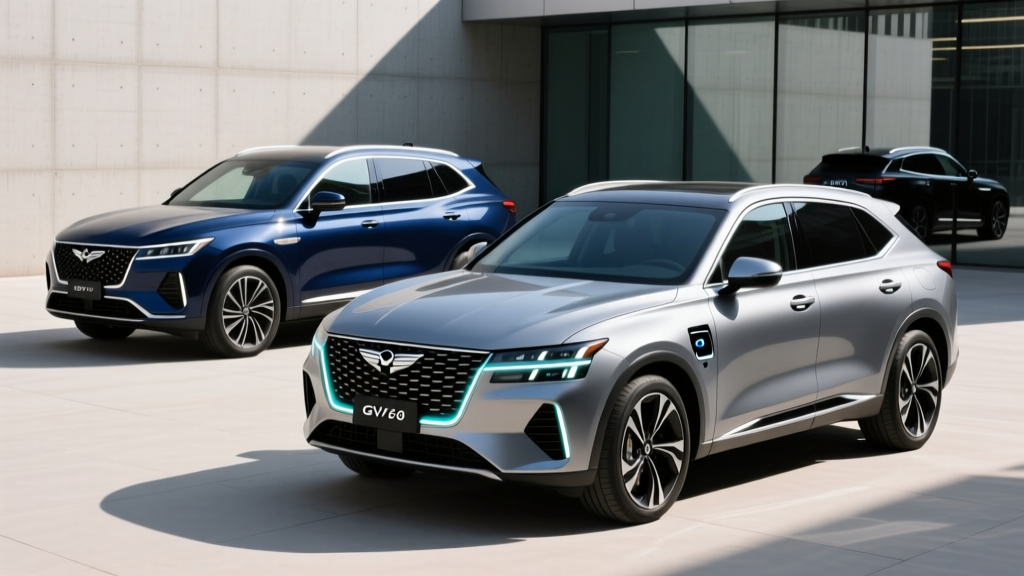
- Genesis GV60: A dedicated BEV (fully electric), not a hybrid — included here for comparison since many cross-shoppers consider it.
HEV vs PHEV vs BEV — What's the Difference?
| Feature | HEV (Conventional Hybrid) | PHEV (Plug-In Hybrid) | BEV (Full Electric) |
|---|---|---|---|
| Plugs in? | No | Yes | Yes |
| Electric-only range | ~1 mi or less | 20–40+ miles | 200–300+ miles |
| Gas engine? | Yes (primary) | Yes (backup) | No |
| Federal tax credit | No | Up to $7,500 (varies) | Up to $7,500 (varies) |
| Best for | No home charging access | Short commutes + road trips | Home charging + low running costs |
Genesis GV70 Electrified (PHEV): Electric Range, MPG & Powertrain
The Genesis GV70 Electrified PHEV is the brand's plug-in hybrid compact luxury SUV, designed for buyers who want electric commuting during the week and gas-engine flexibility for weekend road trips. For 2026, the GV70 PHEV pairs a 2.5-liter turbocharged four-cylinder engine with an electric motor and a larger battery pack compared to the previous mild-hybrid setup.
| Spec | Value |
|---|---|
| Powertrain | 2.5L turbo I4 + electric motor |
| Combined Horsepower | ~305 hp (estimated) |
| Battery Capacity (usable) | ~18.1 kWh |
| EPA Electric-Only Range | ~35 miles (estimated) |
| EPA MPG (gas mode, combined) | ~28 MPG combined (estimated) |
| Total Combined Range | ~420 miles (est.) |
| Level 2 Charging (0–100%) | ~2.5 hours at 7.2 kW |
| DC Fast Charging | Not available |
| 0–60 mph | ~6.5 seconds (estimated) |
| Starting MSRP | ~$57,000 (estimated) |
How Many MPG Does the GV70 PHEV Get?
Once the battery is depleted, the GV70 PHEV operates as a conventional hybrid. Estimated EPA fuel economy in hybrid mode is approximately 28 MPG combined (roughly 26 city / 30 highway). In real-world city driving, PHEVs often exceed their EPA city estimate because regenerative braking recaptures energy in stop-and-go traffic — expect 29–32 MPG in urban conditions. Highway cruising at sustained speeds will trend closer to 27–29 MPG.
Genesis GV80 Hybrid (HEV): MPG, Powertrain & Pricing
The Genesis GV80 is the brand's midsize luxury SUV, and for 2026 it offers a conventional hybrid (HEV) variant. Unlike the GV70 PHEV, the GV80 Hybrid does not plug in. It uses a small battery and electric motor to assist the gas engine, improving fuel economy without any change to your fueling routine.
| Driving Condition | EPA MPG | Real-World Expectation |
|---|---|---|
| City | ~25 MPG | 26–28 MPG (regen helps in traffic) |
| Highway | ~28 MPG | 26–28 MPG |
| Combined | ~26 MPG | 26–27 MPG |
The GV80 Hybrid pairs a 2.5-liter turbocharged four-cylinder engine with an electric assist motor, producing an estimated ~300 combined horsepower. The hybrid system adds roughly 3–4 MPG over the gas-only GV80 2.5T, which is meaningful for a 4,800-pound luxury SUV. Starting MSRP is estimated at ~$60,000, a modest premium over the non-hybrid trim.
Because this is a conventional HEV, there is no electric-only driving range to speak of — the electric motor assists during acceleration and low-speed maneuvers, but the gas engine is always the primary power source. You never plug it in.
Genesis GV60 (BEV): The Full-Electric Alternative
Some shoppers searching for a Genesis SUV hybrid are actually open to a full EV. The Genesis GV60 is the brand's dedicated electric crossover, built on Hyundai Motor Group's E-GMP platform (shared with the Hyundai Ioniq 5 and Kia EV6). It's worth considering if you have reliable home charging.
| Spec | Standard Range | Extended Range AWD |
|---|---|---|
| Battery (usable) | ~63 kWh | ~77.4 kWh |
| EPA Range | ~250 miles (est.) | ~290 miles (est.) |
| Horsepower | ~225 hp (RWD) | ~314 hp (AWD) |
| DC Fast Charge (peak) | ~240 kW | ~240 kW |
| 10–80% DC Charge | ~18 minutes | ~18 minutes |
| 0–60 mph | ~7.0 sec | ~5.0 sec |
| Starting MSRP | ~$53,000 (est.) | ~$60,000 (est.) |
The GV60's 800V architecture enables ultra-fast DC charging — peaking at 240 kW means a 10–80% charge in roughly 18 minutes at a compatible 350 kW station. Note that sustained charge rate tapers above 80% SoC to protect the battery, so plan to charge to 80% on road trips for optimal speed. For more on how charge curves work, see our EPA EV technology overview.
Battery Warranty, Reliability & Replacement Costs
Genesis Hybrid & PHEV Battery Warranty
Genesis covers its hybrid and PHEV battery packs with a 10-year / 100,000-mile warranty, consistent with Hyundai Motor Group's industry-leading hybrid battery coverage. This warranty covers defects and excessive capacity loss (typically defined as dropping below 70% of original capacity).
Battery replacement cost (out of warranty):
- GV70 PHEV battery: ~$8,000–$12,000 (estimated, based on comparable Hyundai/Kia PHEV packs)
- GV80 HEV battery: ~$3,000–$5,000 (smaller pack, lower cost)
- GV60 BEV battery: ~$15,000–$22,000 (large traction battery)
In practice, modern lithium-ion hybrid batteries rarely require full replacement within the warranty period. Degradation of 10–15% over 100,000 miles is typical for NMC chemistry packs used in these vehicles.
Genesis as a brand ranks well in initial quality studies, though long-term reliability data for their newer hybrid powertrains is still accumulating. The hybrid systems themselves — shared with Hyundai and Kia — have a strong track record. The IIHS has awarded Genesis models top safety ratings, which matters for family-oriented luxury SUV buyers.
Federal Tax Credits: What Qualifies?
Tax credit eligibility is where the three Genesis SUVs diverge sharply:
- GV70 PHEV: May qualify for up to $7,500 under IRS §30D, subject to battery component sourcing and critical mineral requirements. Buyer income caps apply ($150K single / $300K joint MSRP caps for SUVs: $80,000). The point-of-sale transfer option allows you to apply the credit as a down payment reduction at the dealer. Check current eligibility on IRS.gov, as sourcing requirements tighten annually.
- GV80 HEV: Does not qualify for the §30D federal EV tax credit. Conventional hybrids are not eligible. Some states may offer modest hybrid incentives — check your state energy office.
- GV60 BEV: Eligibility for the full $7,500 credit depends on battery sourcing compliance, which has been challenging for Hyundai Motor Group vehicles assembled outside the US. The GV60 is built in South Korea, which may limit or eliminate federal credit eligibility under current §30D rules. However, leasing may unlock a commercial clean vehicle credit passed through as a lease incentive.
Important: Tax credit rules under §30D are complex and change frequently. MSRP caps, income thresholds, and battery sourcing requirements all apply. Always verify your personal eligibility with a tax professional and the official IRS guidance before purchasing.
Hybrid vs PHEV vs EV: Which Genesis SUV Fits You?
Decision Framework
Choose the GV80 Hybrid (HEV) if:
- You have no access to home or workplace charging
- You want better MPG without changing any habits
- You regularly take long road trips and don't want to plan charging stops
- You need three rows of seating (GV80 offers an optional third row)
Choose the GV70 PHEV if:
- You have Level 2 home charging and a commute under 35 miles
- You want electric daily driving but gas flexibility for road trips
- You want to reduce fuel costs without full EV commitment
- You may qualify for the federal tax credit
Choose the GV60 (BEV) if:
- You have reliable home Level 2 charging
- You want the lowest per-mile fuel cost (~$0.04–0.06/mile on home electricity vs ~$0.15/mile on gas)
- You want the quietest, smoothest driving experience
- You're ready to plan road trips around DC fast charging
Pricing & Ownership Costs Compared
| Cost Factor | GV80 HEV | GV70 PHEV | GV60 BEV |
|---|---|---|---|
| Base MSRP (est.) | $60,000 | $57,000 | $53,000 |
| Federal Tax Credit | $0 | Up to $7,500 | $0–$7,500* |
| 5-Yr Fuel/Energy | ~$11,250 | ~$6,500 | ~$4,500 |
| 5-Yr Maintenance | ~$3,500 | ~$3,000 | ~$2,000 |
| 5-Yr Insurance (est.) | ~$9,000 | ~$8,500 | ~$9,500 |
*GV60 credit eligibility uncertain due to foreign assembly and battery sourcing. Fuel costs assume $3.50/gal gas, $0.14/kWh home electricity. Insurance varies widely by driver — get personal quotes.
Pros & Cons of Each Genesis Electrified SUV
Pros
- GV80 HEV: No plug needed, three-row option, strong luxury features, improved MPG over gas model
- GV70 PHEV: ~35 mi electric commute, gas backup for road trips, potential $7,500 credit, quiet EV mode in city
- GV60 BEV: Fastest charging in class (240 kW), lowest running costs, 800V architecture, striking design
Cons
- GV80 HEV: No tax credit, modest MPG improvement over gas, still requires oil changes
- GV70 PHEV: No DC fast charging, limited electric range vs competitors, estimated $57K+ price
- GV60 BEV: Tax credit uncertain, no third row, range drops 20–30% in cold weather, public charging dependency on trips
Frequently Asked Questions
How many MPG does the Genesis GV80 Hybrid get?
The 2026 Genesis GV80 Hybrid is estimated at approximately 25 city / 28 highway / 26 combined MPG. Real-world city driving often yields 26–28 MPG thanks to regenerative braking in stop-and-go traffic. This represents a 3–4 MPG improvement over the gas-only GV80 2.5T.
How far can the Genesis GV70 PHEV go on electric only?
The GV70 PHEV offers an estimated 35 miles of EPA electric-only range. In real-world conditions — especially cold weather or sustained highway speeds — expect 25–32 miles. This covers most daily commutes, and the gas engine seamlessly takes over for longer trips.
Does any Genesis SUV hybrid qualify for a tax credit?
The GV70 PHEV may qualify for up to $7,500 under IRS §30D, depending on battery sourcing compliance and your income level. The GV80 conventional hybrid does not qualify for any federal EV credit. The GV60 BEV's eligibility is uncertain due to South Korean assembly. Always verify on IRS.gov before purchasing.
Is the Genesis hybrid system reliable?
Genesis (Hyundai Motor Group) hybrid powertrains have a strong reliability track record. The hybrid battery is covered by a 10-year/100,000-mile warranty. Out-of-pocket replacement costs range from ~$3,000–$5,000 for the GV80 HEV pack to ~$8,000–$12,000 for the GV70 PHEV pack, though full replacements within the warranty period are rare.
Should I buy a Genesis hybrid, PHEV, or full EV?
If you lack home charging, the GV80 HEV is the practical choice — better MPG with zero routine changes. If you can charge at home and commute under 35 miles, the GV70 PHEV lets you drive electric daily while keeping gas flexibility. If you have reliable home charging and want the lowest running costs, the GV60 BEV is the most rewarding to own — provided you're comfortable planning road-trip charging stops.
Does the GV70 PHEV support DC fast charging?
No. The GV70 PHEV charges via Level 1 (120V, ~8 hours) or Level 2 (240V, ~2.5 hours at 7.2 kW). It does not have a DC fast charging port. This is typical for PHEVs — the smaller battery doesn't require rapid charging, and overnight Level 2 replenishment is sufficient for daily electric range.