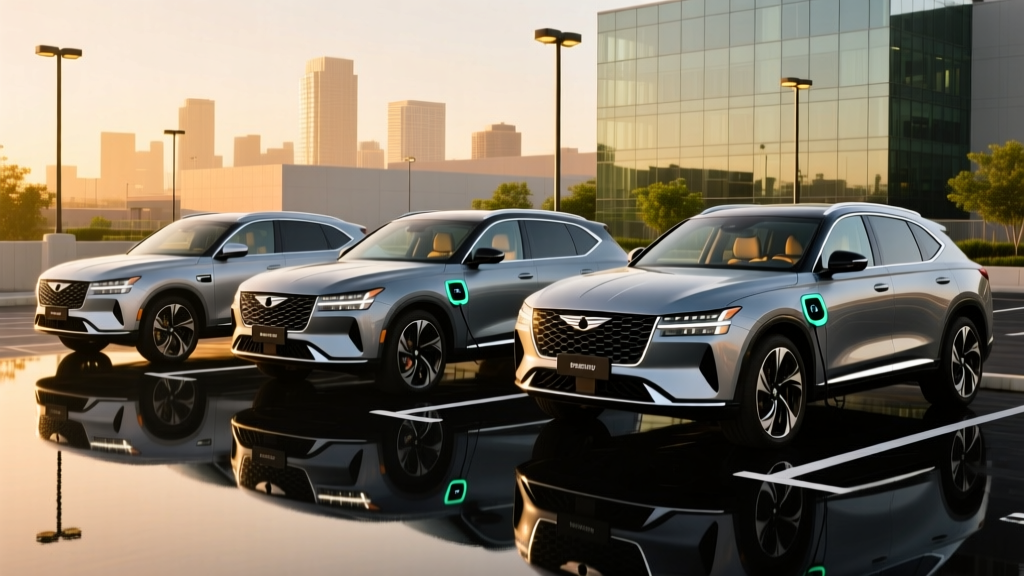
If you're shopping for a Genesis plug-in hybrid SUV, you're navigating a lineup in transition. Genesis has built its reputation on luxury sedans and is now aggressively expanding into electrified SUVs. For 2026, the brand offers several paths: the fully electric GV60, the Electrified GV70, and the conventionally hybridized GV80. But the plug-in hybrid sweet spot — a vehicle that runs on electric power for daily commutes and gasoline for road trips — requires careful model selection.
This guide breaks down exactly which Genesis SUVs offer PHEV powertrains for 2026, what you get in terms of electric-only range, fuel economy, charging capability, and pricing, and how to decide whether a Genesis PHEV is the right move versus a full EV or conventional hybrid.
Genesis PHEV vs HEV vs EV: What's the Difference?
Before diving into specific models, it's critical to understand the three electrified powertrain types Genesis offers, because they behave very differently in daily use:
| Feature | HEV (Conventional Hybrid) | PHEV (Plug-In Hybrid) | BEV (Battery Electric) |
|---|---|---|---|
| Plug in to charge? | No — self-charging via regen & engine | Yes — plug in for electric-only miles | Yes — sole energy source |
| Electric-only range | ~1 mile or less at low speed | 20–40 miles typical | 200–300+ miles |
| Gas engine? | Yes, primary power source | Yes, backup & highway | No |
| Best for | No home charging access | Home charging + road trips | Home charging + mostly <250-mi trips |
| Federal tax credit | Generally no | Up to $7,500 (varies) | Up to $7,500 (varies) |
The key takeaway: a conventional hybrid (HEV) never plugs in — it uses regenerative braking and the gas engine to keep a small battery charged. A plug-in hybrid (PHEV) has a larger battery you charge from a wall outlet or charger, giving you 20–40 miles of electric-only driving before the gas engine kicks in. A battery electric vehicle (BEV) has no gas engine at all.
2026 Genesis Electrified SUV Lineup Overview
Genesis's 2026 electrified SUV lineup spans three core models. Here's where each stands in terms of PHEV availability:
| Model | Powertrain | Electric-Only Range | Combined HP | Base MSRP (est.) |
|---|---|---|---|---|
| Genesis GV60 | BEV (full electric) | EPA est. 248 mi | 314–483 hp | ~$53,000 |
| Genesis Electrified GV70 | BEV (full electric) | EPA est. 236 mi | 429 hp | ~$67,000 |
| Genesis GV80 (Hybrid) | HEV (conventional hybrid) | N/A (no plug-in) | ~300 hp (est.) | ~$62,000 |
| Genesis GV80 PHEV | PHEV (plug-in hybrid) | ~30 mi (est.)* | ~350 hp (est.)* | ~$72,000 (est.)* |
*The GV80 PHEV variant has been announced for global markets. U.S. availability, final EPA certification, and pricing for the 2026 model year should be confirmed with your local Genesis dealer. Specs marked with an asterisk are preliminary estimates based on Hyundai Motor Group's shared PHEV architecture.
Genesis GV80 PHEV: The Plug-In Hybrid Flagship
The GV80 is Genesis's midsize luxury SUV, and the PHEV variant is the model most directly answering the "Genesis plug-in hybrid SUV" search. Built on Hyundai Motor Group's platform (shared with the Hyundai Santa Fe PHEV and Kia Sorento PHEV), the GV80 PHEV pairs a turbocharged engine with a larger traction battery and electric motor for genuine electric-only commuting.
Powertrain and Performance
Based on the shared HMG PHEV architecture, the GV80 PHEV is expected to feature:
- Engine: 1.6L turbocharged 4-cylinder
- Electric motor: ~66 kW (integrated into the transmission)
- Combined output: ~261–350 hp (depending on tuning for the luxury GV80 application)
- Transmission: 6-speed automatic
- Drivetrain: AWD standard (electric motor drives rear axle in some configurations)
Electric-Only Range and Battery
The GV80 PHEV is expected to carry a battery pack in the 13.8–18.0 kWh range (total capacity), with usable capacity somewhat lower due to buffer protection. Target electric-only range is approximately 28–35 miles EPA, though the heavier GV80 luxury platform may land on the lower end of that spectrum compared to the lighter Santa Fe PHEV.
Real-world electric range expectation: EPA estimates assume moderate temperatures and mixed driving. Expect ~22–28 miles of electric-only range in cold weather (below 40°F) or at sustained highway speeds above 65 mph, where aerodynamic drag and cabin heating reduce battery efficiency. Around town at 30–45 mph in mild weather, you may match or slightly exceed the EPA figure.
Charging the GV80 PHEV
PHEV batteries are smaller than full EV batteries, so charging is faster but also more limited in infrastructure:
| Charging Level | Power | Estimated Time (0–100%) | Notes |
|---|---|---|---|
| Level 1 (120V household) | ~1.4 kW | ~10–12 hours | Overnight from any standard outlet |
| Level 2 (240V home/public) | ~3.3–7.2 kW | ~2.5–4 hours | Recommended for daily use |
| DC Fast Charge | Typically not available | N/A | Most PHEVs lack DC fast charging |
Critical note: Most PHEVs in this class, including HMG's current PHEV architecture, do not support DC fast charging. You'll charge exclusively via Level 1 or Level 2 AC power. This is fine for home overnight charging but means you can't use Electrify America or Tesla Supercharger stations to top up the battery on road trips — you'll simply drive on gasoline.
Fuel Economy: MPG Breakdown
| Mode | City | Highway | Combined |
|---|---|---|---|
| Charge-sustaining (hybrid mode, battery depleted) | ~28 MPG (est.) | ~26 MPG (est.) | ~27 MPG (est.) |
| MPGe (with full battery, electric + gas) | ~65–79 MPGe (est., depending on electric miles driven) | ||
How to read this: MPGe (miles per gallon equivalent) only tells the full story if you charge daily and drive within the electric-only range. If you never plug in, the GV80 PHEV operates as a heavy conventional hybrid and will deliver roughly 25–28 MPG combined — potentially worse than a dedicated HEV due to the extra battery weight. Plug in every night, stay under ~30 miles daily, and you'll use almost no gasoline.
Official EPA figures should be confirmed at fueleconomy.gov once the GV80 PHEV receives U.S. certification.
What About the GV60 and Electrified GV70?
Both the GV60 and Electrified GV70 are fully electric (BEV), not plug-in hybrids. They have no gasoline engine and no backup range beyond the battery. They're excellent vehicles, but they don't answer the PHEV question:
- GV60: Compact luxury crossover on the E-GMP platform. EPA-estimated 248 miles of range (AWD Advanced), up to 483 hp in the Performance trim. Supports 350 kW DC fast charging (10–80% in ~18 minutes on capable chargers).
- Electrified GV70: Midsize luxury SUV, also E-GMP. EPA-estimated 236 miles. 429 hp. 350 kW DC fast charging capability.
If you want zero gasoline and have reliable home charging, these are compelling. If you need gas-engine backup for long road trips or lack home charging, the PHEV or HEV route is more practical.
Pricing, Tax Credits, and Ownership Costs
Estimated MSRP
The GV80 PHEV is expected to slot above the conventional hybrid and below the fully loaded GV80 trims:
- GV80 HEV (conventional hybrid): ~$62,000–$68,000
- GV80 PHEV (plug-in hybrid): ~$72,000–$78,000 (est.)
- Electrified GV70 (BEV): ~$67,000–$73,000
Federal Tax Credit Eligibility (§30D)
PHEVs can qualify for the federal EV tax credit under IRS §30D clean vehicle rules, but eligibility is not guaranteed. Current requirements include:
- MSRP cap: SUVs must have an MSRP at or below $80,000
- Buyer income cap: AGI must not exceed $150,000 (single) / $300,000 (joint)
- Battery sourcing: Critical minerals and battery components must meet phased-in domestic/Friend-shoring requirements (increasingly strict through 2026)
- Final assembly: Vehicle must undergo final assembly in North America
- Point-of-sale transfer: Eligible buyers can transfer the credit to the dealer for an upfront price reduction
GV80 PHEV credit outlook: The MSRP cap is the most likely constraint — if a fully optioned GV80 PHEV exceeds $80,000, that trim loses eligibility. Base and mid-trims should fall under the cap. Battery sourcing requirements are tightening annually, so confirm current-year eligibility with your dealer and a tax professional before relying on the credit.
The GV80 conventional hybrid (HEV) does not qualify for the §30D federal tax credit — it applies only to plug-in vehicles with a minimum battery capacity.
Reliability, Battery Warranty, and Replacement Costs
Hyundai Motor Group (Genesis's parent) has an established track record with hybrid and PHEV powertrains. The shared architecture in the Santa Fe PHEV and Sorento PHEV has been on the road since 2022, providing real-world reliability data.
Genesis Hybrid/PHEV Battery Warranty
Genesis typically covers hybrid and PHEV battery packs with a 10-year / 100,000-mile warranty (whichever comes first), consistent with Hyundai/Kia's hybrid battery coverage. This warranty guarantees the battery will retain a minimum percentage of its original capacity (typically 70%) and covers defects and premature degradation.
Battery replacement cost (out of warranty): PHEV battery packs in this class typically cost $4,000–$8,000 for parts and labor if replacement is needed beyond the warranty period. This is significantly less than a full BEV battery replacement ($10,000–$20,000+) because the PHEV pack is much smaller.
Genesis vehicles have generally scored well in IIHS safety testing, and the brand's 10-year/100,000-mile powertrain warranty provides additional peace of mind for the engine and transmission components.
Real-World Reliability Considerations
- Hybrid system complexity: PHEVs have both an engine and an electric motor, meaning more components than either a pure EV or a pure gas car. However, HMG's PHEV system uses a conventional 6-speed automatic (not a CVT), which is well-understood by mechanics.
- Brake longevity: Regenerative braking reduces wear on friction brakes — expect brake pads to last 60,000–100,000+ miles in normal driving.
- Maintenance: You'll still need oil changes, coolant service, and transmission fluid changes on the engine side, but at potentially longer intervals due to electric-mode driving reducing engine runtime.
Who Should Choose a Genesis PHEV vs. EV vs. Gas?
Choose the Genesis GV80 PHEV if:
- You can install a Level 2 charger at home and want to commute 20–30 miles on electricity daily
- You regularly take road trips exceeding 250 miles and don't want to plan around charging stations
- You want luxury SUV space and AWD with lower daily fuel costs
- You live in a region with cold winters where EV range loss is a concern
Choose the Electrified GV70 (BEV) if:
- You have reliable home Level 2 charging
- Your daily driving is under 200 miles and road trips are infrequent
- You want zero tailpipe emissions and the lowest per-mile fuel cost
- You value the fastest acceleration and quietest powertrain
Choose the GV80 HEV (conventional hybrid) if:
- You cannot charge at home (apartment, street parking, no garage)
- You want better fuel economy without changing any habits — just drive and refuel normally
- You want a lower purchase price and don't need electric-only operation
Genesis GV80 PHEV — Pros
- 20–35 miles electric-only covers most commutes
- Gas engine eliminates range anxiety on road trips
- Luxury interior, AWD, and strong towing capability
- 10-year/100,000-mile battery warranty
- Eligible for up to $7,500 federal credit (trim dependent)
Genesis GV80 PHEV — Cons
- Higher purchase price than HEV or gas-only GV80
- No DC fast charging — Level 2 only
- Heavy vehicle means electric range is modest vs. lighter PHEVs
- Must plug in nightly to realize fuel savings — otherwise it's a heavy hybrid
- U.S. availability and final EPA specs still pending for some trims
Frequently Asked Questions
How many MPG does the Genesis GV80 PHEV get?
In charge-sustaining mode (battery depleted, running as a hybrid), expect approximately 25–28 MPG combined. When charged daily and driven within the electric-only range, effective MPGe can reach 65–79 MPGe. Final EPA-certified figures should be confirmed at fueleconomy.gov.
How far can the Genesis GV80 PHEV go on electric only?
The estimated electric-only range is 28–35 miles EPA, depending on final battery capacity and vehicle configuration. Real-world range in cold weather or at highway speeds may drop to 22–28 miles. This covers the average American's one-way commute but requires nightly charging to maintain.
Does the Genesis plug-in hybrid SUV qualify for a tax credit?
The GV80 PHEV may qualify for up to $7,500 under the IRS §30D clean vehicle credit, provided the specific trim's MSRP is at or below $80,000, the buyer meets income caps, and battery sourcing requirements are satisfied. Eligibility changes annually — verify with the IRS and your dealer before purchasing.
Is the Genesis hybrid battery reliable and what does replacement cost?
Genesis covers the PHEV battery with a 10-year/100,000-mile warranty. Hyundai Motor Group's PHEV systems have shown solid reliability since their 2022 introduction. Out-of-warranty replacement typically runs $4,000–$8,000 for PHEV packs — far less than full EV battery replacements.
Can I charge a Genesis PHEV at a public fast-charging station?
No. The GV80 PHEV (like most PHEVs) charges via AC power only — Level 1 (120V) or Level 2 (240V). It cannot use DC fast chargers like Electrify America or Tesla Superchargers. Plan to charge at home overnight on a Level 2 home charger for the best experience.
Is the Genesis GV60 or Electrified GV70 a plug-in hybrid?
No. Both the GV60 and Electrified GV70 are fully electric vehicles (BEVs) with no gasoline engine. They offer longer total range (236–248 miles EPA) but require charging infrastructure and cannot fall back on gasoline for long trips.
The Genesis plug-in hybrid SUV proposition centers on the GV80 PHEV — a luxury midsize SUV that can handle daily commutes on electricity while keeping a gas tank for the flexibility that full EVs still can't match in every scenario. If home charging is feasible and your daily mileage fits within that ~30-mile electric window, the fuel savings and tax credit potential make a compelling case. Just confirm final U.S. availability, EPA certification, and current-year tax credit eligibility before signing.