Quick Verdict: Is a Genesis Plug-In Hybrid Worth It in 2026?
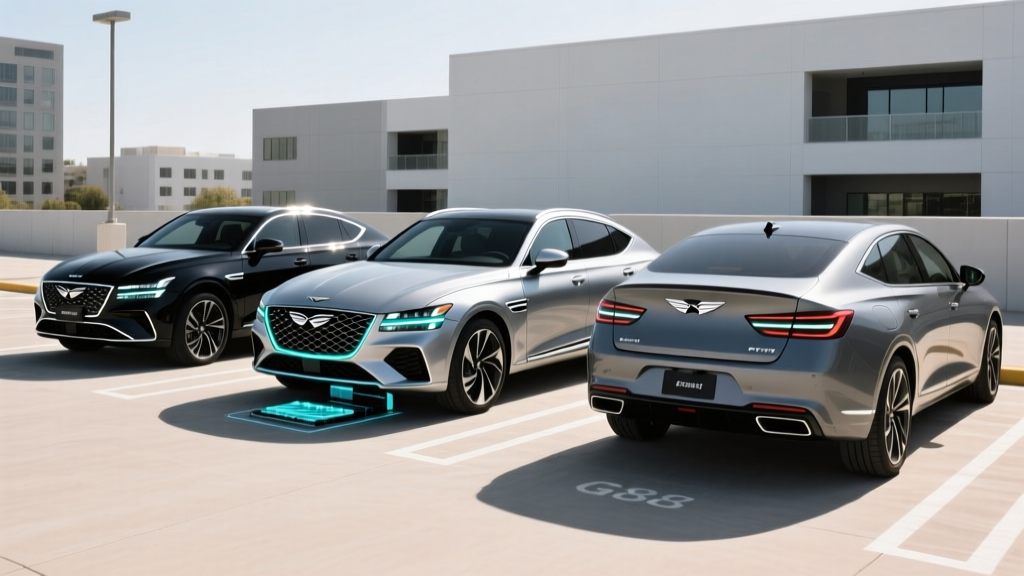
Genesis offers the Electrified G80 PHEV as its sole plug-in hybrid for the 2026 model year, pairing a turbocharged 2.5-liter four-cylinder with an electric motor and a 22.0 kWh battery pack for an EPA-estimated 36 miles of electric-only range. Starting around $71,000, it targets luxury sedan buyers who want daily electric commuting with the security of a gas engine for longer trips — but it faces stiff competition from the BMW 550e xDrive and Mercedes-Benz S 580e in the plug-in luxury segment.
If you're searching for a Genesis plug-in hybrid, this is your model. Genesis discontinued the G90 PHEV variant after 2024 and has not announced additional PHEV entries for 2026. The Electrified G80 PHEV remains the brand's bridge between its conventional gas sedans and the fully electric Electrified G80 BEV.
HEV vs PHEV vs EV: Which Genesis Fits Your Needs?
Before examining specs, clarify which powertrain type matches your driving habits. Genesis sells three electrified categories:
| Powertrain | How It Works | Plug In? | Electric-Only Range | Genesis 2026 Example |
|---|---|---|---|---|
| HEV (Hybrid) | Gas engine + small motor; battery charges via regen and engine | No | <1 mile | None currently offered in US |
| PHEV (Plug-In Hybrid) | Gas engine + larger motor/battery; plug in to charge for EV miles | Yes | 20–50 mi typical | Electrified G80 PHEV |
| BEV (Battery Electric) | Electric motor only; no gas engine | Yes | 200–350+ mi | Electrified G80, GV60, Electrified GV70 |
Choose the PHEV if: You have home Level 2 charging access, commute under 40 miles round-trip, but regularly drive 200+ miles on weekends or road trips where charging infrastructure feels uncertain.
Choose a BEV if: You can charge at home and your longest regular trip stays within 250 miles (or you're willing to plan DC fast-charging stops).
Skip to gas if: You lack reliable home or workplace charging — a PHEV you never plugs in is just a heavier, less efficient gas car.
2026 Electrified G80 PHEV: Full Spec Breakdown
| Specification | 2026 Electrified G80 PHEV |
|---|---|
| Powertrain | 2.5L turbo I-4 + electric motor, AWD |
| Combined Horsepower | ~370 hp (engine 300 hp + motor ~100 kW) |
| Combined Torque | ~420 lb-ft |
| Battery Capacity | 22.0 kWh (usable ~18.5 kWh, NMC chemistry) |
| EPA Electric-Only Range | 36 miles |
| EPA Combined MPGe (EV mode) | ~78 MPGe |
| EPA MPG (gas, charge-depleted) | ~27 combined (24 city / 31 highway) |
| Total Combined Range | ~420 miles (EV + gas) |
| 0–60 mph | ~5.8 seconds |
| Level 2 Charging (240V) | 7.2 kW onboard; 0–100% in ~3 hours |
| DC Fast Charging | Not supported |
| Cargo Volume | ~12.0 cu ft (trunk, battery intrusion reduces space) |
| Base MSRP | $71,000 (est.) |
| Federal §30D Tax Credit | Up to $7,500 (eligibility varies — see below) |
Electric-Only Range and Real-World MPG
EPA Electric Range: 36 miles
Real-World Expectation: 28–34 miles in mixed driving; 22–26 miles in cold weather (below 40°F) or sustained highway speeds above 70 mph.
The 22.0 kWh pack yields 36 EPA miles on a full charge. In practice, PHEV electric range is highly sensitive to temperature and driving style. Lithium-ion batteries lose efficiency in cold weather because the electrolyte becomes more viscous, increasing internal resistance. Expect a 25–35% range reduction in winter conditions — a reality that affects every PHEV on the market.
How Many MPG Does the Genesis PHEV Get?
| Driving Scenario | EPA Estimate | Real-World Expectation |
|---|---|---|
| City (charge-depleted, gas only) | 24 MPG | 22–26 MPG (regen helps in stop-and-go) |
| Highway (charge-depleted, gas only) | 31 MPG | 28–32 MPG |
| Combined (charge-depleted) | 27 MPG | 25–29 MPG |
| EV Mode (MPGe) | 78 MPGe | 70–82 MPGe depending on conditions |
Once the battery depletes, the G80 PHEV operates as a conventional hybrid — though not a particularly efficient one compared to dedicated hybrid platforms. The 2.5-liter turbocharged engine and all-wheel-drive system add weight. For context, the non-hybrid G80 2.5T AWD achieves 25 MPG combined. The PHEV's advantage only materializes if you plug in regularly.
The PHEV math only works if you charge daily. A driver who commutes 30 miles round-trip and charges nightly will use almost zero gasoline on weekdays. A driver who never plugs in will get 25–27 MPG — essentially paying a premium for dead battery weight.
Charging: What You Need to Know
| Charging Level | Power (kW) | Time to Full (from empty) | Miles of EV Range per Hour |
|---|---|---|---|
| Level 1 (120V household outlet) | ~1.4 kW | ~13 hours | ~3 miles/hour |
| Level 2 (240V home/public) | 7.2 kW (max onboard) | ~3 hours | ~12 miles/hour |
| DC Fast Charging | N/A | Not supported — no CCS/NACS DC port | |
The Electrified G80 PHEV uses a standard J1772 connector for Level 2 AC charging. It does not support DC fast charging — a limitation shared by most PHEVs due to their smaller battery packs. For overnight home charging, a Level 2 wallbox (such as a ChargePoint Home Flex or Emporia Level 2) fully replenishes the battery in roughly 3 hours.
kW vs kWh reminder: kW (kilowatts) measures charging power — how fast energy flows into the battery. kWh (kilowatt-hours) measures energy capacity — how much the battery holds. The G80 PHEV's 7.2 kW onboard charger means it can accept up to 7.2 kilowatts of AC power at any moment; its 22.0 kWh battery holds 22 kilowatt-hours of total energy.
Pricing, Tax Credits, and Ownership Costs
The 2026 Electrified G80 PHEV starts at an estimated $71,000 MSRP (destination included), with higher trims reaching approximately $78,000 with the Prestige package.
Federal §30D Tax Credit Eligibility
- MSRP cap: Sedans must be priced at or below $55,000 to qualify. The G80 PHEV at $71,000 exceeds this cap, making it ineligible for the federal §30D new EV credit.
- Income limits: Modified AGI must not exceed $150,000 (single) / $300,000 (joint) — relevant if a lower-priced Genesis PHEV were available.
- Battery sourcing: Critical minerals and battery components must meet phased-in domestic content thresholds per IRS §30D rules.
- Point-of-sale transfer: Eligible buyers can transfer the credit to the dealer for an immediate price reduction — but only if the vehicle qualifies in the first place.
Tax credit reality check: The Electrified G80 PHEV's MSRP exceeds the $55,000 sedan cap set by the Inflation Reduction Act. As of 2026, it does not qualify for the $7,500 federal tax credit. Some buyers may find relief through state-level incentives — check your state's energy office or AFDC state incentive database for local rebates.
Reliability, Battery Warranty, and Long-Term Costs
Hybrid/PHEV Battery Warranty: 10 years / 100,000 miles (whichever comes first)
Powertrain Warranty: 10 years / 100,000 miles
Capacity Retention Threshold: Genesis warrants the battery against defects and excessive degradation — typically defined as falling below 70% of original capacity during the warranty period.
Is This Hybrid Reliable?
Genesis as a brand ranks in the middle-to-upper tier of J.D. Power dependability studies, and the 2.5-liter turbocharged engine is shared across the Hyundai Motor Group lineup (including the Hyundai Sonata and Kia Sportage), giving it a broad reliability track record. The PHEV-specific components — electric motor, inverter, and battery management system — add complexity but are covered by the generous 10-year warranty.
What Does Battery Replacement Cost?
Out-of-warranty PHEV battery replacement for the G80 typically runs $6,000–$9,000 including labor, based on current Hyundai Motor Group PHEV parts pricing. However, NMC lithium-ion packs in PHEVs rarely require full replacement — individual module replacement or reconditioning is more common and costs significantly less. Modern PHEV batteries are designed to last 150,000–200,000 miles before degradation reaches a point where electric range is noticeably reduced (typically dropping to 70–80% of original capacity).
Pros and Cons of the Genesis Plug-In Hybrid
Pros
- Luxury interior quality rivals Mercedes E-Class and BMW 5 Series at a lower price point
- 36 miles of electric range covers most daily commutes without gasoline
- 10-year/100,000-mile battery and powertrain warranty is among the best in the segment
- Smooth transitions between EV and gas modes — no range anxiety on road trips
- Standard AWD for all-weather confidence
Cons
- $71,000 MSRP exceeds the $55,000 federal tax credit cap — no §30D credit
- No DC fast charging — road trips run exclusively on gasoline once battery depletes
- Trunk space reduced to ~12 cu ft due to battery placement
- Gas-only MPG (27 combined) is unremarkable for a vehicle at this price point
- Limited PHEV availability — only one Genesis model offers plug-in hybrid power
Who Should Buy the Genesis Electrified G80 PHEV?
The Electrified G80 PHEV fits a narrow but real buyer profile:
- Luxury sedan loyalists who prefer Genesis styling and value over German competitors but want electrification without committing to a full EV.
- Home-charging commuters with a 20–35 mile round-trip who can run almost entirely on electricity during the week and use gasoline only for weekend road trips.
- Cold-climate drivers in regions where winter EV range loss is a concern — the gas engine eliminates cold-weather range anxiety entirely.
Look elsewhere if: You want federal tax credit eligibility (the BMW 550e xDrive, at ~$58,000, also exceeds the cap, but the Toyota Prius Prime at ~$33,000 qualifies). If your primary goal is maximum electric range, the Chrysler Pacifica PHEV (32 miles, but as a minivan) or the BMW X5 xDrive50e (38 miles, SUV) offer similar EV range with different body styles.
Frequently Asked Questions
How far can the Genesis plug-in hybrid go on electric only?
The 2026 Electrified G80 PHEV achieves an EPA-estimated 36 miles on electric power alone. Real-world range typically falls between 28–34 miles depending on temperature, terrain, and driving speed. In cold weather below 40°F, expect 22–26 miles.
How many MPG does the Genesis G80 PHEV get?
Once the battery is depleted, the G80 PHEV achieves an EPA-estimated 27 MPG combined (24 city / 31 highway). In real-world driving, owners report 25–29 MPG combined in gas-only operation. In EV mode, it achieves approximately 78 MPGe.
Does the Genesis plug-in hybrid qualify for a tax credit?
As of 2026, the Electrified G80 PHEV does not qualify for the federal §30D clean vehicle credit because its MSRP (~$71,000) exceeds the $55,000 sedan cap established by the Inflation Reduction Act. State-level incentives may still apply — check the AFDC state laws database and consult a tax professional for personal eligibility.
Is the Genesis hybrid reliable and what does a battery replacement cost?
Genesis backs the G80 PHEV battery and powertrain with a 10-year/100,000-mile warranty — one of the longest in the luxury segment. Out-of-warranty battery replacement costs approximately $6,000–$9,000, though full pack replacement is rare. Most PHEV batteries retain 70–80% of original capacity at 150,000+ miles.
Can the Genesis G80 PHEV DC fast charge?
No. The Electrified G80 PHEV supports only AC charging — Level 1 (120V, ~1.4 kW) and Level 2 (240V, up to 7.2 kW). A full Level 2 charge takes approximately 3 hours. This is standard for most PHEVs, whose smaller batteries make DC fast charging less practical and cost-prohibitive to implement.
Should I buy the Genesis PHEV or go full electric?
If you have reliable home charging and your longest regular trip stays under 250 miles, the fully electric Electrified G80 BEV (282 miles EPA range) eliminates gasoline entirely and may qualify for different incentives. Choose the PHEV only if you regularly exceed EV range and don't want to rely on public DC fast-charging infrastructure.