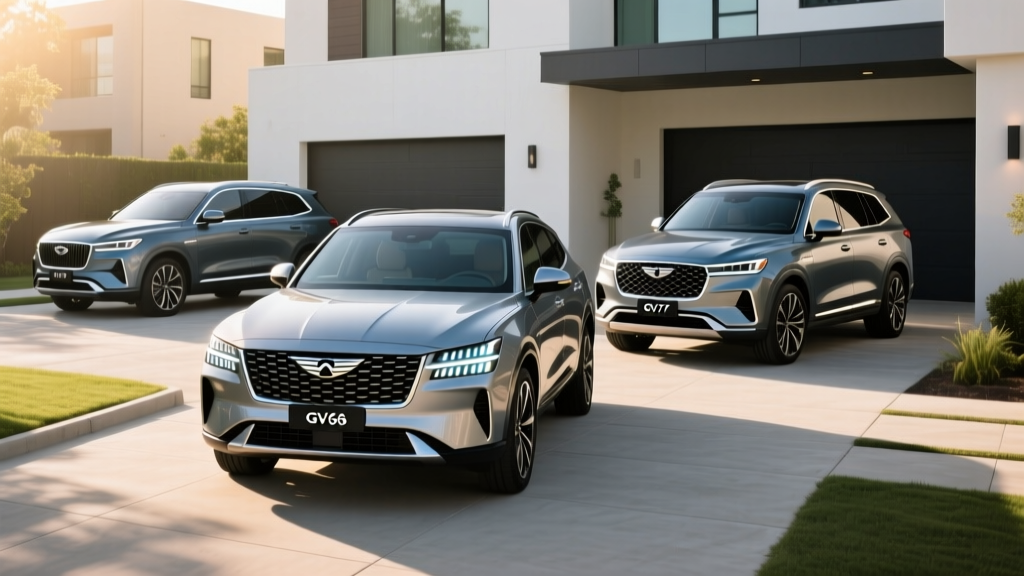
Genesis has carved out a distinct niche in the luxury SUV segment, and buyers searching for a Genesis hybrid SUV in 2026 face a lineup that spans conventional hybrids, plug-in hybrids, and full battery-electric models. The challenge is figuring out which electrified Genesis SUV actually fits your driving pattern, charging access, and budget. This guide breaks down every electrified option in the Genesis SUV family with exact EPA figures, real-world expectations, and ownership economics so you can choose with confidence.
The 2026 Genesis Electrified SUV Lineup at a Glance
Genesis offers three SUV nameplates with some form of electrification for the 2026 model year. It's critical to understand which is a conventional hybrid (HEV), which is a plug-in hybrid (PHEV), and which is a full battery-electric vehicle (BEV) — because the ownership experience differs dramatically between them.
HEV vs PHEV vs BEV — Quick Primer
HEV (Hybrid Electric Vehicle): Uses a small battery charged by regenerative braking and the engine. No plug needed. Think of it as a gas car that sips fuel. The GV80 hybrid falls here.
PHEV (Plug-in Hybrid): Has a larger battery you can plug in to charge, offering 20–40+ miles of electric-only driving before the gas engine kicks in. The GV70 Electrified was positioned in this space for earlier model years.
BEV (Battery Electric Vehicle): No gas engine at all. The GV60 and Electrified GV70 are full EVs — zero tailpipe emissions, but you must charge.
| Spec | GV60 (BEV) | Electrified GV70 (BEV) | GV80 2.5T Hybrid (HEV) |
|---|---|---|---|
| Powertrain Type | BEV (Dual Motor AWD) | BEV (Dual Motor AWD) | HEV (Turbo 4-cyl + Electric Motor) |
| Combined Horsepower | 314 hp (Advanced) / 429 hp (Performance) | 429 hp (Boost mode) | ~304 hp (est.) |
| Battery Capacity | 77.4 kWh usable | 77.4 kWh usable | ~1.5 kWh (HEV buffer) |
| EPA Range / MPG | 248–294 mi / 95–104 MPGe | 236 mi / 89 MPGe | ~24 MPG combined (est.) |
| Max DC Fast Charge | 350 kW (peak) | 350 kW (peak) | N/A — No Plug |
| 10–80% Charge Time | ~18 min (350 kW charger) | ~18 min (350 kW charger) | N/A |
| 0–60 mph | 5.3s (Adv) / 3.9s (Perf) | 4.2s (Boost mode) | ~6.5s (est.) |
| Base MSRP | $53,350 | $67,850 | $60,550 (est.) |
| Federal Tax Credit (§30D) | Up to $7,500 (eligibility varies) | Up to $7,500 (eligibility varies) | Not Eligible |
Sources: EPA fueleconomy.gov, Genesis USA. Estimates noted where 2026 official specs are pending. MSRP excludes destination.
Genesis GV60: The Electric Compact Luxury SUV
The GV60 is Genesis's ground-up electric SUV, built on Hyundai Motor Group's E-GMP platform (shared with the Ioniq 5 and EV6). For 2026, it remains the most accessible entry into the Genesis electrified lineup and the strongest option for buyers who want a true EV experience with luxury finishing.
Range, Efficiency, and Real-World Expectations
EPA Range: 294 miles (Advanced RWD) / 248 miles (Performance AWD)
Real-World Expectation: Plan for ~230–260 miles on highway road trips in moderate weather. In sustained cold (below 30°F), expect 15–25% range reduction, bringing the AWD Performance model down to roughly 185–210 miles. City driving with regen braking can actually exceed the EPA combined figure.
The GV60's 77.4 kWh battery pack (NMC chemistry) supports the E-GMP platform's 800V architecture, which is the real story here. On a 350 kW DC fast charger — the kind found at Electrify America and select Tesla Supercharger stations now open to NACS-equipped vehicles — the GV60 can peak at 350 kW and charge from 10% to 80% in approximately 18 minutes. However, sustained charge rate matters more than peak: real-world charging curves show the GV60 holds above 200 kW through about 55% SoC, then tapers progressively. A typical 10–80% session averages around 180–200 kW effective rate.
Level 2 home charging at 10.9 kW (48A) replenishes the pack in roughly 7.5 hours — ideal for overnight charging on a home Level 2 setup.
Performance and Powertrain
The Advanced trim sends 314 hp to all four wheels via dual motors. The Performance trim bumps output to 429 hp and drops the 0–60 time to 3.9 seconds — genuinely quick for a luxury crossover. Boost mode temporarily increases torque for 10-second bursts. The Performance model also adds an electronic limited-slip differential and adaptive suspension with road-preview capability via the front camera.
Electrified GV70: The Midsize Luxury Electric SUV
The Electrified GV70 converts Genesis's popular midsize SUV to full electric duty. It shares the 77.4 kWh battery and 800V architecture with the GV60 but packages it in a larger, more traditional luxury SUV body with genuine cargo versatility. For 2026, it continues as a dual-motor AWD configuration producing 429 hp in Boost mode.
Range and Charging Reality
The EPA rates the Electrified GV70 at 236 miles combined with an efficiency of 89 MPGe. That's a modest figure for a luxury EV in this price bracket, and it reflects the GV70's heavier curb weight and less aerodynamic profile compared to the GV60.
Real-world highway range settles around 200–215 miles at 70 mph in fair conditions. Cold weather can pull that down to 170–185 miles. For daily commuting under 40 miles round-trip with home charging, this is plenty. For road trips exceeding 200 miles, you'll need to plan one fast-charge stop — the 18-minute 10–80% capability makes this manageable on the Electrify America or Tesla Supercharger networks.
The GV70 Electrified also supports V2L (vehicle-to-load), allowing you to power devices or small appliances from the vehicle's battery — useful for tailgating or emergency backup power at up to 3.6 kW output via an interior or exterior adapter.
GV80 Hybrid: The Conventional Hybrid Option
The GV80 is Genesis's flagship three-row SUV, and for buyers who want electrified efficiency without changing their fueling habits, the GV80 hybrid variant is the answer. As a conventional hybrid (HEV), it requires no plug and no behavior change — you fuel it at any gas station as you always have.
How Many MPG Does the GV80 Hybrid Get?
| Driving Condition | EPA MPG (Est.) | Real-World Expectation |
|---|---|---|
| City | ~26 MPG | 25–28 MPG |
| Highway | ~22 MPG | 20–23 MPG |
| Combined | ~24 MPG | 22–26 MPG |
Note: 2026 GV80 hybrid EPA figures are estimated based on the turbocharged 2.5T hybrid powertrain. Confirm final ratings at fueleconomy.gov when published.
Hybrids typically achieve their best MPG in city driving, where regenerative braking recaptures energy at every stop and the electric motor handles low-speed propulsion. The GV80 hybrid follows this pattern — expect your real-world city numbers to meet or slightly exceed the EPA estimate, while sustained highway driving at 75+ mph will dip below it. Towing (rated up to 5,000 lbs) will significantly reduce fuel economy to the high teens.
Powertrain Details
The GV80 hybrid pairs a turbocharged 2.5-liter four-cylinder engine with an electric motor integrated into the transmission housing. Combined output is estimated at approximately 304 hp. The small hybrid battery (around 1.5 kWh, not plug-in capable) is charged exclusively through regenerative braking and engine operation. There is no electric-only driving mode of meaningful distance — the electric motor assists the engine for smoother acceleration and reduced fuel consumption, but the gas engine is always the primary motivator.
Tax Credit Eligibility: What Genesis Buyers Need to Know
The federal EV tax credit under IRS §30D is a major purchase factor, but eligibility is complex and vehicle-specific. Here's how it breaks down for the Genesis lineup:
- GV60: May qualify for up to $7,500, depending on battery component and critical mineral sourcing requirements for the 2026 tax year. The point-of-sale transfer option allows you to apply the credit as a down-payment reduction at the dealer, if eligible. MSRP cap for SUVs: $80,000. Buyer income caps apply ($300K joint / $225K head of household / $150K single).
- Electrified GV70: The GV70's higher MSRP (starting ~$67,850, often optioned above $75K) still falls under the $80,000 SUV cap, but fully loaded Prestige trims may exceed it. Same sourcing and income requirements apply. The vehicle's South Korean assembly was previously a barrier, but §30D commercial vehicle lease provisions and subsequent sourcing updates have shifted eligibility. Verify the current status on the IRS clean vehicle list before purchase.
- GV80 Hybrid (HEV): Not eligible for the §30D new clean vehicle credit. Conventional hybrids without plug-in capability do not qualify. No federal tax credit applies, though some states may offer small hybrid incentives.
Critical: Tax credit eligibility changes frequently based on Treasury guidance, battery sourcing rules, and FEOC (foreign entity of concern) restrictions. Always confirm current eligibility on irs.gov and consult a tax professional before relying on the credit in your purchase math.
Battery Warranty, Reliability, and Long-Term Costs
Genesis Battery & Powertrain Warranty Coverage
GV60 & Electrified GV70 (BEV): 10 years / 100,000 miles on the high-voltage battery pack and electric drive components. Genesis covers battery capacity retention — if the pack degrades below 70% of original capacity within the warranty period, replacement or repair is covered.
GV80 Hybrid (HEV): 10 years / 100,000 miles on hybrid-specific components including the hybrid battery module and electric motor. This is in line with the industry standard for hybrid battery warranties.
Replacement cost if out of warranty: BEV battery packs (GV60/GV70) are estimated at $12,000–$18,000 for a full replacement based on E-GMP platform pricing. HEV battery packs (GV80) are significantly less — typically $2,000–$4,000 — due to the much smaller capacity.
Genesis's 10-year/100,000-mile powertrain and battery warranty is among the longest in the luxury segment, matching Hyundai and Kia (its corporate siblings) and exceeding BMW, Mercedes-Benz, and Audi, which typically offer 4-year/50,000-mile basic coverage with 8-year/80,000-mile battery warranties on electrified models.
On reliability, Hyundai Motor Group's E-GMP platform (underpinning the GV60 and Electrified GV70) has demonstrated strong durability since its 2022 debut, with no widespread battery degradation or motor failure patterns reported across the Ioniq 5, EV6, and GV60 family. The GV80 hybrid's conventional hybrid system is derived from proven Hyundai/Kia hybrid architectures used in the Tucson and Sorento hybrids, which have shown low failure rates in long-term fleet data.
Pros and Cons: Genesis Electrified SUVs
✓ Pros
- Class-leading 10-year/100K-mile battery warranty
- 800V architecture enables genuinely fast DC charging (18 min 10–80%)
- GV60 offers luxury EV entry under $55K before credits
- Exceptional interior materials and ride refinement across the lineup
- GV80 hybrid: no charging behavior change required
- V2L capability on BEV models for off-grid power
- Strong safety ratings from IIHS
✗ Cons
- Electrified GV70 range (236 mi EPA) trails competitors like the BMW iX and Audi Q8 e-tron
- Genesis charging network access still relies on third-party networks (EA, Tesla via adapter)
- GV80 hybrid MPG improvement over the gas model is modest
- GV60 cargo space (24.0 cu ft behind rear seats) is tight for the class
- Federal tax credit eligibility is uncertain and subject to change for Korean-assembled models
- No dedicated Genesis PHEV SUV currently in the 2026 lineup for US buyers
Who Should Choose Which Genesis SUV?
Decision Framework
Choose the GV60 if: You have reliable home Level 2 charging, your daily driving is under 150 miles, you want the lowest total cost of ownership in the Genesis lineup, and you value quick charging for road trips.
Choose the Electrified GV70 if: You need more cargo room and a traditional SUV form factor, you can charge at home, your typical road trip is under 200 miles (or you don't mind one charging stop), and budget allows $65K+.
Choose the GV80 Hybrid if: You need three rows, you can't charge at home (apartment/condo living), you tow regularly, you take frequent long road trips through areas with sparse charging infrastructure, or you simply don't want to change your fueling routine.
Consider a non-Genesis PHEV if: You want the best of both worlds — 30+ miles electric for commuting plus gas for road trips. Genesis does not currently offer a PHEV SUV in the US for 2026. Look at the BMW X5 xDrive50e, Volvo XC90 Recharge, or Lincoln Corsair Grand Touring instead.
Frequently Asked Questions
Does Genesis make a plug-in hybrid (PHEV) SUV for 2026?
As of the 2026 model year, Genesis does not offer a plug-in hybrid SUV in the US market. The lineup includes the GV60 (BEV), Electrified GV70 (BEV), and GV80 hybrid (conventional HEV). If you specifically need PHEV capability — electric-only commuting with a gas engine backup — you'll need to look at competitors like the BMW X5 xDrive50e (up to 38 miles electric-only) or the Volvo XC90 Recharge (up to 35 miles electric-only).
How far can the Genesis GV60 go on a single charge in real driving?
The EPA rates the GV60 Advanced RWD at 294 miles and the Performance AWD at 248 miles. In real-world mixed driving at moderate temperatures, expect 260–280 miles from the RWD model and 220–240 miles from the AWD Performance. Highway-only driving at 75 mph reduces these figures by roughly 10–15%. Cold weather (below 30°F) can reduce range by 15–25% depending on cabin heating usage — preconditioning the battery while plugged in helps mitigate this loss.
Is the GV80 hybrid reliable, and what does a battery replacement cost?
The GV80 hybrid uses a conventional hybrid system derived from Hyundai Motor Group's proven hybrid architecture. The small hybrid battery (~1.5 kWh) is far less expensive to replace than a full EV pack — estimated at $2,000–$4,000 out of warranty. However, it's covered under Genesis's 10-year/100,000-mile hybrid component warranty, so most original owners will never face this cost. The hybrid system has fewer failure points than a full EV powertrain (no high-voltage contactors, no liquid cooling loops for a large battery), and long-term data from the Tucson and Sorento hybrid platforms shows strong durability.
Does the Genesis GV60 or Electrified GV70 qualify for the $7,500 federal tax credit?
Eligibility depends on three factors under IRS §30D: (1) your modified adjusted gross income must fall below the caps ($300K joint, $225K head of household, $150K single), (2) the vehicle MSRP must be at or below $80,000 for SUVs, and (3) the battery must meet critical mineral and battery component sourcing thresholds that tighten each year. Because both vehicles are assembled in South Korea, their eligibility has fluctuated with Treasury guidance. Always check the current IRS qualified vehicle list before purchasing, and consider the point-of-sale transfer option if you qualify — it converts the credit to an immediate price reduction at the dealer.
Hybrid vs PHEV vs EV — which Genesis SUV fits my lifestyle?
If you can charge at home and drive under 200 miles daily, a full EV (GV60 or Electrified GV70) offers the lowest operating cost — electricity at $0.13/kWh averages roughly $0.04/mile vs $0.14/mile for a 24 MPG hybrid on $3.40/gallon gas. If you can't charge at home, the GV80 hybrid gives you modest fuel savings with zero infrastructure requirements. A PHEV would be the ideal middle ground, but Genesis doesn't currently offer one in the US SUV lineup for 2026.