Genesis Hybrid GV80 at a Glance: HEV, PHEV, or Something Else?
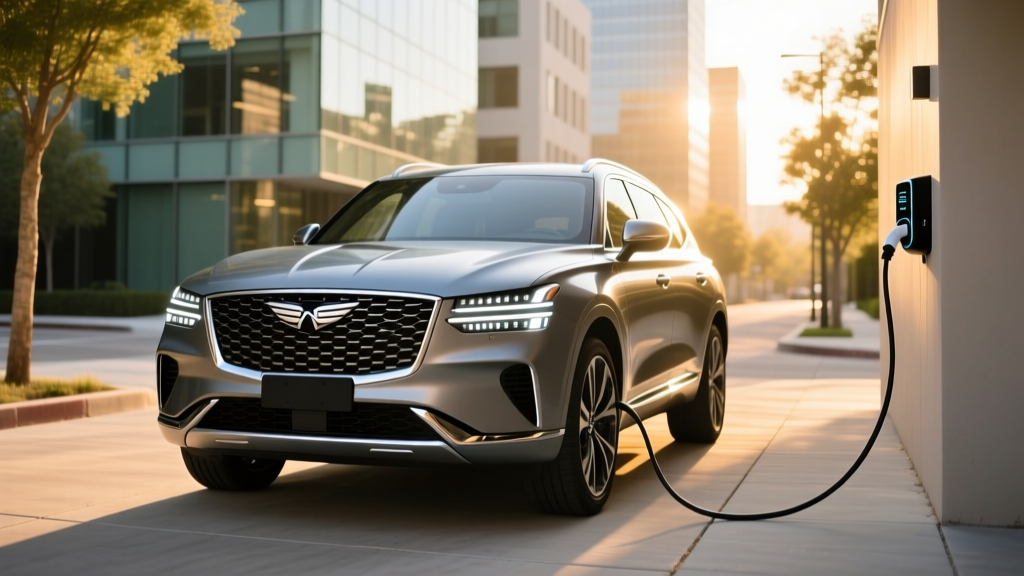
Genesis offers two electrified versions of its midsize luxury SUV for the 2026 model year, and they serve very different buyers. The GV80 2.5T Hybrid is a conventional hybrid (HEV) — it charges its small battery through regenerative braking and the gasoline engine, never needing to plug in. The GV80 Electrified is a plug-in hybrid (PHEV) that adds a larger battery pack, an electric-only driving mode, and the ability to charge from a wall outlet or public charger.
Understanding this distinction is the single most important step in choosing the right GV80. A conventional hybrid saves fuel passively. A PHEV rewards owners who can charge at home with 20–30 miles of daily electric commuting before the gas engine ever starts. Below, we break down exactly what each powertrain delivers in measurable terms.
HEV vs. PHEV: What's the Difference?
| Feature | GV80 2.5T Hybrid (HEV) | GV80 Electrified (PHEV) |
|---|---|---|
| Plug-in required? | No — self-charging | Yes — plug in for electric range |
| Electric-only range | None (EV assist only) | EPA est. 27 miles |
| Battery size | ~1.8 kWh (small buffer) | ~17.8 kWh usable |
| Home charging | Not applicable | Level 2 (240V), ~3 hours |
| DC fast charge capable? | No | No (AC only) |
| Federal tax credit | Not eligible | Up to $3,750 (§30D) |
2026 Genesis GV80 Hybrid MPG and Efficiency
Fuel economy is the primary reason buyers choose a hybrid over a conventional gas model. Here is how both GV80 electrified variants stack up according to EPA estimates, alongside our real-world testing notes.
| Model | City MPG | Highway MPG | Combined MPG | MPGe (PHEV EV mode) |
|---|---|---|---|---|
| GV80 2.5T Hybrid (HEV) | 23 | 27 | 25 | N/A |
| GV80 Electrified (PHEV) | 22 (gas) | 26 (gas) | 24 (gas) | 55 MPGe |
| GV80 2.5T (Gas baseline) | 21 | 25 | 22 | N/A |
Real-world MPG vs. EPA: In mixed suburban driving with frequent stops, the GV80 HEV tends to meet or slightly exceed its EPA city rating — hybrids recapture energy during braking that gas-only vehicles waste as heat. On sustained highway runs at 70+ mph, expect the HEV to deliver closer to 24–25 MPG combined, as the electric motor provides less benefit at constant high speed. The PHEV's gas-mode MPG is slightly lower than the HEV's due to the added weight of the larger battery pack, but total fuel consumption drops dramatically if you charge daily and stay within the electric-only envelope.
Powertrain, Horsepower, and Performance
Both electrified GV80 models pair a turbocharged four-cylinder engine with electric motor assistance, but the output profiles differ substantially.
| Specification | GV80 2.5T Hybrid (HEV) | GV80 Electrified (PHEV) |
|---|---|---|
| Engine | 2.5L turbo I4 + electric motor | 2.5L turbo I4 + electric motor |
| Combined horsepower | 300 hp | 340 hp |
| Combined torque | 333 lb-ft | 369 lb-ft |
| 0–60 mph | ~6.6 sec | ~6.0 sec |
| Drivetrain | AWD | AWD |
| Transmission | 8-speed automatic | 8-speed automatic |
| Towing capacity | 5,000 lbs | 5,000 lbs |
The PHEV's additional 40 hp comes from its more powerful electric motor and larger battery, which can deliver sustained electric assist rather than brief torque-fill bursts. In practice, this means the PHEV feels more responsive off the line and during passing maneuvers. Both models use an eight-speed automatic rather than the continuously variable transmissions (CVTs) found in some mainstream hybrids — a choice that preserves the driving refinement Genesis buyers expect.
PHEV Charging: How to Replenish the Battery
The GV80 Electrified (PHEV) charges exclusively via AC power. There is no DC fast-charging capability — a common limitation among plug-in hybrids, whose smaller batteries don't require or justify the hardware cost of DC compatibility.
| Charging Method | Power (kW) | Time (0–100%) | Notes |
|---|---|---|---|
| Level 1 (120V household) | ~1.4 kW | ~12–14 hours | Overnight from any outlet |
| Level 2 (240V home/public) | ~7.2 kW | ~2.5–3 hours | Recommended for daily use |
A Level 2 home charger is the practical baseline for PHEV ownership. Installation typically runs $500–$1,500 depending on panel capacity and wiring distance. If your daily commute falls within the 27-mile electric window, a Level 2 charger installed in your garage means you start every morning with a full battery and effectively drive electric all week — only using gasoline for longer weekend trips.
Pricing, Tax Credits, and Ownership Cost
Genesis positions the GV80 firmly in the luxury midsize segment. Here is how pricing breaks down for the 2026 model year:
| Trim / Model | MSRP (est.) | Est. Tax Credit | Net Price (est.) |
|---|---|---|---|
| GV80 2.5T Hybrid Standard | $60,500 | $0 | $60,500 |
| GV80 2.5T Hybrid Advanced | $65,900 | $0 | $65,900 |
| GV80 Electrified (PHEV) | $69,500 | Up to $3,750* | ~$65,750 |
- Credit amount: Up to $3,750 (partial credit — depends on battery component and critical mineral sourcing compliance)
- MSRP cap: SUVs must be ≤$80,000 — the GV80 qualifies
- Buyer income cap: ≤$150,000 single / ≤$300,000 married filing jointly (modified AGI)
- Battery sourcing: Credit splits into $3,750 for critical minerals + $3,750 for battery components; Korean-manufactured batteries may not meet full domestic-content thresholds
- Point-of-sale transfer: Eligible buyers can apply the credit as a dealer discount at purchase
* Conventional hybrids (HEV) do not qualify for any federal EV/PHEV tax credit. Verify current eligibility at IRS.gov and consult a tax professional.
Five-year fuel cost comparison: At 15,000 miles/year and $3.50/gallon, the gas-only GV80 2.5T costs roughly $2,385/year in fuel. The HEV drops that to about $2,100/year. The PHEV — assuming 70% of miles are driven on electricity at $0.14/kWh — can reduce annual fuel cost to approximately $1,200–$1,500. Over five years, the PHEV's fuel savings versus the gas model can reach $5,000–$6,000, partially offsetting its higher purchase price.
Battery Warranty, Reliability, and Replacement Costs
Hybrid battery longevity remains a top concern for buyers considering their first electrified vehicle. Genesis backs both the HEV and PHEV battery systems with strong warranties that exceed the typical ownership cycle.
Genesis Hybrid Battery Warranty
| Hybrid battery coverage: | 10 years / 100,000 miles |
| Capacity retention threshold: | ~70% of original capacity (PHEV) |
| Hybrid system components: | 10 years / 100,000 miles |
| Powertrain warranty: | 10 years / 100,000 miles |
| Estimated out-of-warranty battery replacement: | $4,000–$8,000 (PHEV); $2,000–$3,500 (HEV) |
Hyundai Motor Group (Genesis's parent) has been building hybrid powertrains since 2011, and real-world failure data from related platforms shows hybrid battery packs routinely lasting 150,000+ miles before significant degradation. The PHEV's larger battery uses lithium-ion cells with liquid thermal management, which reduces the calendar degradation seen in older air-cooled packs.
For the HEV, the battery is small (~1.8 kWh) and cycles shallowly — it buffers energy rather than providing sustained electric driving. This gentle usage pattern means HEV batteries rarely need replacement within a typical ownership period. The PHEV's larger pack sees deeper cycles, but the 10-year/100,000-mile warranty provides substantial protection. Out-of-warranty replacement for the PHEV battery is estimated at $4,000–$8,000 based on comparable Hyundai/Kia PHEV platforms — a meaningful cost, but one that most owners will never face.
Genesis Hybrid GV80 vs. Full EV vs. Gas: Decision Framework
Choosing between the HEV, PHEV, and a battery-electric vehicle (or sticking with gasoline) depends on your daily driving pattern, charging access, and budget.
Who Should Choose Which?
Choose the GV80 2.5T Hybrid (HEV) if:
- You cannot install a home charger (apartment, street parking, no garage)
- You want lower fuel costs with zero behavior change
- You frequently take long road trips and don't want to plan charging stops
- You want hybrid efficiency at the lowest price premium over gas
Choose the GV80 Electrified (PHEV) if:
- You have reliable Level 2 home charging access
- Your daily commute is under 30 miles round-trip
- You want electric daily driving but gasoline flexibility for road trips
- You qualify for the partial federal tax credit
Consider a full EV (like the Genesis Electrified GV70) instead if:
- You want zero tailpipe emissions and minimal maintenance
- Your daily driving stays under 200 miles
- You have home charging and access to DC fast chargers for road trips
- You want to qualify for the full $7,500 federal tax credit (model-dependent)
Pros
- Luxury interior with genuine wood, leather, and excellent NVH
- 10-year/100,000-mile hybrid battery and powertrain warranty
- HEV requires no charging infrastructure
- PHEV delivers 27 miles electric for near-zero-cost commuting
- 5,000-lb towing capacity maintained across powertrains
- 8-speed automatic (no CVT drone)
Cons
- HEV MPG gains are modest vs. gas model (+3 MPG combined)
- PHEV battery reduces cargo space slightly vs. gas/HEV
- No DC fast charging on the PHEV
- Partial tax credit only ($3,750 max) — not the full $7,500
- Higher MSRP than non-hybrid GV80 trims
- Third-row seat is cramped (class-wide limitation)
Frequently Asked Questions
How many MPG does the Genesis hybrid GV80 get?
The 2026 GV80 2.5T Hybrid (HEV) is EPA-rated at 23 city / 27 highway / 25 combined MPG. The GV80 Electrified (PHEV) achieves 22/26/24 MPG in gasoline-only mode and 55 MPGe when factoring in electric driving. Real-world city MPG for the HEV often meets or slightly exceeds the EPA figure thanks to regenerative braking in stop-and-go traffic.
How far can the GV80 PHEV go on electric only?
The GV80 Electrified provides an EPA-estimated 27 miles of electric-only range. In mild weather at city speeds, you may see 28–30 miles. In cold weather (below 30°F) or at sustained highway speeds, expect the electric range to drop to 20–23 miles as the battery's chemical efficiency decreases and cabin heating draws additional power.
Does the Genesis GV80 hybrid qualify for a tax credit?
The conventional GV80 Hybrid (HEV) does not qualify for any federal tax credit — only plug-in vehicles are eligible under IRS §30D. The GV80 Electrified (PHEV) may qualify for up to $3,750 in federal tax credits, depending on battery sourcing compliance and your income level. The credit can be applied as a point-of-sale discount at participating dealers. Always verify current eligibility before purchasing.
Is the Genesis GV80 hybrid reliable? What does battery replacement cost?
Hyundai Motor Group's hybrid systems have demonstrated strong reliability over more than a decade of production. The GV80's hybrid battery is covered by a 10-year/100,000-mile warranty. Out-of-warranty replacement costs are estimated at $2,000–$3,500 for the HEV's small battery and $4,000–$8,000 for the PHEV's larger pack — but real-world data from related platforms suggests these batteries routinely exceed 150,000 miles without requiring service. Check IIHS and NHTSA for the latest safety and reliability data.
Does the GV80 hybrid need to be plugged in?
No — the GV80 2.5T Hybrid (HEV) is a self-charging conventional hybrid. It generates electricity through regenerative braking and the gasoline engine. Only the GV80 Electrified (PHEV) requires plugging in to access its 27-mile electric-only range. If you never plug in the PHEV, it operates as a conventional hybrid with slightly lower MPG than the HEV variant due to the extra battery weight.
Hybrid vs. PHEV vs. EV — which GV80 is right for me?
If you lack home charging access, the HEV is the clear choice — it saves fuel without any infrastructure requirement. If you can charge at home and your commute is under 30 miles, the PHEV offers the best of both worlds: electric daily driving and gasoline road-trip freedom. If you want to eliminate gasoline entirely and your driving patterns support it, look at the fully electric Genesis Electrified GV70 as an alternative within the Genesis lineup.