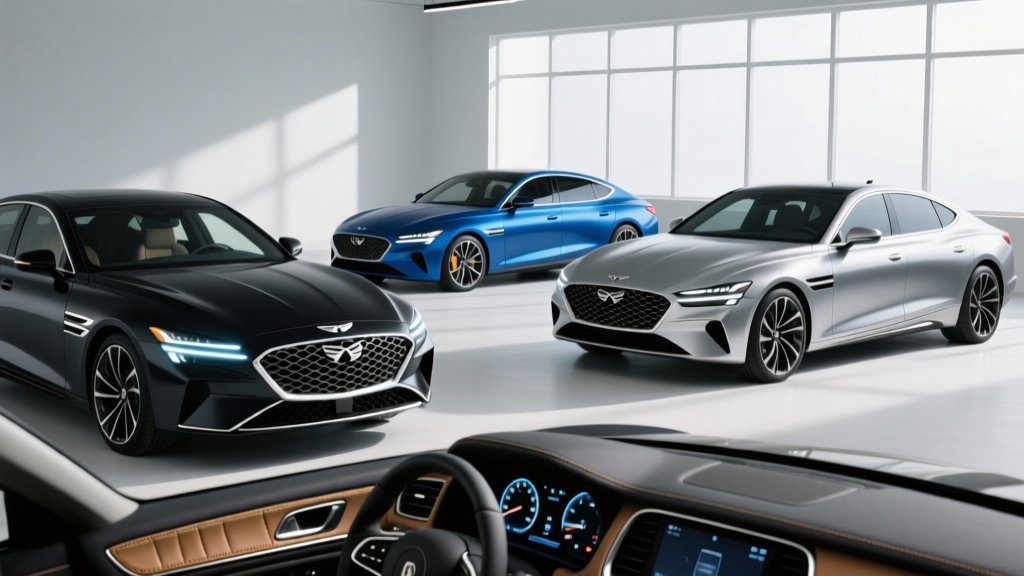
The 2026 Genesis Hybrid Lineup at a Glance
Genesis has taken a measured approach to electrification, offering both plug-in hybrid (PHEV) and fully electric (BEV) variants across its luxury sedan and SUV range. For buyers not ready to commit to a full battery-electric vehicle, the Genesis hybrid options — specifically the PHEV models — provide a practical bridge: short electric-only commutes during the week, gas-engine range for weekend road trips, and no charging infrastructure requirement to function normally.
This guide covers every electrified Genesis available for the 2026 model year, with exact EPA figures, pricing, battery specs, and real-world ownership data. We'll focus primarily on the PHEV models since those are the true "Genesis hybrid" vehicles buyers search for, while also noting the full EVs for comparison.
HEV vs. PHEV: What Genesis Actually Offers
Conventional Hybrid (HEV): Uses a small battery recharged by regenerative braking and the engine. No plug required. Typically delivers 35-50 MPG combined. Genesis does not currently sell a conventional HEV in the U.S. market.
Plug-in Hybrid (PHEV): Features a larger battery (typically 13-22 kWh usable) that can be charged via a plug, providing 20-45 miles of electric-only driving before the gasoline engine engages. Once the battery depletes, it operates like a conventional hybrid. Genesis offers PHEV variants of the G80 sedan, GV70, and GV80 SUVs.
Genesis PHEV Models: MPG, Electric Range, and Powertrain Specs
| Spec | 2026 G80 Electrified (PHEV) | 2026 GV70 Electrified (PHEV) | 2026 GV80 PHEV |
|---|---|---|---|
| Powertrain | 2.5L turbo I4 + electric motor | 2.5L turbo I4 + electric motor | 2.5L turbo I4 + electric motor |
| Combined HP | ~365 hp | ~365 hp | ~370 hp |
| Battery (usable) | ~21.7 kWh (NMC) | ~21.7 kWh (NMC) | ~22.0 kWh (NMC) |
| EPA Electric-Only Range | ~40 mi | ~37 mi | ~38 mi |
| EPA MPG (gas, battery depleted) | ~32 combined (28 city / 36 hwy) | ~28 combined (25 city / 31 hwy) | ~27 combined (24 city / 30 hwy) |
| MPGe (electric + gas combined) | ~79 MPGe | ~72 MPGe | ~70 MPGe |
| Total Combined Range | ~450 mi | ~420 mi | ~430 mi |
| Level 2 Charge Time (10-100%) | ~3.5 hrs @ 7.2 kW | ~3.5 hrs @ 7.2 kW | ~3.5 hrs @ 7.2 kW |
| DC Fast Charge | No | No | No |
| 0-60 mph | ~5.5 sec | ~5.8 sec | ~6.0 sec |
| Starting MSRP | $62,000 | $58,500 | $71,000 |
Note: Specs reflect 2026 model-year estimates based on Genesis's latest powertrain updates. Final EPA certifications may vary slightly. Always verify at fueleconomy.gov before purchasing.
How Many MPG Does a Genesis Hybrid Get?
The answer depends on how you use the vehicle. Here's the critical distinction that separates PHEV owners who save money from those who don't:
If you charge daily and commute under 40 miles: You'll use almost zero gasoline on most days. The G80 PHEV achieves up to 40 miles on electricity alone, meaning a 30-mile round-trip commute can be completed entirely on battery power. Your effective "MPG" is essentially infinite for daily driving, with electricity costs around $0.13-$0.16/kWh nationally — roughly $2.80-$3.50 for a full charge.
If you never plug in: The vehicle operates as a conventional hybrid once the battery depletes. Expect the gas-mode EPA figures — around 28-32 MPG combined depending on the model. This is respectable for a luxury AWD vehicle in this weight class but won't match a purpose-built hybrid like the Toyota Prius.
| Driving Scenario | G80 PHEV | GV70 PHEV | GV80 PHEV |
|---|---|---|---|
| EPA City (gas mode) | 28 MPG | 25 MPG | 24 MPG |
| EPA Highway (gas mode) | 36 MPG | 31 MPG | 30 MPG |
| EPA Combined (gas mode) | 32 MPG | 28 MPG | 27 MPG |
| Combined MPGe (electric + gas) | 79 MPGe | 72 MPGe | 70 MPGe |
| Real-World City (gas mode, observed) | 30-34 MPG | 26-29 MPG | 25-28 MPG |
Real-world vs. EPA note: Hybrids and PHEVs in gas mode tend to exceed EPA city estimates in stop-and-go traffic because regenerative braking recovers energy that conventional vehicles waste as heat. Highway driving at 75+ mph will typically fall 2-4 MPG below the EPA highway figure. In cold weather (below 35°F), expect a 15-25% reduction in electric-only range due to battery chemistry limitations and cabin heating demands.
How Far Can a Genesis PHEV Go on Electric Only?
The 2026 Genesis PHEV lineup delivers between 37 and 40 miles of EPA-rated electric-only range, depending on the model. Here's how that translates to real-world driving:
- G80 Electrified PHEV: 40 miles EPA electric-only. Real-world: expect 33-38 miles in mild weather, 25-30 miles in freezing temperatures with heat running.
- GV70 Electrified PHEV: 37 miles EPA electric-only. Real-world: expect 30-35 miles mild, 23-28 miles cold.
- GV80 PHEV: 38 miles EPA electric-only. Real-world: expect 31-36 miles mild, 24-29 miles cold.
The ~22 kWh NMC (nickel manganese cobalt) battery pack in each model is sized specifically for commute coverage. According to EPA data, the average American drives roughly 37 miles per day — meaning most Genesis PHEV owners who charge at home overnight will complete the vast majority of their daily driving on electricity alone.
What happens when the battery runs out? The vehicle seamlessly transitions to hybrid mode. The 2.5L turbocharged engine engages, and the car operates like a conventional hybrid — no range anxiety, no need to find a charger. Total combined range (electric + gas tank) exceeds 420 miles in every model.
Charging: What You Need to Know
Genesis PHEVs charge via a standard J1772 connector (Level 1 and Level 2 AC charging). Here's what to expect:
| Charging Level | Power | 0-100% Time | Miles of EV Range/Hour |
|---|---|---|---|
| Level 1 (120V outlet) | ~1.4 kW | ~15-18 hours | ~4-5 mi/hr |
| Level 2 (240V, home charger) | 7.2 kW | ~3.5 hours | ~12 mi/hr |
| DC Fast Charge | N/A | N/A | N/A |
Critical detail: Genesis PHEVs do not support DC fast charging. This is common for PHEVs — the smaller battery doesn't justify the cost and weight of DC fast-charge hardware. A Level 2 home charger (240V) is the practical solution: plug in when you get home, and the battery is full by morning. A Level 2 charger installation typically costs $500-$2,000 depending on your electrical panel's capacity and proximity to your parking spot.
Even on a standard 120V household outlet (Level 1), you'll recover roughly 4-5 miles of electric range per hour of charging — enough to replenish a daily commute overnight, though a full 0-100% charge takes 15-18 hours.
Pricing, Tax Credits, and Total Cost
Genesis PHEVs carry a price premium over their gas-only counterparts, justified by the dual powertrain, electric-only capability, and luxury content. Here's the current pricing landscape:
- 2026 G80 Electrified PHEV: Starting at ~$62,000 (Advanced trim); Prestige ~$68,000
- 2026 GV70 Electrified PHEV: Starting at ~$58,500 (Advanced); Prestige ~$64,000
- 2026 GV80 PHEV: Starting at ~$71,000 (Prestige); higher trims ~$78,000+
Federal Tax Credit Eligibility (§30D)
Under the IRS §30D Clean Vehicle Credit, qualifying PHEVs can earn up to $7,500 in federal tax credits — but eligibility depends on several factors that change frequently:
- MSRP Cap: SUVs (GV70, GV80) must be under $80,000; sedans (G80) under $55,000. The G80 PHEV's ~$62,000 starting price may disqualify it from the federal credit unless structured as an SUV classification — verify with your tax professional.
- Buyer Income Cap: Modified AGI must not exceed $150,000 (single), $225,000 (head of household), or $300,000 (joint filers).
- Battery Sourcing Requirements: Critical minerals and battery components must meet phased-in domestic sourcing thresholds. These requirements tighten annually, and some PHEV models may only qualify for a partial credit ($3,750) or none at all depending on supply-chain compliance.
- Point-of-Sale Transfer: As of 2024+, eligible buyers can transfer the credit to the dealer at purchase, reducing the out-of-pocket price immediately rather than waiting for a tax return.
Important: Tax credit eligibility for specific Genesis PHEV models changes as battery sourcing requirements evolve. Always check the latest qualified vehicle list on fueleconomy.gov and consult a tax professional before relying on credit availability.
Battery Warranty, Reliability, and Replacement Cost
Genesis Hybrid Battery Warranty
Coverage: 10 years / 100,000 miles (whichever comes first)
What's covered: Battery capacity loss below 70% of original capacity, manufacturing defects, and failure of hybrid system components including the electric motor and power control unit.
Transferable: Yes — the warranty transfers to subsequent owners, which supports resale value.
Genesis's 10-year/100,000-mile powertrain and hybrid battery warranty is among the strongest in the luxury segment, matching Hyundai/Kia's coverage and exceeding most European competitors (BMW and Mercedes typically offer 8 years/80,000 miles on PHEV batteries).
Reliability outlook: Hyundai Motor Group's PHEV powertrain (shared with Genesis) has been in production since the 2017 Ioniq Plug-in Hybrid, giving the company nearly a decade of real-world data on the 2.5L turbo + electric motor combination. Early-generation PHEV systems from other brands showed issues with battery thermal management, but the Genesis/Hyundai system uses active liquid cooling that maintains battery temperature within optimal operating range.
Battery replacement cost: If the PHEV battery fails outside of warranty coverage (unlikely given the 10-year term, but possible for high-mileage owners), replacement costs are estimated at $5,000-$8,000 including parts and labor. This is significantly less than a full EV battery replacement ($12,000-$20,000+) because the PHEV battery is roughly one-quarter the size. NMC chemistry in these packs typically retains 85-90% capacity after 100,000 miles of normal use, based on data from Hyundai Motor Group's earlier PHEV models.
Genesis Hybrid vs. Full EV vs. Gas: Which Is Right for You?
Choose a Genesis PHEV if:
- You can charge at home (garage, driveway, or dedicated parking spot with outlet access)
- Your daily commute is under 35 miles round-trip
- You take road trips of 200+ miles regularly and don't want to plan around charging stops
- You live in an area with limited public DC fast-charging infrastructure
- You want luxury features without the $80,000+ price tag of a full EV luxury SUV
Choose a full EV (like the Genesis GV60 or Electrified G80 BEV) if:
- You have reliable home Level 2 charging and/or abundant local fast chargers
- You want maximum fuel savings (electricity is 50-70% cheaper per mile than gas)
- You prefer minimal maintenance (no oil changes, no engine)
- Your daily driving rarely exceeds 200 miles, and you're comfortable planning longer trips
Stick with a gas-only Genesis if:
- You cannot charge at home or at work (apartment without EV infrastructure)
- Your budget doesn't accommodate the PHEV premium ($5,000-$8,000 over gas models)
- You drive predominantly long highway stretches where PHEV electric range provides minimal benefit
Pros and Cons: Genesis PHEVs
✓ Pros
- 37-40 miles electric-only covers most daily commutes
- No range anxiety — gas engine provides 420+ total miles
- Industry-leading 10yr/100k battery warranty
- Luxury interior and ride quality at competitive pricing
- Smooth electric takeoff in EV mode; quiet cabin
- AWD standard across all PHEV trims
✗ Cons
- No DC fast charging — limits public charging utility
- G80 PHEV may exceed $55K sedan cap for federal credit
- Gas-mode MPG is average, not class-leading
- Cargo space slightly reduced vs. gas models (battery packaging)
- Electric-only range drops significantly in cold weather
- PHEV premium over gas trims takes years to recoup at current gas prices
Frequently Asked Questions
Does Genesis make a conventional hybrid (non-plug-in)?
No. As of the 2026 model year, Genesis does not offer a conventional hybrid (HEV) in the U.S. market. Their electrified lineup consists exclusively of plug-in hybrids (PHEVs) and full battery-electric vehicles (BEVs). If you want a luxury conventional hybrid without plug-in capability, competitors like the Lexus ES 300h or BMW 530e (in hybrid mode) may be worth cross-shopping.
Do I have to plug in a Genesis PHEV?
No. A PHEV functions perfectly well without ever being plugged in — it simply operates as a conventional hybrid once the battery depletes. However, you'll miss the primary benefit: 37-40 miles of daily electric driving that costs roughly $3 in electricity instead of $5-$7 in gasoline. If you never plan to plug in, a gas-only Genesis may be more cost-effective since you won't recoup the PHEV price premium.
How long does the Genesis PHEV battery last?
Genesis covers the PHEV battery for 10 years or 100,000 miles against capacity loss below 70%. Based on data from Hyundai Motor Group's earlier PHEV models (Ioniq, Niro), NMC batteries in these applications typically retain 85-90% capacity after 100,000 miles. With proper care — avoiding frequent deep discharges below 10% and extreme heat exposure — the battery should last the life of the vehicle.
Can the Genesis GV70 PHEV tow?
Yes. The GV70 Electrified PHEV is rated for up to 3,500 pounds of towing capacity when properly equipped — sufficient for a small trailer, jet skis, or a light boat. Towing will reduce electric-only range significantly (expect 50-60% reduction) and gas-mode fuel economy by roughly 30-40%.
Is the Genesis PHEV all-wheel drive?
Yes. All 2026 Genesis PHEV models come standard with all-wheel drive. The electric motor typically drives the rear axle while the gasoline engine drives the front, providing seamless AWD traction without a mechanical driveshaft connection.
What is the real-world cost to charge a Genesis PHEV at home?
At the U.S. average electricity rate of ~$0.15/kWh, fully charging the ~22 kWh battery costs approximately $3.30. That provides 37-40 miles of electric driving — equivalent to roughly $0.08-$0.09 per mile. Compare this to premium gasoline at $4.00/gallon and 28 MPG gas mode: roughly $0.14 per mile. Daily charging saves about $1.50-$2.00 per 35-mile commute, or roughly $500-$700 annually for a weekday commuter.