Genesis GV70 Hybrid: The Electrified Luxury Compact SUV, Explained
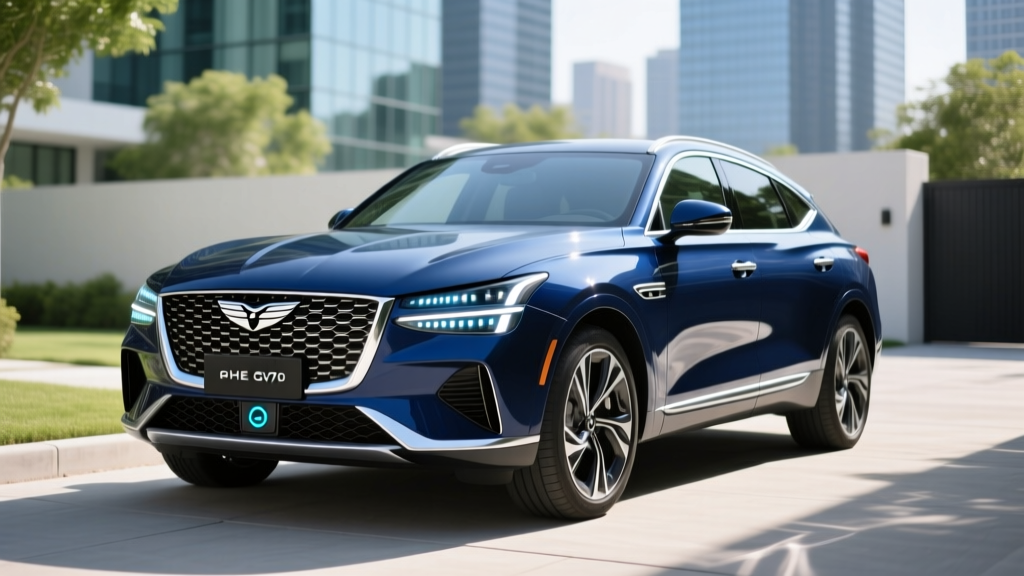
The Genesis GV70 occupies a competitive niche in the luxury compact SUV segment, and its electrified variants — the conventional hybrid (HEV) and the plug-in hybrid (PHEV) — give buyers two distinct paths to better fuel economy without committing to a full battery-electric vehicle. For 2026, Genesis continues to refine both powertrains, but the differences between them matter enormously depending on your driving habits, charging access, and budget.
This guide breaks down the 2026 Genesis GV70 hybrid lineup with exact EPA figures, real-world expectations, battery specs, charging requirements, pricing, and tax credit eligibility — so you can decide whether the HEV, the PHEV, or a full EV like the GV70 Electrified makes sense for you.
HEV vs. PHEV: Which GV70 Hybrid Is Which?
Genesis offers the GV70 with two distinct electrified powertrains. Confusing them is easy — and costly — so let's clarify upfront.
| Attribute | GV70 Hybrid (HEV) | GV70 Plug-In Hybrid (PHEV) |
|---|---|---|
| Needs to be plugged in? | No — self-charging via regen & engine | Yes — plug in to unlock electric-only range |
| Electric-only driving | Very limited (low-speed assist only) | EPA-estimated ~28 miles on battery alone |
| Battery capacity | ~1.5 kWh (small, buffer-style) | ~17.6 kWh usable (lithium-ion) |
| Charging hardware | None — no charge port | Level 1 (120V) & Level 2 (240V); no DC fast charging |
| Combined horsepower | ~268 hp (est.) | ~305 hp (est.) |
| Federal tax credit (§30D) | Not eligible | Potentially up to $7,500 (see eligibility below) |
The conventional HEV is a "buy it and drive it" proposition — no lifestyle change required. The PHEV demands access to a plug (ideally at home) to realize its efficiency advantage, but rewards you with near-silent electric commuting for short trips.
Fuel Economy: EPA MPG and Real-World Numbers
Here's where the rubber meets the road. The EPA publishes official fuel-economy estimates via fueleconomy.gov, and the numbers for the 2026 GV70 hybrid variants tell a clear story.
| Powertrain | City MPG | Highway MPG | Combined MPG | MPGe (PHEV w/ charge) |
|---|---|---|---|---|
| GV70 Hybrid (HEV) | 26 | 28 | 27 | N/A |
| GV70 PHEV (charge-depleting) | — | — | — | ~65 MPGe |
| GV70 PHEV (charge-sustaining / gas only) | 24 | 27 | 25 | N/A |
| GV70 2.5T AWD (gas baseline) | 22 | 28 | 24 | N/A |
Real-world MPG caveat: Hyundai-Genesis hybrid systems tend to overperform their EPA city estimates in stop-and-go driving — expect the HEV to return 28–30 MPG in urban commuting where regenerative braking is maximized. Highway driving at 75+ mph will push the HEV closer to 25–26 MPG. The PHEV, once its battery is depleted, behaves like a slightly heavier conventional hybrid, so expect ~24–25 MPG combined on gas alone.
For PHEV owners who plug in nightly and commute under 30 miles, actual gasoline consumption can drop to near-zero for weeks at a time. The combined MPGe figure (roughly 65 MPGe) reflects this blended scenario — but it's only meaningful if you actually charge.
PHEV Electric-Only Range and Charging Specs
The 2026 GV70 PHEV carries a ~17.6 kWh usable lithium-ion battery pack, which translates to an EPA-estimated 28 miles of electric-only range. That's enough to cover the average American's one-way commute (the FHWA estimates the average daily round-trip commute at roughly 30 miles).
Real-world expectation: ~22–26 miles in mixed driving; ~18–20 miles in cold weather (below 32°F) or sustained highway speeds above 65 mph. Cabin heating and high speeds are the biggest range killers in PHEV mode.
Charging Times
| Charging Level | Power | 0–100% Time (est.) | Notes |
|---|---|---|---|
| Level 1 (120V household outlet) | ~1.4 kW | ~12–13 hours | Adequate for overnight if you drive <25 mi/day |
| Level 2 (240V home/public) | ~7.2 kW | ~2.5–3 hours | Recommended for daily PHEV use |
| DC Fast Charging | Not supported | N/A | No CCS/NACS port for DC charging |
The absence of DC fast charging is typical for PHEVs in this class — the battery is small enough that Level 2 replenishes it quickly. A 240V Level 2 home charger (like a ChargePoint Home Flex or Genesis-branded unit) is the practical sweet spot: plug in when you get home, wake up to a full battery every morning.
Powertrain and Performance
Both GV70 hybrid variants pair a turbocharged engine with one or more electric motors, routed through an automatic transmission to standard all-wheel drive.
| Specification | GV70 HEV | GV70 PHEV |
|---|---|---|
| Engine | 2.5L turbocharged 4-cylinder | 2.5L turbocharged 4-cylinder |
| Electric motor | Integrated starter-generator + drive motor | More powerful drive motor (front axle) |
| Combined output | ~268 hp / ~290 lb-ft | ~305 hp / ~350 lb-ft |
| Transmission | 8-speed automatic | 8-speed automatic |
| Drivetrain | AWD | AWD |
| 0–60 mph (est.) | ~6.5 sec | ~5.8 sec |
| Towing capacity | ~3,500 lbs | ~3,500 lbs |
The PHEV's additional electric torque gives it a noticeable acceleration advantage, particularly in the 0–30 mph range where electric motors deliver instant thrust. Both variants are refined and quiet, though the PHEV in EV mode is nearly silent at city speeds — a meaningful luxury differentiator.
Pricing, Trims, and Tax Credit Eligibility
Pricing for the 2026 GV70 hybrid lineup reflects Genesis's premium positioning, but the PHEV's potential federal tax credit can narrow the gap significantly.
| Trim / Variant | MSRP (est.) | Federal Tax Credit | Effective Price |
|---|---|---|---|
| GV70 HEV (base) | ~$50,000 | $0 (HEV not eligible) | ~$50,000 |
| GV70 PHEV (base) | ~$57,000 | Up to $7,500* | ~$49,500 |
| GV70 PHEV (Advanced) | ~$62,000 | Up to $7,500* | ~$54,500 |
*Federal tax credit eligibility under IRS §30D is not automatic. You must meet all of the following requirements:
- Buyer income cap: Modified AGI ≤ $150,000 (single) or ≤ $300,000 (joint filers)
- MSRP cap: SUVs capped at $80,000 — the GV70 PHEV clears this
- Battery sourcing: A percentage of critical minerals and battery components must be sourced from the U.S. or free-trade-agreement partners (these thresholds tighten annually through 2029)
- Point-of-sale transfer: You may elect to transfer the credit to the dealer at purchase, reducing your out-of-pocket cost immediately (rather than waiting for a tax refund)
Critical caveat: Battery component and critical-mineral sourcing rules have disqualified several PHEVs and EVs from the full $7,500 credit in recent years. Before purchasing, verify the GV70 PHEV's current eligibility on the official fueleconomy.gov tax credit page — it's updated regularly. Consult a tax professional for your specific situation.
Reliability, Battery Warranty, and Replacement Costs
Hybrid system warranty: 10 years / 100,000 miles on electric motor, inverter, and related components.
Replacement cost estimate: If out of warranty, PHEV battery pack replacement runs approximately $6,000–$9,000 (parts + labor). HEV battery replacement is typically $2,000–$4,000. These are worst-case scenarios — modern hybrid batteries from Hyundai-Genesis rarely fail within the warranty period.
Hyundai-Genesis has been building hybrid powertrains since the early 2010s, and their track record is solid. The hybrid battery packs use proven lithium-ion chemistry with conservative thermal management — they're not pushed to the same charge/discharge extremes as full EVs, which contributes to longevity. Independent data from sources like Consumer Reports generally rates Genesis's hybrid reliability as average to above average for the luxury segment.
The 10-year/100,000-mile hybrid battery warranty is one of the strongest in the industry and should ease the minds of buyers concerned about long-term ownership costs. If you plan to keep the GV70 beyond 100,000 miles, the out-of-warranty replacement cost is worth factoring into your total cost of ownership — but statistically, most hybrid batteries outlast their warranty periods without issue.
Who Should Choose the GV70 Hybrid vs. a Full EV or Gas SUV?
- You have no access to home or workplace charging
- You want better fuel economy with zero lifestyle change
- You drive 12,000–15,000 miles/year in mixed city/highway conditions
- You want the lowest purchase price in the GV70 lineup
- You can install a Level 2 charger at home (or have reliable workplace charging)
- Your daily commute is under ~28 miles round-trip
- You qualify for the §30D federal tax credit (bringing the effective price near the HEV)
- You want electric commuting but need gas-engine flexibility for road trips
- You have reliable home charging and access to DC fast charging on road trips
- You want zero tailpipe emissions and the lowest per-mile fuel cost
- Your daily driving is under ~240 miles (the EV's EPA range)
- You want maximum performance (the EV variant produces 429 hp)
The PHEV is the "Goldilocks" option for buyers who want electric daily driving without range anxiety — but only if the math works. If you can't charge at home, the PHEV becomes a heavier, more expensive conventional hybrid once its 28-mile electric range is depleted. The HEV, by contrast, delivers consistent 26–30 MPG regardless of whether you ever plug in (because you can't).
Pros and Cons at a Glance
- PHEV offers ~28 mi electric commute — silent, cheap, zero tailpipe emissions for daily use
- 10-year / 100,000-mile hybrid battery warranty is industry-leading
- Luxury interior, ride quality, and technology on par with BMW X3, Audi Q5
- AWD standard on all trims
- PHEV may qualify for up to $7,500 federal tax credit, significantly lowering effective price
- HEV requires no charging infrastructure — works anywhere gas is sold
- PHEV has no DC fast charging — Level 2 only (~2.5 hr to full)
- 28-mile electric range is modest; rivals like the BMW X5 xDrive50e offer ~38 mi
- HEV fuel economy (27 combined MPG) is only marginally better than the gas 2.5T (24 combined)
- MSRP premium over non-hybrid GV70 trims
- Tax credit eligibility depends on sourcing rules that change annually
- Heavier than gas-only variants, slightly reducing handling agility
Frequently Asked Questions
How many MPG does the Genesis GV70 Hybrid get?
The 2026 GV70 conventional hybrid (HEV) is EPA-estimated at 26 city / 28 highway / 27 combined MPG. In real-world city driving with frequent regenerative braking, owners typically report 28–30 MPG. Highway driving at sustained speeds above 70 mph drops the figure to around 25–26 MPG. The PHEV, when operating on gasoline alone (battery depleted), returns approximately 24–25 MPG combined.
How far can the GV70 PHEV go on electric power alone?
The EPA estimates 28 miles of electric-only range. In real-world conditions — moderate temperatures, mixed city/suburban driving — expect 22–26 miles. In cold weather (below freezing) or at sustained highway speeds, that drops to approximately 18–20 miles. The electric motor can propel the GV70 PHEV to speeds up to ~84 mph in EV mode before the engine engages.
Does the GV70 Hybrid qualify for a federal tax credit?
The conventional HEV does not qualify for the §30D federal tax credit — it's only available for plug-in vehicles with sufficient battery capacity. The GV70 PHEV may qualify for up to $7,500, but eligibility depends on your income (≤$300,000 joint / ≤$150,000 single), the vehicle's MSRP (must be ≤$80,000 for SUVs), and current battery-sourcing requirements. Always verify on fueleconomy.gov before purchasing, as sourcing rules change annually.
Is the GV70 Hybrid reliable, and what does battery replacement cost?
Genesis (Hyundai) has over a decade of hybrid powertrain experience, and the hybrid battery is covered by a 10-year / 100,000-mile warranty. Out-of-warranty PHEV battery replacement is estimated at $6,000–$9,000; HEV battery replacement is $2,000–$4,000. However, modern hybrid batteries rarely require replacement within the warranty period, and many last 150,000+ miles with normal use.
Hybrid vs. PHEV vs. full EV — which GV70 should I buy?
If you lack home charging access, the HEV is the pragmatic choice — better MPG with no infrastructure requirements. If you can charge at home and commute under 28 miles daily, the PHEV gives you electric commuting with gas-engine backup for road trips, and the tax credit can make it price-competitive with the HEV. If you have reliable charging and rarely drive over 240 miles in a day, the full GV70 Electrified offers the lowest operating costs, 429 hp, and zero tailpipe emissions.
Can the GV70 PHEV DC fast charge?
No. The GV70 PHEV supports Level 1 (120V, ~1.4 kW) and Level 2 (240V, ~7.2 kW) charging only. This is standard for PHEVs — the 17.6 kWh battery is small enough that a Level 2 charger replenishes it fully in about 2.5–3 hours, making DC fast charging unnecessary for typical overnight use.