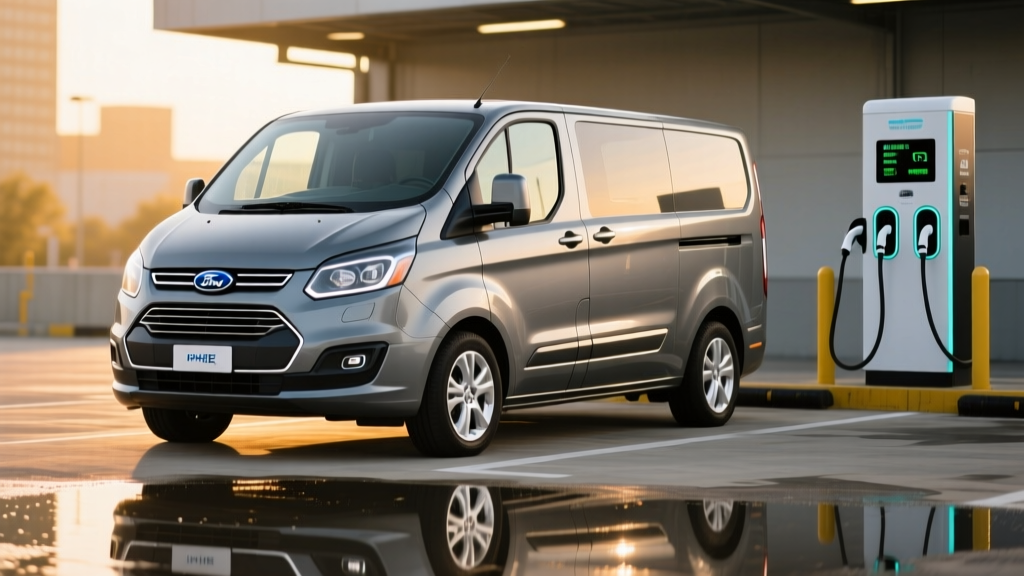
The Ford Transit Custom PHEV occupies a narrow but increasingly important niche: a mid-size commercial van that can run emission-free in city centers yet still cover inter-city routes without range anxiety. For fleet managers and tradespeople weighing electrification against operational flexibility, this plug-in hybrid offers a bridge solution that a full battery-electric van like the E-Transit Custom cannot yet match in every use case.
This review covers the current-generation Transit Custom PHEV (the European-market model built on Ford's latest front-wheel-drive van platform), its powertrain architecture, real-world efficiency data, charging logistics, and total ownership economics. Note: the Transit Custom is sold primarily in European and UK markets. North American buyers receive the full-size Transit lineup — the Transit Custom nameplate does not appear in Ford's US catalog.
HEV vs PHEV: What the Transit Custom Plug-In Hybrid Actually Is
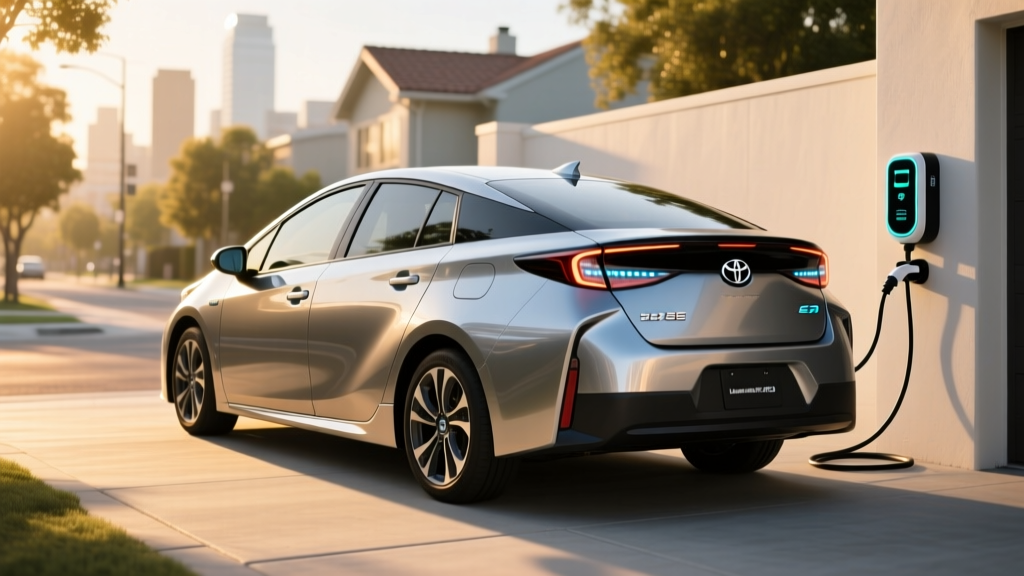
Conventional Hybrid (HEV): A small battery (typically 1–2 kWh) recharged solely by regenerative braking and the engine. No plug. Electric-only driving is limited to very low speeds for short distances. Example: Toyota Prius.
Plug-In Hybrid (PHEV): A larger battery (10+ kWh) that charges via a plug and provides meaningful electric-only range (20–50+ miles). Once depleted, the gasoline engine takes over seamlessly. Example: Ford Transit Custom PHEV.
Full EV (BEV): No engine. Runs entirely on a large battery pack (60–100+ kWh). Must be plugged in to recharge. Example: Ford E-Transit Custom.
The Transit Custom PHEV is squarely a plug-in hybrid. It pairs a 1.0-liter EcoBoost three-cylinder gasoline engine with an electric motor and a 13.6 kWh (usable) lithium-ion battery pack. The van can drive on electricity alone for approximately 25 miles (WLTP), then the engine engages as a range extender — meaning it primarily generates electricity for the motor rather than driving the wheels mechanically in most conditions.
kW vs kWh — a quick refresher: kW (kilowatts) measures power — how fast energy flows, like your charging speed. kWh (kilowatt-hours) measures energy — how much the battery holds, like a fuel tank's capacity. The Transit Custom PHEV's 13.6 kWh battery stores energy; its 7 kW onboard charger determines how fast it replenishes from a wallbox.
Powertrain, Horsepower, and Driving Characteristics
| Specification | Value |
|---|---|
| Engine | 1.0L EcoBoost 3-cylinder (range extender) |
| Electric Motor Output | 92.9 kW (125 hp) |
| Combined System Power | ~125 hp (motor-primary drive) |
| Battery (Usable) | 13.6 kWh lithium-ion |
| Transmission | Single-speed (electric drive) |
| Drivetrain | Front-wheel drive |
| 0–62 mph (est.) | ~13.5 seconds |
| Top Speed | ~75 mph (electronically limited in EV mode) |
| Payload Capacity | Up to ~1,130 kg (varies by body style) |
| Cargo Volume | Up to 6.8 m³ (L2 body) |
The Transit Custom PHEV drives primarily as an electric vehicle. The electric motor delivers 125 hp to the front wheels, providing the instant torque characteristic of electric drivetrains — useful when pulling away from stops fully laden. The 1.0L EcoBoost engine acts mainly as a range extender, generating electricity when the battery depletes rather than directly driving the wheels.
This architecture means the van feels responsive in urban stop-start traffic, where the electric motor excels. Highway performance is adequate but not brisk; the system prioritizes efficiency over acceleration. Ford offers selectable drive modes including EV Now (electric-only), EV Auto (system decides), and EV Charge (engine charges battery — useful before entering a zero-emission zone).
Electric-Only Range, MPGe, and Real-World Fuel Economy
| Metric | Official Rating (WLTP) | Real-World Expectation |
|---|---|---|
| Electric-Only Range | 25 miles (40 km) | 18–22 miles (loaded, cold weather) |
| Combined MPGe (EV + gas) | 91.7 MPGe | 70–85 MPGe (varies with charge discipline) |
| Fuel Economy (charge-depleted) | ~31 MPG (combined) | 26–30 MPG (highway/loaded) |
| CO₂ Emissions | ~70 g/km | Depends on charge frequency |
| Total Combined Range | ~310 miles (EV + gas) | ~260–290 miles |
Real-World Range Reality: The WLTP-rated 25-mile electric range assumes moderate temperatures, flat terrain, and partial load. In practice, fleet operators report 18–22 miles of usable electric range when the van carries a typical payload in cool weather. In warm conditions with light loads, you may see the full 25 miles. The gasoline range extender then provides an additional ~240+ miles before refueling — eliminating range anxiety for longer routes.
The critical efficiency variable for any PHEV is charging discipline. Operators who plug in nightly and drive primarily within the 20-mile electric window will see fuel consumption drop to near zero on most working days. Those who rarely charge will operate as a conventional hybrid, achieving roughly 26–31 MPG — still better than a gasoline-only Transit Custom, but far from the PHEV's potential.
According to Ford's UK commercial vehicle specifications, the Transit Custom PHEV's official WLTP combined fuel consumption is approximately 2.0 L/100 km when starting with a full charge — translating to the 91.7 MPGe figure. This number is meaningful only if you charge regularly.
Charging Specs: Level 1, Level 2, and DC Fast Charge Capability
| Charging Level | Power (kW) | Time (0–100%) | Connector |
|---|---|---|---|
| Level 1 (Domestic Outlet, 230V) | ~2.3 kW | ~5.5 hours | |
| Level 2 (Wallbox, 230V) | 7.0 kW | ~2.75 hours | |
| DC Fast Charge | Not supported | N/A | |
The Transit Custom PHEV charges via a Type 2 (Mennekes) connector, standard across European commercial and passenger EVs. The onboard charger is rated at 7.0 kW for AC charging — meaning a full charge from a dedicated wallbox takes under three hours. This is practical for depot-based fleets: plug in at midday during a break, and the battery is replenished for afternoon routes.
DC fast charging is not available on the Transit Custom PHEV. The 13.6 kWh battery is small enough that AC charging is sufficient for most operational patterns, and the added cost, weight, and complexity of a DC fast-charge system were deemed unnecessary for this application. For comparison, the fully electric E-Transit Custom supports up to 125 kW DC fast charging.
For fleet depots, installing multiple 7 kW Type 2 wallboxes is straightforward and far less expensive than DC fast-charge infrastructure. A single 7 kW wallbox installation typically costs £800–£1,500 in the UK (roughly $1,000–$1,900 USD equivalent), depending on electrical panel proximity and local permitting.
Pricing, Tax Credits, and Fleet Incentives
The Ford Transit Custom PHEV is priced for the European and UK markets. As of the current model year, pricing in the UK starts at approximately £39,000–£43,000 (ex VAT) depending on body length (L1 or L2), roof height, and trim level (Base, Trend, Limited). This represents a premium of roughly £8,000–£12,000 over an equivalent diesel Transit Custom.
US Federal Tax Credit (§30D): The Transit Custom PHEV is not sold in the United States, so it does not qualify for the IRS §30D Clean Vehicle Credit. US buyers evaluating plug-in hybrid commercial vans should consider alternatives like the Chrysler Pacifica PHEV (for passenger use) or await potential US-market PHEV van offerings. The §30D credit has strict MSRP caps ($80,000 for vans), buyer income limits ($150K single / $300K joint), and critical-mineral battery-sourcing requirements — always verify current eligibility at IRS.gov.
UK and European Incentives: The Transit Custom PHEV qualifies for various regional incentives including the UK's Plug-In Van Grant (subject to current funding availability), reduced Vehicle Excise Duty (VED), and exemption from London's Ultra Low Emission Zone (ULEZ) and Congestion Charge — savings that can total £3,000–£5,000 annually for London-based operators. Many European cities with low-emission zones offer similar benefits. Consult local authority guidelines for current incentive amounts, as these change frequently.
Reliability, Battery Warranty, and Long-Term Costs
High-Voltage Battery Warranty: Ford covers the Transit Custom PHEV's 13.6 kWh lithium-ion battery for 8 years or 100,000 miles (whichever comes first), with a guaranteed minimum capacity retention of 70%. This is consistent with industry-standard PHEV battery warranties.
Powertrain Warranty: The 1.0L EcoBoost engine and electric motor are covered under Ford's standard commercial vehicle warranty of 3 years / 100,000 miles (UK market).
Battery Replacement Cost: Out-of-warranty replacement for a 13.6 kWh PHEV battery pack is estimated at £4,000–£6,000 ($5,000–$7,500 USD equivalent), though real-world data on PHEV battery failures remains limited — most PHEV batteries outlast their warranty periods with gradual, manageable degradation.
Ford's 1.0L EcoBoost engine is one of the most widely deployed small-displacement engines globally, with a long reliability track record in passenger cars. The range-extender architecture means the engine operates under relatively low stress — it runs at optimized RPM to generate electricity rather than responding to variable throttle demands, which can reduce wear compared to conventional powertrains.
Fleet operators in London and other European cities have accumulated significant real-world mileage data on the Transit Custom PHEV. Early reports from Transport for London fleet trials showed the PHEV powertrain performing reliably over multi-year, high-mileage urban operations. Regenerative braking also reduces brake pad wear — a meaningful maintenance saving in stop-start city driving.
For operators comparing long-term maintenance costs: the PHEV eliminates AdBlue (diesel exhaust fluid) top-ups, diesel particulate filter (DPF) regeneration issues, and the higher per-mile fuel cost of diesel. Trade-offs include the eventual battery replacement cost (mitigated by the 8-year warranty) and slightly higher initial purchase price.
Transit Custom PHEV vs. Diesel vs. Full Electric: Which Fits Your Fleet?
Choose the Transit Custom PHEV if:
- Your daily routes are 20–60 miles with frequent stops (urban deliveries, service calls)
- You operate in or near a low-emission zone (ULEZ, Clean Air Zone) requiring zero-emission capability
- You need the flexibility to make occasional longer trips (100+ miles) without charging infrastructure en route
- Your depot has basic AC charging (7 kW wallbox) available overnight or during shifts
- You want to reduce fuel costs and emissions without committing to full electrification
Choose the E-Transit Custom (full EV) if:
- Your daily routes are predictable and under 150 miles
- You have reliable depot charging (ideally DC fast charge capability)
- You want the lowest per-mile operating cost and zero tailpipe emissions always
- Your fleet can absorb the higher upfront purchase price for long-term savings
Choose the Diesel Transit Custom if:
- Your routes are primarily long-distance highway (200+ miles daily)
- You lack any charging infrastructure at depot or home
- Upfront purchase price is the primary constraint
- You operate in regions without low-emission zone requirements
The PHEV's sweet spot is urban and suburban commercial use with depot charging. A plumber, electrician, or delivery fleet covering 30–40 miles daily with regular stops will spend most of that distance on electric power — especially if the van charges during the workday. The gasoline range extender eliminates the downtime and route-planning anxiety that a full EV might introduce for variable-schedule operators.
Pros
- 25-mile EV range covers most urban delivery routes emission-free
- ULEZ/Clean Air Zone compliant — avoids daily charges in restricted zones
- No range anxiety — gasoline extender provides 310+ mile total range
- Lower running costs vs diesel when charged regularly
- Reduced brake wear from regenerative braking
- Quiet, refined electric driving in city traffic
- 8-year / 100,000-mile battery warranty
Cons
- ~£8,000–£12,000 premium over equivalent diesel model
- No DC fast charging — limited to 7 kW AC
- Electric range drops significantly when fully loaded or in cold weather
- Fuel economy poor if operators don't plug in regularly
- Not available in North American market
- 1.0L range extender can be audible under heavy load
- Payload slightly reduced vs diesel due to battery weight
Frequently Asked Questions
How many MPG does the Ford Transit Custom PHEV get?
The Transit Custom PHEV achieves an official WLTP rating of 91.7 MPGe combined when starting with a full battery charge. In charge-depleted (hybrid-only) operation, expect approximately 26–31 MPG combined. Real-world results depend heavily on charging frequency, payload, and driving conditions. Operators who charge nightly and drive under 25 miles daily may use almost no gasoline on typical workdays.
How far can the Transit Custom PHEV go on electric only?
The WLTP-rated electric-only range is 25 miles (40 km). In real-world conditions — with payload, climate control, and cold weather — expect 18–22 miles of usable electric range before the gasoline range extender activates. The EV Now mode prioritizes electric driving; EV Auto lets the system optimize between electric and gasoline power.
Hybrid vs PHEV vs EV — which van fits my business?
A conventional hybrid (HEV) offers modest fuel savings with no plug-in requirement but cannot drive in zero-emission zones on electric power alone. A PHEV like the Transit Custom provides 20+ miles of electric range for city compliance plus gasoline flexibility for longer routes. A full EV (BEV) like the E-Transit Custom offers the lowest operating cost and zero emissions always, but requires reliable charging infrastructure and route planning within its ~200-mile range.
Is the Transit Custom PHEV reliable, and what does battery replacement cost?
The PHEV powertrain has proven reliable in fleet trials across European cities. Ford's 1.0L EcoBoost engine is widely used and well-supported. The high-voltage battery carries an 8-year / 100,000-mile warranty with 70% capacity retention guaranteed. Out-of-warranty battery replacement is estimated at £4,000–£6,000, though most PHEV batteries show gradual degradation rather than sudden failure.
Does the Ford Transit Custom PHEV qualify for any tax credit?
The Transit Custom PHEV is not sold in the US and therefore does not qualify for the federal §30D Clean Vehicle Credit. In the UK, it may qualify for the Plug-In Van Grant (subject to current funding) and provides exemption from ULEZ and Congestion Charge fees. European incentives vary by country and municipality. Always verify current incentive availability with local authorities, as programs change annually.
Can the Transit Custom PHEV DC fast charge?
No. The Transit Custom PHEV supports only AC charging via a Type 2 connector at up to 7.0 kW. A full charge takes approximately 2.75 hours from a wallbox or 5.5 hours from a standard domestic outlet. The 13.6 kWh battery is small enough that AC charging is practical for most fleet depot operations without the cost and infrastructure requirements of DC fast charging.
What is the total range of the Transit Custom PHEV?
With a full battery and a full fuel tank, the Transit Custom PHEV delivers approximately 310 miles of total combined range (WLTP). Real-world total range is approximately 260–290 miles depending on load, terrain, and driving style. This eliminates the range anxiety that some fleet operators experience with fully electric vans.
For commercial buyers, the Transit Custom PHEV is a pragmatic electrification tool — not a revolution, but a targeted solution for urban fleets navigating low-emission zone requirements while maintaining operational flexibility. Its value proposition depends entirely on charging discipline: plug in daily, and it's a near-electric van with a safety net. Skip the plug, and it's a slightly thirstier hybrid with a premium price tag.