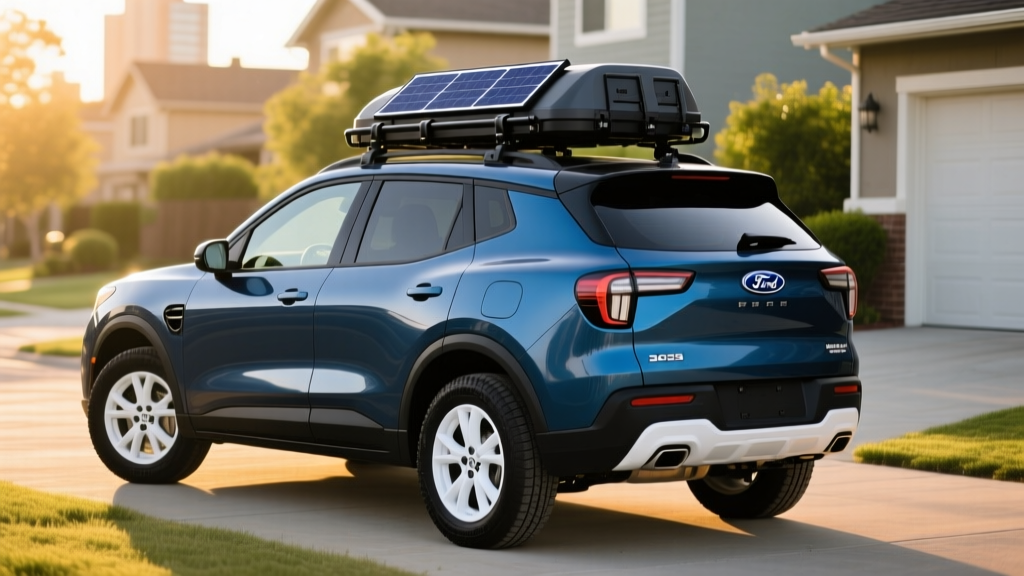
The 2025 Ford Maverick Hybrid has earned a reputation as one of the most fuel-efficient trucks on the road, with an EPA-rated 42 MPG in the city. But a growing community of owners is asking a different question: what happens to that efficiency when you bolt on a truck topper? Whether you're eyeing a fiberglass cap for weatherproof cargo storage or dreaming of a slide-in camper for weekend overlanding, adding a topper to the Maverick Hybrid changes the aerodynamic and weight equation in ways worth understanding before you buy.
This guide covers the 2025 Maverick Hybrid's powertrain, real-world MPG expectations with a topper installed, payload and bed constraints, and how this compact hybrid truck stacks up against PHEV and full-EV alternatives for the utility-minded buyer.
2025 Ford Maverick Hybrid: Powertrain and Spec Overview
The 2025 Maverick Hybrid pairs a 2.5-liter Atkinson-cycle four-cylinder engine with an electric motor integrated into Ford's e-CVT (electronic continuously variable transmission). This is a conventional hybrid (HEV), not a plug-in hybrid — meaning it generates all its electricity onboard through regenerative braking and engine-driven generation. You never plug it in.
| Specification | Value |
|---|---|
| Powertrain | 2.5L I4 Atkinson-cycle + electric motor (e-CVT) |
| Combined Horsepower | 191 hp |
| Drivetrain | Front-wheel drive (FWD only on Hybrid) |
| Battery Type | ~1.1 kWh lithium-ion (self-charging HEV) |
| EPA Fuel Economy (FWD) | 42 city / 33 highway / 37 combined MPG |
| Bed Length | 54.4 inches (4.5 ft) |
| Max Payload (Hybrid) | 1,500 lbs |
| Max Towing (Hybrid) | 2,000 lbs (4,000 lbs with 4K Tow Package on EcoBoost only) |
| Base MSRP (XL Hybrid) | ~$28,990 (destination included) |
| Hybrid Battery Warranty | 8 years / 100,000 miles |
A critical point for topper shoppers: the Maverick Hybrid is available exclusively with front-wheel drive. If you need all-wheel drive, you must step up to the 2.0L EcoBoost engine, which sacrifices the hybrid's fuel economy advantage (EPA 23/30/26 MPG) but gains AWD and higher towing capacity. Ford does not offer AWD on the hybrid powertrain for the 2025 model year.
EPA vs. Real-World MPG: What Happens With a Topper?
The EPA rates the 2025 Maverick Hybrid FWD at 42 MPG city, 33 MPG highway, and 37 MPG combined. In practice, hybrid trucks — like hybrid sedans — tend to exceed their EPA city estimates because regenerative braking recaptures energy in stop-and-go driving. Many Maverick Hybrid owners report 40–45 MPG in mixed suburban driving without a topper.
| Configuration | City MPG | Highway MPG | Combined MPG |
|---|---|---|---|
| Stock (EPA Rated) | 42 | 33 | 37 |
| Stock (Real-World Owner Avg) | 40–45 | 31–35 | 35–39 |
| With Fiberglass Topper (Est.) | 38–42 | 28–31 | 33–36 |
| With Topper + Camper Load (Est.) | 34–38 | 25–28 | 29–33 |
Why Highway MPG Drops More Than City MPG
A topper — whether a low-profile fiberglass cap (roughly 80–120 lbs) or a heavier aluminum-fr camper shell (200–400 lbs) — impacts fuel economy through two mechanisms: added weight and altered aerodynamics.
In city driving, the weight penalty is partially offset by regenerative braking. The hybrid system recovers kinetic energy during deceleration, so the added mass of a topper is less punishing than it would be in a gas-only truck. Expect a 1–3 MPG drop in city driving with a standard topper.
Highway driving tells a different story. At 65–75 mph, aerodynamic drag dominates fuel consumption. A topper changes the airflow over the bed, and while a smooth, cab-height cap can actually reduce drag compared to an open bed (by eliminating the turbulent air pocket behind the cab), many aftermarket toppers sit slightly higher than the cab roofline or have roof racks, crossbars, and accessories that increase frontal drag area. Combined with the weight penalty, highway MPG can drop 3–5 MPG.
If you're loading the bed with camping gear, water, or a slide-in unit, you're working against the Maverick Hybrid's 1,500-pound payload ceiling — and every 100 pounds of added cargo typically costs about 1 MPG in a vehicle this size.
Choosing the Right Topper for the Maverick Hybrid
The Maverick's 54.4-inch bed (4.5 feet) is shorter than most compact trucks, which limits topper options. Here's what fits and what to consider:
- Fiberglass cab-height caps (e.g., Leer, SnugTop, ARE): These are the most aerodynamic option and typically add 80–130 lbs. A cab-height cap that matches the Maverick's roofline can minimize highway drag. Some owners report negligible MPG loss (1–2 MPG combined) with a smooth, flush-fit cap.
- Aluminum commercial caps: Heavier (150–250 lbs) and often taller than the cab. Better for tool storage than for fuel economy. Expect a 3–5 MPG combined penalty.
- Pop-up camper toppers (e.g., Four Wheel Campers, SuperATV): These add 300–600 lbs when deployed and significantly more wind resistance when raised. Best suited for weekend trips rather than daily driving. The Maverick Hybrid's 1,500-lb payload leaves room for a lightweight pop-up plus two passengers, but you'll be close to the limit with water, gear, and a full tank.
- DIY platform builds: Some owners build lightweight plywood platforms with topper tents. These can be kept under 100 lbs and minimize the efficiency penalty.
Topper Advantages on the Maverick Hybrid
- Secure, weatherproof cargo storage
- Enables lightweight camper conversion
- Cab-height caps can improve bed aerodynamics
- Retains 33+ MPG combined with a light cap
Topper Trade-offs to Consider
- Highway MPG drops 3–5 MPG with most caps
- Eats into 1,500-lb payload capacity
- Limited aftermarket options for 54.4" bed
- FWD-only hybrid limits off-road camper use
HEV vs. PHEV vs. EV: Which Truck Fits Your Needs?
The Maverick Hybrid is a conventional HEV — it never plugs in. That distinction matters when comparing it to plug-in hybrids and full EVs in the truck segment.
| Factor | HEV (Maverick Hybrid) | PHEV (e.g., upcoming trucks) | BEV (e.g., Rivian R1T, F-150 Lightning) |
|---|---|---|---|
| Plug-in Required? | No | Yes (for EV range) | Yes (always) |
| Electric-Only Range | None (motor assists only) | 20–50 mi (typical) | 230–400 mi |
| Total Range | ~500+ mi | ~400–550 mi | 230–400 mi |
| Fuel Cost per Mile | ~$0.09 (at $3.30/gal) | ~$0.04–0.09 (mixed) | ~$0.04–0.06 (home charging) |
| Best For | No home charging, long trips | Short commutes + road trips | Home charging, daily driving |
| Federal Tax Credit | Not eligible (§30D is BEV/PHEV only) | Up to $7,500 if eligible | Up to $7,500 if eligible |
As of the 2025 model year, there is no plug-in hybrid (PHEV) compact truck available in the U.S. market. The Maverick Hybrid remains the only hybrid option in this segment. If PHEV capability is a priority — say, a 30-mile electric-only commute followed by gas-powered road trips — you'd need to look at larger vehicles like the Chrysler Pacifica Hybrid or wait for future PHEV truck entrants.
Who Should Choose the Maverick Hybrid With a Topper?
The Maverick Hybrid with a topper is ideal for buyers who:
- Want a daily-driver truck that sips fuel in city commuting (40+ MPG achievable)
- Need secure cargo storage but don't want a full-size truck's fuel bill
- Plan lightweight camper conversions for weekend trips (under 500 lbs of gear)
- Don't have access to home Level 2 charging and aren't ready for a full EV
- Prioritize lower upfront cost (~$29K base) over maximum towing or off-road capability
You should consider a full EV truck (Rivian R1T, Chevrolet Silverado EV, Ford F-150 Lightning) instead if you have reliable home charging, want near-zero per-mile fuel costs, and need substantially more power and towing capacity — though you'll pay $55K+ for the privilege.
Payload, Bed Constraints, and the 1,500-Pound Ceiling
The Maverick Hybrid's 1,500-pound payload rating is generous for a compact truck but demands careful math when adding a topper and cargo. Here's a realistic weight budget:
- Fiberglass cab-height topper: ~100 lbs
- Two adult passengers: ~350 lbs
- Bed cargo or camping gear: ~400–600 lbs
- Remaining payload margin: ~450–650 lbs
A lightweight pop-up camper (e.g., a basic roof-top tent or slide-in at ~400 lbs) leaves room for two passengers and modest gear. But heavier camper builds with water tanks, batteries, and kitchens can quickly push you to or past the 1,500-lb limit. Overloading a hybrid not only risks mechanical wear and brake fade but also degrades fuel economy significantly — expect to drop below 30 MPG combined if you're running at max payload regularly.
The 54.4-inch bed also constrains what fits inside. Standard 4×8 sheets of plywood will not lie flat. Most slide-in truck campers are designed for 6-foot or 8-foot beds, so Maverick-specific camper solutions remain niche. The aftermarket is growing, but options like the Maverick-specific pop-up from specialized fabricators are limited and often custom-order.
Battery Warranty, Reliability, and Long-Term Costs
Maverick Hybrid Battery Coverage
Ford covers the hybrid battery pack with an 8-year / 100,000-mile warranty (whichever comes first), in compliance with federal emissions-related component mandates. In California Air Resources Board (CARB) states, hybrid battery coverage extends to 10 years / 150,000 miles.
The Maverick's hybrid system uses a relatively small (~1.1 kWh) lithium-ion battery pack — far smaller than a PHEV or BEV battery. Because it operates within a narrow state-of-charge window (never fully depleted or fully charged), degradation is minimal. Toyota and Ford hybrid systems using similar architectures have demonstrated 200,000+ mile lifespans in fleet and taxi use with original battery packs.
Battery Replacement Cost
If the hybrid battery does fail outside warranty, replacement costs for the Maverick Hybrid's small pack are estimated at $2,000–$4,000 (parts and labor) based on comparable Ford and Toyota hybrid systems. This is substantially less than the $10,000–$20,000+ associated with full EV battery replacements, because the HEV pack is small and the chemistry is well-proven.
The broader hybrid powertrain — including the e-CVT and electric motor — is covered under Ford's standard 5-year / 60,000-mile powertrain warranty. The e-CVT has no traditional transmission fluid to change and no friction clutches to wear, contributing to long-term reliability.
According to NHTSA records, the Maverick Hybrid has not been subject to major recalls specific to its hybrid system as of early 2025.
Pricing, Trim Levels, and Tax Credit Eligibility
The 2025 Ford Maverick Hybrid is available across multiple trims:
- XL Hybrid: ~$28,990 — base trim, functional but basic
- XLT Hybrid: ~$30,990 — adds alloy wheels, upgraded infotainment
- Lariat Hybrid: ~$34,990 — leather-trimmed seats, premium audio
- Lobo Hybrid (new for 2025): ~$36,490 — street-performance styling, sport-tuned suspension
Adding a topper is an aftermarket expense. Fiberglass caps from brands like Leer or SnugTop typically run $1,500–$3,000 installed, while lightweight pop-up campers start around $4,000–$8,000.
Federal Tax Credit: Not Eligible
The Maverick Hybrid is a conventional HEV, not a plug-in vehicle. Under IRS §30D rules, only battery electric vehicles (BEVs) and plug-in hybrids (PHEVs) with sufficient battery capacity qualify for the federal clean vehicle credit of up to $7,500. The Maverick Hybrid does not qualify.
Some states offer separate incentives for conventional hybrids, but these are uncommon and typically small ($250–$1,000). Check your state's energy office or department of environmental quality for current programs.
Total Cost of Ownership Advantage
Even without a tax credit, the Maverick Hybrid's low fuel consumption delivers meaningful savings. At 37 MPG combined and $3.30/gallon, fuel costs roughly $0.089 per mile. Compare that to the EcoBoost Maverick (26 MPG combined) at $0.127 per mile — a difference of about $570 per year at 15,000 miles. Over five years, the hybrid saves approximately $2,850 in fuel, which nearly offsets the ~$1,000 hybrid powertrain premium over the base EcoBoost model.
Frequently Asked Questions
How many MPG does the 2025 Ford Maverick Hybrid get with a topper?
The stock Maverick Hybrid is EPA-rated at 42 city / 33 highway / 37 combined MPG. With a lightweight fiberglass cab-height topper, expect roughly 33–36 MPG combined in real-world driving. Heavier or taller toppers, especially with loaded cargo, can reduce combined MPG to 29–33.
Does the Maverick Hybrid need to be plugged in?
No. The Maverick Hybrid is a conventional HEV (hybrid electric vehicle). It charges its small battery through regenerative braking and the gasoline engine. There is no plug, no charging cable, and no electric-only driving range.
Can I put a camper on the Maverick Hybrid?
Yes, but with constraints. The 1,500-lb payload and 54.4-inch bed limit you to lightweight pop-up campers or custom micro-camper builds under ~500 lbs. Heavy slide-in campers designed for full-size trucks will exceed the Maverick's payload rating and are not compatible.
Is the Maverick Hybrid reliable, and what does a battery replacement cost?
Ford's hybrid system (derived from decades of hybrid engineering) is considered reliable, with the hybrid battery covered for 8 years / 100,000 miles (10 years / 150,000 miles in CARB states). Out-of-warranty battery replacement is estimated at $2,000–$4,000 — far less than a full EV battery swap.
Does the 2025 Maverick Hybrid qualify for any federal tax credit?
No. The IRS §30D clean vehicle credit applies only to plug-in vehicles (BEVs and PHEVs). The Maverick Hybrid is a conventional HEV and is not eligible for the federal credit or the point-of-sale transfer. Some states may offer small hybrid incentives — check local programs.
Is there an AWD Maverick Hybrid?
No. For the 2025 model year, the hybrid powertrain is available only with front-wheel drive. If you need AWD for snow, mud, or off-road camper access, you must choose the 2.0L EcoBoost engine, which is not a hybrid.
What's the best topper brand for the Maverick Hybrid?
Leer, SnugTop, and ARE all manufacture cab-height fiberglass caps compatible with the Maverick's 54.4-inch bed. For camper applications, look at specialized Maverick-compatible pop-up solutions from companies like Four Wheel Campers (custom fit) or aftermarket roof-top tent platforms. Always confirm fitment for the Maverick's specific bed dimensions before ordering.