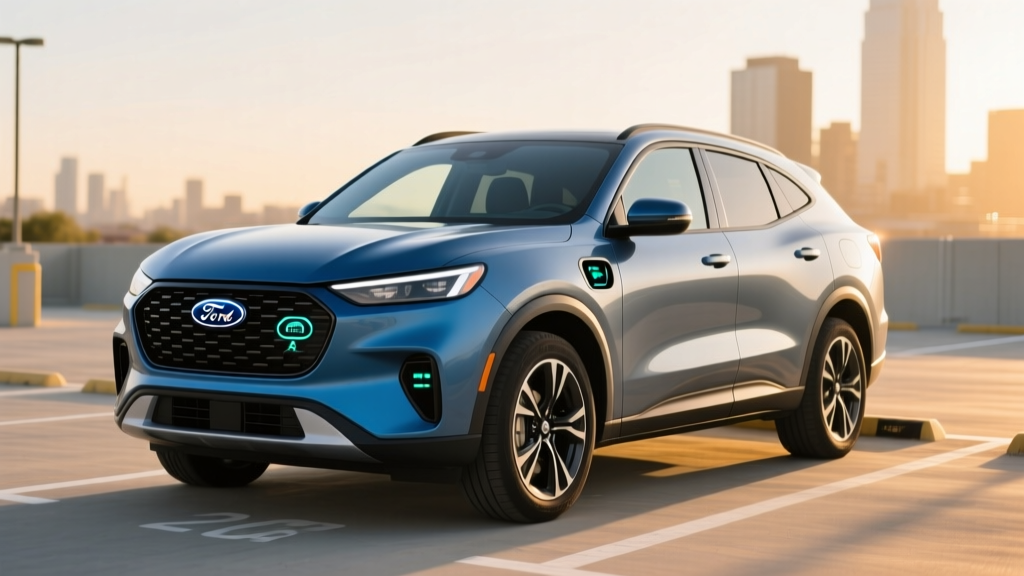
The Ford Maverick Hybrid remains one of the most practical and fuel-efficient compact pickups on the market. For 2026, Ford continues to offer the Maverick's 2.5-liter hybrid powertrain across multiple trims, pairing genuine truck utility with fuel economy that rivals compact sedans. If you've been searching for detailed Ford Maverick Hybrid specs, this guide covers every number that matters — from EPA MPG ratings and powertrain output to pricing, warranty coverage, and how the Maverick Hybrid stacks up against full EVs and conventional gas trucks.
2026 Ford Maverick Hybrid Powertrain and Performance Specs
The Maverick Hybrid uses Ford's fourth-generation 2.5-liter Atkinson-cycle inline-four engine paired with an electric motor integrated into the eCVT (electronic continuously variable transmission). This is a conventional hybrid (HEV) — it does not plug in. The system recovers energy during braking and deceleration to charge a small battery pack, which then assists the gas engine during acceleration and low-speed driving.
| Specification | Value |
|---|---|
| Engine | 2.5L Atkinson-cycle I-4 |
| Gas Engine Output | 162 hp @ 5,600 rpm / 155 lb-ft torque |
| Electric Motor Output | 131 hp / 155 lb-ft |
| Combined System Horsepower | 194 hp |
| Transmission | eCVT (planetary gearset, not belt-driven) |
| Drivetrain (FWD trims) | Front-wheel drive |
| Drivetrain (AWD available) | All-wheel drive (Lariat, Tremor trims) |
| 0–60 mph (est.) | ~8.5 seconds (FWD) |
| Max Towing Capacity | 2,000 lbs (standard); 4,000 lbs with 4K Tow Package (gas only — hybrid limited to 2,000 lbs) |
| Max Payload | 1,500 lbs |
| Hybrid Battery | ~1.1 kWh lithium-ion (sealed, self-charging) |
A critical clarification: the Maverick Hybrid is a conventional hybrid (HEV), not a plug-in hybrid (PHEV). You never plug it in. The small lithium-ion battery charges exclusively through regenerative braking and engine-driven generation. This is fundamentally different from a PHEV like the Ford Escape PHEV or Toyota RAV4 Prime, which offers 30–40 miles of electric-only range and requires a charging outlet to realize its full efficiency benefit.
Ford Maverick Hybrid MPG: EPA Ratings and Real-World Numbers
Fuel economy is the Maverick Hybrid's headline feature. Here are the official EPA estimates per fueleconomy.gov:
| Configuration | City MPG | Highway MPG | Combined MPG |
|---|---|---|---|
| FWD Hybrid | 42 | 33 | 37 |
| AWD Hybrid | 38 | 31 | 34 |
Real-World MPG: What Owners Actually See
Conventional hybrids like the Maverick often exceed their EPA city rating in stop-and-go driving because regenerative braking recovers more energy in urban conditions. On the highway, where the electric motor assists less and aerodynamic drag dominates, real-world MPG tends to dip closer to — or slightly below — the EPA highway figure.
Based on aggregated owner data and independent testing:
- City driving: 40–45 MPG is typical, with some drivers reporting 48+ MPG on flat, moderate-speed urban routes
- Highway driving (70–80 mph): 30–34 MPG, with loaded beds or roof racks reducing this further
- Mixed commuting: Most owners average 35–40 MPG combined over a tank
- Cold weather impact: Expect a 3–5 MPG drop in winter months as the engine runs more frequently for cabin heat and battery conditioning
- Towing: When towing near the 2,000-lb limit, fuel economy drops significantly — expect 18–22 MPG depending on trailer weight and terrain
HEV vs PHEV vs EV: Which Powertrain Fits Your Needs?
The Maverick Hybrid occupies a specific niche. Here's how it compares to the other electrified options available in the compact truck and crossover segments:
| Factor | HEV (Maverick Hybrid) | PHEV (e.g., RAV4 Prime) | Full EV (e.g., F-150 Lightning) |
|---|---|---|---|
| Plug-in required? | No | Yes (for full benefit) | Yes (mandatory) |
| Electric-only range | 0 miles (motor assists only) | 30–42 miles typical | 230–350+ miles |
| Gas engine | Yes (primary) | Yes (backup) | None |
| Home charging needed | No | Recommended (120V or 240V) | Required (240V Level 2) |
| Fuel cost per mile | ~$0.10–0.13 | ~$0.04 electric / ~$0.11 gas | ~$0.03–0.06 |
| Upfront cost premium | Low ($1,000–2,000 over gas) | Moderate ($4,000–8,000) | High ($10,000+) |
| Maintenance | Standard (oil changes, etc.) | Standard + battery system | Minimal (no oil, fewer moving parts) |
| Federal tax credit | Not eligible (§30D is EV/PHEV only) | Up to $7,500 (if eligible) | Up to $7,500 (if eligible) |
- Choose the Maverick Hybrid (HEV) if: You want maximum fuel efficiency without changing your refueling habits, lack access to home charging, or want a truck at a moderate price point.
- Choose a PHEV if: You have home charging access, commute under 40 miles daily, and want to drive mostly on electricity with a gas backup for road trips.
- Choose a full EV if: You have reliable Level 2 home charging, want the lowest per-mile fuel cost, and your daily driving stays within the vehicle's range.
2026 Ford Maverick Hybrid Pricing by Trim
For 2026, Ford offers the hybrid powertrain across the XL, XLT, Lobo, and Lariat trims. AWD is available on Lariat and select trims. Pricing below reflects MSRP before destination charges:
| Trim | Drivetrain | MSRP (approx.) |
|---|---|---|
| XL Hybrid | FWD | $29,490 |
| XLT Hybrid | FWD | $31,990 |
| Lobo Hybrid | FWD | $34,490 |
| Lariat Hybrid | FWD | $36,990 |
| Lariat Hybrid AWD | AWD | $38,490 |
Note: Prices include the hybrid powertrain, which carries no additional upcharge over the 2.0L EcoBoost gas engine on most trims. Destination and delivery fees (~$1,595) are additional.
Tax Credit Eligibility
The Ford Maverick Hybrid is a conventional hybrid (HEV) and does not qualify for the federal §30D Clean Vehicle Credit. Under current IRS rules, the §30D credit of up to $7,500 applies only to battery electric vehicles (BEVs) and plug-in hybrid electric vehicles (PHEVs) that meet battery sourcing, critical mineral, MSRP cap, and buyer income requirements.
Some states offer their own incentives for conventional hybrids, though these are far less common than EV incentives. Check your state's energy office or department of environmental quality for current programs. A few utilities also offer rebates for purchasing any electrified vehicle, including HEVs.
Battery Warranty, Reliability, and Replacement Cost
Hybrid battery longevity is consistently the top concern among first-time hybrid buyers. Here's what Ford provides:
- Hybrid battery: 8 years / 100,000 miles (whichever comes first)
- Hybrid system components (inverter, eCVT, motor): 8 years / 100,000 miles
- Powertrain warranty (engine): 5 years / 60,000 miles
- Bumper-to-bumper: 3 years / 36,000 miles
Real-World Hybrid Battery Longevity
Ford's hybrid system has been in use across the Escape Hybrid and other models for years, and failure rates remain low. The Maverick's ~1.1 kWh battery is small and operates within a narrow state-of-charge window (roughly 40–80%), which significantly reduces degradation stress compared to a full EV battery that cycles through wider ranges.
Most hybrid batteries from major manufacturers last well beyond the warranty period. Toyota's Prius batteries routinely exceed 150,000–200,000 miles, and Ford's hybrid system uses similar lithium-ion chemistry and management strategies. Premature failure before 100,000 miles is uncommon but not unheard of — which is exactly why the warranty exists.
Battery Replacement Cost
If the hybrid battery does require replacement out of warranty, expect the following approximate costs:
- OEM replacement battery: $2,500–$4,000 (parts)
- Labor: $500–$1,000
- Total out-of-pocket: $3,000–$5,000
Third-party refurbished hybrid batteries are available for $1,500–$2,500 installed, though they may carry shorter warranties. Given the Maverick Hybrid's modest battery size, replacement is significantly cheaper than an EV traction battery swap.
Maverick Hybrid vs Gas Maverick: Is the Hybrid Worth It?
The Maverick is also available with a 2.0L EcoBoost turbocharged gas engine producing 250 hp. Here's how the two powertrains compare for buyers deciding between them:
| Factor | 2.5L Hybrid (FWD) | 2.0L EcoBoost Gas (FWD) |
|---|---|---|
| Horsepower | 194 hp combined | 250 hp |
| EPA Combined MPG | 37 MPG | 26 MPG |
| EPA City MPG | 42 MPG | 23 MPG |
| Annual Fuel Cost (15K mi) | ~$1,420 | ~$2,020 |
| Max Towing | 2,000 lbs | 4,000 lbs (with tow pkg) |
| AWD Available | Yes (select trims) | Yes |
| Price Premium | No upcharge on most trims | Base engine |
The hybrid wins decisively on fuel economy — saving roughly $600 per year in fuel at 15,000 miles driven annually (assuming $3.50/gallon regular). Over a five-year ownership period, that's approximately $3,000 in fuel savings. The gas engine wins on towing capacity and peak horsepower, making it the better choice if you regularly tow near 4,000 lbs or prioritize acceleration.
Who Should Buy the Ford Maverick Hybrid?
✓ Ideal For
- Commuters who want truck utility with sedan-like fuel costs
- Urban and suburban drivers (city MPG is the standout figure)
- Buyers without home charging access who still want efficiency gains
- First-time truck buyers prioritizing low operating costs
- Those who want a ~$29,500 starting price with no EV charging infrastructure investment
✗ Consider Alternatives If
- You regularly tow more than 2,000 lbs (choose the EcoBoost gas model)
- You want zero tailpipe emissions or electric-only driving (look at BEVs or PHEVs)
- You need maximum acceleration (the gas EcoBoost is noticeably quicker)
- You want federal tax credit eligibility (only BEVs and PHEVs qualify under §30D)
- You drive predominantly long highway trips where the hybrid's city advantage diminishes
Frequently Asked Questions
How many MPG does the Ford Maverick Hybrid get?
The FWD Maverick Hybrid achieves an EPA-rated 42 city / 33 highway / 37 combined MPG. The AWD version rates at 38 city / 31 highway / 34 combined. Real-world results vary: city drivers often see 40–45 MPG, while sustained highway driving at 75+ mph may yield 30–33 MPG.
Does the Ford Maverick Hybrid need to be plugged in?
No. The Maverick Hybrid is a conventional hybrid (HEV). It charges its own small battery through regenerative braking and the gas engine. You refuel it exclusively at a gas station, exactly like a conventional vehicle.
Does the Maverick Hybrid qualify for a federal tax credit?
No. Under current IRS §30D rules, only battery electric vehicles (BEVs) and plug-in hybrids (PHEVs) are eligible for the federal Clean Vehicle Credit. The Maverick Hybrid is a conventional hybrid and does not qualify. Check your state's incentive programs for any local hybrid rebates.
How long will the Maverick Hybrid battery last?
Ford warranties the hybrid battery for 8 years/100,000 miles (10 years/150,000 miles in CARB states). Based on industry data from similar hybrid systems, most batteries last well beyond the warranty period — often 150,000+ miles. Out-of-warranty replacement costs approximately $3,000–$5,000.
Can the Maverick Hybrid tow?
Yes, but with limits. The Maverick Hybrid has a maximum towing capacity of 2,000 lbs across all trims. The 4,000-lb towing capacity (with the 4K Tow Package) is only available on the 2.0L EcoBoost gas model. If you need to tow a larger boat, camper, or trailer, the gas engine is the better choice.
Is the Maverick Hybrid slower than the gas model?
The hybrid produces 194 combined horsepower versus the gas engine's 250 hp. Expect a 0–60 mph time of roughly 8.5 seconds for the hybrid versus approximately 6.5 seconds for the EcoBoost. For daily driving and merging, the hybrid is perfectly adequate, but it won't feel sporty under hard acceleration.
Is AWD available on the Maverick Hybrid?
Yes. For 2026, AWD is available on the Lariat Hybrid and select other trims. Adding AWD reduces fuel economy slightly (34 MPG combined vs. 37 for FWD) but provides improved traction in snow and rain.