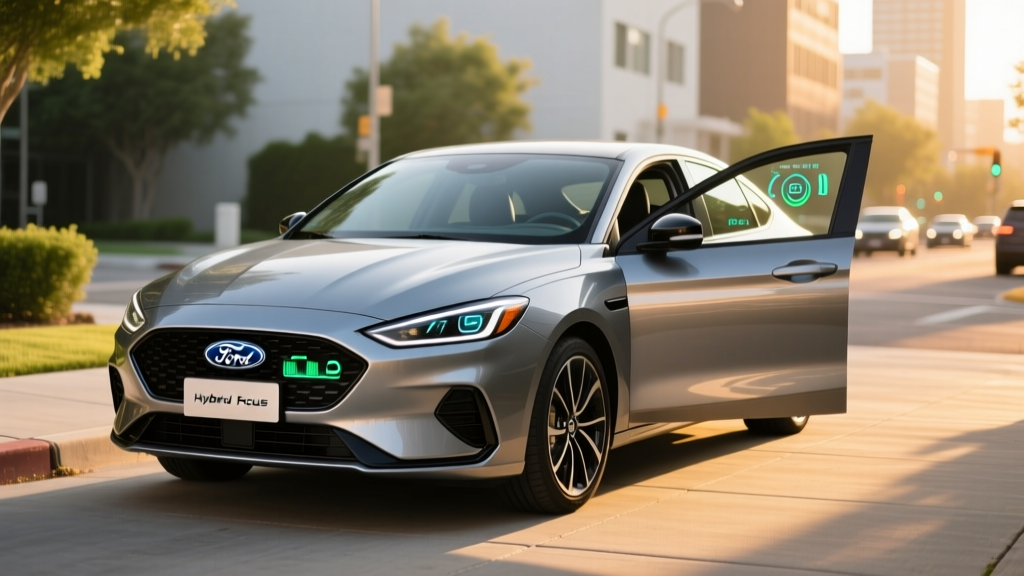
If you've been searching for a Ford hybrid Focus, you've likely hit a wall — and for good reason. Ford discontinued the Focus sedan and hatchback in the United States after the 2018 model year as part of its pivot toward SUVs, crossovers, and trucks. That means there is no 2026 Ford Focus, hybrid or otherwise, available new in the US market.
But if what you actually want is a fuel-efficient, compact Ford with hybrid technology, the good news is that Ford's 2026 hybrid lineup fills the gap the Focus left behind — often with better fuel economy, more cargo space, and available plug-in hybrid (PHEV) variants the old Focus never offered.
This guide covers what happened to the Focus, breaks down the 2026 Ford hybrid alternatives that serve the same buyer, and gives you the exact MPG, pricing, battery warranty, and tax-credit data you need to decide.
What Happened to the Ford Focus (and Its Hybrid)?
The Ford Focus was a staple compact car in the US from its 2000 debut through 2018. Ford offered a mild-hybrid variant in some European markets, but the US-market Focus was sold exclusively with gasoline engines — including the popular 1.0L EcoBoost and 2.0L four-cylinder. There was never a full hybrid or plug-in hybrid Focus sold in the United States.
Ford's all-electric Focus Electric (2012–2018) existed, but it was a battery-electric vehicle (BEV) with just 76 miles of EPA range and a small 23 kWh usable battery — a compliance car, not a volume seller. It was discontinued alongside the gas Focus when Ford restructured its North American lineup to focus on the Escape, Bronco Sport, Explorer, F-150, and Mustang.
The upshot: if you want a Ford hybrid Focus in 2026, you'll need to look at the models that replaced it in spirit and function.
HEV vs PHEV: Understanding the Two Hybrid Types
Before comparing alternatives, it's essential to distinguish the two hybrid architectures Ford uses in 2026:
| Feature | Conventional Hybrid (HEV) | Plug-In Hybrid (PHEV) |
|---|---|---|
| Plug-in charging | No — charges via regenerative braking and engine | Yes — plug in to charge the larger battery |
| Battery size | 1.0–1.5 kWh | 14–19 kWh usable |
| Electric-only range | None (electric assist only) | 30–42 miles EPA |
| Fueling | Gasoline only | Gasoline + electricity |
| Federal tax credit | No | Up to $7,500 (§30D, if eligible) |
| Best for | Drivers who can't charge at home | Drivers with home charging and short commutes |
Conventional hybrids (HEVs) never need plugging in — they recover energy during braking and use a small battery to assist the gas engine, boosting MPG especially in city driving. Plug-in hybrids (PHEVs) carry a much larger battery that you charge from a wall outlet or Level 2 charger, giving you 30–42 miles of pure electric driving before the gas engine kicks in.
2026 Ford Hybrid Alternatives to the Focus
Three Ford models in 2026 carry the hybrid torch for buyers who would have once considered a Focus. Each uses Ford's 2.5L Atkinson-cycle four-cylinder hybrid powertrain, paired with an electric motor and an eCVT (electronic continuously variable transmission).
| Spec | 2026 Ford Escape Hybrid (HEV) | 2026 Ford Escape PHEV | 2026 Ford Maverick Hybrid |
|---|---|---|---|
| Powertrain | 2.5L I4 + electric motor | 2.5L I4 + electric motor | 2.5L I4 + electric motor |
| Combined HP | 192 hp (FWD) / 210 hp (AWD) | 210 hp | 191 hp |
| EPA City / Hwy / Combined MPG | 42 / 36 / 39 (FWD) | 40 / 37 / 39 (hybrid mode) | 42 / 33 / 37 (FWD) |
| Electric-only range (PHEV) | N/A | 37 miles EPA | N/A |
| Total range | ~540 miles | ~520 miles (gas + electric) | ~500 miles |
| Battery (kWh usable) | 1.1 kWh (NMC) | 14.4 kWh (NMC) | 1.1 kWh (NMC) |
| Level 2 charge time (PHEV) | N/A | ~3.5 hours at 3.3 kW | N/A |
| DC fast charging | No | No | No |
| 0–60 mph | 7.7 sec (FWD) | 7.5 sec | 8.0 sec |
| Cargo (behind rear seats) | 34.4 cu ft | 34.4 cu ft | 33.3 cu ft (bed) |
| Starting MSRP | $33,000 | $40,500 | $28,000 |
Sources: fueleconomy.gov, Ford Motor Company official specifications.
The Escape Hybrid: Closest to a "Hybrid Focus"
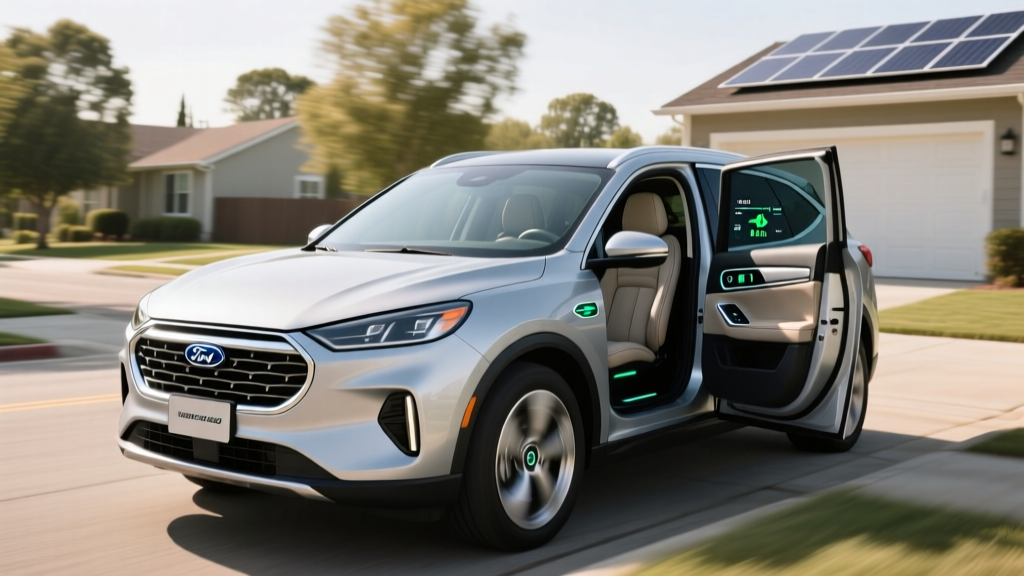
If you wanted a Focus hybrid for commuting and daily efficiency, the 2026 Ford Escape Hybrid is the direct spiritual successor. It's larger than the old Focus (it's a compact SUV, not a sedan), but its 42 MPG city figure actually beats what any Focus ever delivered. The front-wheel-drive Hybrid trim starts around $33,000 and delivers 39 MPG combined — roughly 540 miles per tank.
In real-world driving, the Escape HEV often exceeds its EPA city rating in stop-and-go traffic because regenerative braking is most effective at low speeds. Highway mileage tends to drop slightly below the 36 MPG EPA figure at sustained 75+ mph speeds, especially with AWD engaged.
The Escape PHEV: For Home Chargers with Short Commutes
The 2026 Ford Escape PHEV adds a 14.4 kWh battery that delivers 37 miles of EPA-rated electric-only range. If your daily commute is under 35 miles round-trip and you can charge at home on a standard 120V outlet (Level 1, ~8 hours) or a 240V Level 2 charger (~3.5 hours), you may go weeks without visiting a gas station.
Once the battery is depleted, the Escape PHEV operates as a conventional hybrid, returning 39 MPG combined. Total range — electric plus a full tank of gas — is roughly 520 miles.
The Maverick Hybrid: The Budget-Friendly Wildcard
At just $28,000 starting, the 2026 Ford Maverick Hybrid is the most affordable new Ford hybrid. It's a compact pickup, not a car, but its 42 MPG city rating and practical 4.5-foot bed make it a compelling alternative for buyers who find SUVs too tall and sedans too impractical. Real-world city MPG of 44–46 is common in urban driving.
Fuel Economy Deep Dive: Real-World MPG vs EPA Stickers
| Model | EPA Combined | Real-World City (observed) | Real-World Highway (observed) | Cold-Weather Impact |
|---|---|---|---|---|
| Escape Hybrid FWD | 39 MPG | 42–45 MPG | 33–35 MPG | -3 to -5 MPG in sub-30°F |
| Escape PHEV | 39 MPG (hybrid mode) | 40–43 MPG | 34–36 MPG | EV range drops ~20% in cold |
| Maverick Hybrid FWD | 37 MPG | 40–46 MPG | 30–33 MPG | -2 to -4 MPG in sub-30°F |
Hybrids consistently outperform their EPA city ratings because urban driving maximizes regenerative braking opportunities. Highway efficiency drops because the electric motor provides less benefit at steady high speeds, where aerodynamic drag dominates. Cold weather reduces battery efficiency and forces the engine to run more often for cabin heat — expect a 5–10% MPG hit in freezing conditions.
Pricing, Tax Credits, and Total Cost
Here's what each model costs and whether federal incentives apply:
- Escape Hybrid (HEV): Starts at ~$33,000. Does not qualify for the federal §30D tax credit, which applies only to plug-in vehicles with sufficient battery capacity.
- Escape PHEV: Starts at ~$40,500. May qualify for up to $7,500 under IRS §30D, subject to battery-component and critical-mineral sourcing requirements, buyer income caps ($150K single / $300K joint), and the $80,000 MSRP cap for SUVs. As of 2026, the Escape PHEV qualifies for a partial credit ($3,750) depending on the specific battery sourcing compliance for the model year. Always verify current eligibility at IRS.gov before purchasing.
- Maverick Hybrid (HEV): Starts at ~$28,000. No federal tax credit. However, some states (California, Colorado, New York) offer their own hybrid or efficiency rebates — check your state energy office.
Ford Hybrid Battery Warranty
All 2026 Ford hybrid and PHEV models include an 8-year / 100,000-mile hybrid battery warranty (whichever comes first), covering defects and capacity loss below a defined threshold. In California and states that follow CARB emissions rules, the warranty extends to 10 years / 150,000 miles. Ford's hybrid batteries have proven durable — out-of-warranty replacements for the Escape Hybrid battery run approximately $2,500–$4,000 at a dealership, though most units last well beyond 150,000 miles with minimal degradation.
Hybrid vs PHEV vs Full EV: Which Fits You?
Choose a conventional hybrid (HEV) if:
- You rent or live somewhere without reliable access to a charging outlet
- You want zero behavior change — just fill up with gas and go
- Your driving is mostly city/stop-and-go where hybrids shine
- Budget is a priority (HEVs are $5,000–$7,000 cheaper than PHEVs)
Choose a plug-in hybrid (PHEV) if:
- You can install a Level 2 charger at home or have a 120V garage outlet
- Your daily commute is under 35 miles round-trip
- You want to drive mostly on electricity but need gas flexibility for road trips
- You want to capture a partial or full federal tax credit
Choose a full EV (BEV) if:
- You have reliable home charging (Level 2)
- You want the lowest cost per mile and minimal maintenance
- Your daily driving is under 250 miles and you're comfortable planning road-trip charging
- You want the full $7,500 federal tax credit (on eligible models)
If you were hoping for a compact, affordable Ford hybrid Focus, the Maverick Hybrid at $28,000 and 42 MPG city is the closest match in spirit. The Escape Hybrid offers more space and similar efficiency. The Escape PHEV is the premium option for those who can charge at home.
Reliability and Long-Term Ownership
Ford's 2.5L Atkinson-cycle hybrid powertrain, introduced for the 2020 Escape and refined through 2026, has proven reliable in fleet and consumer use. The eCVT transmission has no traditional gears or belts — it uses a planetary gearset that is mechanically simple and durable.
Common long-term ownership notes:
- Hybrid battery degradation: Minimal in real-world use. Most Ford hybrid owners report less than 5% capacity loss over 100,000 miles. The 1.1 kWh HEV battery is small and cycles shallowly, which extends life significantly.
- PHEV battery: The 14.4 kWh pack in the Escape PHEV sees deeper cycles but benefits from active thermal management. Expect 8–12% degradation over 8 years based on industry NMC data.
- Brake wear: Hybrids often see brake pad life of 80,000–100,000+ miles because regenerative braking handles most deceleration.
- Maintenance: No transmission fluid changes, no spark plugs until 100K+ miles, and standard oil changes at 7,500–10,000-mile intervals.
Safety ratings for the 2026 Escape can be verified at NHTSA.gov and IIHS.org.
Frequently Asked Questions
Does a Ford hybrid Focus exist?
No. Ford never sold a hybrid Focus in the US, and the Focus was discontinued after the 2018 model year. The 2026 Ford Escape Hybrid and Maverick Hybrid serve as the closest alternatives.
How many MPG does the 2026 Ford Escape Hybrid get?
The front-wheel-drive Escape Hybrid achieves an EPA-rated 42 city / 36 highway / 39 combined MPG. Real-world city driving often yields 42–45 MPG thanks to aggressive regenerative braking.
How far can the Escape PHEV go on electric only?
The 2026 Escape PHEV delivers 37 miles of EPA-rated electric-only range. In cold weather (below 30°F), expect that to drop to roughly 28–30 miles due to cabin heating demands and reduced battery efficiency.
Do Ford hybrid batteries need to be plugged in?
No. Conventional hybrids (HEVs) like the Escape Hybrid and Maverick Hybrid charge their small batteries entirely through regenerative braking and the gas engine. Only the Escape PHEV needs to be plugged in to access its electric-only range.
Is the Ford hybrid battery reliable, and what does replacement cost?
Ford's hybrid batteries are covered by an 8-year/100,000-mile warranty (10 years/150,000 miles in CARB states). Most batteries last well beyond warranty. Out-of-warranty replacement for the Escape HEV battery costs approximately $2,500–$4,000.
Does any 2026 Ford hybrid qualify for a tax credit?
The Escape PHEV may qualify for a partial federal tax credit (up to $3,750) under IRS §30D, depending on battery-sourcing compliance, buyer income limits, and MSRP caps. Conventional hybrids (HEVs) do not qualify for the federal credit. Always check IRS.gov for current eligibility.
Hybrid vs PHEV vs EV — which should I choose?
Choose an HEV if you can't charge at home and want simplicity. Choose a PHEV if you have home charging and a short commute but want gas flexibility for road trips. Choose a full EV if you want the lowest operating costs and can charge at home reliably.
Pros of Ford's 2026 Hybrid Lineup
- 42 MPG city (Escape HEV and Maverick Hybrid) beats any gas-only compact
- No plug-in required for HEVs — zero lifestyle change
- Escape PHEV offers 37 miles electric + full gas flexibility
- 8-year/100K-mile hybrid battery warranty across the lineup
- Maverick Hybrid at $28K is one of the cheapest new hybrids available
Cons to Consider
- No compact car (sedan/hatchback) hybrid option — SUVs and trucks only
- Escape PHEV starts at $40,500 before any credit — $7,500 more than the HEV
- No DC fast charging on any Ford PHEV (Level 2 only)
- AWD hybrid trims sacrifice 2–4 MPG vs FWD
- Federal tax credit for PHEV is partial and subject to sourcing rules