Quick Verdict: The Hybrid F-150 Makes Practical Sense
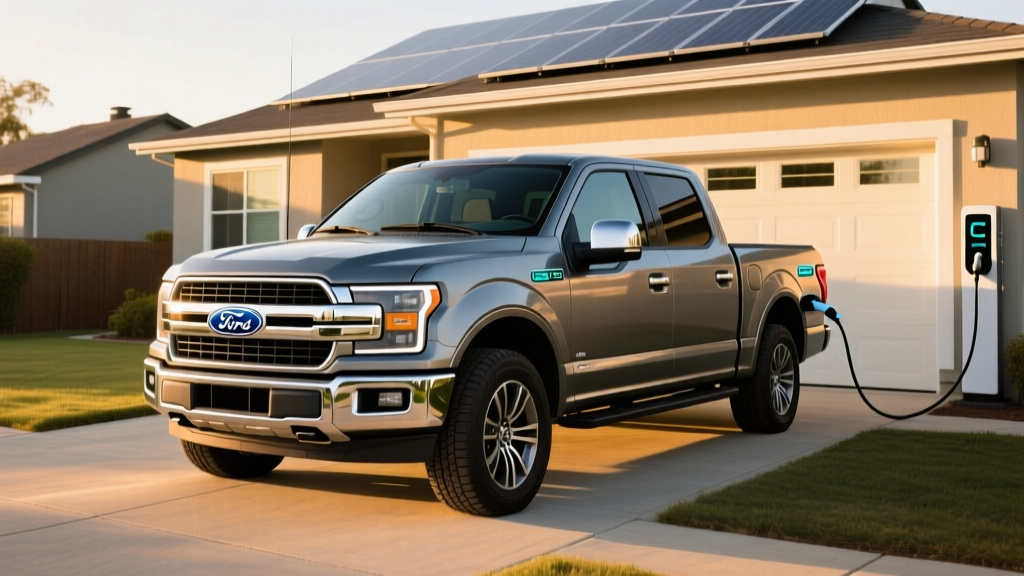
If you need a full-size pickup that can tow a boat on Saturday and commute to the office on Monday without burning through fuel like a conventional V8, the Ford F-150 PowerBoost hybrid occupies a compelling middle ground. It's a conventional hybrid (HEV) — not a plug-in — meaning you never need to search for a charger. The 3.5-liter V6 paired with a 47-horsepower electric motor integrated into the 10-speed automatic transmission delivers 430 combined horsepower and up to 570 lb-ft of torque, all while returning an EPA-estimated 25 MPG combined.
For the 2026 model year, Ford continues to position the PowerBoost as the efficiency play in the F-150 lineup, sitting between the base 3.3L V6 and the high-output Raptor variants. It's not a plug-in hybrid and it's not a battery-electric truck like the F-150 Lightning — it's a self-charging hybrid that recovers energy through regenerative braking and engine optimization. That distinction matters, and we'll break down exactly who benefits from this powertrain.
Hybrid vs Plug-In Hybrid vs Electric: What the F-150 PowerBoost Actually Is
Before evaluating the PowerBoost's numbers, it's essential to clarify the terminology, because Ford's F-150 lineup includes all three electrification approaches:
Conventional Hybrid (HEV) — F-150 PowerBoost
- How it charges: Self-charging via regenerative braking and the gasoline engine. No plug required.
- Battery: ~1.5 kWh lithium-ion (small, used for assist and regen capture)
- Electric-only driving: Very limited — the motor assists the engine and enables short low-speed electric creep, but it cannot sustain highway speeds on battery alone.
- Fueling: Gas station only, identical to a conventional F-150.
Plug-In Hybrid (PHEV) — Not Offered in F-150 (as of 2026)
- How it charges: Plugs into a wall outlet or charger for 20-40 miles of electric-only range, then operates as a hybrid.
- Battery: Typically 15-25 kWh.
- Examples: Jeep Wrangler 4xe, Toyota RAV4 Prime. Ford does not currently offer an F-150 PHEV.
Battery Electric (BEV) — F-150 Lightning
- How it charges: Plug-in only — Level 2 home charging or DC fast charging.
- Battery: 98 kWh (Standard Range) or 131 kWh (Extended Range).
- Range: 240-320 miles EPA depending on configuration.
- No gasoline engine.
The PowerBoost is the least disruptive option: you drive it exactly like a gas truck, fill up at any station, and the hybrid system works invisibly in the background to reduce fuel consumption by roughly 15-25% compared to the non-hybrid 3.5L EcoBoost V6.
Fuel Economy: EPA Numbers and Real-World MPG
| Configuration | City MPG | Highway MPG | Combined MPG |
|---|---|---|---|
| F-150 PowerBoost 4x2 | 25 | 26 | 25 |
| F-150 PowerBoost 4x4 | 23 | 24 | 23 |
| F-150 3.5L EcoBoost 4x4 (non-hybrid) | 17 | 22 | 19 |
| F-150 5.0L V8 4x4 | 16 | 22 | 18 |
Source: fueleconomy.gov
Hybrid trucks, like hybrid cars, tend to outperform their EPA city estimates in stop-and-go traffic because regenerative braking recaptures energy that a conventional truck wastes as heat. In mixed suburban driving with moderate loads, owners frequently report 24-27 MPG in the 4x2 PowerBoost. Highway-only driving at 75+ mph with an empty bed typically returns 22-24 MPG in the 4x4. However, towing a 5,000-lb trailer drops fuel economy sharply — expect 12-15 MPG under load, which is comparable to the non-hybrid EcoBoost under similar conditions. The hybrid advantage shrinks as workload increases.
Powertrain Specs: What Makes the PowerBoost Tick
| Specification | F-150 PowerBoost Hybrid |
|---|---|
| Engine | 3.5L twin-turbo V6 + 47-hp electric motor |
| Combined Horsepower | 430 hp |
| Combined Torque | 570 lb-ft |
| Transmission | 10-speed automatic (motor integrated into housing) |
| Hybrid Battery | ~1.5 kWh lithium-ion (under rear seat) |
| Max Towing Capacity | Up to 12,700 lbs (properly equipped, 4x2) |
| Max Payload | Up to 2,120 lbs |
| 0-60 mph | ~5.8 seconds (4x4) |
| Pro Power Onboard | Available 2.0 kW or 7.2 kW generator |
| Drivetrain | RWD or 4WD |
The 430-hp combined output makes the PowerBoost one of the most powerful non-Raptor F-150 variants, and the 570 lb-ft of torque — available low in the rev range thanks to electric motor assist — gives it strong off-the-line acceleration and confident highway merging. The electric motor is housed inside the 10-speed transmission bell housing, so there's no separate drive unit or compromise to the truck's mechanical layout.
One standout feature: Pro Power Onboard. The available 7.2 kW onboard generator turns the PowerBoost's hybrid battery and engine into a mobile power source — enough to run power tools at a job site, appliances during an outage, or a campsite setup. This is a genuine utility advantage over the non-hybrid F-150 and a practical alternative to carrying a standalone generator.
Pricing, Trims, and Tax Credit Eligibility
For the 2026 model year, the PowerBoost hybrid is available across multiple F-150 trims, typically as a powertrain upgrade rather than a standalone model:
| Trim (4x4) | Approx. MSRP | PowerBoost Availability |
|---|---|---|
| XLT | ~$55,000 | Optional (~$2,500-$3,300 upgrade) |
| Lariat | ~$63,000 | Optional / included on certain packages |
| King Ranch | ~$70,000 | Available |
| Platinum | ~$73,000 | Available |
Pricing varies by configuration, options, and destination charges. Verify current MSRP on Ford.com.
The F-150 PowerBoost is a conventional hybrid (HEV), not a plug-in hybrid or battery-electric vehicle. It does not qualify for the federal §30D Clean Vehicle Credit (up to $7,500 for new EVs and PHEVs). The IRS tax credit under IRS §30D requires a minimum battery capacity of 7 kWh and plug-in capability — the PowerBoost's ~1.5 kWh battery does not meet this threshold.
Some states may offer modest incentives for conventional hybrids, but these are uncommon and typically small ($250-$500 rebates where available). Check your state's energy office or the Alternative Fuels Data Center for state-specific programs. If a federal tax credit is a dealbreaker, you'd need to look at the F-150 Lightning (BEV) or a qualifying PHEV from another manufacturer.
Battery Warranty, Reliability, and Replacement Costs
- Ford coverage: 8 years / 100,000 miles (whichever comes first) on hybrid-specific components including the battery pack, electric motor, and inverter.
- Powertrain warranty: 5 years / 60,000 miles on the engine and transmission.
- Capacity threshold: Ford's hybrid warranty covers defects and failures; unlike EV batteries, the small hybrid pack is not warrantied against gradual capacity loss because its function is assist/regen, not sustained electric propulsion.
The F-150 PowerBoost's hybrid system has proven reliable since its 2021 introduction. Ford's 3.5L EcoBoost V6 is one of the most extensively tested engines in the company's lineup, and the electric motor integration is comparatively simple — there's no separate high-voltage system, no plug-in charging hardware, and the battery pack is small enough that thermal management is straightforward.
Battery replacement cost: If the hybrid battery does fail outside warranty, replacement parts typically range from $2,000 to $4,000, with labor adding $500-$1,000. This is substantially less than a full EV battery replacement (which can exceed $15,000-$20,000) because the PowerBoost's pack is small and its role is supplemental. Most hybrid batteries in Ford's system are expected to last the life of the vehicle under normal use — the 8-year/100,000-mile warranty provides a solid backstop, and real-world failure rates have been low.
Overall reliability: The F-150 as a platform earns average to above-average reliability ratings. IIHS has tested the SuperCrew configuration, and NHTSA has awarded the F-150 strong crash-test scores. The hybrid components add minimal complexity compared to the non-hybrid powertrain — the electric motor essentially replaces the traditional torque converter, reducing one wear item rather than adding a new failure point.
Who Should Buy the Hybrid F-150 — and Who Shouldn't
Choose the F-150 PowerBoost Hybrid If:
- You drive a truck daily (commuting, errands, job-site trips) and want meaningful fuel savings without changing your fueling habits.
- You value Pro Power Onboard for job-site or emergency power (7.2 kW is genuinely useful).
- You need strong towing capacity (up to 12,700 lbs) combined with better-than-average fuel economy when unloaded.
- You want electric motor torque for low-speed responsiveness without range anxiety or charging infrastructure concerns.
- You live in an area with limited or unreliable public charging infrastructure.
Consider the F-150 Lightning (BEV) Instead If:
- You have reliable home Level 2 charging and your daily driving is under 200 miles.
- You want to qualify for the federal §30D tax credit (up to $7,500, subject to income and sourcing rules).
- You want near-zero maintenance costs (no oil changes, no transmission fluid, fewer moving parts).
- Your local electricity rates make per-mile fuel costs dramatically cheaper than gasoline.
Stick with the Non-Hybrid 3.5L EcoBoost If:
- You primarily tow heavy loads and rarely drive unloaded — the hybrid fuel savings diminish significantly under towing conditions.
- The PowerBoost upcharge doesn't pencil out given your annual mileage and fuel cost projections.
- You prefer the simplest possible powertrain with the longest track record.
Pros
- 25 MPG combined (4x2) — a 20%+ improvement over the non-hybrid EcoBoost
- 430 hp / 570 lb-ft — strongest non-Raptor F-150 powertrain
- Pro Power Onboard (7.2 kW) — best-in-class mobile power
- No charging infrastructure needed — fuel normally at any gas station
- 8-year / 100,000-mile hybrid component warranty
- Regenerative braking extends brake pad life in city driving
Cons
- No federal tax credit eligibility (HEV, not PHEV or BEV)
- $2,500-$3,300 upcharge over the non-hybrid 3.5L EcoBoost
- Fuel savings shrink dramatically when towing heavy loads
- 4x4 models drop to 23 MPG combined
- Small hybrid battery limits electric-only operation to low-speed assist
- Higher curb weight than non-hybrid (slightly reduced payload in some configs)
Ownership Economics: Does the Hybrid Premium Pay for Itself?
Let's run a practical calculation. Assume 15,000 miles per year, $3.50/gallon regular unleaded, and a 5-year ownership period:
| Metric | PowerBoost Hybrid 4x4 (23 MPG) | 3.5L EcoBoost 4x4 (19 MPG) |
|---|---|---|
| Annual fuel consumption | 652 gallons | 789 gallons |
| Annual fuel cost | $2,282 | $2,762 |
| 5-year fuel cost | $11,410 | $13,810 |
| 5-year fuel savings (hybrid) | $2,400 | |
At these assumptions, the hybrid saves roughly $2,400 over five years against a ~$3,000 powertrain upcharge. The math is close to break-even on fuel alone — but factors like stronger resale value for the hybrid, lower brake wear from regen, and the utility value of Pro Power Onboard can tip the balance. If your fuel costs are higher (premium in California or the Northeast) or your annual mileage exceeds 15,000, the payback period shortens considerably. If you primarily tow, the savings narrow or disappear.
Frequently Asked Questions
How many MPG does the hybrid F-150 get?
The 2026 F-150 PowerBoost 4x2 earns an EPA-estimated 25 MPG city / 26 highway / 25 combined. The 4x4 version drops slightly to 23 city / 24 highway / 23 combined. Real-world driving in mixed suburban conditions often yields 24-27 MPG for the 4x2, while sustained highway driving at 75+ mph typically returns 22-24 MPG. Towing reduces fuel economy to 12-15 MPG depending on trailer weight and terrain.
Does the F-150 PowerBoost need to be plugged in?
No. The PowerBoost is a conventional hybrid (HEV). It charges its small battery pack through regenerative braking and the gasoline engine. You never plug it in — you fuel it at any gas station like a standard F-150. Ford does not currently offer a plug-in hybrid (PHEV) version of the F-150.
Can the hybrid F-150 drive on electric power alone?
Only at very low speeds for brief distances. The 47-hp electric motor assists the V6 engine and can propel the truck in stop-and-go traffic at parking-lot speeds, but it cannot sustain highway speeds on battery alone. The ~1.5 kWh battery is designed for assist and energy recapture, not extended electric-only driving. If you need 20-40 miles of electric-only range, you need a PHEV — which Ford does not offer in the F-150 lineup.
Is the hybrid F-150 reliable?
Yes. The PowerBoost hybrid system has demonstrated solid reliability since its 2021 introduction. The 3.5L EcoBoost V6 is a proven engine, and the electric motor is integrated into the transmission housing with minimal additional complexity. Ford covers hybrid-specific components (battery, motor, inverter) for 8 years or 100,000 miles. Hybrid battery failure rates have been low, and the small pack size means replacement costs ($2,000-$4,000 parts) are far lower than a full EV battery swap.
Does the hybrid F-150 qualify for any tax credits?
No federal tax credit applies. The IRS §30D Clean Vehicle Credit requires plug-in capability and a minimum battery capacity of 7 kWh. The PowerBoost's ~1.5 kWh battery and lack of plug-in charging disqualify it. Some states may offer minor hybrid incentives, but these are uncommon and typically under $500. If a federal tax credit is important to your purchase decision, the battery-electric F-150 Lightning may qualify (subject to MSRP caps, buyer income limits, and battery sourcing requirements — verify current eligibility at IRS.gov).
How much can the hybrid F-150 tow?
Up to 12,700 pounds when properly equipped (4x2 configuration with max tow package). The 4x4 hybrid typically rates around 11,000-12,000 lbs depending on trim and equipment. This is competitive with the non-hybrid 3.5L EcoBoost and substantially higher than the F-150 Lightning's maximum towing rating (7,700-10,000 lbs depending on battery and configuration). The electric motor's low-end torque assists with trailer launch and low-speed maneuvering.
What is Pro Power Onboard and is it worth it?
Pro Power Onboard turns the PowerBoost's hybrid system into a mobile generator. The available 7.2 kW system provides four 120V household outlets and one 240V outlet in the bed — enough to simultaneously run a compressor, circular saw, and job-site lights, or power household appliances during an outage. The 2.0 kW base system is adequate for lighter duty (laptops, small tools, camping). For contractors, emergency preparedness, or frequent camping, the 7.2 kW system is a genuine differentiator that eliminates the need for a standalone portable generator.
Hybrid vs full EV (F-150 Lightning) — which is better for me?
Choose the PowerBoost hybrid if you need maximum range flexibility (400+ miles on a tank), tow frequently, lack home charging access, or operate in areas with sparse charging infrastructure. Choose the Lightning if you have home Level 2 charging, your daily driving stays under 200 miles, you want to minimize maintenance (no oil changes, fewer moving parts), and you want to pursue federal tax credit eligibility. The Lightning offers lower per-mile energy costs and instant torque but requires charging planning for longer trips and tows. The PowerBoost asks nothing of your routine — it's a drop-in efficiency upgrade for drivers who want a truck that works like a truck.