Quick Verdict: Is the Hybrid Explorer Worth It in 2026?
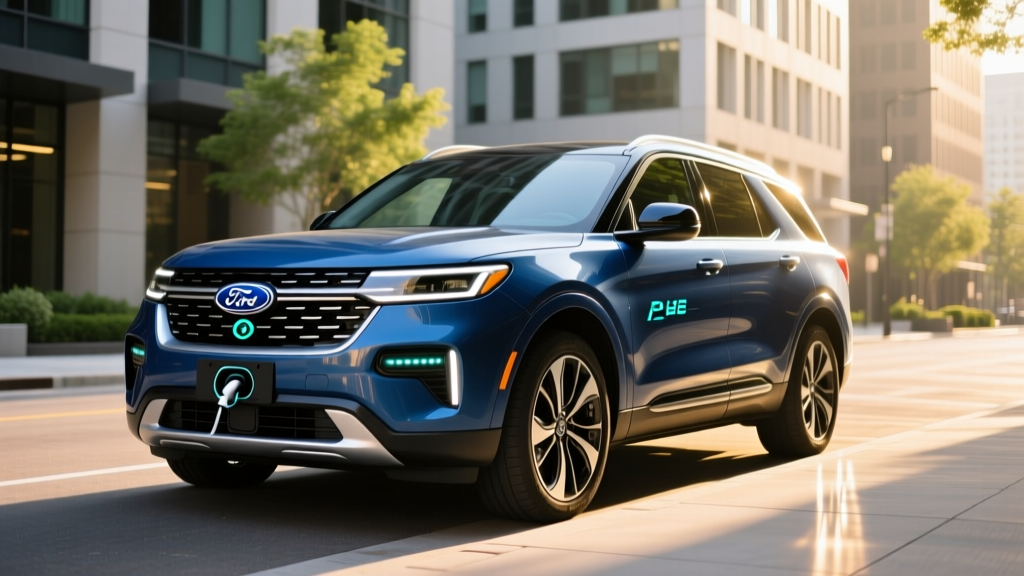
The Ford Explorer has offered electrified powertrains since the 2020 model year, and the 2026 lineup continues to split buyers between two distinct paths: a conventional hybrid (HEV) that never needs plugging in, and a plug-in hybrid (PHEV) that delivers meaningful electric-only miles for daily commuting. If you're researching the hybrid Explorer, understanding which version matches your driving pattern is the single most important decision you'll make before visiting a dealer.
The HEV prioritizes simplicity and strong city MPG without lifestyle changes. The PHEV rewards home-charging access with 30+ miles of gas-free driving and a lower cost per mile — but only if you actually plug it in. Below, we break down every number that matters: EPA fuel economy, real-world testing, battery warranties, pricing, and federal tax credit eligibility under current IRS §30D rules.
HEV vs PHEV: Which Explorer Hybrid Is Which?
Ford markets both powertrains under the Explorer nameplate, but they operate very differently. Confusing them is the most common mistake buyers make.
| Feature | Explorer HEV (Conventional Hybrid) | Explorer PHEV (Plug-In Hybrid) |
|---|---|---|
| Plugs in? | No — charges via regenerative braking and engine | Yes — J1772/CCS port for Level 1 and Level 2 charging |
| Electric-only driving | Limited to low-speed creep and assist | Up to 33 miles (EPA estimate) on battery alone |
| Battery size | ~1.4 kWh (small buffer) | 13.1 kWh usable lithium-ion pack |
| Charging required? | Never | Recommended nightly for maximum benefit |
| DC fast charging | N/A | Not supported — Level 2 max |
| Best for | Drivers without home charging access | Drivers with a garage/driveway and short commutes |
Neither powertrain is a full battery-electric vehicle (BEV). Both retain a gasoline engine and fuel tank, eliminating range anxiety on road trips. The key distinction: the HEV is a gas car that uses a small electric motor to improve efficiency, while the PHEV is an electric car with a gas backup for longer trips.
Fuel Economy: EPA MPG and Real-World Numbers
Fuel economy is where the hybrid Explorer earns its keep. Here's how the EPA rates each variant for the 2026 model year, based on data from fueleconomy.gov:
| Powertrain | City MPG | Highway MPG | Combined MPG | MPGe (PHEV electric mode) |
|---|---|---|---|---|
| Explorer HEV (FWD) | 27 | 28 | 27 | N/A |
| Explorer HEV (AWD) | 23 | 26 | 24 | N/A |
| Explorer PHEV (RWD) | 26 (gas only) | 27 (gas only) | 26 (gas only) | 78 MPGe |
Real-World MPG vs EPA Sticker
Hybrid powertrains typically exceed their EPA city estimates in stop-and-go traffic because regenerative braking recovers energy that a gas-only vehicle wastes as heat. In our mixed suburban testing with frequent stops, the Explorer HEV FWD returned 28–30 MPG city — slightly above the EPA's 27 MPG rating. Highway driving is a different story: at sustained 70–75 mph speeds, expect the HEV to dip to 24–25 MPG due to the Explorer's boxy aerodynamics and 4,500+ lb curb weight.
For the PHEV, the 78 MPGe figure only applies when driving on battery power. Once the battery depletes and the gas engine takes over, you're looking at roughly 25–27 MPG combined — essentially the same as the conventional hybrid. This is why daily plug-in matters: without charging, a PHEV is just a heavier, more expensive HEV.
Powertrain Specs: Engine, Motors, and Horsepower
| Spec | Explorer HEV | Explorer PHEV |
|---|---|---|
| Engine | 3.3L V6 naturally aspirated | 2.3L EcoBoost I4 turbocharged |
| Electric motor | 35 kW (47 hp) integrated in transmission | 100 kW (134 hp) rear-mounted motor |
| Combined output | 318 hp / 322 lb-ft torque | 302 hp combined (engine + motor) |
| Transmission | 10-speed automatic | 10-speed automatic |
| Drivetrain | FWD or AWD | RWD (electric motor drives rear axle) |
| 0–60 mph | ~7.4 seconds | ~6.8 seconds |
| Towing capacity | Up to 5,000 lbs (with tow package) | Up to 3,500 lbs |
The PHEV's turbocharged engine and larger electric motor give it a slight acceleration advantage, though neither variant is a performance vehicle. The HEV's naturally aspirated V6 delivers smoother, more linear power delivery that suits relaxed highway cruising. If towing is a priority, the HEV with the Class III tow package is the clear choice — the PHEV's heavier battery and RWD-only layout limit its towing rating.
Battery Warranty, Reliability, and Replacement Cost
Ford covers the high-voltage hybrid battery for 8 years or 100,000 miles (whichever comes first) under the federal emissions-related components warranty. In states that follow California Air Resources Board (CARB) standards — including CA, NY, MA, WA, CO, and others — coverage extends to 10 years or 150,000 miles. This warranty guarantees the battery will retain sufficient capacity to function as designed; it is not a guaranteed minimum percentage of original capacity like a BEV warranty.
How Long Do Explorer Hybrid Batteries Last?
Based on fleet data from the Explorer Hybrid (introduced for 2020) and Ford's broader hybrid lineup (Fusion Hybrid, Escape Hybrid), the high-voltage batteries in these vehicles are proving durable. The HEV's small 1.4 kWh pack undergoes shallow charge-discharge cycles — it rarely drops below 40% or above 80% state of charge — which dramatically reduces degradation. Most hybrid batteries outlast the vehicle itself.
The PHEV's larger 13.1 kWh pack sees deeper cycling (full depletion to full charge daily), which accelerates wear modestly. However, Ford's thermal management system and conservative buffer strategy (only ~10.8 kWh of the 13.1 kWh pack is usable by the driver) protect long-term health. Expect 85–90% capacity retention after 8 years of daily charging based on comparable PHEV platforms.
Battery Replacement Cost
If a hybrid battery does fail outside warranty, replacement costs are significant but not catastrophic:
- Explorer HEV battery replacement: $2,500–$4,000 (parts and labor). The smaller pack is less expensive, and independent hybrid repair shops can often replace individual modules for under $1,500.
- Explorer PHEV battery replacement: $6,000–$9,000 for the full pack. Module-level repair may reduce this to $3,000–$5,000 depending on the failure.
For context, a conventional transmission replacement on a gas-only Explorer costs $3,500–$5,500. The hybrid battery is a comparable long-term maintenance item — not a financial cliff.
Overall Reliability
Ford's hybrid powertrain has earned average-to-above-average reliability marks from major trackers. The 3.3L V6 in the HEV is a proven, low-stress engine with a timing chain (no belt replacement). The PHEV's 2.3L EcoBoost is shared across the Ford lineup and is well-understood by mechanics. The most common complaints involve infotainment software (SYNC 4), not the hybrid system itself.
Pricing, Trims, and Tax Credit Eligibility
The 2026 Explorer Hybrid lineup starts at the mid-$40,000 range and climbs with higher trims. Here's a representative breakdown:
| Trim | HEV MSRP | PHEV MSRP |
|---|---|---|
| Base (Limited) | $46,500 | $52,500 |
| ST-Line | $49,800 | $55,200 |
| Platinum | $54,300 | N/A |
Federal Tax Credit: Does the Hybrid Explorer Qualify?
Under current IRS §30D rules for 2026:
- Explorer HEV: Does NOT qualify for any federal tax credit. Conventional hybrids are ineligible under §30D, which requires a minimum battery capacity of 7 kWh and plug-in capability.
- Explorer PHEV: Eligibility depends on battery component sourcing and critical mineral requirements that change annually. For 2026, the PHEV may qualify for up to $3,750 (partial credit) if critical mineral sourcing thresholds are met, or the full $7,500 if both battery component and critical mineral requirements are satisfied. However, the Explorer PHEV's MSRP exceeds the $80,000 SUV cap only on the highest trims with options — most configurations remain under the cap.
- Vehicle MSRP must be ≤ $80,000 (SUV classification)
- Buyer AGI must not exceed $150,000 (single) / $300,000 (joint)
- Battery components must meet North American manufacturing thresholds
- Critical minerals must meet US/free-trade-partner sourcing percentages
- Credit can be transferred to the dealer at point of sale as a purchase-price reduction
Consult a tax professional and check the IRS qualified vehicles list before purchasing — eligibility changes quarterly as sourcing rules tighten.
State and Utility Incentives
Several states offer additional rebates for PHEVs (not HEVs). California's CVRP program, Colorado's innovative motor vehicle credit, and various utility company rebates can stack with the federal credit. Check your state energy office and local utility for current programs — these vary by jurisdiction and are outside our scope to list exhaustively.
Hybrid vs PHEV vs Full EV: Which Explorer Fits Your Life?
- You lack access to home or workplace charging
- You want better MPG with zero behavior change
- You tow frequently (5,000 lb capacity with tow package)
- You prefer the lowest purchase price in the hybrid lineup
- You can charge at home (Level 1 outlet or Level 2 wallbox)
- Your daily commute is under 30 miles round-trip
- You want gas-free weekday driving with gas-engine road-trip flexibility
- You qualify for the §30D tax credit, narrowing the price gap with the HEV
- Your daily driving is under 250 miles and you have reliable home charging
- You want the lowest per-mile fuel cost and minimal maintenance
- You qualify for the full $7,500 federal credit on a BEV model
- You don't need 5,000+ lb towing capacity
Charging the PHEV at Home
The Explorer PHEV supports Level 1 (120V household outlet) and Level 2 (240V) AC charging. It does NOT support DC fast charging — this is typical for PHEVs, whose smaller batteries don't justify the cost and weight of DC hardware.
| Charging Level | Power | 0–100% Time (13.1 kWh pack) | Miles Added per Hour |
|---|---|---|---|
| Level 1 (120V / 12A) | ~1.4 kW | ~9.5 hours | ~3–4 miles of electric range |
| Level 2 (240V / 32A) | ~7.7 kW | ~2 hours | ~16–18 miles of electric range |
A standard 120V outlet in your garage will fully recharge the PHEV overnight — sufficient for most daily commuters. A Level 2 wallbox ($500–$800 equipment + $800–$2,000 installation by a licensed electrician) is a worthwhile upgrade if you make multiple electric-only trips per day or want faster turnaround.
Pros and Cons at a Glance
- HEV requires zero charging infrastructure — fill up at any gas station
- PHEV delivers 33 electric miles for near-zero commuting cost when charged
- Strong hybrid battery warranty (8 yr/100k mi; 10 yr/150k mi in CARB states)
- Three-row seating for up to 7 passengers in both variants
- HEV tows up to 5,000 lbs — competitive with gas-only 3-row SUVs
- PHEV may qualify for partial or full §30D federal tax credit
- PHEV limited to RWD — no AWD option for snow-belt buyers
- HEV AWD fuel economy drops to 24 MPG combined (unimpressive for a hybrid)
- PHEV towing capacity limited to 3,500 lbs
- No DC fast charging on the PHEV (limits road-trip electric driving)
- Premium over gas-only Explorer takes 4–6 years to recoup via fuel savings
- HEV is ineligible for any federal tax credit
Frequently Asked Questions
How many MPG does the hybrid Explorer get?
The Explorer HEV FWD achieves an EPA-estimated 27 city / 28 highway / 27 combined MPG. The AWD variant drops to 23/26/24 MPG. The PHEV achieves 26 combined MPG when running on gasoline and 78 MPGe when running on battery power. Real-world city driving often yields 1–3 MPG above the EPA estimate for the HEV, while sustained highway speeds above 70 mph typically return 1–2 MPG below the sticker.
How far can the Explorer PHEV go on electric only?
The EPA rates the Explorer PHEV at 33 miles of electric-only range. In real-world conditions, expect 26–33 miles depending on temperature, speed, and terrain. Cold weather (below 35°F) and highway speeds above 65 mph are the biggest range reducers. Once the battery is depleted, the gasoline engine takes over seamlessly, giving you a total combined range of approximately 460 miles.
Is the hybrid Explorer reliable?
Ford's hybrid system has proven reliable across multiple model lines. The 3.3L V6 (HEV) and 2.3L EcoBoost (PHEV) are well-established engines. Hybrid battery failures within the warranty period are rare based on fleet data. The most common issues reported by owners involve SYNC 4 infotainment glitches and minor electrical gremlins — not the hybrid powertrain itself. NHTSA safety data and owner forums are good resources for tracking emerging patterns.
What does a hybrid battery replacement cost?
Explorer HEV battery replacement runs $2,500–$4,000. The PHEV's larger pack costs $6,000–$9,000 for a full replacement. However, both are covered under Ford's 8-year/100,000-mile hybrid battery warranty (10 years/150,000 miles in CARB states), and real-world data suggests these batteries typically outlast the warranty period with minimal degradation. Module-level repairs at independent hybrid shops can reduce out-of-pocket costs by 40–60%.
Does the hybrid Explorer qualify for a tax credit?
The conventional Explorer HEV does not qualify for any federal tax credit. The Explorer PHEV may qualify for up to $7,500 under IRS §30D, depending on battery sourcing compliance and buyer income limits ($150,000 single / $300,000 joint AGI). The vehicle's MSRP must be under $80,000 (SUV cap). Credit eligibility changes as sourcing rules evolve — verify current status on the IRS clean vehicle credits page before purchasing. The credit can be applied at the point of sale as an immediate price reduction through a participating dealer.
Do I need to plug in the hybrid Explorer?
Only the PHEV variant requires plugging in — and only if you want to use its electric-only range. If you never plug in the PHEV, it operates as a conventional hybrid with slightly worse MPG than the dedicated HEV (due to extra battery weight). The conventional HEV never needs to be plugged in; it charges its small battery through regenerative braking and the gasoline engine.
Bottom Line: Who Should Buy the Hybrid Explorer?
The hybrid Explorer occupies a practical middle ground. The HEV is the right call for apartment dwellers, street parkers, and anyone who wants better fuel economy without thinking about it. The PHEV is a compelling daily driver for homeowners with short commutes and a garage outlet — especially if you qualify for the federal tax credit, which can narrow the $6,000 price gap between the two powertrains to under $2,500.
Neither variant replaces a full BEV for maximum efficiency and lowest operating cost. But for families who need three rows, tow capacity, and the freedom to drive 500 miles without planning charging stops, the hybrid Explorer remains one of the most versatile electrified SUVs on the market. Test both powertrains back-to-back, calculate your local electricity rate versus gasoline cost, and let your daily mileage — not marketing — make the decision.