Quick Verdict: The Escape PHEV for Practical Commuters
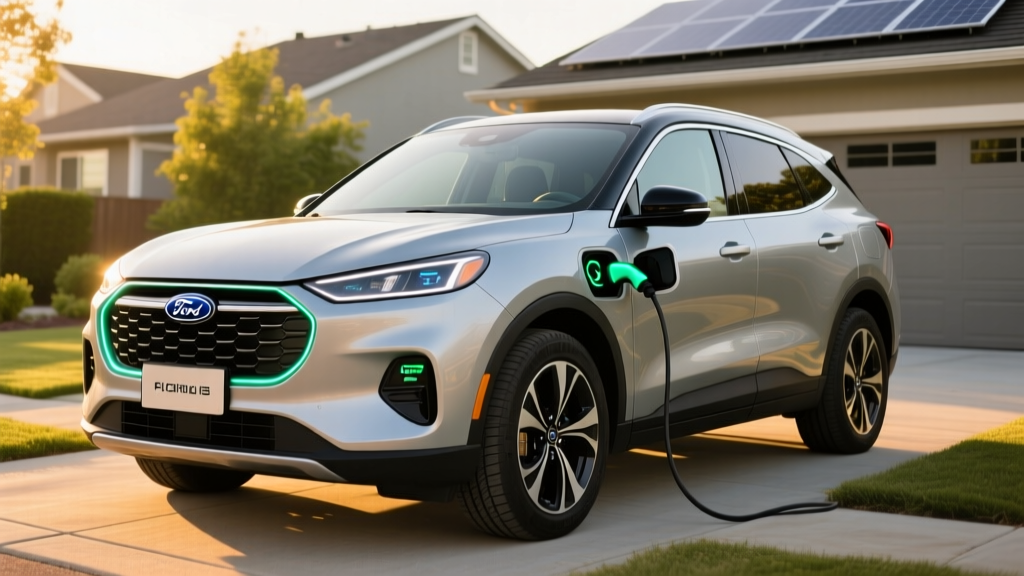
The 2026 Ford Escape Plug-In Hybrid (PHEV) occupies a narrow but useful lane in the electrified-vehicle market. With an EPA-rated 37 miles of electric-only range, it covers most daily commutes without burning a drop of gasoline — then transitions seamlessly into a conventional hybrid for longer trips, delivering 40 MPG combined. It's not a performance standout, and it lacks DC fast charging, but for buyers who want electric commuting without range anxiety and aren't ready for a full battery-electric vehicle (BEV), the Escape PHEV makes a compelling case.
Ford offers the Escape PHEV in a single well-equipped trim, starting at approximately $39,995 for the 2026 model year. Whether it qualifies for the federal §30D tax credit depends on battery-sourcing and buyer-income requirements that shift frequently — we break down the current rules below.
HEV vs. PHEV: Which Escape Hybrid Is Right for You?
Ford sells the Escape with two distinct electrified powertrains. Understanding the difference is critical before you visit a dealer.
| Feature | Escape Hybrid (HEV) | Escape Plug-In Hybrid (PHEV) |
|---|---|---|
| Plug-in charging | No — self-charging via regen & engine | Yes — J1772 AC plug |
| Battery size | ~1.1 kWh (small buffer) | 14.4 kWh usable |
| Electric-only range | ~1 mile at low speed | 37 miles (EPA) |
| EPA combined MPG | 39 MPG | 40 MPG (gas) / 105 MPGe (electric+gas) |
| Drivetrain | AWD available | FWD only |
| Starting MSRP (2026) | ~$33,995 | ~$39,995 |
The HEV is the simpler pick: no plug, no behavior change from a gas car, and AWD availability. It suits drivers without home-charging access or those who want electrified efficiency with zero lifestyle adjustment.
The PHEV rewards drivers who can plug in at home or work. If your round-trip commute is under 37 miles and you charge nightly, you may go weeks without the engine running. But note: the PHEV is front-wheel drive only — if AWD is non-negotiable, the conventional HEV or a competing PHEV like the Toyota RAV4 Prime is your alternative.
Fuel Economy & Electric Range: The Numbers That Matter
| Metric | EPA Rating | Real-World Expectation |
|---|---|---|
| Electric-only range | 37 miles | 32–36 miles (highway/cold weather reduces) |
| MPGe (electric + gas combined) | 105 MPGe | 90–100 MPGe with mixed driving |
| Gas-only MPG (city) | 42 MPG | 40–44 MPG — hybrids often beat EPA in city |
| Gas-only MPG (highway) | 36 MPG | 34–37 MPG at 70+ mph |
| Gas-only MPG (combined) | 40 MPG | 38–41 MPG |
| Total combined range | ~520 miles | ~480–540 miles depending on conditions |
According to fueleconomy.gov, the 2026 Escape PHEV achieves 105 MPGe when blending its electric charge with gasoline operation. Once the battery is depleted, the 2.5-liter Atkinson-cycle four-cylinder and electric motor work together as a conventional hybrid, returning 40 MPG combined.
Powertrain & Performance Specs
| Specification | 2026 Ford Escape PHEV |
|---|---|
| Engine | 2.5L Atkinson-cycle 4-cylinder |
| Engine output | 163 hp / 155 lb-ft torque |
| Electric motor output | 131 hp (front axle) |
| Combined system horsepower | 210 hp |
| Transmission | eCVT (planetary gearset, no belt) |
| Drivetrain | Front-wheel drive (FWD only) |
| Battery chemistry | NMC (nickel-manganese-cobalt) lithium-ion |
| Battery capacity (usable) | 14.4 kWh |
| 0–60 mph | ~7.5 seconds |
| Top speed (electric only) | ~85 mph |
| Towing capacity | 1,500 lbs (not recommended for PHEV) |
The eCVT isn't a traditional continuously variable transmission with a steel belt — it's a planetary gearset that blends engine and motor power seamlessly. There are no fixed gears to "shift," which means smooth, interruption-free acceleration. The 210 combined horsepower is adequate for merging and passing, though the Escape PHEV isn't quick by modern EV standards. The Toyota RAV4 Prime, with 302 hp and AWD, is significantly faster at 5.7 seconds to 60 mph — but also significantly more expensive.
Charging: What You Need to Know Before Plugging In
The Escape PHEV uses a standard J1772 connector for AC charging. Here's what to expect at each charging level:
| Charging Level | Power (kW) | Time to Full Charge | Notes |
|---|---|---|---|
| Level 1 (120V household outlet) | ~1.4 kW | ~10–11 hours | Trickle charge; adequate for overnight top-ups |
| Level 2 (240V home/public) | ~3.3 kW (onboard charger limit) | ~3.5–4 hours | Recommended for daily use |
| DC Fast Charging | Not supported | N/A | No CCS or CHAdeMO capability |
Critical limitation: The Escape PHEV's onboard charger maxes out at 3.3 kW. Even if you plug into a 7.2 kW or 11.5 kW Level 2 station, the car will only draw 3.3 kW. This is typical for PHEVs with smaller batteries — the Toyota RAV4 Prime charges at up to 6.6 kW on its higher trim — but it means you can't rush a charge at a public Level 2 station any faster than at home.
For most owners, a standard 120V outlet in the garage is sufficient: plug in when you get home, and the battery is full by morning. A dedicated Level 2 home charger adds convenience and ensures a full charge in roughly 3.5 hours, useful if you need a midday top-up between a morning commute and an afternoon errand.
Pricing, Trims & Tax Credit Eligibility
The 2026 Ford Escape PHEV is offered in a single trim:
| Trim | MSRP | Notable Standard Features |
|---|---|---|
| Escape PHEV | $39,995 | 14.4 kWh battery, 8" SYNC 4 touchscreen, wireless CarPlay/Android Auto, Ford Co-Pilot360, heated front seats, power liftgate |
Destination charges add approximately $1,495, bringing the out-the-door starting price to roughly $41,490 before incentives.
Federal §30D Tax Credit: Does the Escape PHEV Qualify?
Under current IRS rules, the Ford Escape PHEV may qualify for a partial or full federal tax credit of up to $3,750, depending on critical-mineral and battery-component sourcing requirements that the IRS updates periodically. Key eligibility criteria include:
- Vehicle MSRP cap: SUVs must be under $80,000 — the Escape PHEV clears this easily at ~$40,000.
- Buyer income cap: Modified AGI must not exceed $150,000 (single), $225,000 (head of household), or $300,000 (joint).
- Battery sourcing: A percentage of critical minerals must be sourced from the U.S. or free-trade-agreement partners, and battery components must be manufactured or assembled in North America. These thresholds tighten annually.
- Point-of-sale transfer: If eligible, you can transfer the credit to the dealer at purchase, reducing your out-of-pocket cost immediately rather than waiting for a tax refund.
Important: Sourcing requirements under §30D change frequently. Always verify current eligibility on the official IRS qualified vehicle list before purchasing. A tax professional can confirm your personal eligibility.
Reliability, Battery Warranty & Long-Term Ownership
Ford covers the Escape PHEV's high-voltage battery and hybrid-specific components (electric motor, power electronics, eCVT) for 8 years or 100,000 miles, whichever comes first. In states that follow California Air Resources Board (CARB) standards — including CA, NY, MA, WA, and several others — hybrid battery coverage extends to 10 years or 150,000 miles.
Warranty trigger: Ford will replace or repair the battery if its capacity falls below approximately 70% of its original capacity during the warranty period.
Out-of-warranty replacement cost: Based on current dealer pricing, a full Escape PHEV battery replacement runs approximately $4,500–$6,500 including labor. However, PHEV batteries in Ford's eCVT architecture have demonstrated strong longevity — many first-generation Fusion Energi and Escape Hybrid owners report minimal degradation past 150,000 miles.
The Escape PHEV's eCVT transmission is mechanically simple — no clutch packs, no torque converter, no traditional gears to wear out. This contributes to strong long-term reliability. NHTSA and IIHS ratings should be checked for the latest crash-test scores, as Ford has made incremental structural updates to the Escape platform.
For context, the conventional Escape Hybrid has been on sale since the 2020 model year with generally favorable reliability reports. The PHEV variant shares the same fundamental powertrain architecture with a larger battery, and Ford's hybrid system is one of the most proven in the industry, dating back to the 2005 Escape Hybrid.
Escape PHEV vs. Full EV vs. Gas Car: Decision Framework
- Your daily commute is under 35 miles round-trip and you can charge at home.
- You take regular road trips (300+ miles) and don't want to plan around charging stops.
- You live in an apartment or area where public charging infrastructure is sparse.
- You want to reduce fuel costs without committing to full electric.
- You have reliable home Level 2 charging.
- Your daily driving rarely exceeds 200 miles.
- You want zero tailpipe emissions and the lowest per-mile "fuel" cost.
- You qualify for the full $7,500 federal credit, narrowing the price gap.
- You cannot charge at home or work.
- You want AWD (not available on the PHEV).
- You want a lower purchase price and don't mind paying more at the pump.
Pros & Cons at a Glance
Pros
- 37 miles electric-only covers most commutes
- 40 MPG combined after battery depletion
- No range anxiety — 520+ mile total range
- Smooth eCVT with no gear hunting
- Competitive pricing for a compact PHEV SUV
- Strong hybrid battery warranty (8–10 years)
- Standard Ford Co-Pilot360 safety suite
Cons
- FWD only — no AWD option
- 3.3 kW onboard charger limits Level 2 speed
- No DC fast charging capability
- Single trim limits customization
- 210 hp feels modest vs. RAV4 Prime's 302 hp
- Cargo space reduced slightly vs. gas Escape (~34 cu ft vs. ~37.5 cu ft)
- Electric range drops notably in cold weather
Frequently Asked Questions
How many MPG does the Ford Escape Plug-In Hybrid get?
The EPA rates the 2026 Escape PHEV at 42 MPG city, 36 MPG highway, and 40 MPG combined when operating as a conventional hybrid after the battery is depleted. When blending electric and gas operation, it achieves 105 MPGe. In real-world city driving, many owners report 41–44 MPG thanks to the regenerative braking system recapturing energy in stop-and-go traffic.
How far can the Escape PHEV go on electric only?
The EPA rates the Escape PHEV at 37 miles of electric-only range. In real-world conditions, expect 32–36 miles in moderate temperatures, dropping to roughly 28–32 miles in winter or at sustained highway speeds above 70 mph. The electric motor can propel the vehicle up to approximately 85 mph before the engine engages.
Does the Ford Escape PHEV qualify for a tax credit?
The Escape PHEV may qualify for up to $3,750 under the federal §30D credit, depending on current battery-sourcing rules and your income. The MSRP cap ($80,000 for SUVs) is easily met. Check the IRS qualified vehicle list for the most current status. Some states offer additional PHEV rebates — check your local utility and state energy office.
Is the Escape PHEV reliable, and what does a battery replacement cost?
Ford's hybrid powertrain is one of the most proven in the industry. The high-voltage battery is warranted for 8 years/100,000 miles (10 years/150,000 miles in CARB states). Out-of-warranty replacement costs approximately $4,500–$6,500. Real-world data from earlier Ford hybrid models (Fusion Energi, prior Escape Hybrid) suggests the battery often lasts well beyond 150,000 miles with minimal degradation.
Can I charge the Escape PHEV at a DC fast charger?
No. The Escape PHEV does not support DC fast charging. It charges via AC only, using a J1772 connector, at a maximum rate of 3.3 kW on Level 2. A full charge takes about 3.5–4 hours on a 240V Level 2 station or 10–11 hours on a standard 120V outlet.
Hybrid vs. PHEV vs. EV — which is right for me?
If you can charge at home and your commute is under 35 miles, the PHEV gives you electric daily driving with gas-engine backup for road trips. If you can't charge at home, the conventional HEV provides similar efficiency without a plug. If you have home charging and rarely drive over 200 miles in a day, a full BEV offers the lowest operating cost and zero tailpipe emissions — but requires adapting to charging logistics for longer trips.
Does the Escape PHEV have all-wheel drive?
No. The 2026 Escape PHEV is front-wheel drive only. If AWD is essential, consider the conventional Escape Hybrid (AWD available) or the Toyota RAV4 Prime PHEV (standard electronic AWD via a rear-mounted electric motor).