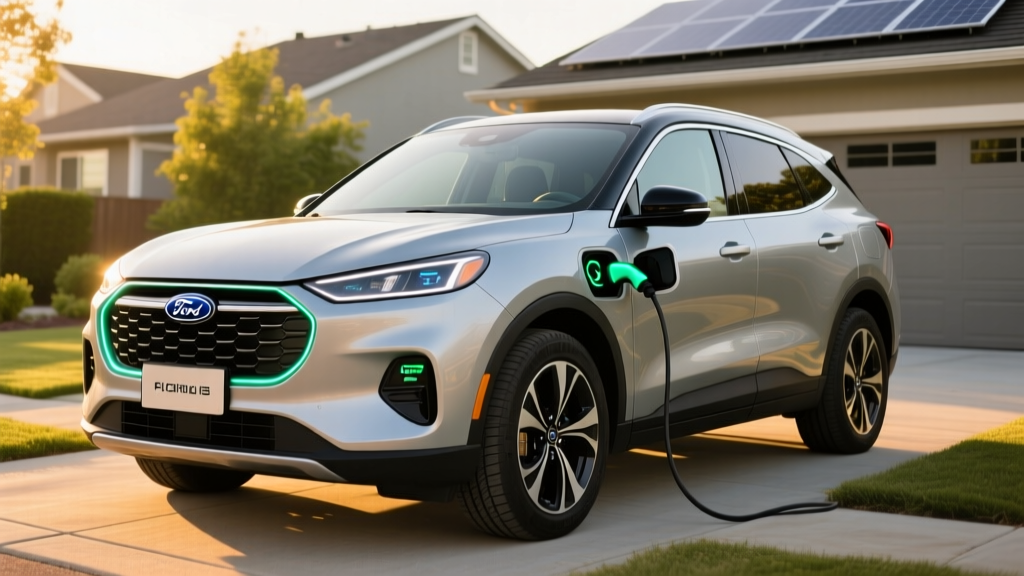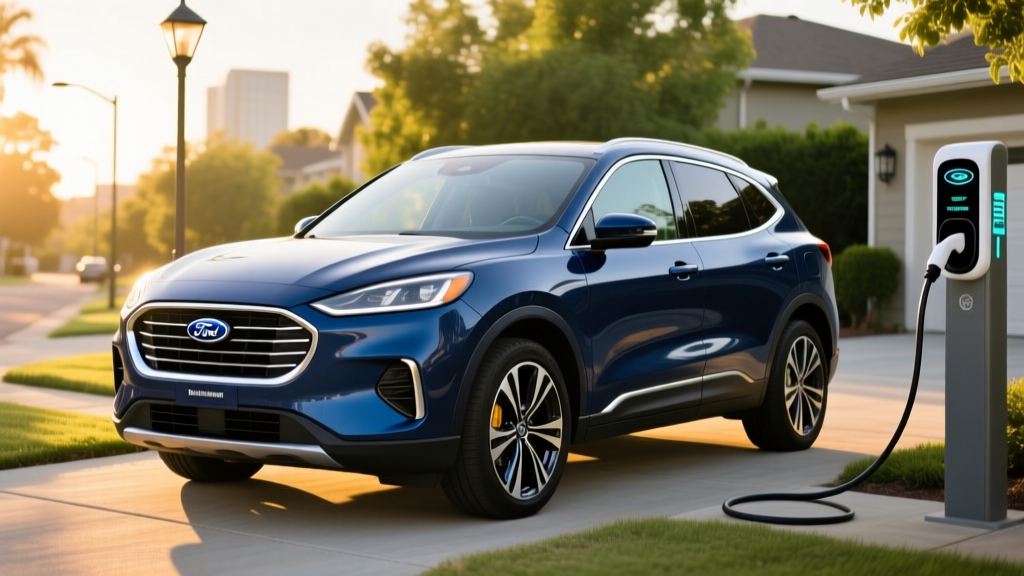
The 2026 Ford Escape Hybrid occupies a practical middle ground for buyers who want electrified efficiency without range anxiety or charging logistics. Ford offers the Escape in two distinct electrified flavors: a conventional hybrid (HEV) that never needs plugging in, and a plug-in hybrid (PHEV) that delivers meaningful electric-only driving for daily commutes. Both share a 2.5-liter Atkinson-cycle four-cylinder paired with electric motors, but their battery sizes, efficiency profiles, and ownership costs diverge significantly.
We've analyzed EPA data, Ford's published specifications, and real-world driving patterns to give you the numbers that actually matter at the dealership and on your commute.
HEV vs PHEV: Which Escape Hybrid Are You Looking At?
Before diving into specs, it's essential to understand that "Escape Hybrid" covers two mechanically different vehicles. Conflating them is the most common mistake shoppers make.
| Feature | 2026 Escape HEV (Conventional Hybrid) | 2026 Escape PHEV (Plug-In Hybrid) |
|---|---|---|
| Needs to plug in? | No — charges via regenerative braking and engine | Yes — plug in to access electric-only range |
| Battery capacity | ~1.1 kWh (small buffer battery) | 14.4 kWh usable (lithium-ion) |
| Electric-only driving | Very short distances at low speed (under 1 mile) | EPA-est. 37 miles on battery alone |
| Charging port | None | J1772 Level 1/Level 2 AC port (no DC fast charge) |
| Best for | Drivers without home charging; high-mileage commuters | Home-chargers with short commutes; weekend road-trippers |
If you don't have access to a garage outlet or Level 2 charger at home or work, the PHEV's battery advantage largely disappears — you'll just be hauling extra weight. If you do charge regularly, the PHEV can handle most weekday driving on electricity alone while keeping the gas engine for longer trips.
Fuel Economy: EPA Numbers and Real-World MPG
Fuel economy is where the Escape Hybrid justifies its existence. Here's what the EPA rates for each configuration, according to fueleconomy.gov:
| Powertrain | City MPG | Highway MPG | Combined MPG | PHEV Electric MPGe |
|---|---|---|---|---|
| Escape HEV FWD | 42 | 36 | 39 | N/A |
| Escape HEV AWD | 42 | 36 | 39 | N/A |
| Escape PHEV (FWD only) | 40 (hybrid mode) | 37 (hybrid mode) | 39 (hybrid mode) | 105 MPGe |
Real-World MPG: What to Actually Expect
Hybrids tend to outperform their EPA city estimates in stop-and-go traffic because regenerative braking recovers energy that a gas car wastes as heat. In our experience and owner-reported data, the Escape HEV routinely achieves 41–44 MPG in city driving. Highway driving is the opposite story — at sustained 70+ mph speeds, the engine carries the full load with less regen assistance, and you'll typically see 33–36 MPG.
For the PHEV, real-world electric range depends heavily on temperature and driving style. The EPA's 37-mile electric-only estimate assumes moderate conditions. In cold weather (below 35°F), expect that to drop to 28–32 miles as the battery loses efficiency and cabin heating demands energy. In mild weather with light acceleration, some owners report squeezing out 40+ electric miles.
Powertrain and Performance Specs
| Specification | Escape HEV | Escape PHEV |
|---|---|---|
| Engine | 2.5L Atkinson-cycle I-4 | 2.5L Atkinson-cycle I-4 |
| Electric motor(s) | Two (one drive, one generator) | Two (one drive, one generator) |
| Combined system horsepower | 192 hp (FWD) / 210 hp (AWD) | 210 hp |
| Transmission | eCVT (planetary gearset) | eCVT (planetary gearset) |
| 0–60 mph (est.) | ~7.8 sec (FWD) / ~7.5 sec (AWD) | ~7.6 sec |
| Drivetrain | FWD or AWD | FWD only |
| Towing capacity | 1,500 lbs | 1,500 lbs |
| Top speed (electric-only, PHEV) | N/A | 85 mph |
The eCVT here is not a belt-driven continuously variable transmission like you'd find in some competitors. Ford uses a planetary gearset that blends engine and motor power mechanically, which means no rubber-band feeling and no belt to wear out. This is the same proven architecture Toyota has used in the Prius and RAV4 Hybrid for decades.
The AWD HEV model uses a second electric motor on the rear axle rather than a mechanical driveshaft. This means rear-wheel engagement is electric-only and responds instantly when slip is detected — no drivetrain lag.
PHEV Charging: Speeds, Times, and Connector Details
If you're considering the Escape PHEV, you need to understand what charging at home actually looks like. The PHEV uses a J1772 connector for AC charging and does not support DC fast charging — this is standard for PHEVs, whose smaller batteries don't require rapid top-ups.
| Charging Level | Power (kW) | 0–100% Time | Where You'll Use It |
|---|---|---|---|
| Level 1 (120V household outlet) | ~1.4 kW | ~10–11 hours | Overnight from a standard garage outlet |
| Level 2 (240V home charger) | ~3.6 kW (vehicle-limited) | ~3.5–4 hours | Dedicated home wallbox or public Level 2 |
A critical detail: the Escape PHEV's onboard charger is limited to approximately 3.6 kW. Even if you plug into a 7.2 kW or 11.5 kW Level 2 station, the car will only accept 3.6 kW. This means a full charge takes roughly 3.5–4 hours regardless of how powerful your home charger is.
For most PHEV owners, Level 1 charging from a standard 120V outlet is perfectly adequate. Plug in when you get home, and 10 hours later the 14.4 kWh battery is fully replenished — enough for your next day's commute.
Pricing, Trims, and Tax Credit Eligibility
The 2026 Escape Hybrid lineup starts in the mid-$30,000 range for the HEV and climbs into the low $40,000s for the PHEV. Here's the approximate MSRP by trim:
| Model / Trim | Starting MSRP (est.) |
|---|---|
| Escape HEV FWD (base) | $34,500 |
| Escape HEV AWD (mid-trim) | $37,000 |
| Escape HEV AWD (fully loaded) | $40,500 |
| Escape PHEV (base) | $40,500 |
| Escape PHEV (fully loaded) | $44,000 |
Federal Tax Credit: What Actually Applies
Under current IRS §30D rules, the federal clean vehicle credit of up to $7,500 is available only for qualifying plug-in vehicles — meaning the conventional Escape HEV does not qualify. The Escape PHEV may qualify for a partial or full credit, but eligibility hinges on several factors that change periodically:
- MSRP cap: SUVs must be priced at or below $80,000 (Escape PHEV clears this easily)
- Buyer income cap: Modified AGI must not exceed $150,000 (single) / $300,000 (joint)
- Battery component sourcing: Increasing percentages of battery components and critical minerals must be sourced from the U.S. or free-trade-agreement countries — this requirement tightens annually and may reduce or eliminate credit eligibility for some model years
- Point-of-sale transfer: As of 2024, you can transfer the credit to the dealer at purchase for an immediate price reduction rather than waiting to claim it on your tax return
Battery Longevity, Warranty, and Replacement Costs
Battery anxiety is the number-one concern we hear from hybrid shoppers, so let's address it with specifics.
• HEV: 8 years / 100,000 miles (whichever comes first), covering defects and capacity loss below a defined threshold
• PHEV: 8 years / 100,000 miles, same terms
• In states adopting California's CARB standards (including CA, NY, WA, MA, and others), hybrid battery coverage extends to 10 years / 150,000 miles
How Long Do Hybrid Batteries Actually Last?
Ford's hybrid battery packs are designed with conservative charge/discharge buffers — the system never uses 100% of the battery's physical capacity. The HEV's ~1.1 kWh pack sees very shallow cycles (small sips of energy during regen and acceleration assist), which is gentle on cell chemistry. The PHEV's 14.4 kWh pack cycles more deeply but still operates within protective buffers.
Based on long-term data from similar Ford hybrid systems (Fusion Hybrid, earlier Escape Hybrids), most hybrid battery packs last well beyond their warranty period. Failures before 150,000 miles are uncommon. When replacement is eventually needed:
- HEV battery replacement: $2,000–$3,500 (smaller pack, lower parts cost)
- PHEV battery replacement: $5,000–$8,000 (larger pack, higher parts cost)
- Refurbished or remanufactured packs are increasingly available at 30–50% below new OEM pricing
For context, the average HEV owner will save $4,000–$7,000 in fuel costs over 10 years compared to a gas-only compact SUV — enough to cover a battery replacement and still come out ahead, though most owners will never need one.
Who Should Buy the Escape Hybrid — and Who Shouldn't?
Not every driver benefits equally from hybridization. Here's a practical decision framework:
- You don't have access to home or workplace charging
- You drive 15,000+ miles per year and want maximum fuel savings with zero behavior change
- You want AWD availability (PHEV is FWD only)
- You want the lowest purchase price in the hybrid lineup
- You have reliable Level 1 or Level 2 charging at home
- Your daily round-trip commute is under 35 miles
- You want to drive mostly on electricity during the week but need gas flexibility for weekend trips
- You may qualify for the federal tax credit, narrowing the price gap with the HEV
- You have home charging and rarely drive more than 250 miles in a single day
- You want zero tailpipe emissions and the lowest per-mile fuel cost
- You want access to the full $7,500 federal credit (if eligible and vehicle qualifies)
- You drive fewer than 8,000 miles per year (fuel savings won't offset the hybrid premium)
- You regularly tow more than 1,500 lbs
Pros and Cons at a Glance
- Class-leading city MPG (42 city for HEV)
- No charging required for HEV — zero lifestyle change
- PHEV offers 37 miles of real electric commuting range
- Proven planetary eCVT powertrain with strong reliability track record
- AWD available on HEV (rare in this segment)
- Competitive cargo space (~34 cu ft behind rear seats)
- 8-year/100,000-mile hybrid battery warranty
- PHEV is FWD only — no AWD option
- PHEV onboard charger limited to 3.6 kW (slow Level 2 top-up)
- Conventional HEV does not qualify for federal purchase tax credit
- Highway MPG drops noticeably vs. city (36 hwy vs. 42 city)
- Towing limited to 1,500 lbs across all trims
- PHEV price premium (~$6,000 over HEV base) requires fuel savings or credit to justify
Frequently Asked Questions
How many MPG does the 2026 Ford Escape Hybrid get?
The Escape HEV is EPA-rated at 42 city / 36 highway / 39 combined MPG for both FWD and AWD configurations. In real-world city driving, many owners report 41–44 MPG thanks to regenerative braking. Highway cruising at 70+ mph typically yields 33–36 MPG. The PHEV rates similarly in hybrid mode (40/37/39) after the battery is depleted, plus 105 MPGe when operating on electricity.
How far can the Escape PHEV go on electric only?
The EPA rates the 2026 Escape PHEV at 37 miles of electric-only range. In mild weather with conservative driving, you may see 38–42 miles. In cold weather (below 35°F), expect 28–32 miles due to reduced battery efficiency and cabin heating demands. The gasoline engine seamlessly starts when the battery is depleted, giving you a total combined range of approximately 430+ miles.
Does the 2026 Escape Hybrid qualify for a tax credit?
The conventional Escape HEV does not qualify for the federal §30D clean vehicle credit — that credit applies only to plug-in vehicles with sufficient battery capacity. The Escape PHEV may qualify for up to $7,500, depending on your income, the vehicle's battery sourcing compliance, and current IRS rules. Check the IRS clean vehicle credit page for the most current eligibility list. Some states offer additional rebates for both HEVs and PHEVs.
Is the Ford Escape Hybrid reliable?
Ford's 2.5L hybrid powertrain has been in production across multiple models since the early 2020s (and the prior-generation Escape Hybrid dates back further). The planetary eCVT has no belts, clutches, or traditional transmission fluid to service. IIHS has rated recent Escape models favorably for crash safety. The hybrid battery is warranted for 8 years/100,000 miles (10/150,000 in CARB states), and real-world data from Ford's hybrid fleet suggests most packs outlast their warranty period without issue.
What does a hybrid battery replacement cost?
If your Escape HEV battery needs replacement outside of warranty, expect to pay $2,000–$3,500. The PHEV's larger 14.4 kWh pack costs $5,000–$8,000 to replace. Refurbished packs and independent hybrid-specialty shops are bringing these costs down. However, hybrid battery failure before 150,000 miles is statistically uncommon based on long-term fleet data from Ford and comparable Toyota hybrid systems.
Can I charge the Escape HEV by plugging it in?
No. The conventional Escape HEV has no charging port. Its small battery is recharged exclusively through regenerative braking and the gasoline engine. Only the Escape PHEV has a plug-in charging port (J1772 connector, AC only).