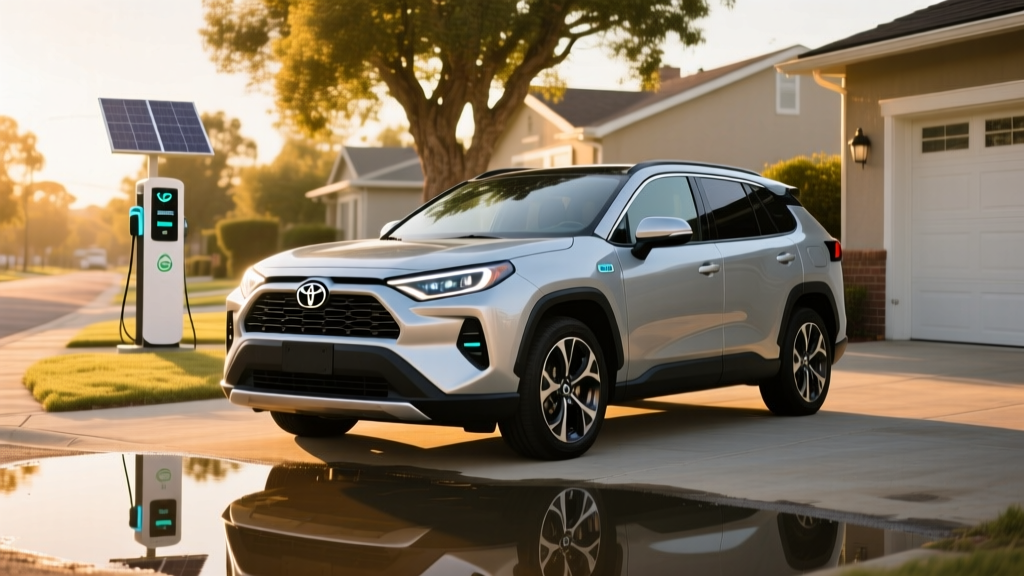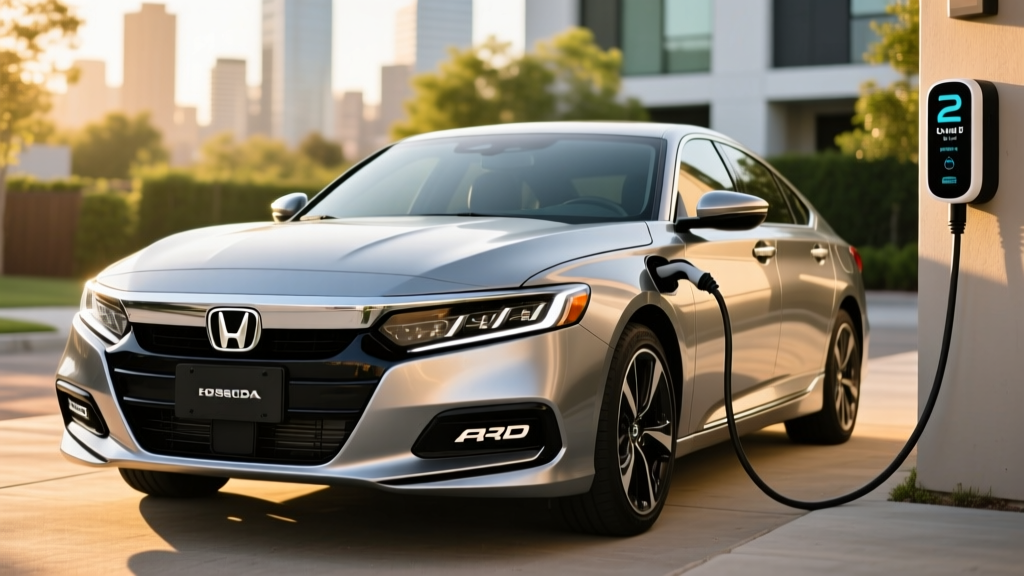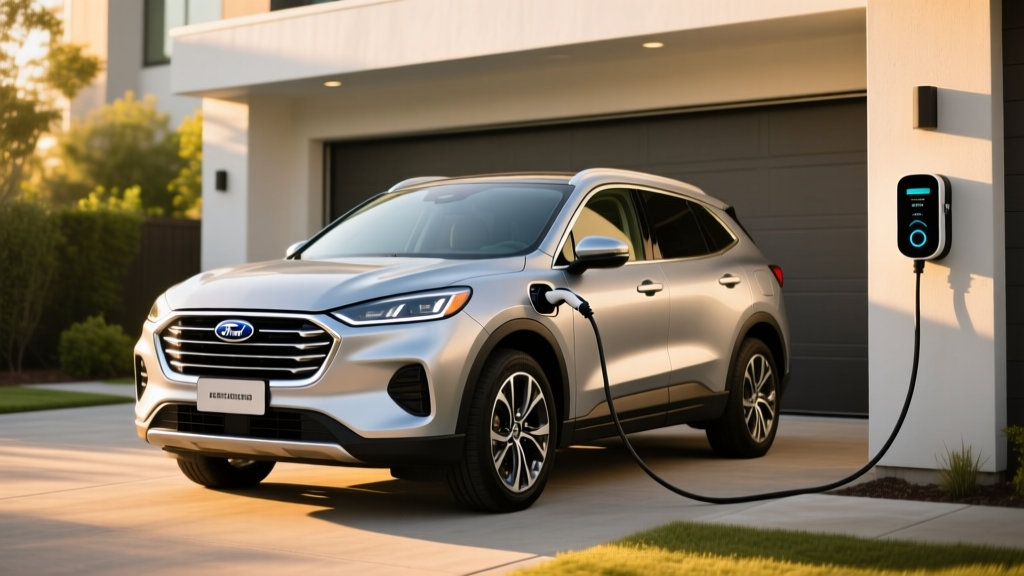
The 2025 Ford Escape Hybrid occupies a practical middle ground for buyers who want electric-motor efficiency without committing to a plug or a fully electric vehicle. Ford offers the Escape in two electrified flavors: a conventional hybrid (HEV) that never needs plugging in, and a plug-in hybrid (PHEV) that delivers meaningful electric-only commuting range. Both share the same 2.5-liter Atkinson-cycle four-cylinder architecture, but their efficiency profiles, pricing, and ownership experiences diverge sharply.
After examining EPA data, real-world driving patterns, and current federal incentive rules, here is everything you need to decide which Escape powertrain — or whether a full EV — fits your life.
HEV vs PHEV: Which Escape Hybrid Is Which?
Ford sells the Escape Hybrid (HEV) across multiple trims, including the sporty ST-Line. The Escape PHEV is offered separately and requires access to charging — ideally a home Level 2 outlet — to realize its efficiency advantage. Conflating the two is the most common mistake shoppers make, so let's separate them clearly.
| Attribute | 2025 Escape Hybrid (HEV) | 2025 Escape PHEV |
|---|---|---|
| Plug-in required? | No — self-charging via regenerative braking and engine | Yes — plug in to access electric-only range |
| Battery capacity | ~1.1 kWh (small buffer) | 14.4 kWh usable |
| EPA electric-only range | N/A (EV assist only) | 37 miles |
| Total combined range | ~520+ miles | ~520 miles (electric + gas) |
| DC fast charging | N/A | No — Level 2 AC only |
| Drivetrain | FWD or AWD | FWD only |
| Starting MSRP | ~$34,490 | ~$40,490 |
The HEV is a drop-in replacement for a gas car: fill up with gas and go. The PHEV rewards owners who can charge at home or work with dramatically lower fuel consumption on shorter trips, but its higher upfront cost takes discipline to recoup.
Fuel Economy: EPA Ratings and Real-World MPG
Fuel economy is where the Escape Hybrid justifies its existence. According to fueleconomy.gov, the EPA ratings break down as follows:
| Model | City MPG | Highway MPG | Combined MPG | MPGe (PHEV electric mode) |
|---|---|---|---|---|
| Escape Hybrid FWD | 42 | 36 | 39 | N/A |
| Escape Hybrid AWD | 42 | 36 | 39 | N/A |
| Escape PHEV (gas only after battery depleted) | 42 | 37 | 40 | 105 MPGe |
Real-world expectations: Hybrids typically exceed their EPA city ratings in stop-and-go driving because regenerative braking recaptures energy that gas cars waste as heat. Expect 40–45 MPG in urban commuting with the HEV. Highway efficiency drops to roughly 33–35 MPG at sustained 70–75 mph speeds, where the electric motor provides less assist and aerodynamic drag dominates. In cold weather (below 35°F), expect a 5–10% reduction as the engine runs more frequently to provide cabin heat.
The PHEV, when charged daily, can complete most commutes on zero gasoline. A driver with a 20-mile round-trip commute and nightly home charging might visit a gas station only a handful of times per year. Once the 14.4 kWh battery is depleted, the PHEV operates as a conventional hybrid at approximately 40 MPG combined.
Powertrain and Performance Specs
| Specification | Escape Hybrid (HEV) | Escape PHEV |
|---|---|---|
| Engine | 2.5L Atkinson-cycle I4 | 2.5L Atkinson-cycle I4 |
| Combined system horsepower | 198 hp | 210 hp |
| Transmission | eCVT (power-split device) | eCVT (power-split device) |
| 0–60 mph (est.) | ~7.8 seconds | ~7.5 seconds |
| Towing capacity | 1,500 lbs | 1,500 lbs |
| Cargo volume (behind 2nd row) | 34.4 cu ft | 34.4 cu ft |
Neither variant is quick by EV standards — a Tesla Model Y or Hyundai Ioniq 5 will gap the Escape Hybrid from a stoplight. But the power-split eCVT delivers smooth, linear acceleration appropriate for merging and passing. The PHEV's slightly higher output comes from a more powerful electric motor drawing from its larger battery.
PHEV Charging: What to Expect at Home and on the Road
The Escape PHEV uses a standard J1772 connector for AC charging. It does not support DC fast charging — a limitation shared with most compact PHEVs. Here is what charging looks like in practice:
| Charging Level | Power (kW) | Time: 0–100% | Practical note |
|---|---|---|---|
| Level 1 (120V household outlet) | ~1.4 kW | ~10–11 hours | Works for overnight top-ups if daily driving is under 30 miles |
| Level 2 (240V, 32A home charger) | ~7.7 kW | ~2.5 hours | Ideal for home; fully replenishes during workday or overnight |
Because the battery is only 14.4 kWh, even a standard 120V outlet can meaningfully replenish the pack overnight. However, a Level 2 home charger (typically $500–$1,200 for equipment plus $800–$2,000 for electrician installation) unlocks the convenience of a full charge in roughly 2.5 hours — useful if you want to drive electric for both a morning commute and afternoon errands.
Pricing, Trims, and Tax Credit Eligibility
The 2025 Escape Hybrid starts around $34,490 (base FWD) and climbs to approximately $38,000–$40,000 in loaded ST-Line or Platinum trims with AWD. The Escape PHEV starts at roughly $40,490 and tops out near $44,000.
Federal tax credit status: Under current IRS §30D rules, the Escape PHEV does not qualify for the $7,500 federal tax credit. The credit requires a minimum battery capacity of 7 kWh (which the PHEV meets), but also mandates that critical minerals and battery components be sourced from the U.S. or free-trade-agreement partners — a threshold the Escape PHEV's supply chain does not currently satisfy. The conventional HEV is not eligible for §30D at all, as the credit applies only to plug-in vehicles.
§30D eligibility checklist for the Escape PHEV:
- Battery ≥ 7 kWh: ✅ Met (14.4 kWh)
- MSRP cap (SUVs: ≤$80,000): ✅ Met (~$44,000 max)
- Buyer income cap (AGI ≤$150K single / $300K joint): Varies by buyer
- Critical minerals sourcing requirement: ❌ Not met
- Battery component sourcing requirement: ❌ Not met
- Result: Not currently eligible for the $7,500 credit
Some states and utilities offer their own rebates for PHEVs — check your local program, as these vary by jurisdiction and change frequently. A tax professional can confirm your specific eligibility.
Battery Warranty, Reliability, and Replacement Cost
Hybrid battery longevity is the top concern for buyers considering their first electrified vehicle. Ford's coverage is competitive:
| Coverage | Escape Hybrid (HEV) | Escape PHEV |
|---|---|---|
| Hybrid battery warranty | 8 years / 100,000 miles | 8 years / 100,000 miles |
| Hybrid/electric component warranty | 8 years / 100,000 miles | 8 years / 100,000 miles |
| Powertrain warranty | 5 years / 60,000 miles | 5 years / 60,000 miles |
| Bumper-to-bumper | 3 years / 36,000 miles | 3 years / 36,000 miles |
In CARB states (California and states adopting California emissions standards), the hybrid battery warranty extends to 10 years / 150,000 miles.
Real-world reliability: Ford's power-split hybrid system has been in production across multiple models (Fusion Hybrid, Maverick Hybrid) for years. The eCVT has no traditional transmission bands or clutches to wear, and the Atkinson-cycle engine operates under less thermal stress than a conventional powertrain. Taxi fleets using similar Ford hybrid systems have reported battery packs lasting 200,000+ miles with minimal degradation.
Battery replacement cost: If the hybrid battery fails out of warranty, replacement runs approximately $3,000–$5,000 for the HEV pack and $6,000–$9,000 for the PHEV's larger 14.4 kWh battery. These figures include parts and labor but vary by region and dealership. Third-party refurbished packs may reduce costs as the fleet ages.
Who Should Buy the Escape Hybrid — and Who Shouldn't?
Pros
- 39 MPG combined (HEV) with no behavior change required
- 37 miles electric-only (PHEV) covers most commutes
- AWD available on HEV (rare for the PHEV segment at this price)
- Proven, mature hybrid powertrain with strong warranty
- No range anxiety — gas stations everywhere
Cons
- No DC fast charging on PHEV
- PHEV is FWD only — no AWD option
- Does not qualify for $7,500 federal tax credit
- Modest 198–210 hp; not a performance vehicle
- PHEV price premium takes 4–6 years to recoup at current gas prices
Choose the Escape Hybrid (HEV) if: You want better fuel economy without changing your routine, you need AWD for snow or rough roads, or you lack access to home or workplace charging. The HEV is the lowest-friction upgrade from a gas-only compact SUV.
Choose the Escape PHEV if: You have reliable Level 2 charging at home or work, your daily driving is under 35 miles, and you want to minimize gasoline use without committing to a full EV. The PHEV makes sense for two-car households where one vehicle handles longer road trips.
Choose a full EV (e.g., Hyundai Ioniq 5, Tesla Model Y) if: You can install a Level 2 home charger, you want zero tailpipe emissions and minimal maintenance, your daily range needs are under 250 miles, and you want access to the $7,500 federal tax credit (on eligible models). A full EV has lower per-mile energy costs but requires charging infrastructure planning.
Stick with a gas-only Escape if: You drive fewer than 8,000 miles per year (the fuel savings won't offset the hybrid premium), or you plan to trade the vehicle within 2–3 years.
Frequently Asked Questions
How many MPG does the 2025 Ford Escape Hybrid get?
The Escape Hybrid FWD and AWD both achieve an EPA-rated 42 city / 36 highway / 39 combined MPG. In real-world city driving, many owners report 40–45 MPG thanks to regenerative braking. Highway driving at sustained speeds yields approximately 33–35 MPG.
How far can the Escape PHEV go on electric only?
The EPA rates the 2025 Escape PHEV at 37 miles of electric-only range from its 14.4 kWh battery. Real-world range varies from roughly 30 miles (highway speeds, cold weather, or aggressive acceleration) to 40+ miles (gentle city driving in mild temperatures).
Does the Ford Escape Hybrid need to be plugged in?
The conventional Escape Hybrid (HEV) does not plug in — it charges its small battery through regenerative braking and the gasoline engine. The Escape PHEV must be plugged in to access its 37-mile electric-only range; otherwise, it operates as a standard hybrid at ~40 MPG combined.
Is the Escape Hybrid reliable, and what does battery replacement cost?
Ford's power-split hybrid system is well-proven across multiple model lines, and the battery is covered by an 8-year/100,000-mile warranty (10 years/150,000 miles in CARB states). Out-of-warranty battery replacement costs approximately $3,000–$5,000 for the HEV and $6,000–$9,000 for the PHEV. Many hybrid batteries exceed 200,000 miles before significant degradation.
Does the 2025 Escape Hybrid or PHEV qualify for a tax credit?
The Escape PHEV does not currently qualify for the federal §30D $7,500 tax credit due to battery-sourcing requirements. The conventional HEV is not eligible because it is not a plug-in vehicle. State and utility incentives may still apply — check your local programs and consult a tax professional for personal eligibility.
Can the Escape PHEV DC fast charge?
No. The Escape PHEV supports only AC charging via a J1772 connector: Level 1 (120V, ~10 hours for a full charge) or Level 2 (240V, ~2.5 hours). This is typical for compact PHEVs with smaller batteries.