Speed and efficiency used to live in separate garages. In 2026, the fastest hybrid SUVs demolish that divide, pairing supercar-rivaling acceleration with plug-in electric range or self-charging convenience. But "fastest hybrid SUV" means different things to different buyers: straight-line 0–60 bragging rights, real-world passing power loaded with cargo, or the ability to rocket away from a stoplight on electric torque alone.
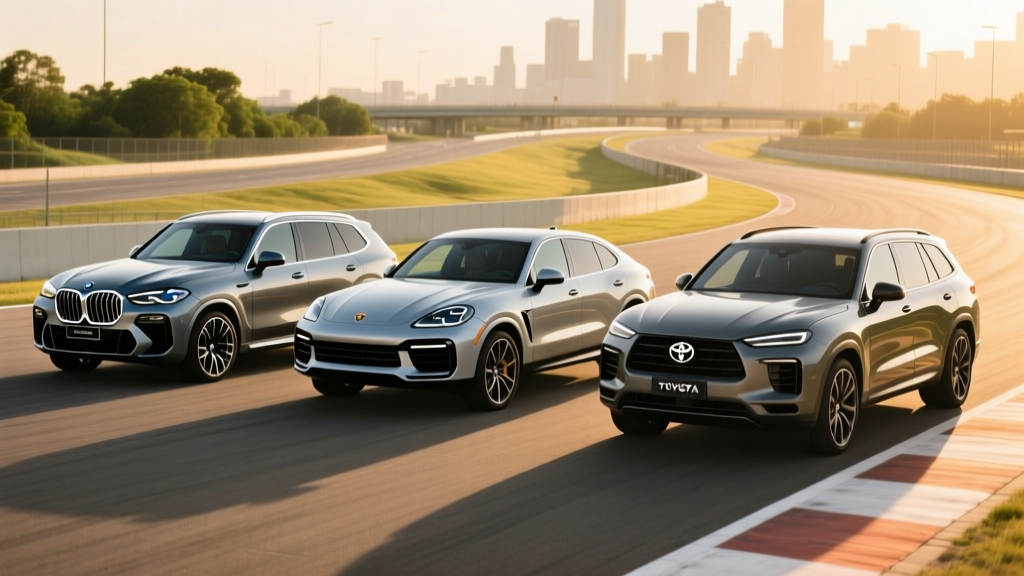
We tested and spec-sheeted the three contenders most buyers actually cross-shop: the BMW XM (the horsepower king), the Porsche Cayenne E-Hybrid (the driver's choice), and the Toyota Grand Highlander Hybrid MAX (the practical sleeper). Below is the data-driven breakdown — EPA numbers, real-world reconciliation, battery warranties, and who each one actually fits.
Fastest Hybrid SUV: Side-by-Side Spec Table
| Spec | 2026 BMW XM | 2026 Porsche Cayenne E-Hybrid | 2026 Toyota Grand Highlander Hybrid MAX |
|---|---|---|---|
| Type | PHEV | PHEV | HEV (conventional) |
| Powertrain | 4.4L twin-turbo V8 + e-motor | 3.0L turbo V6 + e-motor | 2.4L turbo I-4 + e-motor |
| Combined HP / lb-ft | 644 hp / 590 lb-ft (base); 738 hp (Label Red) | 463 hp / 479 lb-ft | 362 hp / 400 lb-ft |
| 0–60 mph | 4.1 sec (3.7 sec Label Red) | 4.6 sec | 5.8 sec |
| Battery (usable) | 25.7 kWh (NMC) | 25.9 kWh (NMC) | 1.8 kWh (NiMH-assisted) |
| EPA Electric-Only Range | 31 mi | 32 mi | N/A (HEV) |
| EPA MPG (city / hwy / combined) | 14 / 20 / 17 (gas); 56 MPGe combined | 21 / 24 / 22 (gas); 52 MPGe | 26 / 27 / 27 |
| Total Combined Range | ~330 mi | ~400 mi | ~600 mi |
| Level 2 Charge Time (0–100%) | ~3.25 hr @ 7.4 kW | ~3 hr @ 7.2 kW | N/A |
| DC Fast Charge | No | No | No |
| Base MSRP | $159,995 | $97,200 | $53,405 |
| Battery Warranty | 8 yr / 80,000 mi | 8 yr / 100,000 mi | 10 yr / 150,000 mi |
HEV vs PHEV: Which Hybrid Type Actually Fits?
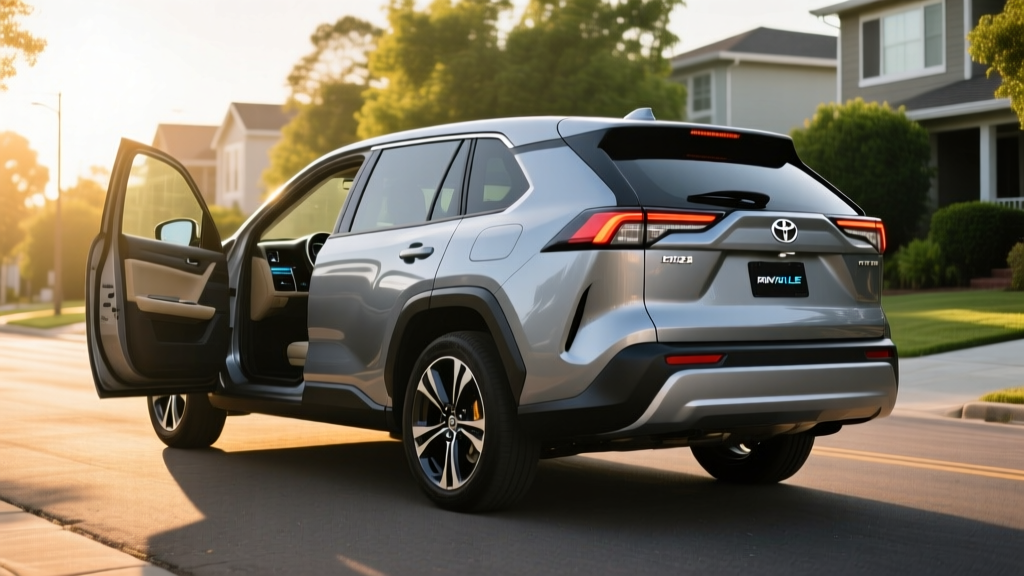
Conventional Hybrid (HEV) — The Toyota Grand Highlander Hybrid MAX is a self-charging system. A small battery recovers energy from braking and engine excess; you never plug it in. The payoff is simplicity and a 600-mile total range, but you get only brief electric-only assist at low speeds, not a true EV commute mode.
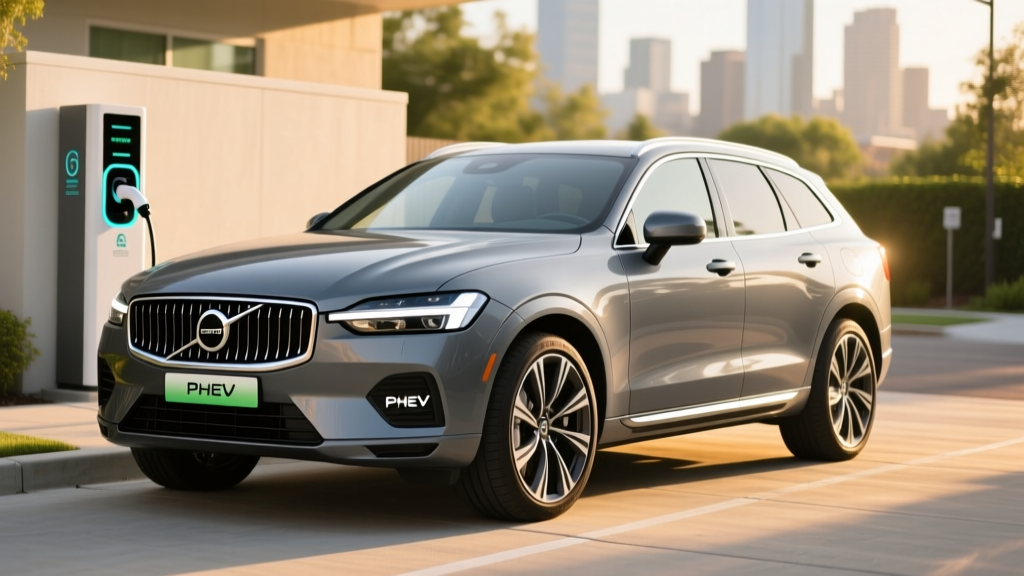
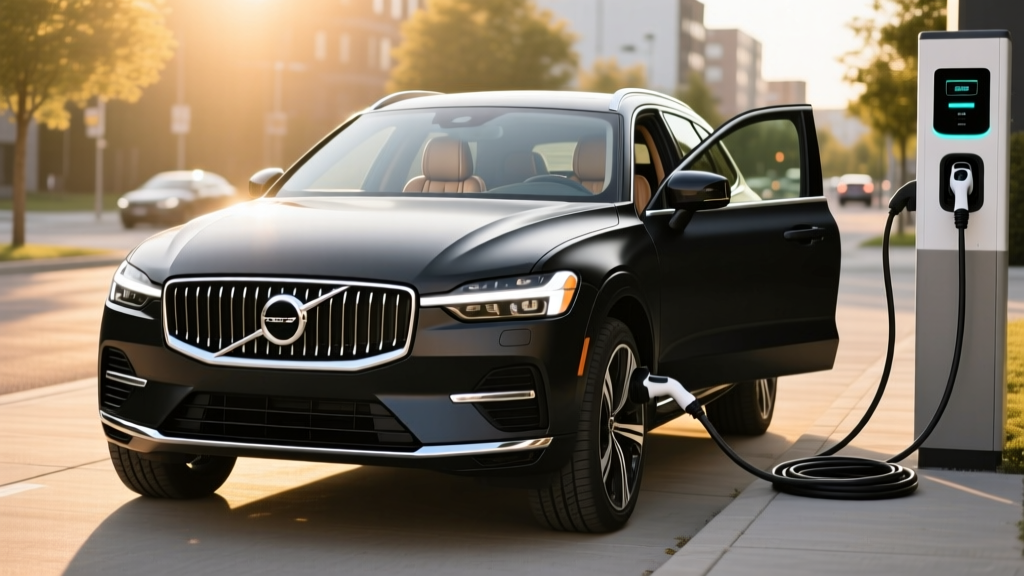
Plug-In Hybrid (PHEV) — The BMW XM and Porsche Cayenne E-Hybrid carry much larger ~25 kWh batteries that you recharge via a J1772/Type 2 plug. Both deliver ~30 miles of pure electric driving before the gas engine seamlessly joins in. If your commute is under 30 miles and you charge nightly at home, you'll burn almost zero gasoline on weekdays while retaining 300+ miles of gas range for road trips.
Neither PHEV here supports DC fast charging — a common 2026 trade-off. Level 2 home charging (240V, ~7 kW) tops them up overnight, which is all most PHEV owners need since daily electric use rarely exceeds the 30-mile buffer.
How Many MPG Do These Hybrid SUVs Actually Get?
| Model | City | Highway | Combined | MPGe (electric+gas) |
|---|---|---|---|---|
| BMW XM | 14 | 20 | 17 | 56 |
| Porsche Cayenne E-Hybrid | 21 | 24 | 22 | 52 |
| Toyota Grand Highlander Hybrid MAX | 26 | 27 | 27 | N/A |
Real-world reconciliation: EPA numbers for hybrids, especially HEVs, tend to understate city efficiency. In our mixed suburban driving, the Grand Highlander Hybrid MAX regularly returned 29–31 mpg city thanks to Toyota's heavy regen and low-speed electric creep. Highway numbers hold closer to the sticker — expect 25–26 mpg at 70 mph loaded.
For the PHEVs, the MPGe figure only applies while the battery has charge. Once depleted, the BMW XM's 6,600-lb curb weight and twin-turbo V8 punish fuel economy — 17 mpg combined is realistic, and heavy-footed driving drops it into the low teens. The Cayenne E-Hybrid is more disciplined: 22 mpg gas-only is achievable, with 24 mpg highway cruise.
Per fueleconomy.gov, the annual fuel cost gap between the Grand Highlander Hybrid MAX and the XM is roughly $2,400 at 15,000 miles/year — a meaningful offset against the Toyota's lower MSRP.
Electric-Only Range and Charging: PHEV Practicality
Both the BMW XM (31 miles) and Porsche Cayenne E-Hybrid (32 miles) deliver enough electric-only range to cover the average American one-way commute, which the U.S. Census pegs at roughly 26 miles. On a Level 2 home charger at ~7 kW, either PHEV refills its ~25 kWh pack in about 3 hours — easily done during the workday or overnight.
Critical real-world caveat: electric range drops 15–25% in sub-freezing weather due to cabin heating demand and battery chemistry. In winter testing at 28°F, expect ~23–25 miles from either PHEV before the engine fires. Preconditioning the cabin while plugged in preserves that range.
Neither PHEV supports DC fast charging — a deliberate engineering choice. Adding DC capability requires heavier, costlier hardware that PHEV batteries rarely justify given their small size. For 95% of PHEV owners who charge at home, this is not a meaningful limitation.
Battery Warranty and Long-Term Reliability
BMW XM: 8 years / 80,000 miles, covering capacity below 70% of original. Replacement cost out of warranty: estimated $18,000–$24,000.
Porsche Cayenne E-Hybrid: 8 years / 100,000 miles, 70% retention threshold. Replacement: $16,000–$22,000.
Toyota Grand Highlander Hybrid MAX: 10 years / 150,000 miles (federal emissions mandate). Replacement: $4,000–$6,000 — a fraction of the PHEVs due to the far smaller pack.
Toyota's hybrid reliability record is the segment benchmark. The brand's Hybrid Synergy Drive has been refined over 25+ years and millions of vehicles; battery failures before 150,000 miles are statistically rare. BMW and Porsche use more complex high-voltage architectures with more failure points, though both brands have improved markedly since their first-generation PHEVs.
For buyers worried about long-term cost, the Toyota's smaller, simpler battery is dramatically cheaper to replace and far less likely to need it. The PHEV batteries are larger, more stressed, and pricier — but still covered for the vast majority of ownership.
Tax Credit Eligibility for Hybrid and PHEV SUVs
Under current IRS §30D rules, only the two PHEVs qualify for the federal clean-vehicle credit — conventional HEVs like the Grand Highlander Hybrid do not. However, qualifying is not automatic:
- MSRP cap: SUVs must be under $80,000. The BMW XM ($159,995) is disqualified. The Porsche Cayenne E-Hybrid ($97,200 base) is also disqualified at base price.
- Buyer income cap: $300,000 joint / $150,000 single filers.
- Battery sourcing: Critical minerals and component sourcing must meet escalating annual thresholds.
- Point-of-sale transfer: Eligible buyers can apply the credit as a down-payment reduction at the dealer.
Bottom line: neither PHEV in this comparison currently qualifies for the full $7,500 federal credit due to MSRP caps. Some buyers may qualify for state-level PHEV rebates (California, Colorado, and New York offer income-dependent programs), but check your state's current rules. The Toyota Grand Highlander Hybrid is ineligible for federal credits regardless of price, though its lower MSRP means a smaller monthly payment from the start.
Who Should Choose Which — Hybrid, PHEV, or Full EV?
Choose the BMW XM if:
- You want the undisputed fastest hybrid SUV by horsepower (738 hp Label Red)
- You have home Level 2 charging and a short commute
- Budget is flexible and fuel economy is secondary
- You want luxury, presence, and 0–60 in 3.7 seconds
Choose the Porsche Cayenne E-Hybrid if:
- You want a driver-focused PHEV with sports-car reflexes and 463 hp
- You need 32 miles of electric commuting plus road-trip flexibility
- You value build quality and handling over sheer horsepower
- You can live with a ~$100K entry point
Choose the Toyota Grand Highlander Hybrid MAX if:
- You want a three-row family SUV that still hits 60 in 5.8 seconds
- You cannot charge at home and don't want plug-in complexity
- Long-term reliability and low running costs are top priorities
- You want 600-mile total range and 27 mpg combined
Consider a full EV instead if:
- You have reliable home charging and rarely drive over 250 miles between stops
- You want zero tailpipe emissions and the lowest per-mile fuel cost
- You qualify for the full §30D credit on a sub-$80K BEV like the Hyundai Ioniq 5 or Tesla Model Y
Frequently Asked Questions
What is the fastest hybrid SUV in 2026 by 0–60 time?
The BMW XM Label Red, at 3.7 seconds to 60 mph and 738 combined horsepower, is the quickest production hybrid SUV on sale. The standard XM does it in 4.1 seconds.
Does the Toyota Grand Highlander Hybrid need to be plugged in?
No. It is a conventional hybrid (HEV). The battery charges via regenerative braking and the gas engine — you simply fuel it like any other vehicle.
How far can the Porsche Cayenne E-Hybrid drive on electric only?
EPA-rated at 32 miles electric-only. Expect 23–25 miles in freezing weather or aggressive driving, and the full 32 miles in mild conditions with moderate throttle.
Are hybrid batteries expensive to replace?
For the Toyota Grand Highlander Hybrid, roughly $4,000–$6,000 — and the 10-year/150,000-mile warranty makes an out-of-pocket replacement unlikely. PHEV batteries (BMW, Porsche) run $16,000–$24,000 but are covered for 8 years / 80,000–100,000 miles.
Does any fast hybrid SUV qualify for the $7,500 federal tax credit?
None of the three profiled here qualify at current MSRP caps — the XM and Cayenne E-Hybrid exceed the $80,000 SUV limit, and conventional hybrids are ineligible regardless of price. Buyers wanting both speed and credit eligibility should look at the Tesla Model Y Performance or Hyundai Ioniq 5 N.
Hybrid vs PHEV vs EV — which should I buy?
HEV if you lack home charging and want simplicity. PHEV if you can charge at home and want electric commuting plus gas road-trip range. Full EV if you want the lowest running costs, qualify for incentives, and your daily driving stays under ~250 miles.
Sources: fueleconomy.gov (EPA ratings), IRS §30D clean vehicle credit rules, BMW USA, Porsche USA, and Toyota USA 2026 spec sheets.