Quick Verdict: The F-150 PowerBoost Hybrid at a Glance
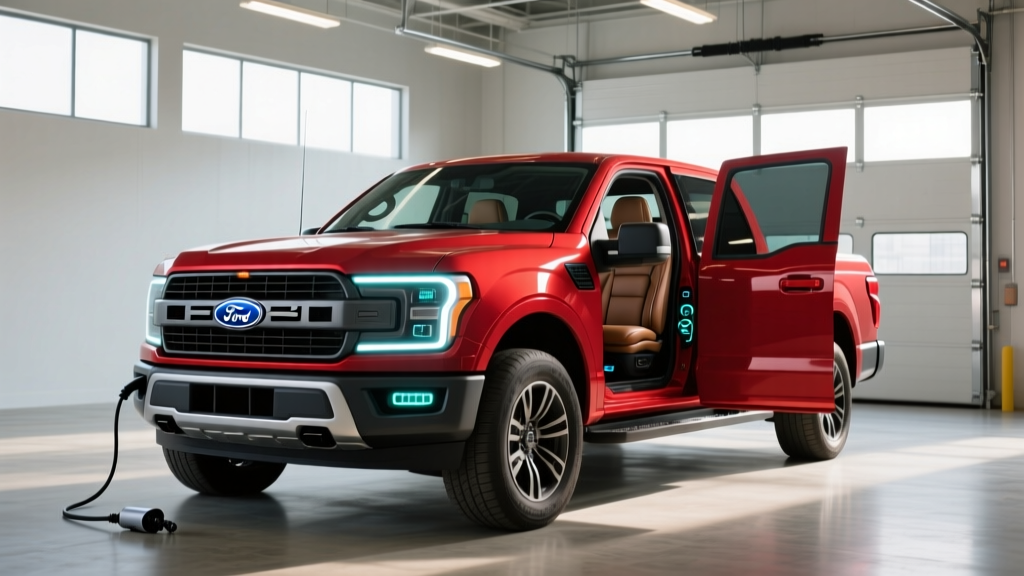
The Ford F-150 PowerBoost hybrid pairs a 3.5-liter twin-turbo V6 with a 35 kW electric motor integrated into the 10-speed automatic transmission. The result is 430 combined horsepower, 570 lb-ft of torque, and an EPA-estimated 25 MPG combined — a meaningful improvement over the non-hybrid 3.5L EcoBoost's 20 MPG combined. For a full-size, body-on-frame truck capable of towing up to 11,200 pounds, that efficiency figure is genuinely noteworthy. But as with any hybrid truck, real-world results depend heavily on how and where you drive.
This guide breaks down the 2026 F-150 PowerBoost's fuel economy data, powertrain engineering, ownership costs, battery longevity, and where it fits in the hybrid-vs-EV truck landscape. If you're searching for F-150 hybrid MPG numbers to decide whether the PowerBoost premium is worth it, you're in the right place.
Ford F-150 PowerBoost: Hybrid (HEV) vs. Plug-In Hybrid (PHEV) — What You're Getting
The F-150 PowerBoost is a conventional full hybrid (HEV), not a plug-in hybrid (PHEV). This distinction matters enormously for buyers:
- HEV (PowerBoost): No plug. The 1.5 kWh lithium-ion battery charges exclusively through regenerative braking and the gasoline engine. You never need to find a charger. The electric motor assists the engine during acceleration and enables low-speed electric-only driving for short distances (typically under 1 mile at parking-lot speeds).
- PHEV (for comparison): A larger battery (typically 12-20 kWh) that you plug in, providing 20-40 miles of pure electric range before the gas engine engages. Ford does not currently offer an F-150 PHEV in the U.S. market.
If you want plug-in electric range in a Ford truck, the all-electric F-150 Lightning is the alternative — but that's a fundamentally different vehicle with different trade-offs. The PowerBoost is designed for buyers who want improved fuel economy without any charging infrastructure dependency.
F-150 Hybrid MPG: EPA Ratings and Real-World Fuel Economy
| Configuration | City MPG | Highway MPG | Combined MPG |
|---|---|---|---|
| PowerBoost 4x2 (RWD) | 25 | 26 | 25 |
| PowerBoost 4x4 | 23 | 24 | 24 |
| 3.5L EcoBoost (non-hybrid) 4x4 | 18 | 23 | 20 |
| 5.0L V8 4x4 | 16 | 22 | 19 |
Source: fueleconomy.gov (EPA estimates). Verify current model-year data at fueleconomy.gov as specs may shift.
Real-World MPG: What Owners Actually Report
EPA estimates provide a standardized baseline, but hybrid trucks often behave differently than the sticker suggests — and usually in the buyer's favor for city driving.
City driving (favorable for hybrids): The PowerBoost's regenerative braking and electric motor assist shine in stop-and-go traffic. Owners consistently report exceeding the EPA city estimate by 1-3 MPG in urban and suburban conditions. The electric motor handles low-speed launches, reducing the engine's least-efficient operating range. Expect 24-27 MPG in mixed city driving with the 4x4.
Highway driving (less hybrid advantage): At sustained 70-80 MPH speeds, the electric motor provides minimal benefit. Aerodynamic drag dominates a full-size truck's energy consumption, and the PowerBoost's hybrid system can't overcome physics. Expect 21-23 MPG on the highway with the 4x4 — close to or slightly below the EPA highway estimate.
Towing and heavy loads: This is where the MPG picture changes dramatically. Towing a 7,000-pound trailer will drop fuel economy to approximately 10-13 MPG regardless of the hybrid system. The electric motor's 35 kW contribution is negligible against the energy demands of moving combined truck-plus-trailer weight at highway speed. Don't buy the PowerBoost expecting towing fuel economy miracles.
Real-World F-150 Hybrid MPG Summary:
EPA Combined: 24 MPG (4x4) | Real-world mixed driving: 22-26 MPG | City-heavy: up to 27 MPG | Highway-only: 21-23 MPG | Towing 7,000 lbs: 10-13 MPG
Powertrain Deep Dive: Engine, Motor, and Combined Output
| Specification | F-150 PowerBoost Hybrid |
|---|---|
| Engine | 3.5L twin-turbo V6 (EcoBoost) |
| Engine Output | 400 hp / 500 lb-ft |
| Electric Motor | 35 kW (47 hp) integrated into 10-speed auto |
| Combined System Output | 430 hp / 570 lb-ft |
| Hybrid Battery | 1.5 kWh lithium-ion (air-cooled) |
| Transmission | 10-speed modular hybrid automatic |
| 0-60 MPH | ~5.8 seconds (4x4) |
| Max Towing Capacity | 11,200 lbs (properly equipped) |
| Max Payload | ~2,120 lbs |
| Pro Power Onboard | Up to 7.2 kW (optional) |
The 35 kW electric motor sits between the engine and the transmission in Ford's modular hybrid architecture. It serves three functions: supplementing torque during hard acceleration (the combined 570 lb-ft exceeds the non-hybrid 3.5L EcoBoost's 500 lb-ft), enabling engine-off coasting and low-speed electric crawling, and acting as a generator during regenerative braking to recharge the 1.5 kWh battery.
The 1.5 kWh battery is small by EV standards — roughly equivalent to 4-5 miles of energy in a compact EV — but it's appropriately sized for a conventional hybrid. It buffers energy captured from braking and provides short bursts of electric assist. Ford positions it under the rear seat, preserving bed space and interior volume.
Pro Power Onboard is where the hybrid system delivers a unique truck-specific advantage. The PowerBoost can run its engine as a generator to supply up to 7.2 kW of 120V/240V AC power through bed-mounted outlets. That's enough to simultaneously run a job-site table saw, compressor, and lights — or power a camper's appliances off-grid. This feature alone has driven PowerBoost adoption among contractors and overlanders who value mobile power without a separate generator.
Pricing, Trims, and Tax Credit Eligibility
The PowerBoost hybrid is available across multiple F-150 trims for the 2026 model year. Here's the approximate pricing structure:
- XLT PowerBoost 4x2: ~$57,000 MSRP
- XLT PowerBoost 4x4: ~$60,500 MSRP
- Lariat PowerBoost 4x4: ~$67,000 MSRP
- Platinum PowerBoost 4x4: ~$75,000 MSRP
- King Ranch PowerBoost 4x4: ~$77,000 MSRP
The PowerBoost powertrain typically adds $2,500-$3,500 over the equivalent 3.5L EcoBoost non-hybrid configuration, depending on the trim and option packaging.
Federal Tax Credit: Does the F-150 Hybrid Qualify?
The F-150 PowerBoost (HEV) does NOT qualify for the federal §30D clean vehicle tax credit. Under current IRS rules, the §30D credit of up to $7,500 applies exclusively to plug-in electric vehicles (BEVs and PHEVs) that meet battery sourcing, critical minerals, MSRP cap, and buyer income requirements.
Conventional hybrids — which cannot be plugged in — have never been eligible for §30D. There is currently no federal tax credit for purchasing a conventional HEV.
Check your state: Some states offer their own incentives for hybrid vehicles, though these are increasingly rare as state programs shift focus to BEVs and PHEVs. Consult your state's energy or DMV website for current programs.
Does the Hybrid Premium Pay for Itself?
Let's run the math on the PowerBoost fuel savings versus the non-hybrid 3.5L EcoBoost 4x4:
- PowerBoost 4x4: 24 MPG combined
- EcoBoost 4x4: 20 MPG combined
- Assumed annual mileage: 15,000 miles
- Assumed fuel cost: $3.40/gallon (national average, varies regionally)
Annual fuel cost comparison:
- EcoBoost: 15,000 ÷ 20 × $3.40 = $2,550/year
- PowerBoost: 15,000 ÷ 24 × $3.40 = $2,125/year
- Annual savings: ~$425
At a ~$3,000 hybrid powertrain premium, the break-even point is approximately 7 years or 105,000 miles. For high-mileage drivers (20,000+ miles/year) or those who do predominantly city driving where the MPG gap widens, payback accelerates to 4-5 years. For lower-mileage highway-heavy drivers, the hybrid premium may not fully recoup through fuel savings alone — though the added torque and Pro Power Onboard may justify the cost independently.
Battery Longevity, Warranty, and Replacement Cost
Ford Hybrid Battery Warranty: 8 years or 100,000 miles (whichever comes first). In California Air Resources Board (CARB) states, the warranty extends to 10 years or 150,000 miles.
The warranty covers defects and capacity loss below a specified threshold — typically 60-70% of original capacity, though Ford's specific retention threshold should be confirmed with your dealer at purchase.
The 1.5 kWh battery in the PowerBoost is far smaller and less stressed than an EV traction battery. It operates in a narrow state-of-charge window (roughly 40-80%) managed by the hybrid control system, which avoids the deep discharge cycles that accelerate degradation in BEVs. Ford uses an air-cooled thermal management approach for this pack.
Real-world durability data: Ford's previous-generation hybrid systems (in the Escape Hybrid and Fusion Hybrid) have demonstrated strong longevity, with many examples exceeding 150,000 miles on the original hybrid battery. Toyota's hybrid trucks (the Tundra i-FORCE MAX, using a similar architecture) show comparable durability. The PowerBoost's larger, more powerful system is newer, but the engineering principles are well-proven.
Replacement cost: If the hybrid battery fails out of warranty, expect a replacement cost in the range of $3,000 to $5,000 (parts and labor) based on current pricing for Ford hybrid battery assemblies. This is significantly less than EV battery replacement ($10,000-$20,000+) because the pack is small. The hybrid system's electric motor and inverter are also covered under the powertrain warranty and are generally reliable components.
Is the F-150 PowerBoost reliable overall? Ford's 3.5L EcoBoost V6 is one of the brand's most proven engines, now in its third generation. The 10-speed transmission has had some early-generation complaints (primarily in 2017-2019 models) but has been substantially refined. The hybrid module adds complexity but not significant failure risk based on industry-wide hybrid reliability data. Check NHTSA for any open recalls or technical service bulletins on your specific model year.
F-150 Hybrid vs. F-150 Lightning vs. Gas F-150: Which Truck Fits You?
Choose the F-150 PowerBoost Hybrid if:
- You want better fuel economy without changing your refueling habits (no charging needed)
- You drive a mix of city and highway miles, especially with city-heavy commutes
- You need Pro Power Onboard for job-site or campsite electricity
- You tow regularly but want slightly better fuel economy when unloaded
- You're not ready for an EV due to charging access limitations or range concerns with heavy towing
Choose the F-150 Lightning (full EV) if:
- You have reliable home Level 2 charging and your daily driving is under 250 miles
- You want the lowest per-mile "fuel" cost (electricity at $0.12-$0.16/kWh vs. gasoline at $3.40/gal)
- You qualify for the federal §30D tax credit (up to $7,500 point-of-sale, subject to IRS income and sourcing rules)
- You rarely tow heavy loads over long distances (towing cuts EV range by 40-50%)
- You want instant torque, a front trunk (frunk), and near-silent operation
Choose the gas-only F-150 (3.5L EcoBoost or 5.0L V8) if:
- Your budget is the primary constraint and the hybrid premium doesn't fit
- You do almost exclusively highway driving where the hybrid MPG advantage narrows
- You prefer the simplest possible powertrain with fewer hybrid-specific components
- You plan to keep the truck 10+ years and want to minimize long-term repair complexity
Pros and Cons of the F-150 PowerBoost Hybrid
Pros
- 24-25 MPG combined — 4-5 MPG better than the equivalent gas V6
- 570 lb-ft combined torque exceeds the non-hybrid 3.5L EcoBoost
- Pro Power Onboard up to 7.2 kW — best-in-class mobile power
- No charging infrastructure needed; refuel at any gas station
- 11,200-lb towing capacity maintained vs. gas models
- Strong 8yr/100k-mile hybrid battery warranty
- Real-world city MPG often exceeds EPA estimate
Cons
- No federal tax credit eligibility (HEV, not PHEV/BEV)
- $2,500-$3,500 powertrain premium with 5-7 year fuel-cost payback
- Highway MPG advantage over gas models is minimal (1-2 MPG)
- Towing fuel economy is poor regardless of hybrid system (~10-13 MPG)
- Small 1.5 kWh battery limits electric-only driving to under 1 mile at low speed
- Hybrid system adds weight (~200 lbs) and mechanical complexity
- Air-cooled battery may be less optimal in extreme desert heat
Frequently Asked Questions
How many MPG does the F-150 hybrid get?
The 2026 F-150 PowerBoost 4x4 is EPA-rated at 23 city / 24 highway / 24 combined MPG. The 4x2 (rear-wheel-drive) version rates slightly higher at 25/26/25 MPG. In real-world driving, owners report 22-27 MPG depending on driving mix, with city-heavy routes yielding the best results thanks to regenerative braking and electric motor assist.
Does the F-150 hybrid need to be plugged in?
No. The F-150 PowerBoost is a conventional hybrid (HEV), not a plug-in hybrid. The 1.5 kWh battery charges entirely through regenerative braking and the gasoline engine. You never plug it in — you simply refuel at a gas station like any other truck.
How far can the F-150 hybrid drive on electric only?
Less than 1 mile, and only at very low speeds (under 25 MPH). The PowerBoost's electric motor is designed for torque assist during acceleration and low-speed maneuvering (parking lots, driveways), not for meaningful electric-only driving range. If you want electric-only range in a truck, you need a PHEV or a full EV like the F-150 Lightning.
Is the F-150 PowerBoost hybrid reliable?
Ford's hybrid technology is well-proven across the Escape Hybrid, Fusion Hybrid, and Maverick Hybrid. The 3.5L EcoBoost V6 is in its third generation and is one of Ford's most durable engines. The hybrid battery carries an 8-year/100,000-mile warranty (10yr/150k in CARB states). Out-of-warranty battery replacement runs approximately $3,000-$5,000 — far less than EV battery replacement.
Does the F-150 hybrid qualify for a tax credit?
No federal tax credit is available for the F-150 PowerBoost. The IRS §30D clean vehicle credit (up to $7,500) applies only to plug-in vehicles (BEVs and PHEVs), not conventional hybrids. Some states may offer minor hybrid incentives, but these are uncommon. Check your state's energy office for current programs.
How much does the PowerBoost hybrid save in fuel costs?
Compared to the 3.5L EcoBoost 4x4 (20 MPG combined), the PowerBoost 4x4 (24 MPG combined) saves approximately $425 per year at 15,000 miles/year and $3.40/gallon fuel. At a ~$3,000 hybrid premium, the break-even point is roughly 7 years. High-mileage city drivers may see payback in 4-5 years.
What's the towing fuel economy of the F-150 hybrid?
Expect approximately 10-13 MPG when towing a 7,000-pound trailer at highway speeds. The hybrid system provides negligible fuel economy benefit under heavy towing loads — the energy required to move the combined truck-and-trailer weight far exceeds what the 35 kW electric motor can offset. Towing MPG is comparable to the non-hybrid 3.5L EcoBoost.