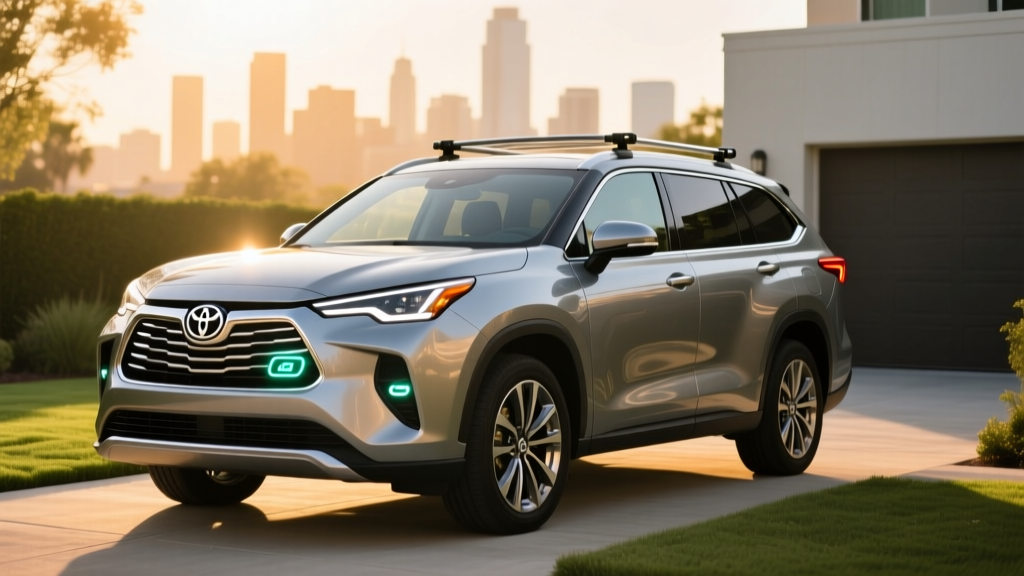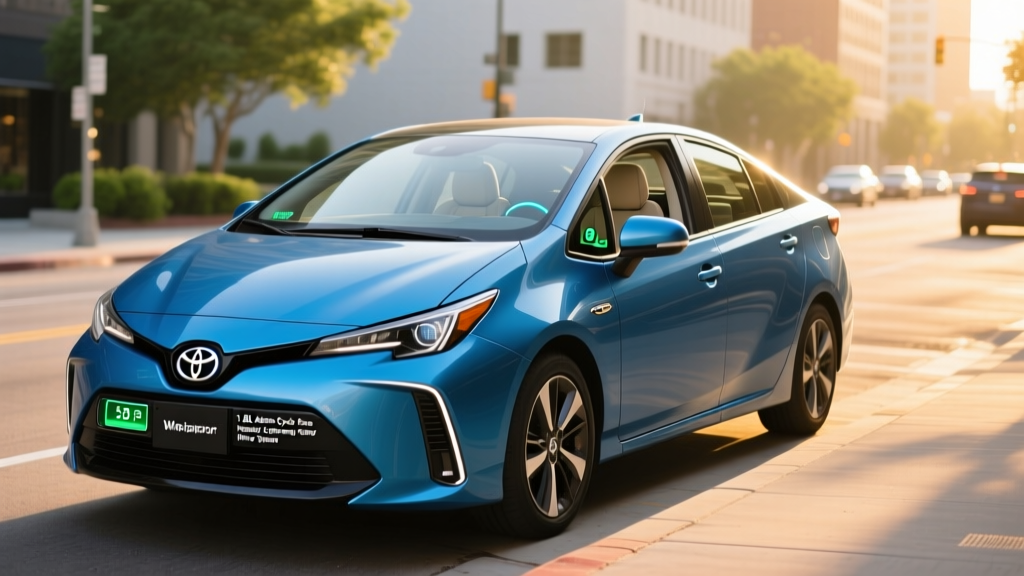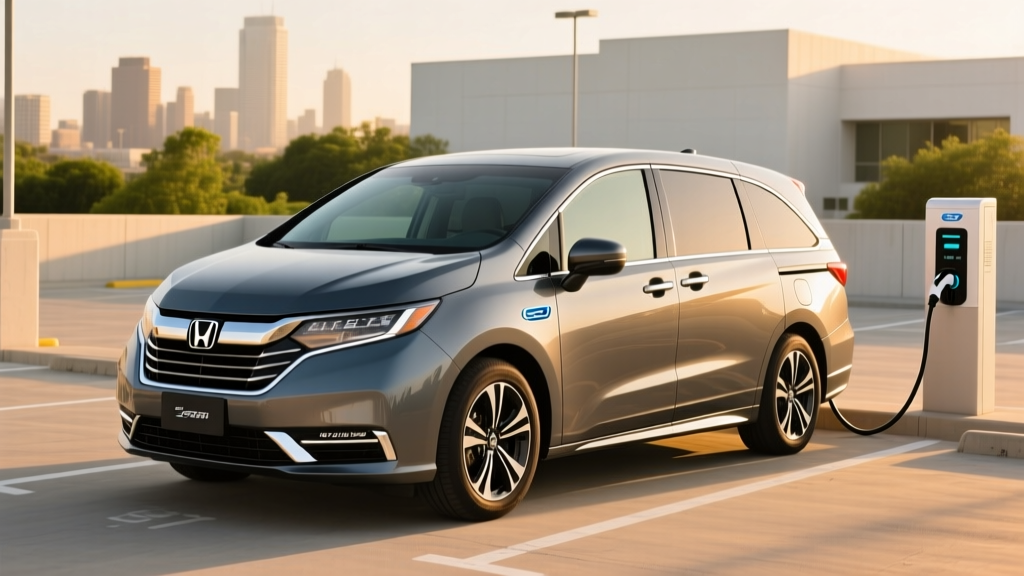
If you're shopping for an electrified vehicle but aren't ready for a full battery-electric car, you've probably asked: does the EV tax credit apply to hybrids? The short answer is that it depends entirely on what kind of hybrid you're considering. Conventional hybrids (HEVs) like the Toyota Prius never qualify for the federal §30D clean vehicle credit. Plug-in hybrids (PHEVs) like the Toyota RAV4 Prime or Chrysler Pacifica Hybrid can qualify — but only if they meet strict battery-sourcing, MSRP, and buyer-income requirements that have tightened significantly under current IRS rules.
This guide breaks down exactly which hybrids and PHEVs may be eligible for federal tax incentives in 2026, how the HEV vs. PHEV distinction affects your wallet, and what the real-world fuel economy looks like once you leave the dealership.
HEV vs. PHEV: The Credit Eligibility Divide
The single most important thing to understand is that the federal §30D New Clean Vehicle Credit was designed for vehicles you can plug in. A conventional hybrid (HEV) charges its small battery exclusively through regenerative braking and the gasoline engine — it has no charging port, no plug, and no pathway to the federal EV tax credit.
| Feature | Conventional Hybrid (HEV) | Plug-in Hybrid (PHEV) | Battery Electric (BEV) |
|---|---|---|---|
| Has a plug / charging port? | No | Yes | Yes |
| Electric-only range | 0 miles (motor assists engine) | 20–50 miles typical | 200–400+ miles |
| Battery size | 0.5–2.0 kWh | 10–25 kWh usable | 50–110 kWh usable |
| Federal §30D credit eligible? | No | Yes, if sourcing/MSRP/income rules met | Yes, if sourcing/MSRP/income rules met |
| Needs home charging install? | No | Recommended (Level 2) | Essential (Level 2) |
| Example models | Toyota Prius, Honda CR-V Hybrid | Toyota RAV4 Prime, Jeep Wrangler 4xe | Tesla Model Y, Hyundai Ioniq 5 |
A PHEV sits in the middle: it carries a battery large enough to drive 20–50 miles on electricity alone, then seamlessly switches to hybrid mode once that battery depletes. Because you can plug it in, it's treated as an electrified vehicle under the tax code — but qualifying for the credit is far from guaranteed.
Federal Tax Credit Rules for PHEVs in 2026
Under IRS §30D, a qualifying PHEV can earn up to $7,500 in federal tax credit. That credit is split into two $3,750 halves: one tied to critical-mineral sourcing and one tied to battery-component manufacturing in North America or a free-trade-agreement partner country. Meeting both requirements is what unlocks the full $7,500; meeting only one nets $3,750.
Here's what your PHEV and your tax situation must satisfy to claim any credit at all:
- MSRP cap: Vans, SUVs, and pickups must have a base MSRP at or below $80,000. Sedans and other passenger cars must be at or below $55,000.
- Buyer income cap (modified AGI): $300,000 for joint filers, $225,000 for heads of household, $150,000 for single filers.
- Battery capacity: The vehicle must have at least 7 kWh of battery capacity (virtually all current PHEVs meet this).
- Final assembly: Must occur in North America (check the VIN at NHTSA's decoder).
- Critical minerals & battery components: Must meet escalating annual thresholds for North American or FTA-partner sourcing and manufacturing. These thresholds tighten each year, which is why some PHEVs that qualified in 2024 no longer qualify in 2026.
- Point-of-sale transfer: As of 2024, you can transfer the credit to the dealer at purchase, reducing the sale price directly — even if your tax liability is lower than the credit amount. This is a significant change from the old non-refundable credit model.
How Many MPG Does a Hybrid Get? (EPA vs. Real-World)
One of the strongest arguments for any hybrid — HEV or PHEV — is fuel economy. But EPA stickers don't tell the whole story. Hybrids often exceed their EPA city ratings in real-world stop-and-go driving because regenerative braking recaptures energy that a gas car wastes as heat. Highway driving is where hybrids lose their advantage somewhat, since the electric motor assists less at sustained speeds.
| Model (2025–2026) | Type | EPA City | EPA Highway | EPA Combined | Real-World Combined (est.) | PHEV EV Range |
|---|---|---|---|---|---|---|
| Toyota Prius | HEV | 57 | 56 | 57 | 52–60 mpg | — |
| Toyota Prius Prime | PHEV | 52 (hybrid mode) | 48 | 52 | 48–55 mpg | 44 miles |
| Honda CR-V Hybrid | HEV | 43 | 36 | 40 | 37–44 mpg | — |
| Toyota RAV4 Prime | PHEV | 40 (hybrid mode) | 36 | 38 | 35–42 mpg | 42 miles |
| Chrysler Pacifica Hybrid | PHEV | 30 (hybrid mode) | 31 | 30 | 28–33 mpg | 32 miles |
| Hyundai Tucson PHEV | PHEV | 37 (hybrid mode) | 36 | 35 | 33–38 mpg | 33 miles |
Sources: fueleconomy.gov, manufacturer specifications. Real-world estimates reflect mixed driving; cold weather and heavy highway use reduce figures by 5–15%.
For PHEVs, the combined MPG figure above applies only after the electric range is depleted. During your daily commute — if it falls within the EV-only range — you may burn zero gasoline. A RAV4 Prime owner with a 20-mile round-trip commute and home charging might go months between fill-ups.
PHEV Electric-Only Range, Battery Size, and Charging
Plug-in hybrids carry batteries in the 10–25 kWh range (usable capacity), which is roughly one-tenth the size of a full EV battery. That's enough for short daily drives on electricity alone, but it also means charging is relatively quick — and, in most cases, limited to Level 2 AC charging.
| PHEV Model | Usable Battery (kWh) | EV-Only Range (mi) | Total Range (mi) | Level 2 Charge Time (0–100%) | DC Fast Charge? | Combined HP |
|---|---|---|---|---|---|---|
| Toyota Prius Prime | 13.6 | 44 | ~440 | ~4 hours (3.3 kW) | No | 220 |
| Toyota RAV4 Prime | 18.1 | 42 | ~600 | ~2.5 hours (6.6 kW) | No | 302 |
| Chrysler Pacifica Hybrid | 16.0 | 32 | ~520 | ~2 hours (7.2 kW) | No | 260 |
| Hyundai Tucson PHEV | 13.8 | 33 | ~420 | ~2 hours (7.2 kW) | No | 261 |
| Jeep Wrangler 4xe | 17.3 | 21 | ~370 | ~2.5 hours (7.2 kW) | No | 375 |
A critical detail many buyers miss: virtually no PHEVs on the US market support DC fast charging. You'll charge at home on a Level 2 (240V) outlet or a standard 120V household plug (Level 1), which will fully replenish most PHEV batteries overnight in 8–14 hours. This means public charging infrastructure is largely irrelevant to PHEV ownership — a significant advantage over full EVs for apartment dwellers who can install a 120V trickle charger or those who simply want to plug in at home overnight without investing in a dedicated Level 2 station.
Pricing and the Real Cost After Credits
PHEVs command a premium over their conventional hybrid siblings — typically $4,000 to $8,000 more at the base trim level. The question is whether the federal tax credit, fuel savings, and electric-only commuting close that gap.
| Model | Base MSRP (2025–2026) | Est. Federal Credit | Effective Price (if eligible) |
|---|---|---|---|
| Toyota Prius (HEV) | $28,350 | $0 (not eligible) | $28,350 |
| Toyota Prius Prime (PHEV) | $33,445 | $3,750–$7,500* | $25,945–$29,695 |
| Toyota RAV4 Prime (PHEV) | $44,500 | $0–$7,500* | $37,000–$44,500 |
| Chrysler Pacifica Hybrid | $51,095 | $0–$7,500* | $43,595–$51,095 |
| Hyundai Tucson PHEV | $39,460 | $3,750–$7,500* | $31,960–$35,710 |
*Credit eligibility varies by model year, battery-sourcing compliance, and buyer income. Verify at fueleconomy.gov and consult a tax professional. Point-of-sale transfer available at participating dealers.
For context, a conventional Prius HEV starts around $28,350 and gets 57 MPG combined with zero credit eligibility — making it one of the most cost-efficient vehicles on the market regardless of tax policy. The Prius Prime, with the full $7,500 credit applied at point of sale, can actually undercut the HEV on effective price while adding 44 miles of electric range. That arithmetic only works if the Prime qualifies for the full credit in your purchase year — which is not guaranteed as sourcing rules continue to tighten.
Battery Reliability, Warranty, and Replacement Costs
Hybrid battery reliability has proven exceptional over two decades of real-world use. The Toyota Prius, now in its sixth generation, has documented cases of original batteries lasting 200,000+ miles. PHEV batteries, being larger and subjected to deeper daily discharge cycles, have somewhat less long-term data, but early evidence from models like the first-generation RAV4 Prime (introduced for 2021) shows minimal degradation.
If a hybrid battery does need replacement outside of warranty, costs vary significantly:
- HEV battery replacement: $2,000–$4,000 (Toyota Prius: ~$2,500–$3,500 at a dealer; refurbished units available for $1,000–$1,800)
- PHEV battery replacement: $5,000–$9,000 (larger battery, more complex thermal management)
- BEV battery replacement: $10,000–$22,000+ (for context — significantly higher)
The HEV's smaller battery means lower replacement cost, which is a genuine long-term-ownership advantage. However, the probability of needing that replacement within 15 years of normal use is low for most mainstream models.
Hybrid vs. PHEV vs. EV: Which Fits Your Life?
Choose a conventional hybrid (HEV) if:
- You can't install any form of home charging (apartment, street parking, no garage)
- You want maximum MPG with zero behavioral change — just drive it like a gas car
- You want the lowest upfront cost and lowest battery-replacement risk
- You drive mostly city/stop-and-go where hybrids shine
- You don't want to think about plugging in, ever
Choose a plug-in hybrid (PHEV) if:
- You have access to a standard 120V outlet at home (that's enough to charge overnight)
- Your daily commute is under 30–40 miles round trip (you'll rarely use gas)
- You want electric commuting but need road-trip flexibility without route-planning anxiety
- You may qualify for the federal §30D credit, narrowing the price gap with an HEV
- You want a bridge vehicle while charging infrastructure matures in your area
Choose a full battery-electric vehicle (BEV) if:
- You have reliable Level 2 home charging (240V, 30–50A circuit)
- Your typical daily driving is under 200 miles and you can plan for road trips
- You want the lowest per-mile fuel cost and zero tailpipe emissions
- You want the strongest federal and state incentives (up to $7,500 federal + state rebates)
- You want minimal drivetrain maintenance (no engine oil, spark plugs, or exhaust system)
Real-World Ownership Considerations
Beyond the spec sheet, a few ownership realities shape the hybrid vs. PHEV decision:
Cold-weather MPG: All hybrids lose efficiency in freezing temperatures, but the impact is less severe than with full EVs. Expect a 10–20% MPG reduction in sub-30°F weather for both HEVs and PHEVs. PHEVs also lose electric-only range in the cold — a 42-mile EPA-rated RAV4 Prime may deliver only 30–35 miles of EV range in January in Minnesota.
Insurance costs: PHEVs and BEVs tend to carry 10–20% higher insurance premiums than equivalent HEVs or gas vehicles, driven by higher repair costs for electrified components. Get quotes before purchasing.
Maintenance: HEVs require the same maintenance as a conventional gas car (oil changes, spark plugs, transmission fluid). PHEVs add a cooling system for the larger battery but still require engine maintenance. BEVs eliminate most of this, needing only cabin air filters, brake fluid, tire rotation, and wiper fluid.
Resale value: As of 2026, Toyota hybrids and PHEVs hold their value exceptionally well, often outperforming both gas cars and BEVs in 5-year depreciation. The Prius and RAV4 Prime are particularly strong retainers, in part because demand continues to exceed supply at dealers.
Frequently Asked Questions
Does the EV tax credit apply to conventional hybrids like the Toyota Prius?
No. The federal §30D New Clean Vehicle Credit applies only to plug-in vehicles — battery-electric vehicles (BEVs), plug-in hybrids (PHEVs), and fuel-cell vehicles (FCEVs). A conventional hybrid (HEV) has no charging port and does not qualify for any federal purchase credit. Some states or utilities may offer small rebates for HEVs, but these are uncommon.
Which PHEVs qualify for the full $7,500 federal tax credit in 2026?
Eligibility changes frequently as battery-sourcing requirements tighten each year. As of early 2026, qualifying PHEVs must meet critical-mineral and battery-component thresholds, MSRP caps ($80,000 for SUVs/trucks, $55,000 for sedans), and buyer income limits. Check the current list at fueleconomy.gov and confirm with your dealer before purchase. The point-of-sale transfer option lets you apply the credit directly to the purchase price at participating dealerships.
Can I charge a PHEV on a regular 120V household outlet?
Yes. All PHEVs ship with a Level 1 (120V) charging cord. Because PHEV batteries are small (10–25 kWh), a standard household outlet can fully recharge most PHEVs in 8–14 hours — fast enough for overnight replenishment. A Level 2 (240V) home charger cuts that to 2–4 hours and is recommended but not required.
How long do hybrid batteries last, and what does replacement cost?
Most hybrid batteries last 150,000–200,000+ miles under normal use. Federal law mandates a minimum warranty of 8 years/100,000 miles (10 years/150,000 miles in CARB states). If replacement is needed, HEV batteries cost $2,000–$4,000; PHEV batteries cost $5,000–$9,000. Refurbished HEV batteries are available for under $2,000.
Is a PHEV better than a full EV for someone who can't charge at home?
Generally, yes. A PHEV gives you electric-only driving for short commutes while the gasoline engine handles everything else — no public charging dependency. However, if you truly cannot charge at home at all (not even a 120V outlet), a conventional HEV may make more sense, since a PHEV's electric range is wasted if you never plug it in. In that scenario, you're paying a premium for a battery you never use.
Do hybrids get better MPG in the city or on the highway?
City driving. Hybrids recapture braking energy and shut off the engine at stops, which is where gas cars waste the most fuel. Most hybrids achieve higher EPA city MPG than highway MPG — the opposite of a conventional gas car. The Toyota Prius, for example, is rated 57 city / 56 highway.
The Bottom Line
Does the EV tax credit apply to hybrids? For conventional HEVs, no — never. For PHEVs, yes — but only if the specific model meets evolving battery-sourcing, MSRP, and buyer-income requirements that shift annually. The credit can make a PHEV like the Prius Prime genuinely competitive with its HEV sibling on price, but you must verify eligibility at the time of purchase rather than relying on last year's list.
If your priority is simplicity and proven fuel economy, a conventional hybrid like the Prius or CR-V Hybrid remains one of the smartest vehicle purchases available — no plug, no credit, no complications. If you want electric commuting with gas-car flexibility and can plug in at home, a PHEV is an excellent bridge technology — especially if the tax credit applies. Just do the math on your actual commute, your home-charging access, and your tax situation before deciding.