The Short Answer: Tesla Does Not Make a Hybrid
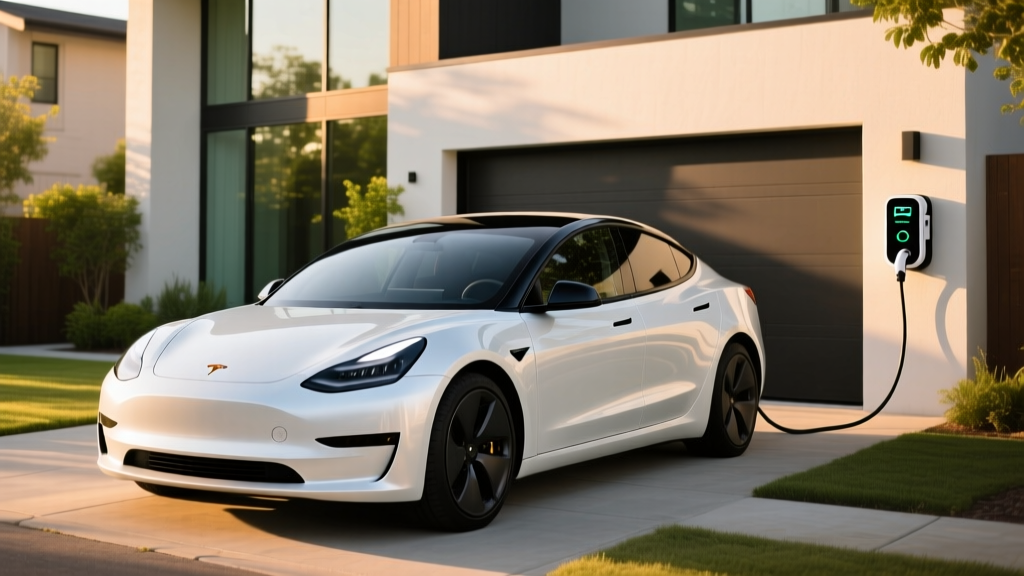
If you've been searching for a Tesla hybrid, a Tesla plug-in hybrid, or wondering whether the company behind the Model 3 and Model Y offers any gas-electric powertrain option, the answer as of 2026 is definitive: Tesla does not manufacture any hybrid or plug-in hybrid vehicle. Every model in Tesla's lineup — the Model 3, Model Y, Model S, Model X, and the Cybertruck — is a battery electric vehicle (BEV) with no internal combustion engine whatsoever.
This isn't a gap in Tesla's product strategy that's likely to be filled. CEO Elon Musk has repeatedly stated that Tesla views hybrids as a transitional technology and has committed exclusively to full electrification. There are no announced plans, patent filings, or credible reports suggesting Tesla will introduce a hybrid or PHEV model at any foreseeable point.
But if you're asking "does Tesla make a hybrid" because you want Tesla-level technology with the flexibility of a gas backup, you're not alone — and the good news is that several competitors offer compelling hybrid and plug-in hybrid alternatives that borrow heavily from the EV playbook. Let's break down what's actually available, who should consider these options, and how they compare to going full electric.
Why Tesla Skips Hybrids — and What That Means for You
Tesla's reasoning is rooted in engineering philosophy: hybrids carry the weight and complexity of two complete powertrains (an engine plus an electric motor and battery), which Tesla argues adds cost, maintenance burden, and packaging compromise without delivering the efficiency or performance of a purpose-built BEV. From a total-cost-of-ownership perspective, Tesla's position has merit — a hybrid owner still pays for oil changes, spark plugs, transmission service, and emissions systems alongside EV components.
However, Tesla's all-in approach also means buyers who face any of these real-world constraints have no Tesla option:
- No home charging access: Apartment dwellers, street parkers, and those without garage access often find BEV ownership impractical. A conventional hybrid (HEV) requires zero plug-in infrastructure.
- Frequent long-distance travel in charging deserts: Rural routes or cross-country corridors with sparse DC fast-charging coverage make a PHEV or HEV a lower-stress choice.
- Budget constraints: Tesla's most affordable model, the Model 3, starts around $38,990 in 2026. Several excellent hybrids start under $30,000.
- Cold-climate range concerns: BEVs can lose 20-40% of EPA range in sub-freezing temperatures. Hybrids maintain consistent range regardless of weather.
If any of those describe your situation, the hybrid and PHEV market offers genuinely strong alternatives — many with technology that rivals Tesla's infotainment, driver-assistance, and efficiency.
HEV vs. PHEV: Understanding the Two Hybrid Types
Before comparing specific models, it's critical to understand the difference between the two hybrid categories, because they serve very different use cases and have different charging requirements.
| Feature | Conventional Hybrid (HEV) | Plug-in Hybrid (PHEV) |
|---|---|---|
| Plug-in Charging | Not required — never plugs in | Can plug in to charge battery |
| Battery Size | ~1.0–1.6 kWh | ~13–25 kWh (usable) |
| Electric-Only Range | Less than 1 mile at low speed | 20–50+ miles on battery alone |
| Gas Engine Role | Primary power, assisted by electric motor | Backup/range extender after battery depletes |
| Fueling | Gas station only | Gas station + electrical outlet/charger |
| Federal Tax Credit (§30D) | Not eligible | Up to $7,500 (with sourcing/income rules) |
| Best For | No home charging, simplicity, city driving | Home charging available, short commutes, road-trip flexibility |
| Example | Toyota Prius, Honda Accord Hybrid | Toyota RAV4 Prime, Jeep Wrangler 4xe |
A conventional hybrid (HEV) like the Toyota Prius uses a small battery that charges exclusively through regenerative braking and the gas engine. You never plug it in, and it operates like a regular gas car — just with dramatically better fuel economy, especially in city driving where the electric motor handles low-speed propulsion.
A plug-in hybrid (PHEV) like the Toyota RAV4 Prime carries a much larger battery that can be charged from a wall outlet or Level 2 charger, giving you 20-50 miles of pure electric driving before the gas engine kicks in. For many PHEV owners with short commutes and home charging, the gas engine may not start for weeks at a time — effectively functioning as an EV with a built-in range extender for road trips.
Top Hybrid and PHEV Alternatives to Tesla in 2026
Since Tesla won't offer a hybrid, here are the models that deliver the best combination of efficiency, technology, and value for buyers cross-shopping between a Tesla and a hybrid.
Toyota Prius (HEV) — The Efficiency Benchmark
| EPA MPG (City/Hwy/Combined) | 57 / 56 / 57 MPG |
| Powertrain | 2.0L 4-cyl + electric motor, 196 combined HP |
| Battery | ~1.0 kWh lithium-ion (self-charging) |
| 0-60 MPH | 7.0 seconds |
| Base MSRP | $28,350 |
| Federal Tax Credit | Not eligible (HEV) |
| Battery Warranty | 10 years / 150,000 miles |
The redesigned Prius is no longer the slow, quirky econobox of the past. With 196 horsepower and a 7.0-second 0-60 time, it's genuinely quick, and its 57 MPG combined is extraordinary. In real-world city driving, many owners report exceeding the EPA estimate — hybrids often outperform their stickers in stop-and-go traffic because regenerative braking recaptures energy that a gas-only car wastes as heat. Highway driving at 75+ MPH may return closer to 48-52 MPG. According to fueleconomy.gov, the Prius LE achieves 57 MPG combined, making it one of the most efficient non-plug-in vehicles ever sold in the US.
Toyota RAV4 Prime (PHEV) — The Electric-Everyday, Gas-Anywhere SUV
| Electric-Only Range | 42 miles (EPA) |
| Combined Range (Electric + Gas) | ~440+ miles total |
| EPA MPG (after battery depletes) | 38 MPG combined (gas mode) |
| MPGe (electric mode) | 94 MPGe combined |
| Powertrain | 2.5L 4-cyl + dual electric motors, 302 combined HP, AWD |
| Battery (usable) | ~14.9 kWh lithium-ion |
| Level 2 Charging Time (0-100%) | ~2.5 hours at 6.6 kW |
| DC Fast Charging | Not available |
| 0-60 MPH | 5.7 seconds |
| Base MSRP | $43,690 |
| Federal Tax Credit (§30D) | Up to $7,500 — subject to battery sourcing, income caps, and MSRP limits (verify at IRS.gov) |
| Battery Warranty | 10 years / 150,000 miles |
The RAV4 Prime is arguably the most compelling PHEV on the market and the closest thing to a "Tesla-like" experience with a gas safety net. Its 302 horsepower and 5.7-second 0-60 time rival the Tesla Model Y Long Range in straight-line performance. The 42-mile electric-only range covers the daily commute for the majority of American drivers (the US average one-way commute is approximately 16 miles, per Census Bureau data), meaning many owners rarely burn gas on weekdays.
On Level 2 charging at 6.6 kW, the RAV4 Prime fully replenishes in about 2.5 hours — fast enough to recharge during a workday or overnight on a standard 240V home outlet. Note that the RAV4 Prime does not support DC fast charging, which is common among PHEVs due to their smaller battery sizes making the added hardware cost unjustifiable.
Honda Accord Hybrid (HEV) — The Sedan That Puts Practicality First
| EPA MPG (City/Hwy/Combined) | 51 / 44 / 48 MPG |
| Powertrain | 2.0L 4-cyl + dual electric motors, 204 combined HP |
| Battery | ~1.3 kWh lithium-ion (self-charging) |
| 0-60 MPH | 7.4 seconds |
| Base MSRP | $33,990 |
| Federal Tax Credit | Not eligible (HEV) |
| Battery Warranty | 8 years / 100,000 miles (10 yr / 150,000 mi in CARB states) |
The Accord Hybrid's two-motor system operates primarily as a series hybrid at low and moderate speeds — the gas engine generates electricity while the motor drives the wheels — switching to direct engine drive at highway cruising speeds. The result is 51 MPG city, which in real-world driving around town can easily climb into the mid-50s. Highway efficiency drops to around 44 MPG because the engine takes over directly at higher speeds, where electric motors are less efficient.
Hybrid Battery Reliability and Replacement Cost
Battery longevity is consistently the top concern among hybrid shoppers, and the data is reassuring. Modern hybrid batteries from Toyota, Honda, Hyundai, and Ford have demonstrated excellent long-term reliability. The Toyota Prius, with over two decades of real-world data on the road, shows hybrid battery replacement rates well below 5% within the warranty period, and many original batteries exceed 200,000 miles with minimal degradation.
Hybrid Battery Warranty Standards
Federal law mandates a minimum hybrid battery warranty of 8 years / 100,000 miles for all hybrids sold in the US. In California Air Resources Board (CARB) states — which include California, New York, Massachusetts, and several others — that requirement extends to 10 years / 150,000 miles. Toyota voluntarily applies the 10-year/150,000-mile warranty nationwide on most of its hybrid models.
If a hybrid battery does require replacement out of warranty, costs have dropped significantly. A refurbished Toyota Prius hybrid battery typically runs $1,500–$2,500 installed, while a brand-new OEM battery from a dealer may cost $3,000–$4,500. For PHEVs with larger batteries, replacement costs are higher — a RAV4 Prime battery replacement could range from $6,000–$9,000 out of warranty, though failures within the warranty period are rare.
The key insight: hybrid battery degradation is gradual, not sudden. A battery at 80% state of health still functions perfectly — it simply offers slightly less electric assist (in an HEV) or a few fewer electric-only miles (in a PHEV). Unlike a BEV where battery degradation directly reduces your range, a degraded hybrid battery is less consequential because the gas engine compensates.
Real-World MPG: What to Actually Expect
EPA estimates for hybrids are generally reliable, but real-world results vary based on driving style, climate, and route composition. Here's what the data shows:
| Model | EPA Combined | Real-World City | Real-World Highway (75 MPH) | Cold-Weather Impact |
|---|---|---|---|---|
| Toyota Prius LE | 57 MPG | 55-62 MPG | 48-52 MPG | ~3-5 MPG drop |
| Honda Accord Hybrid | 48 MPG | 49-55 MPG | 40-44 MPG | ~3-5 MPG drop |
| Toyota RAV4 Prime (gas mode) | 38 MPG | 35-38 MPG | 33-36 MPG | ~2-4 MPG drop |
| Hyundai Tucson Hybrid | 38 MPG | 36-40 MPG | 33-36 MPG | ~2-4 MPG drop |
Hybrids tend to exceed EPA estimates in city driving because stop-and-go traffic maximizes regenerative braking energy recapture and allows the electric motor to handle more of the propulsion load. Conversely, sustained highway speeds reduce the hybrid advantage — the gas engine operates at a relatively steady state, and aerodynamic drag dominates. Cold weather reduces MPG modestly (less than in a BEV) because the engine must run more frequently to maintain cabin heat and battery temperature.
For PHEVs, real-world electric-only range also varies. The RAV4 Prime's 42-mile EPA electric range may deliver 44-48 miles in mild city driving at lower speeds, but drops to approximately 30-35 miles at highway speeds or in cold weather with cabin heating active.
Tax Credits: Which Hybrids Qualify?
This is where the distinction between HEV and PHEV matters enormously for your wallet:
- Conventional hybrids (HEVs) do NOT qualify for the federal §30D Clean Vehicle tax credit. The credit applies only to plug-in electric vehicles — BEVs and PHEVs.
- Plug-in hybrids (PHEVs) may qualify for up to $7,500 under §30D, but eligibility depends on several factors that change frequently.
As of 2026, the key §30D requirements for a PHEV to qualify include:
- Battery capacity: At least 7 kWh (most PHEVs meet this threshold).
- MSRP caps: Vans, SUVs, and pickup trucks must be under $80,000; sedans under $55,000.
- Buyer income limits: Modified AGI cannot exceed $150,000 (single), $225,000 (head of household), or $300,000 (joint filers).
- Battery component and critical mineral sourcing: Increasingly strict percentages must be manufactured or assembled in North America, with critical minerals sourced from the US or free-trade-agreement partners. These thresholds tighten each year.
- Point-of-sale transfer: Since 2024, buyers can transfer the credit to the dealer at purchase, receiving it as an immediate price reduction rather than waiting to claim it on their tax return.
Always verify current eligibility on IRS.gov or through the DOE's fueleconomy.gov tax credit pages, as battery sourcing requirements have disqualified several previously eligible PHEVs. A tax professional can confirm your specific eligibility based on income and filing status.
Hybrid vs. PHEV vs. Full EV: Which Should You Choose?
Choose a Conventional Hybrid (HEV) If:
- You have no access to home or workplace charging
- You want maximum simplicity — no plugs, no new habits
- You primarily drive in city/stop-and-go traffic
- Your budget is under $35,000
- You want proven, decade-plus reliability data
Choose a Plug-in Hybrid (PHEV) If:
- You have Level 2 home charging (or can install it)
- Your daily commute is under 40 miles round-trip
- You take road trips where charging infrastructure is sparse
- You want EV-like daily driving with gas-engine flexibility
- You may qualify for the §30D tax credit
Choose a Full EV (like a Tesla) If:
- You have reliable home Level 2 charging
- Your daily driving is within the vehicle's real-world range
- You want the lowest per-mile fuel cost and minimal maintenance
- You have access to DC fast charging for road trips
- You want maximum performance and the latest software/ADAS features
Stick with a Gas-Only Car If:
- You drive very few miles per year (under 5,000 — the hybrid premium won't pay back)
- You tow heavy loads regularly (few hybrids/PHEVs are rated for serious towing)
- You live in an extremely remote area with no hybrid service support
The Bottom Line for Tesla-Curious Hybrid Shoppers
Tesla's commitment to pure battery-electric vehicles means there is no Tesla hybrid, no Tesla PHEV, and no indication that one is coming. For buyers whose circumstances make a full EV impractical — whether due to charging access, budget, climate, or travel patterns — the hybrid and PHEV market offers genuinely excellent alternatives.
The Toyota Prius delivers 57 MPG combined starting under $29,000 with no lifestyle changes required. The RAV4 Prime provides 42 miles of electric commuting with a gas safety net and 302 horsepower. The Honda Accord Hybrid offers midsize sedan comfort at 48 MPG. All carry robust 8-10 year battery warranties and have demonstrated strong real-world reliability.
The right choice depends on your charging access, commute distance, budget, and willingness to adapt your fueling habits — not on waiting for a Tesla hybrid that isn't coming.
Frequently Asked Questions
Does Tesla make a hybrid car in 2026?
No. Tesla manufactures only battery electric vehicles (BEVs). The entire lineup — Model 3, Model Y, Model S, Model X, and Cybertruck — runs exclusively on electricity with no gas engine. Tesla has no announced plans to produce a hybrid or plug-in hybrid.
How many MPG does the Toyota Prius hybrid get?
The 2026 Toyota Prius LE achieves an EPA-estimated 57 MPG city, 56 MPG highway, and 57 MPG combined. In real-world city driving, many owners report 55-62 MPG due to regenerative braking efficiency. Highway driving at sustained high speeds typically returns 48-52 MPG.
How far can the RAV4 Prime go on electric only?
The Toyota RAV4 Prime delivers an EPA-estimated 42 miles of electric-only range on a full charge. Real-world results range from approximately 44-48 miles in mild city conditions to 30-35 miles at highway speeds or in cold weather with climate control active.
Do conventional hybrids need to be plugged in?
No. Conventional hybrids (HEVs) like the Toyota Prius and Honda Accord Hybrid never plug in. Their small batteries charge through regenerative braking and the gas engine. You fuel them at a gas station exactly like a traditional car.
Is a hybrid battery expensive to replace?
Hybrid battery replacement costs $1,500–$4,500 for conventional hybrids (refurbished to new OEM) and $6,000–$9,000 for PHEVs. However, failures are rare within the warranty period (8-10 years / 100,000-150,000 miles), and many hybrid batteries exceed 200,000 miles with gradual, manageable degradation.
Does any hybrid qualify for a federal tax credit?
Conventional hybrids (HEVs) do not qualify for the federal §30D tax credit. Plug-in hybrids (PHEVs) may qualify for up to $7,500, subject to MSRP caps, buyer income limits, and battery sourcing requirements that change annually. Check current eligibility at IRS.gov.
Hybrid vs. PHEV vs. EV — which is best for me?
Choose a hybrid (HEV) if you lack home charging and want simplicity. Choose a PHEV if you can charge at home, have a short commute, but need gas-engine flexibility for road trips. Choose a full EV if you have reliable home charging, your daily driving fits within the vehicle's range, and you want the lowest operating costs and minimal maintenance.