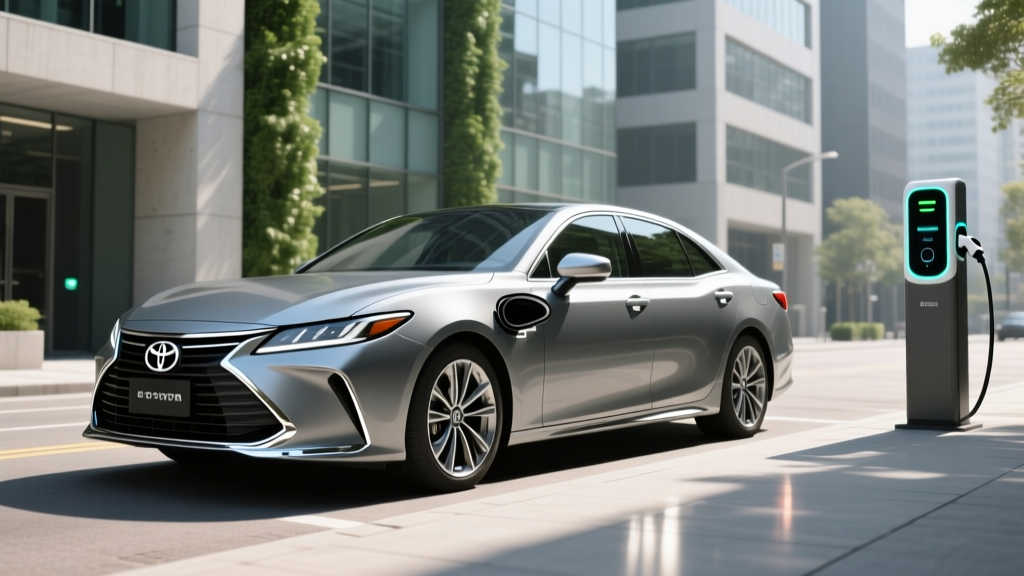
The Toyota Crown Signia occupies a niche that few automakers dare to touch: a midsize hybrid-only wagon with standard all-wheel drive and near-luxury refinement. For the 2026 model year, Toyota continues to position the Crown Signia as the practical alternative to SUVs, leveraging its proven hybrid synergy drive to deliver strong fuel economy without sacrificing cargo versatility. If you've been searching for a crown signia hybrid review that goes beyond the brochure, this guide covers every number that matters — from EPA MPG to battery warranty terms.
What Is the Crown Signia? HEV vs. PHEV Clarity
Before diving into specs, it's critical to understand what the Crown Signia is — and what it isn't. The 2026 Toyota Crown Signia is a conventional hybrid electric vehicle (HEV). It pairs a gasoline engine with electric motors and a small battery pack that recharges through regenerative braking and the engine itself. You never plug it in.
HEV vs. PHEV: Where the Crown Signia Fits
| Feature | HEV (Crown Signia) | PHEV (e.g., RAV4 Prime) | BEV (e.g., Tesla Model Y) |
|---|---|---|---|
| Plugs in? | No | Yes | Yes |
| Electric-only range | ~1 mile at low speed | 25–42 miles typical | 250–330+ miles |
| Fuel needed? | Yes, always | Yes, for longer trips | No |
| Home charging required? | No | Recommended (Level 2) | Essential |
| Federal tax credit (§30D) | Not eligible | Up to $7,500 if eligible | Up to $7,500 if eligible |
The Crown Signia's HEV powertrain means zero behavior change from a gas car — just fill up and drive. The trade-off is that it cannot run on electricity alone for meaningful distances.
Toyota does not currently offer a Crown Signia PHEV variant in the U.S. market. If you need plug-in electric range for a short commute, you'd need to look at alternatives like the RAV4 Prime or the Toyota Prius Prime.
Fuel Economy: EPA MPG and Real-World Numbers
The headline figure for the 2026 Crown Signia hybrid is its EPA-estimated fuel economy. Toyota's hybrid system is tuned for efficiency across all driving conditions, but as with all hybrids, real-world results vary based on driving style, terrain, and climate.
| Metric | EPA Estimate | Real-World Expectation |
|---|---|---|
| City MPG | 39 MPG | 37–42 MPG |
| Highway MPG | 37 MPG | 33–36 MPG |
| Combined MPG | 38 MPG | 35–39 MPG |
| Fuel tank capacity | 14.5 gallons | — |
| Total driving range | ~551 miles | ~490–540 miles |
Real-World MPG Note
Hybrids like the Crown Signia often exceed their EPA city estimate in stop-and-go traffic because regenerative braking recaptures energy that gas cars waste as heat. However, sustained highway driving at 75+ MPH, cold weather below 30°F, and mountainous terrain will push real-world numbers toward the lower end of the range. Expect 33–35 MPG on a flat 70-MPH highway cruise, and potentially 40+ MPG in urban driving during mild weather. Source: fueleconomy.gov.
Powertrain Specs: Engine, Motors, and Horsepower
The 2026 Crown Signia uses Toyota's fourth-generation hybrid system with a 2.5-liter inline-four Atkinson-cycle engine paired with three electric motors — one integrated into the transaxle for front-wheel drive, one for the rear axle (e-wear AWD), and a starter-generator. The result is seamless torque delivery and standard electronic all-wheel drive across all trims.
| Specification | Detail |
|---|---|
| Engine | 2.5L 4-cyl Atkinson cycle |
| Combined net horsepower | 240 HP |
| Drivetrain | Electronic AWD (standard) |
| Transmission | eCVT (electronically controlled) |
| 0–60 MPH (est.) | ~7.1 seconds |
| Towing capacity | Up to 2,700 lbs |
| Hybrid battery type | Lithium-ion (NiMH on base) |
| Cargo volume (rear seats up / folded) | 25.8 / 68.8 cu ft |
The 240-horsepower combined output gives the Crown Signia confident passing power, and the electric motors deliver instant torque from a stop. The eCVT is smooth and avoids the rubber-band feel that older Toyota hybrids exhibited. On the road, the Signia drives more like a lifted wagon than an SUV — lower center of gravity, composed ride, and minimal body roll in corners.
Pricing, Trims, and Tax Credit Eligibility
The 2026 Crown Signia is available in two trims: XLE and Limited. Both come standard with AWD and the full hybrid powertrain — there is no gas-only or FWD-only variant.
| Trim | MSRP | Key Features |
|---|---|---|
| XLE | ~$43,590 | 12.3" touchscreen, heated front seats, power liftgate, TSS 3.0 |
| Limited | ~$49,090 | Panoramic roof, ventilated seats, 360° camera, premium audio |
Federal Tax Credit: Not Eligible
Because the Crown Signia is a conventional hybrid (HEV) and not a plug-in vehicle, it does not qualify for the federal §30D clean vehicle tax credit (up to $7,500). That credit is reserved for BEVs and PHEVs meeting battery-sourcing, MSRP, and buyer income requirements per IRS guidelines. Some states may offer small rebates for efficient hybrids, but these vary by jurisdiction — check your state's energy office or DMV for current programs.
The lack of a federal tax credit is the Crown Signia's main financial disadvantage compared to plug-in competitors. However, the lower purchase price (no large battery premium), no home charging installation costs, and Toyota's strong resale value partially offset this gap over a 5-year ownership period.
Reliability, Battery Warranty, and Replacement Cost
Hybrid battery longevity is consistently the top concern for first-time hybrid buyers. Toyota has been refining its hybrid systems since the original Prius in 1997, and the data is reassuring.
Crown Signia Hybrid Battery Warranty
- Hybrid battery coverage: 10 years / 150,000 miles (whichever comes first)
- Hybrid system components: 8 years / 100,000 miles
- Powertrain warranty: 5 years / 60,000 miles
- Basic warranty: 3 years / 36,000 miles
Toyota extended its hybrid battery warranty to 10 years/150,000 miles starting with the 2020 model year, one of the longest in the industry.
Real-world data from Toyota's hybrid fleet — now numbering in the millions globally — shows that most hybrid batteries last well beyond 150,000 miles with minimal capacity loss. Unlike a full EV battery (60–100+ kWh), the Crown Signia's hybrid battery is small (approximately 1.6 kWh usable) and is never deeply cycled. The system keeps the battery in a narrow state-of-charge window (roughly 40–80%), which dramatically reduces degradation.
If a replacement is needed out of warranty, a new OEM hybrid battery for the Crown Signia's powertrain typically costs between $2,500 and $4,000 installed, depending on the dealership and region. Refurbished units are available for $1,500–$2,500. This is far less than a full EV battery replacement ($8,000–$20,000+), and the likelihood of needing one during typical ownership is low.
Who Should Buy the Crown Signia Hybrid?
The Crown Signia is a deliberate vehicle for a specific buyer. It's not trying to be everything to everyone — and that's its strength.
Pros
- 38 MPG combined with standard AWD — no compromises
- Wagon cargo versatility (68.8 cu ft) without SUV bulk
- No plug-in charging required — zero behavior change
- 10-year/150k-mile hybrid battery warranty
- Composed ride, low center of gravity vs. SUVs
- Toyota Safety Sense 3.0 standard (adaptive cruise, lane centering, AEB)
Cons
- No federal tax credit eligibility (HEV, not PHEV/BEV)
- Only two trims — limited customization
- Starting near $44K — premium over RAV4 Hybrid
- No electric-only driving for short trips
- Infotainment learning curve for first-time Toyota users
- eCVT drone under hard acceleration (common to hybrids)
Crown Signia Hybrid vs. EV vs. PHEV: Which Fits You?
The right electrified vehicle depends on your daily routine, home setup, and budget. Here's a decision framework:
Choose the Crown Signia Hybrid (HEV) if:
- You don't have access to home or workplace charging
- You want maximum simplicity — no plugs, no apps, no charging planning
- Your daily commute is mixed city/highway and exceeds 40 miles
- You want AWD capability with strong fuel economy
- You plan to keep the vehicle 8+ years and value Toyota's reliability record
Choose a PHEV (e.g., RAV4 Prime, Prius Prime) if:
- You can install a Level 2 charger at home
- Your daily commute is under 40 miles (covering most trips on electric)
- You want to qualify for the §30D federal tax credit (up to $7,500)
- You want to reduce gas consumption without range anxiety on road trips
Choose a full EV (e.g., Tesla Model Y, Hyundai Ioniq 5) if:
- You have reliable home charging (Level 2 strongly recommended)
- You want zero tailpipe emissions and the lowest per-mile fuel cost
- Your typical trips fall within 250 miles, or you're willing to plan DC fast-charging stops
- You want the full federal tax credit and lowest total cost of ownership over 5 years
Frequently Asked Questions
How many MPG does the Crown Signia hybrid get?
The 2026 Toyota Crown Signia hybrid is EPA-rated at 39 MPG city, 37 MPG highway, and 38 MPG combined. In real-world driving, expect 37–42 MPG in city conditions (where regenerative braking helps most) and 33–36 MPG on sustained highway trips. Cold weather and aggressive driving will push numbers lower. With a 14.5-gallon tank, total range is approximately 490–550 miles per fill-up.
Is the Crown Signia a plug-in hybrid?
No. The Crown Signia is a conventional hybrid (HEV). It does not have a charging port and cannot be plugged in. The hybrid battery recharges through regenerative braking and the gasoline engine. Toyota does not currently offer a PHEV version of the Crown Signia in the U.S. market. If you want a Toyota plug-in hybrid with electric-only range, consider the RAV4 Prime (42 miles electric) or Prius Prime (up to 44 miles electric).
Does the Crown Signia qualify for any tax credit?
The Crown Signia does not qualify for the federal §30D clean vehicle tax credit, which is available only to plug-in electric vehicles (BEVs and PHEVs) meeting specific battery sourcing, MSRP cap, and buyer income requirements. Some states offer modest rebates for fuel-efficient hybrids, but these vary widely. Check your state energy office or the IRS clean vehicle credit page for current eligibility details.
How long will the Crown Signia hybrid battery last?
Toyota covers the hybrid battery for 10 years or 150,000 miles. Real-world data from millions of Toyota hybrids suggests most batteries last 150,000–200,000+ miles with minimal degradation. The Crown Signia's hybrid battery is small (~1.6 kWh) and is kept in a narrow charge window (40–80% SoC), which minimizes wear. If replacement is needed out of warranty, expect to pay $2,500–$4,000 for a new OEM unit installed.
Is the Crown Signia reliable?
Toyota's hybrid powertrains have a strong long-term reliability record, with the 2.5L hybrid system used across the Camry, RAV4, and Highlander lineups for years. The Crown Signia shares this proven architecture. Toyota Safety Sense 3.0 is standard, and the vehicle earned strong marks in crash testing. For the latest safety ratings, check NHTSA and IIHS as ratings are updated throughout the model year.
How does the Crown Signia compare to the RAV4 Hybrid?
The RAV4 Hybrid starts roughly $10,000 lower (~$33,000) and achieves similar fuel economy (39–41 MPG combined). The Crown Signia trades the RAV4's taller SUV profile for a lower, wagon-like stance with a more refined interior, more rear legroom, and a smoother ride. If cargo height and ground clearance matter, the RAV4 wins. If you prefer car-like dynamics with wagon practicality, the Crown Signia fills that gap.