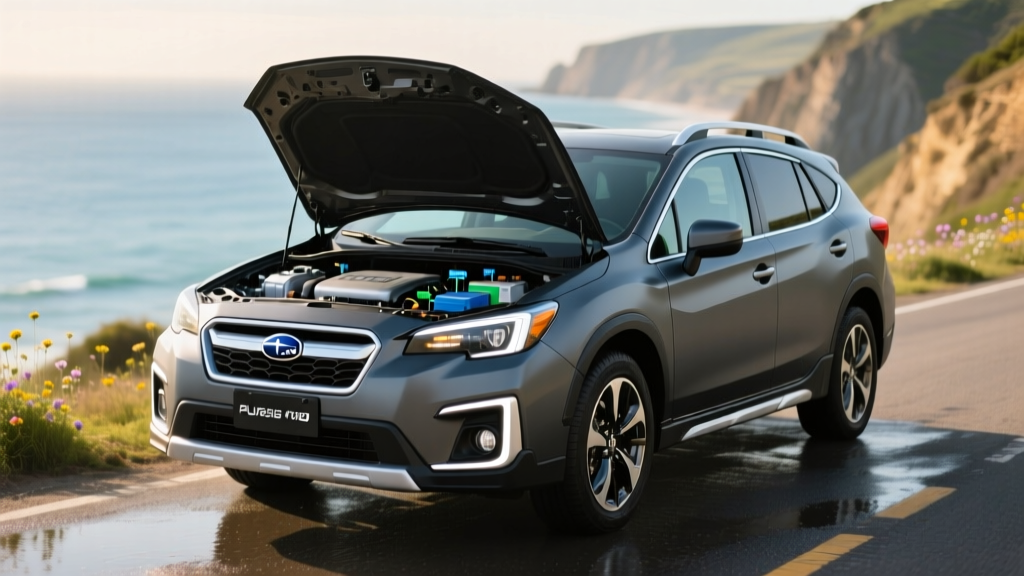
The Subaru Crosstrek plug-in hybrid occupies a narrow but compelling space in the electrified-vehicle market. It pairs Subaru's trademark symmetrical all-wheel drive with a modest electric-only range and a proven hybrid powertrain — aimed squarely at outdoor-oriented buyers who want some EV benefit without range anxiety. For 2026, the Crosstrek PHEV returns with incremental updates to its infotainment system and safety suite, but the fundamental formula remains unchanged: a compact crossover that can handle your commute on electrons and your weekend trail run on gasoline.
But is 17 miles of electric range enough to justify the price premium over the standard hybrid? And does the Crosstrek PHEV still qualify for any tax incentives in 2026? This guide breaks down every spec, real-world efficiency figure, and ownership consideration you need before deciding.
HEV vs PHEV: Which Crosstrek Are We Talking About?
Subaru sells the Crosstrek in three powertrain flavors for 2026, and confusing them is easy. Here's the distinction that matters:
Conventional Hybrid (HEV)
The Crosstrek Hybrid (HEV) uses a small battery recharged entirely by regenerative braking and the gasoline engine. You never plug it in. It delivers improved fuel economy — roughly 36 MPG combined — but zero electric-only driving. Think of it as a more efficient gas car.
Plug-In Hybrid (PHEV)
The Crosstrek plug-in hybrid carries a larger 8.8 kWh battery that you can charge from a wall outlet or Level 2 charger. It provides up to 17 miles of electric-only range before the gasoline engine seamlessly engages. After the battery depletes, it operates as a conventional hybrid.
This article focuses on the Crosstrek plug-in hybrid — the model you can plug in. If you have no access to home or workplace charging, the conventional HEV may serve you better at a lower price.
EPA Range, MPG, and Real-World Efficiency
The headline numbers from the EPA's fueleconomy.gov listing tell a two-part story: electric-first commuting, then hybrid efficiency once the battery depletes.
| Metric | EPA Rating | Real-World Expectation |
|---|---|---|
| Electric-only range | 17 miles | 14–16 mi (highway/cold weather) |
| MPGe (electric + gas combined) | 90 MPGe | Varies heavily with charge frequency |
| Gas-only MPG (combined) | 35 MPG | 33–37 MPG (city-favored) |
| Gas-only MPG (city) | 36 MPG | 37–39 MPG (regen-heavy stop-and-go) |
| Gas-only MPG (highway) | 34 MPG | 31–33 MPG (sustained 70+ mph) |
| Total combined range | ~480 miles | ~440–470 mi depending on conditions |
Like most PHEVs, the Crosstrek plug-in hybrid rewards city driving. Regenerative braking recaptures energy at stoplights, and the hybrid system can stretch to 37–39 MPG in urban traffic. Highway driving at sustained speeds above 70 mph erodes both the electric-only range and the gas-mode efficiency — expect roughly 31–33 MPG on long interstate runs.
In cold weather (below 35°F), the electric-only range drops noticeably. The battery's usable capacity shrinks, and the cabin heater draws significant power. Expect 12–14 miles of EV range in January in northern climates, not the EPA's 17.
Battery, Charging, and Powertrain Specs
| Specification | 2026 Crosstrek PHEV |
|---|---|
| Battery capacity | 8.8 kWh (lithium-ion) |
| Usable battery capacity | ~6.6 kWh (buffer protects longevity) |
| Electric-only range | 17 miles (EPA) |
| Electric motor output | 118 hp / 149 lb-ft (integrated in eCVT) |
| Gasoline engine | 2.0L flat-4, 137 hp / 134 lb-ft |
| Combined system horsepower | 148 hp |
| Transmission | eCVT (electronically controlled) |
| Drivetrain | Symmetrical AWD (standard) |
| 0–60 mph | ~9.2 seconds |
| Level 1 charging (120V) | ~5 hours (0–100%) |
| Level 2 charging (240V) | ~2 hours (0–100%) |
| DC fast charging | Not available |
| Charge port | J1772 (Level 1/2) |
| Cargo volume (behind rear seats) | ~19.9 cu ft (reduced vs. gas model) |
| Ground clearance | 8.7 inches |
The most important charging fact for prospective buyers: the Crosstrek PHEV does not support DC fast charging. This is typical for PHEVs in this class — the small battery simply doesn't warrant it. You'll charge at home via a standard 120V outlet (Level 1) in about 5 hours, or install a 240V Level 2 charger to cut that to roughly 2 hours. For most owners, plugging in overnight on Level 1 is perfectly adequate given the small battery.
The powertrain uses Toyota's proven hybrid synergy drive architecture (Subaru and Toyota share PHEV technology from their partnership). The eCVT is not a traditional belt-driven CVT — it uses planetary gearsets to blend engine and motor power, which contributes to the system's long-term reliability.
Pricing, Trims, and Tax Credit Eligibility
The 2026 Subaru Crosstrek plug-in hybrid is offered in a single, well-equipped trim level:
- Crosstrek PHEV (base): $36,995 MSRP (including destination)
Standard equipment includes EyeSight driver-assist technology (Subaru's Level 2 ADAS), heated front seats, an 8-inch touchscreen with wireless Apple CarPlay and Android Auto, LED headlights, and roof rails. There are limited option packages for a moonroof and upgraded Harman Kardon audio.
Does the Crosstrek PHEV Qualify for the Federal Tax Credit?
This is where 2026 buyers need to pay close attention. Under the current IRS §30D clean vehicle credit rules, the Crosstrek plug-in hybrid faces significant hurdles:
- MSRP cap: PHEV SUVs must be under $80,000 — the Crosstrek clears this easily at ~$37K.
- Battery sourcing / critical minerals: The battery components and critical minerals must meet phased-in domestic-sourcing thresholds that tighten each year. As of 2026, very few PHEVs meet the full requirement.
- Buyer income cap: MAGI must not exceed $150K (single), $225K (head of household), or $300K (joint).
- Assembly: Final assembly must occur in North America — the Crosstrek is assembled in Gunma, Japan, which disqualifies it from the §30D federal credit.
Because the Crosstrek PHEV is assembled in Japan, it does not qualify for the $7,500 federal clean vehicle credit. Some buyers may be eligible for state-level incentives — California, Colorado, New York, and several other states offer their own rebates for PHEVs, often $1,000–$2,500. Check your state's energy office or Alternative Fuels Data Center for current programs.
Battery & Powertrain Warranty
Subaru covers the Crosstrek PHEV's hybrid battery with an 8-year / 100,000-mile warranty (10 years / 150,000 miles in CARB states including California, New York, Massachusetts, and others that follow California emissions standards). The hybrid system components carry the same coverage. The conventional powertrain warranty is 5 years / 60,000 miles.
Reliability and Battery Replacement Cost
The Crosstrek PHEV's hybrid system benefits from one of the most proven architectures in the industry. Toyota's hybrid synergy drive — which underpins this powertrain — has accumulated billions of real-world miles across the Prius, RAV4, and Camry lineups. Subaru's integration has shown strong reliability in owner surveys and long-term tests.
The lithium-ion traction battery is buffered — meaning the system never fully charges or fully depletes it, which significantly slows degradation. Most Toyota/Subaru PHEV batteries retain 85–90%+ of their original capacity after 100,000 miles. Catastrophic battery failure within the warranty period is rare.
If out-of-warranty replacement becomes necessary (typically 12–15+ years into ownership), a refurbished or new hybrid battery for the Crosstrek PHEV currently runs $3,000–$5,000 installed at a dealership. Independent hybrid-battery specialists can often perform the work for $2,000–$3,500. This is considerably less than a full BEV battery replacement.
Who Should Buy the Crosstrek Plug-In Hybrid?
Pros
- Standard symmetrical AWD — best-in-class for snow and light off-road
- 8.7 inches of ground clearance exceeds most compact crossovers
- Proven Toyota-derived hybrid powertrain reliability
- Can commute 14–17 miles on electricity alone
- No range anxiety — 480-mile total range
- EyeSight safety suite standard
- Level 1 (120V) charging sufficient for daily use
Cons
- Only 17 miles of electric range — less than RAV4 Prime (42 mi) or Tucson PHEV (33 mi)
- No DC fast charging
- Does not qualify for the $7,500 federal tax credit (Japan assembly)
- Modest 148 hp combined — not quick (9.2s to 60 mph)
- Cargo space reduced vs. gas Crosstrek (~19.9 cu ft)
- Single trim limits option flexibility
- $37K price premium over the gas Crosstrek (~$28K base)
The Decision Framework
Choose the Crosstrek PHEV if: You have a short commute (under 17 miles each way) with home charging access, need AWD for snow or dirt roads, want a proven hybrid system, and don't want to commit to a full EV. It's ideal for the "electric commute, gas road trip" lifestyle.
Choose the conventional Crosstrek Hybrid (HEV) if: You lack home charging access or your commute far exceeds 17 miles. You'll still get strong MPG without the plug-in price premium or the frustration of an uncharged battery.
Choose a full BEV (e.g., Subaru Solterra, Hyundai Ioniq 5) if: You have reliable home Level 2 charging, your daily driving stays under 250 miles, you want to eliminate gasoline entirely, and you want access to the $7,500 federal credit (check eligibility per vehicle).
Consider the RAV4 Prime instead if: You want more electric range (42 miles), more power (302 hp), and a larger cargo area — though at a higher price (~$45K) and with limited dealer availability.
Frequently Asked Questions
How many MPG does the Crosstrek plug-in hybrid get?
The EPA rates the 2026 Crosstrek PHEV at 35 MPG combined in hybrid (gas-only) mode, with 36 city and 34 highway. In real-world driving, city-heavy routes often yield 37–39 MPG thanks to regenerative braking, while sustained highway speeds above 70 mph drop efficiency to 31–33 MPG. When regularly charged, the effective MPGe rating is 90 MPGe.
How far can the Crosstrek PHEV go on electric only?
The EPA rates it at 17 miles of electric-only range. In real-world conditions, expect 14–16 miles in moderate weather and 12–14 miles in cold weather (below 35°F) or at highway speeds. This covers many round-trip commutes but falls short of competitors like the Toyota RAV4 Prime (42 miles).
Does the Crosstrek plug-in hybrid qualify for any tax credit?
The Crosstrek PHEV does not qualify for the $7,500 federal §30D clean vehicle credit because final assembly occurs in Japan, not North America. Some state-level incentives may apply — typically $1,000–$2,500 depending on your state. Consult the IRS clean vehicle credit page and your state energy office for current eligibility. A tax professional can confirm your specific situation.
Is the Crosstrek PHEV reliable, and what does battery replacement cost?
The hybrid powertrain is derived from Toyota's extensively proven system and carries an 8-year/100,000-mile battery warranty (10 years/150,000 miles in CARB states). Out-of-warranty battery replacement typically costs $3,000–$5,000 at a dealer, or $2,000–$3,500 at an independent hybrid specialist. Most owners will never need a replacement within the vehicle's normal lifespan.
Do I need to install a special charger at home for the Crosstrek PHEV?
No. The 8.8 kWh battery charges fully in about 5 hours from a standard 120V household outlet (Level 1). If you want faster top-ups, a 240V Level 2 charger reduces the time to roughly 2 hours. Given the small battery, most owners find overnight Level 1 charging perfectly adequate — saving the $500–$1,500 cost of a Level 2 installation.
How does the Crosstrek PHEV compare to a full EV like the Subaru Solterra?
The Solterra offers 222–228 miles of electric range, DC fast charging, and may qualify for federal incentives, but starts around $45K and requires commitment to charging infrastructure. The Crosstrek PHEV at ~$37K gives you electric commuting flexibility with gasoline backup, standard AWD, and more ground clearance — at the cost of a shorter EV range and continued gasoline use. If charging access is uncertain, the PHEV is the lower-risk choice.