Quick Verdict: A Practical PHEV for the Subaru Loyalist
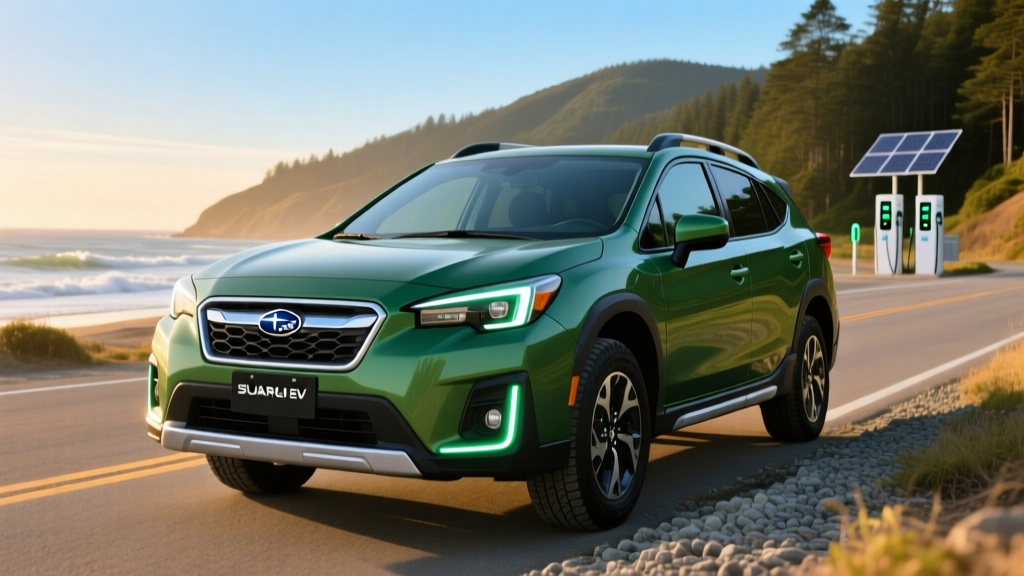
The Subaru Crosstrek Hybrid occupies a narrow but valuable lane: it's one of the only plug-in hybrid compact crossovers that pairs genuine all-wheel drive with electric-only commuting capability. For 2026, Subaru continues to offer the Crosstrek Hybrid as a PHEV (plug-in hybrid electric vehicle), not a conventional self-charging hybrid. That distinction matters enormously when you're evaluating fuel economy claims, charging expectations, and total cost of ownership.
If you're searching for Crosstrek Hybrid fuel economy data, the headline number is an EPA-estimated 35 MPG combined when operating as a hybrid after the battery is depleted, plus an estimated 17 miles of electric-only range on a full charge. Those numbers tell part of the story. The full picture — including real-world efficiency, cold-weather impacts, and whether the PHEV premium pays for itself — requires a deeper look at the powertrain, charging logistics, and ownership math.
| Specification | Value |
|---|---|
| Vehicle Type | Plug-in Hybrid (PHEV) Compact Crossover |
| Powertrain | 2.0L Boxer-4 + Electric Motor (PHEV system) |
| Combined Horsepower | 148 hp (net system) |
| EPA Fuel Economy (Hybrid Mode) | 35 MPG combined (33 city / 38 highway) |
| EPA MPGe (Electric + Gas) | 90 MPGe combined |
| Electric-Only Range | 17 miles (EPA est.) |
| Total Combined Range | ~440 miles (electric + gas) |
| Battery Capacity | 8.8 kWh (lithium-ion) |
| Level 2 Charge Time (0–100%) | ~2.5 hours at 240V / 3.3 kW |
| DC Fast Charging | Not available |
| Drivetrain | Symmetrical All-Wheel Drive (standard) |
| 0–60 mph | ~9.5 seconds (est.) |
| Base MSRP | ~$37,995 |
| Battery Warranty | 8 years / 100,000 miles |
Understanding the Crosstrek: PHEV vs. Conventional Hybrid
Before evaluating fuel economy, it's essential to clarify what the Crosstrek Hybrid actually is — because Subaru's naming convention has caused confusion for years.
| Feature | Conventional Hybrid (HEV) | Plug-in Hybrid (PHEV) |
|---|---|---|
| Plug-in Charging? | No — charges via regenerative braking and engine | Yes — plug in to access electric-only range |
| Electric-Only Range | ~1 mile or less at low speed | 15–40+ miles (model dependent) |
| Battery Size | Small (~1–2 kWh) | Larger (~8–20 kWh) |
| Gas Engine | Primary power source, electric assists | Backup after battery depletes; both can drive wheels |
| Federal Tax Credit | No longer eligible (§30D expired for HEVs) | Potentially eligible (subject to sourcing/income rules) |
| Crosstrek Availability | Not offered in US for 2026 | Available as Crosstrek Hybrid |
The 2026 Crosstrek Hybrid is a PHEV. You can — and should — plug it in to capture its efficiency advantage. If you never plug it in, you're carrying around a heavy battery pack you're not using, and your fuel economy drops to that 35 MPG combined figure, which is respectable but not class-leading among non-plugged-in hybrids. The magic happens when you charge regularly and use those 17 electric miles for your daily commute.
Crosstrek Hybrid Fuel Economy: EPA Numbers and Real-World MPG
According to fueleconomy.gov, the EPA rates the Crosstrek Hybrid at:
| Mode | City | Highway | Combined |
|---|---|---|---|
| Hybrid (charge-sustaining) | 33 MPG | 38 MPG | 35 MPG |
| Electric + Gas (MPGe) | — | — | 90 MPGe |
| Electric-Only Efficiency | ~3.0 kWh/mile (est.) | ||
Real-World MPG: What Owners Actually See
EPA stickers are a baseline, not a guarantee. In real-world driving, the Crosstrek Hybrid's fuel economy varies significantly based on how often you charge:
- Daily charging + short commute (<17 miles): You may use zero gasoline for weeks at a time. Your effective "MPG" is essentially infinite on weekdays, with gas consumption limited to weekend trips.
- Daily charging + 40-mile round-trip commute: Expect roughly 23 miles on gas after the battery depletes, yielding an effective blended economy of around 55–70 MPG equivalent depending on driving conditions.
- Never charging: You'll see the EPA-rated 35 MPG combined. Some owners report 32–37 MPG in mixed driving, with highway trips occasionally reaching 38–40 MPG thanks to the Boxer engine's efficiency at steady state.
- Cold weather (below 32°F): Expect a 20–30% reduction in electric-only range (dropping to ~12–14 miles) and a 2–4 MPG decrease in hybrid mode due to cabin heating demands and battery thermal limits.
Hybrids and PHEVs often exceed their EPA city rating because regenerative braking recaptures energy in stop-and-go traffic. The Crosstrek Hybrid follows this pattern: owners who do heavy city driving with frequent charging consistently report beating the 33 MPG city figure in hybrid mode.
Electric-Only Range and Charging Logistics
The Crosstrek Hybrid's 8.8 kWh battery pack delivers an EPA-estimated 17 miles of electric-only range. That's on the shorter end of the current PHEV spectrum — for comparison, the Toyota RAV4 Prime offers 42 miles and the Hyundai Tucson PHEV offers 33 miles. But 17 miles is enough to cover the average American's one-way commute, which the US Census Bureau pegs at roughly 16 miles.
Charging: What You Need to Know
The Crosstrek Hybrid accepts a maximum of 3.3 kW on Level 2 (240V) charging. It does not support DC fast charging — a limitation shared with most PHEVs due to their smaller battery packs.
| Charging Level | Power | Time (0–100%) | Practical Use |
|---|---|---|---|
| Level 1 (120V household) | ~1.2 kW | ~7 hours | Overnight at a standard outlet |
| Level 2 (240V home/public) | 3.3 kW (max) | ~2.5 hours | Home wall charger or workplace |
| DC Fast Charge | Not supported | N/A | N/A |
For most PHEV owners, Level 1 charging from a standard 120V outlet is sufficient overnight — seven hours covers a typical night's sleep, and you rarely arrive at zero battery. A Level 2 home charger is a convenience upgrade, not a necessity, for this vehicle. If you already have a Level 2 charger installed for another EV, the Crosstrek Hybrid will happily use it via the standard J1772 connector.
Powertrain and Performance: The Boxer-Motor PHEV
Subaru pairs its signature 2.0-liter flat-four (Boxer) engine with an electric motor integrated into the drivetrain. The combined net output is 148 horsepower, which is modest by modern crossover standards. The 0–60 mph time of approximately 9.5 seconds won't win any stoplight races, but the electric motor provides immediate torque off the line, making city driving feel more responsive than the horsepower figure suggests.
The all-wheel-drive system is Subaru's well-proven Symmetrical AWD, which distributes power mechanically to all four wheels. Unlike some PHEV competitors that use a rear-mounted electric motor to create "e-AWD" (with no mechanical connection to the rear axle), the Crosstrek Hybrid maintains a traditional mechanical AWD layout. This gives it a credibility edge in snow and off-pavement conditions — a key reason Subaru buyers choose the brand.
Driving Modes
The Crosstrek Hybrid offers selectable drive modes that let you prioritize electric driving, hybrid efficiency, or performance:
- EV Mode: Forces electric-only operation when battery allows (up to ~17 miles at speeds under ~65 mph)
- Auto EV/HV Mode: System decides when to use electric vs. gas for maximum efficiency
- Save Mode: Preserves battery charge for later use (useful if you want electric range for city driving after a highway segment)
Pricing, Trims, and Tax Credit Eligibility
The 2026 Crosstrek Hybrid starts at an MSRP of approximately $37,995 (destination included). It's offered in a single, well-equipped trim that includes features like EyeSight driver assistance, an 8-inch touchscreen, heated front seats, and the full AWD system.
That price represents a significant premium over the gas-only Crosstrek (which starts around $27,000) — roughly $11,000 more. The PHEV premium pays for the battery, electric motor, onboard charger, and associated engineering.
Federal Tax Credit: Does the Crosstrek Hybrid Qualify?
- Vehicle MSRP cap: SUVs/crossovers must be under $80,000 — Crosstrek Hybrid qualifies ✓
- Buyer income cap: Modified AGI must not exceed $150,000 (single) / $300,000 (joint) ✓
- Battery sourcing requirements: Critical minerals and battery components must meet escalating percentage thresholds from US or FTA partners — this is where many PHEVs face disqualification
- Point-of-sale transfer: If eligible, the credit can be applied as a down payment reduction at the dealer
Important: PHEV tax credit eligibility under IRS §30D depends on battery component and critical-mineral sourcing, which changes annually. The Crosstrek Hybrid's credit eligibility has been inconsistent year-to-year as sourcing rules tighten. Always verify current-year eligibility on the IRS website or with a tax professional before relying on the credit in your purchase decision.
Some states offer additional rebates or HOV lane access for PHEVs. California's Clean Vehicle Rebate Project (CVRP), for example, has historically included PHEVs with sufficient electric range, though the 17-mile Crosstrek may fall below certain state thresholds. Check your state's energy or environmental agency for current programs.
Reliability and Battery Longevity
Subaru's hybrid and PHEV systems have proven reasonably reliable in the field. The brand's PHEV technology shares engineering DNA with Toyota's hybrid systems (the two companies have a long-standing partnership), which benefits from decades of real-world hybrid durability data.
Battery Replacement Cost
Should the battery fail outside of warranty, replacement costs for the Crosstrek Hybrid's 8.8 kWh pack are estimated between $4,000 and $7,000 including labor, based on current PHEV battery pricing and Subaru dealer service quotes. This is lower than full EV battery replacements because the pack is significantly smaller. However, widespread reports of Crosstrek Hybrid battery failures remain rare — most PHEV batteries outlast their warranty periods with gradual, manageable degradation.
The gasoline engine and conventional drivetrain components carry Subaru's standard 5-year / 60,000-mile powertrain warranty. EyeSight and other electronic systems are covered under the 3-year / 36,000-mile comprehensive warranty.
Common Reliability Considerations
Based on owner reports and industry data from IIHS and NHTSA, the Crosstrek Hybrid's primary reliability considerations include:
- CVT transmission: Subaru's Lineartronic CVT has improved significantly, but some owners report occasional shuddering under heavy load. The PHEV variant's electric motor reduces CVT strain during low-speed operation.
- Infotainment system: Subaru's Starlink system has drawn complaints for slow response times and occasional connectivity issues — an annoyance, not a mechanical concern.
- 12V auxiliary battery: Like all modern vehicles with extensive electronics, the 12V battery can die if the car sits unplugged for extended periods. Keep the vehicle on a maintenance schedule.
Who Should Choose the Crosstrek Hybrid?
Choose the Crosstrek Hybrid (PHEV) if:
- You have a short commute (under 20 miles round-trip) and can charge at home nightly
- You need Subaru's AWD for snow, mud, or outdoor recreation
- You want to reduce gas consumption without committing to a full EV
- You live in a rural or mountainous area with limited DC fast-charging infrastructure
- You value mechanical AWD over the electric "torque-vectoring" AWD of some competitors
Choose a Full EV (like the Subaru Solterra or Hyundai Ioniq 5) if:
- Your commute is longer than 17 miles and you want zero gas use
- You have reliable home Level 2 charging and access to public fast chargers
- You want lower maintenance costs (no oil changes, no gas engine upkeep)
- You qualify for the full $7,500 federal tax credit on a qualifying EV
Choose the Gas-Only Crosstrek if:
- You cannot charge at home or at work
- The $11,000 PHEV premium doesn't pencil out given your annual mileage
- You drive fewer than 8,000 miles per year (the fuel savings won't offset the price gap)
Ownership Economics: Does the PHEV Premium Pay Off?
Let's run simplified math for a driver covering 12,000 miles per year with daily home charging:
| Scenario | Gas-Only Crosstrek (29 MPG) | Crosstrek Hybrid (PHEV, charged daily) |
|---|---|---|
| Annual Miles | 12,000 | 12,000 |
| Gasoline Used (Year) | ~414 gallons | ~180 gallons (est., varies by commute) |
| Electricity Cost (Year) | $0 | ~$180 (at $0.14/kWh) |
| Fuel Cost at $3.50/gal | $1,449/year | $630 gas + $180 elec = $810/year |
| 5-Year Fuel Cost | $7,245 | $4,050 |
| 5-Year Savings | — | ~$3,195 |
At roughly $3,200 in fuel savings over five years, the $11,000 PHEV premium is difficult to justify purely on economics. The math improves significantly if you qualify for a federal tax credit (potentially $3,750–$7,500 depending on sourcing compliance) or state incentives. With a $3,750 credit, the effective premium drops to ~$7,250, and the break-even point moves within reach for a 10-year owner.
But most Crosstrek Hybrid buyers aren't motivated solely by fuel savings. They're paying for the ability to commute on electricity, reduce tailpipe emissions, access HOV lanes in some states, and enjoy the instant torque of electric acceleration — while retaining the gas-engine safety net for road trips into Subaru's core outdoor-recreation territory where charging infrastructure remains sparse.
Pros
- Standard Symmetrical AWD — best-in-class traction for a PHEV crossover
- 17-mile EV range covers many daily commutes gas-free
- Can charge on a standard 120V outlet overnight
- Proven Boxer engine reliability with hybrid assistance
- Strong resale value (Subaru brand strength)
- 8.7 inches of ground clearance for light off-road use
Cons
- Shorter EV range than rivals (RAV4 Prime: 42 mi, Tucson PHEV: 33 mi)
- No DC fast charging capability
- Modest 148 hp — acceleration is leisurely
- ~$11,000 premium over gas Crosstrek with long payback period
- 8.8 kWh battery is small by 2026 PHEV standards
- Single trim limits option flexibility
Frequently Asked Questions
How many MPG does the 2026 Crosstrek Hybrid get?
The EPA rates the Crosstrek Hybrid at 35 MPG combined (33 city / 38 highway) when operating in hybrid mode after the battery is depleted. When you factor in electric-only driving, the combined rating is 90 MPGe. Real-world results vary widely based on charging frequency: owners who charge daily and have short commutes may use almost no gasoline on weekdays, while those who never charge will see 32–38 MPG depending on conditions.
How far can the Crosstrek Hybrid go on electric power alone?
The EPA estimates 17 miles of electric-only range. In mild weather with gentle driving, you may see 18–19 miles. In freezing temperatures or aggressive highway driving, expect 11–14 miles before the gas engine automatically starts. Total combined range (electric + full 13.2-gallon gas tank) is approximately 440 miles.
Does the Crosstrek Hybrid qualify for a federal tax credit?
It may, depending on current-year battery sourcing requirements under IRS §30D. The vehicle's MSRP falls well under the $80,000 SUV cap, and most buyers meet income thresholds. However, PHEV credit eligibility hinges on critical-mineral and battery-component sourcing percentages that tighten annually. Check the IRS Clean Vehicle Credit page or consult a tax professional for the definitive current-year answer.
Is the Crosstrek Hybrid reliable, and what does battery replacement cost?
Subaru's PHEV system has demonstrated solid reliability, benefiting from engineering partnerships with Toyota's hybrid technology. The high-voltage battery is warrantied for 8 years / 100,000 miles. Out-of-warranty replacement is estimated at $4,000–$7,000, though premature failures are uncommon. The conventional powertrain carries a 5-year / 60,000-mile warranty.
Do I need to install a Level 2 charger at home for the Crosstrek Hybrid?
No. The Crosstrek Hybrid's 8.8 kWh battery charges fully in about 7 hours on a standard 120V household outlet (Level 1). Since most owners charge overnight, Level 1 is adequate. A Level 2 (240V) charger reduces charging time to ~2.5 hours and is useful if you need a mid-day top-up or share the charger with a full EV. DC fast charging is not supported.
How does the Crosstrek Hybrid compare to the Toyota RAV4 Prime?
The RAV4 Prime offers significantly more electric range (42 miles vs. 17), more power (302 hp vs. 148 hp), and DC fast-charge capability on newer models. However, the RAV4 Prime is larger, more expensive (starting around $44,000), and has faced chronic availability issues. The Crosstrek Hybrid is more compact, more affordable, and offers Subaru's proven mechanical AWD system for off-pavement credibility that the RAV4 Prime's e-AWD can't fully match.