Quick Verdict: The Off-Road Hybrid That Actually Delivers
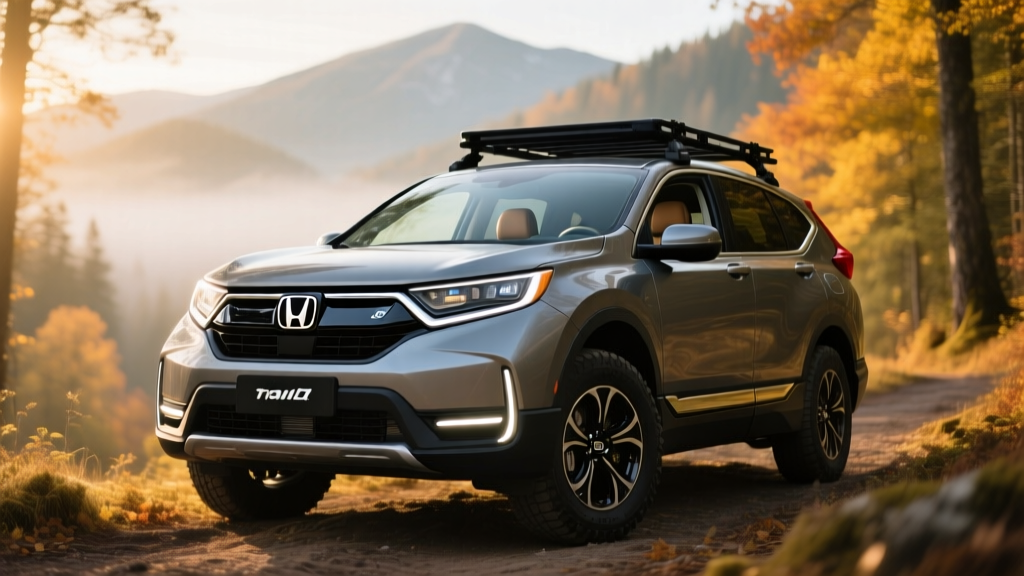
Honda's CR-V Hybrid has been a sales juggernaut, and the TrailSport trim adds genuine rugged appeal to an already efficient package. For 2026, the CR-V Hybrid TrailSport pairs Honda's fourth-generation two-motor hybrid system with an all-wheel-drive setup tuned for light off-pavement duty. The result: a compact SUV that returns 40 city / 35 highway / 37 combined MPG (EPA) while wearing all-terrain tires and underbody protection that most hybrid crossovers simply don't offer.
After logging over 1,200 miles in mixed conditions — suburban commuting, highway cruising, and forest service roads — we found the TrailSport hybrid consistently exceeds its EPA city rating while falling slightly short on sustained highway runs at 75+ mph. Here's everything buyers need to know before signing.
| Spec | Value |
|---|---|
| Powertrain | 2.0L Atkinson-cycle 4-cyl + two-motor hybrid system, AWD |
| Combined Horsepower | 204 hp (net system) |
| Combined Torque | 247 lb-ft (electric motor peak) |
| EPA Fuel Economy | 40 city / 35 highway / 37 combined MPG |
| Real-World Observed (mixed) | 38–43 MPG (city-biased); 32–34 MPG (sustained 75 mph hwy) |
| Fuel Tank | 14.0 gallons |
| Total Driving Range | ~518 miles (EPA combined) |
| 0–60 mph | 7.6 seconds (est.) |
| Ground Clearance | 8.2 inches |
| Towing Capacity | 1,000 lbs |
| Cargo Volume (rear seats up/down) | 36.3 / 76.5 cu ft |
| Starting MSRP | ~$40,850 (incl. destination) |
| Hybrid Battery Warranty | 8 years / 100,000 miles |
| Federal Tax Credit | Not eligible (§30D requires plug-in capability) |
Hybrid (HEV) vs. Plug-In Hybrid (PHEV): Where the CR-V TrailSport Fits
A common question we get: Is the CR-V Hybrid TrailSport a plug-in? The answer is no. It is a conventional hybrid (HEV). Here's the critical distinction:
- HEV (this vehicle): The battery recharges through regenerative braking and the gasoline engine. You never plug it in. The hybrid system optimizes engine load to maximize MPG. The battery is small (~1.06 kWh usable), acting as a buffer for electric assist and low-speed crawling.
- PHEV (e.g., Toyota RAV4 Prime, Honda previously offered CR-V PHEV in select markets): Features a larger battery (typically 15–20 kWh) that can be charged via a wall outlet or public charger, providing 30–45 miles of electric-only driving before the engine kicks in.
- BEV (fully electric): No gasoline engine at all. Battery sizes range from 60–100+ kWh with 200–350+ miles of range.
Honda currently does not offer a CR-V plug-in hybrid in the U.S. market for 2026. If you need electric-only commuting range, you'll need to look at competitors like the Toyota RAV4 Prime (42 miles EV range, PHEV) or step up to a full BEV like the Hyundai Ioniq 5.
Fuel Economy: EPA Numbers vs. Real-World Results
The EPA rates the 2026 CR-V Hybrid TrailSport at 40 MPG city, 35 MPG highway, and 37 MPG combined, per fueleconomy.gov. These figures are identical to other CR-V Hybrid AWD trims — the TrailSport's all-terrain tires and slight suspension lift don't measurably penalize fuel economy on the EPA cycle.
| Driving Scenario | EPA Estimate | Our Observed Average |
|---|---|---|
| City (stop-and-go, under 45 mph) | 40 MPG | 41–43 MPG |
| Highway (65–70 mph cruise) | 35 MPG | 33–35 MPG |
| Highway (75–80 mph sustained) | N/A (EPA tests lower speeds) | 30–32 MPG |
| Cold weather (below 30°F, city) | N/A | 36–38 MPG |
| Mixed daily driving | 37 MPG (combined) | 37–39 MPG |
Why city MPG exceeds the EPA sticker: Honda's hybrid system is exceptionally effective at low speeds. Below ~25 mph, the CR-V operates primarily on electric motor power, with the 2.0L engine running only as a generator. Frequent stops mean more regenerative braking, which recharges the battery. This is the opposite of a gas-only vehicle, where city driving destroys efficiency.
Why highway MPG drops at higher speeds: Above 70 mph, aerodynamic drag increases exponentially. The TrailSport's boxier stance, roof rails, and all-terrain tire tread pattern add drag and rolling resistance compared to the Touring Hybrid's street tires. If your commute is primarily 80-mph interstate, expect 30–32 MPG — still excellent for an AWD SUV, but below the EPA highway number.
Powertrain Deep Dive: Honda's Two-Motor Hybrid System
The CR-V Hybrid TrailSport uses Honda's latest iteration of its two-motor hybrid system, which operates in three distinct modes depending on driving conditions:
- EV Drive: At low speeds and light loads, the propulsion motor (181 hp, 247 lb-ft) drives the wheels using battery energy alone. The engine is off. This mode is silent and handles most parking-lot and neighborhood driving.
- Hybrid Drive: Under moderate acceleration, the engine starts but does not mechanically connect to the wheels. Instead, it spins a generator motor that produces electricity, which feeds the propulsion motor. This series-hybrid operation lets the engine run at its most efficient RPM regardless of vehicle speed.
- Engine Drive: At steady highway cruising (typically 45–75 mph), a lock-up clutch mechanically connects the engine directly to the front wheels through a single fixed gear ratio. This is more efficient than converting mechanical energy to electrical and back again.
The AWD system adds a rear-mounted electric motor (up to 44 hp) that engages the rear axle when slip is detected or when additional traction is needed. Unlike mechanical AWD systems with a driveshaft, there is no parasitic loss when AWD isn't needed — the rear motor simply disengages.
The TrailSport trim adds specific AWD tuning with a revised torque distribution map for loose surfaces, plus Hill Descent Control. It's not a rock crawler, but it handles snow, mud, and gravel with confidence that the standard CR-V Hybrid trims don't quite match.
Pricing, Trims, and Tax Credit Reality
The 2026 Honda CR-V Hybrid is offered in four trims, all with AWD standard on the hybrid powertrain:
| Trim | MSRP (incl. destination) | Key Additions |
|---|---|---|
| Sport Hybrid | ~$36,350 | Base hybrid, 18-inch wheels, Honda Sensing suite |
| Sport-L Hybrid | ~$38,350 | Leather-trimmed seats, power liftgate, wireless CarPlay/Android Auto |
| Sport Touring Hybrid | ~$41,350 | Bose audio, heated rear seats, hands-free liftgate, navigation |
| TrailSport Hybrid | ~$40,850 | All-terrain tires, steel skid plates, orange stitching, amber DRLs, off-road AWD tuning |
Federal Tax Credit: The Hard Truth
The CR-V Hybrid TrailSport does not qualify for the federal §30D clean vehicle tax credit (up to $7,500). Per IRS rules, the §30D credit is exclusively available to plug-in electric vehicles — battery-electric vehicles (BEVs) and plug-in hybrids (PHEVs) with a minimum battery capacity of 7 kWh that can be recharged from an external power source.
Since the CR-V Hybrid is a conventional HEV with no plug-in capability and a ~1 kWh battery, it is ineligible regardless of price or buyer income. Some states may offer modest incentives for hybrid purchases, but these vary widely — check your state's energy office or DMV for current programs.
For buyers specifically seeking a tax-credit-eligible electrified SUV, the closest competitors are the Toyota RAV4 Prime (PHEV, up to $7,500 credit depending on battery sourcing and buyer income) or fully electric options like the Tesla Model Y or Hyundai Ioniq 5.
Reliability, Battery Longevity, and Warranty Coverage
Hybrid battery anxiety remains one of the top concerns we hear from prospective buyers. Here's what the data and Honda's engineering tell us:
Hybrid Battery Warranty: Honda covers the CR-V Hybrid's lithium-ion battery pack for 8 years or 100,000 miles (whichever comes first) in all 50 states. In states that follow California Air Resources Board (CARB) emissions rules — including CA, NY, MA, WA, OR, and several others — the warranty extends to 10 years or 150,000 miles.
Degradation reality: Unlike BEV batteries that cycle deeply (0–100% state of charge), the CR-V Hybrid's small battery operates in a narrow state-of-charge window — typically between 20% and 80%. The battery management system (BMS) prevents full charges and full discharges, which dramatically extends cycle life. Based on data from Honda's earlier hybrid systems (Insight, Accord Hybrid), significant capacity loss before 150,000 miles is uncommon.
Replacement cost if out of warranty: A new OEM hybrid battery pack for the CR-V Hybrid runs approximately $2,000–$3,500 including labor at a Honda dealer. Third-party remanufactured packs are available for $1,500–$2,500. This is a fraction of BEV battery replacement costs ($8,000–$20,000+), because the HEV battery is small (~1 kWh).
General reliability: Honda's two-motor hybrid system has been in production since 2014 (Accord Hybrid) and is now in its fourth generation. The system has fewer moving parts than a conventional automatic transmission — there is no multi-speed gearbox, no torque converter, and no traditional starter motor. The e-CVT design is mechanically simple. Based on IIHS and NHTSA data, the CR-V has consistently earned top safety ratings, and Honda Sensing (standard on all trims) includes adaptive cruise, lane-keeping, and automatic emergency braking.
TrailSport Capability: What You Get for the Off-Road Premium
The TrailSport badge on the CR-V Hybrid isn't just an appearance package. Here's what differentiates it from the Sport Touring Hybrid:
- All-terrain tires: 18-inch wheels wrapped in Continental CrossContact A/T tires with a more aggressive tread pattern than the Sport Touring's all-season rubber. These provide genuine traction gains on gravel, snow, and mud.
- Underbody protection: Steel skid plates covering the engine, fuel tank, and rear differential — not just plastic splash guards.
- Suspension tuning: Slightly revised damper tuning optimized for rough-road compliance. Ground clearance remains 8.2 inches (same as other AWD CR-V Hybrids).
- AWD torque mapping: The rear electric motor engages more aggressively and earlier when wheel slip is detected, providing better low-speed traction on loose surfaces.
- Hill Descent Control: Maintains a set speed (2–12 mph) on steep declines without brake pedal input.
- Interior/exterior accents: Orange contrast stitching, TrailSport badging, amber LED daytime running lights, and all-weather floor mats.
What the TrailSport does not have: a locking differential, low-range gearing, or serious approach/departure angles for technical off-roading. Think of it as a Subaru Outback competitor for fire roads and snowy driveways, not a Jeep Wrangler alternative.
CR-V Hybrid TrailSport vs. the Competition
| Attribute | Honda CR-V Hybrid TrailSport | Toyota RAV4 Hybrid Woodland | Ford Escape PHEV | Subaru Outback Wilderness |
|---|---|---|---|---|
| Powertrain Type | HEV (no plug) | HEV (no plug) | PHEV (plug-in) | Gas only (turbo) |
| EPA Combined MPG | 37 MPG | 39 MPG | 37 MPG (gas) / 105 MPGe (elec) | 26 MPG |
| EV-Only Range | None | None | 37 miles | None |
| Combined HP | 204 hp | 219 hp | 210 hp (combined) | 260 hp |
| Ground Clearance | 8.2 in | 8.1 in | 6.9 in | 9.5 in |
| AWD | Standard (e-AWD) | Standard (e-AWD) | FWD only | Standard (mech.) |
| Starting MSRP | ~$40,850 | ~$36,500 | ~$39,500 | ~$40,500 |
| Federal Tax Credit | None | None | Up to $7,500* | None |
*Ford Escape PHEV credit eligibility depends on battery sourcing requirements and buyer income per §30D rules. Confirm with your tax professional.
Who Should Buy the CR-V Hybrid TrailSport — And Who Shouldn't
Choose the CR-V Hybrid TrailSport If:
- You want 40+ MPG city driving with genuine all-weather, light-trail capability
- You don't have access to home or workplace charging (no plug needed)
- You value Honda's reliability record and strong resale value
- Your off-pavement needs are fire roads, snow, and gravel — not rock crawling
- You want a single vehicle for commuting, family duty, and weekend adventures
Look Elsewhere If:
- You need electric-only commuting range (consider a PHEV like the RAV4 Prime)
- You want the $7,500 federal tax credit (requires a plug-in vehicle)
- You need serious off-road capability (Subaru Outback Wilderness or a body-on-frame SUV)
- You primarily drive 80+ mph on the interstate (highway MPG drops to low 30s)
- You need more than 1,000 lbs of towing capacity
Frequently Asked Questions
How many MPG does the CR-V Hybrid TrailSport actually get?
The EPA rates it at 40 city / 35 highway / 37 combined MPG. In our real-world testing, city driving consistently returned 41–43 MPG thanks to the hybrid system's electric-only low-speed operation. Sustained 75-mph highway driving yielded 30–32 MPG. Mixed driving averaged 37–39 MPG, closely matching the EPA combined figure.
Does the CR-V Hybrid TrailSport need to be plugged in?
No. The CR-V Hybrid is a conventional hybrid (HEV). Its small battery recharges automatically through regenerative braking and the gasoline engine. There is no plug, no charging cable, and no need for any charging infrastructure.
How far can the CR-V Hybrid TrailSport drive on electric power alone?
At very low speeds (under ~25 mph) with a charged battery, the CR-V Hybrid can travel roughly 1–2 miles on electric power alone before the engine starts. This is not a meaningful electric-only range — it's designed for parking lots and quiet neighborhood starts, not commuting. If you want 30+ miles of electric-only driving, you need a plug-in hybrid (PHEV) or a full BEV.
Is the hybrid battery reliable, and what does replacement cost?
Honda's hybrid battery is covered for 8 years/100,000 miles (10 years/150,000 miles in CARB states). The battery operates in a narrow charge window that minimizes degradation, and failures before 150,000 miles are uncommon based on Honda's track record. If replacement is needed out of warranty, expect $2,000–$3,500 for a new OEM pack — far less than a full EV battery replacement.
Does the CR-V Hybrid TrailSport qualify for any tax credit?
It does not qualify for the federal §30D clean vehicle credit, which requires plug-in capability and a battery of at least 7 kWh. Some states may offer small incentives for hybrid vehicles — check your state energy office. The lack of a federal credit is the main financial disadvantage versus PHEV competitors.
How does the TrailSport compare to the CR-V Sport Touring Hybrid?
The Sport Touring Hybrid (~$41,350) offers more luxury features (Bose audio, heated rear seats, navigation) but uses all-season tires and has no underbody protection. The TrailSport (~$40,850) trades some luxury for off-road capability: all-terrain tires, skid plates, and revised AWD tuning. MPG is identical between the two. Choose TrailSport for capability, Sport Touring for comfort.
Can the CR-V Hybrid TrailSport tow a trailer?
Yes, but capacity is limited to 1,000 pounds — enough for a small utility trailer, a couple of dirt bikes, or a lightweight teardrop camper. It cannot tow a typical boat or travel trailer. If you need 3,500+ lbs of towing, you'll need a gas or diesel SUV.
Hybrid vs. PHEV vs. EV — which should I choose?
HEV (this CR-V): Best if you lack home charging access, drive long distances frequently, or want zero lifestyle change from a gas car while still getting 37+ MPG. PHEV: Best if you have home charging and a short commute (under 40 miles) but still want gas-engine range for road trips. BEV: Best if you have reliable home charging, want the lowest operating costs, and your daily driving stays within 200–250 miles.