Editor's note: AutoEdgeView covers electric and hybrid cars, trucks, and SUVs. The Coston DX Step-Thru is an electric bicycle (e-bike), which sits outside our core automotive coverage. However, because readers searching for this model often cross-shop electrified transportation options, we've published this brief orientation guide to clarify what the Coston DX is, how its electric drivetrain works, and when a four-wheeled plug-in hybrid (PHEV) or battery-electric vehicle (BEV) may better serve the same commute.
What the Coston DX Step-Thru Actually Is
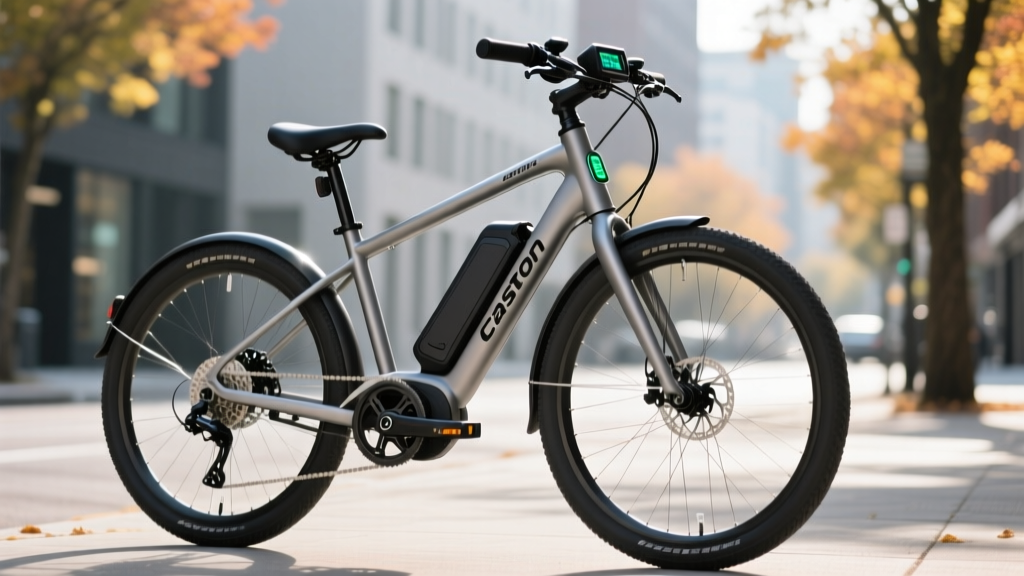
The Coston DX Step-Thru, sold primarily through retailers like Huffy, is a Class 2 electric bicycle — a pedal-assist and throttle-equipped e-bike with a hub motor and a rechargeable lithium-ion battery pack. It is not a hybrid car, a plug-in hybrid, or a motorcycle. Under U.S. federal law (15 U.S.C. §2085), e-bikes with motors ≤750 watts and a top motor-only speed of 20 mph are regulated as bicycles, not motor vehicles, which means no driver's license, registration, or auto insurance is required in most states.
| Spec | Value |
|---|---|
| Vehicle class | Class 2 e-bike (throttle + pedal assist, 20 mph cap) |
| Motor | ~250–350W rear hub motor (nominal) |
| Battery | ~36V lithium-ion, ~10 Ah (~360 Wh) |
| Claimed range | Up to ~20 miles (pedal-assist dependent) |
| Top assisted speed | 20 mph (motor cut-off) |
| Charge time (120V) | ~4–6 hours to full |
| Frame | Step-thru aluminum |
| Typical MSRP | ~$700–$900 (retailer dependent) |
Why "Electric Hybrid Bike" Is a Misleading Search Term
Shoppers often type "electric hybrid bike" meaning one of two very different things:
- A hybrid-style bicycle with electric assist — an upright, flat-bar commuter bike (the "hybrid" bicycle category) fitted with a motor and battery. The Coston DX falls here.
- A plug-in hybrid electric vehicle (PHEV) — a four-wheeled car like the Toyota RAV4 Prime or Hyundai Tucson PHEV that pairs a gasoline engine with a larger battery you can plug in.
Because the terminology overlaps, it's worth explicitly separating the two before you spend money on the wrong solution for your commute.
| Factor | Coston DX E-Bike | Typical PHEV (e.g., RAV4 Prime) |
|---|---|---|
| Upfront cost | ~$700–$900 | $43,000–$50,000 MSRP |
| Electric-only range | ~15–20 mi | ~35–42 mi EPA |
| Top speed | 20 mph | 80+ mph |
| Weather protection | None | Full cabin, HVAC |
| Cargo / passengers | 1 rider + small pannier | 5 passengers, 30+ cu ft cargo |
| Licensing / insurance | None in most states | Required |
| Federal tax credit (§30D) | Not eligible | Up to $7,500 if sourcing/income rules met |
| Year-round practicality | Fair-weather / short trip | All-season, long-distance |
When an E-Bike Beats a Car (and When It Doesn't)
The Coston DX makes sense as a last-mile or short urban commuter: grocery runs, campus travel, or a 3–8 mile round-trip commute on bike-friendly streets. Cost per mile is a few cents of electricity, maintenance is minimal, and parking is trivial.
It does not replace a car if your commute exceeds ~15 miles one way, involves highways, runs through winter weather, or requires carrying passengers or cargo beyond a backpack. For those use cases, a PHEV or BEV is the appropriate tool — and the one we primarily cover on this site.
Real-World Range vs. the Sticker Claim
Huffy and retailers typically advertise "up to ~20 miles" for the Coston DX. As with any EV, treat that as a best-case figure. Real-world range depends on:
- Throttle vs. pedal assist: Throttle-only riding draws more current and can cut range to 12–15 miles.
- Rider weight and terrain: Hills and heavier riders increase watt-hours per mile.
- Temperature: Lithium-ion cells lose capacity below ~40°F; expect 20–30% range drop in winter.
- Tire pressure and wind: Under-inflated tires and headwinds measurably reduce range on a 360 Wh pack.
Plan for ~12–18 usable miles in mixed real-world riding, and less in cold weather.
Charging, Battery Care, and Replacement Cost
The Coston DX charges from a standard 120V wall outlet using an included charger — no Level 2 station, no NACS or CCS connector, no DC fast charging. A full charge draws roughly 0.4 kWh, costing pennies at U.S. residential electricity rates (~$0.16/kWh national average).
Battery longevity follows the same lithium-ion rules as any EV: avoid storing at 100% or 0% state of charge for weeks, avoid leaving the pack in freezing temperatures or hot sun, and expect gradual capacity fade. Replacement packs for 36V/10Ah e-bikes typically run $200–$350 aftermarket — a significant fraction of the bike's original price, so factor that in around years 4–6 depending on use.
Warranty reality check: E-bike batteries from mass-market brands are typically warranted for 1 year (sometimes 6 months on the battery specifically). That is dramatically shorter than the 8-year/100,000-mile battery warranties mandated on PHEVs and BEVs sold in the U.S. — a meaningful ownership-cost difference if you plan to keep the vehicle long-term.
Tax Credits, Incentives, and the §30D Question
The Coston DX e-bike does not qualify for the IRS §30D Clean Vehicle Credit — that credit applies to four-wheeled plug-in vehicles meeting battery-sourcing, MSRP, and buyer-income requirements (see IRS guidance on new clean vehicles). E-bikes may qualify under separate proposed legislation and some state/local e-bike rebate programs (notably in Colorado, California, and a handful of cities), but these vary by jurisdiction and are not federal tax credits. Check your state energy office or local utility for current programs.
Should You Buy the Coston DX, a PHEV, or a Full EV?
Coston DX E-Bike — Pros
- Sub-$1,000 entry price
- No license, registration, or insurance
- Pennies-per-charge operating cost
- Easy parking, no fuel stops
Coston DX E-Bike — Cons
- ~15–20 mi real-world range
- No weather protection or highway capability
- Short battery warranty; replacement is costly relative to bike price
- No federal tax credit eligibility
Choose the Coston DX e-bike if: your commute is under 10 miles, you live in a mild climate, you have secure bike storage, and you want a car-free secondary runabout.
Choose a PHEV (RAV4 Prime, Tucson PHEV, Prius Prime) if: you need year-round, all-weather commuting with 30–40 miles of electric-only range for short trips plus a gas engine for longer drives, and you can charge at home overnight.
Choose a BEV (Model Y, Ioniq 5, Equinox EV) if: you have reliable home Level 2 charging, your daily driving is under ~250 miles, and you want zero tailpipe emissions with the lowest per-mile energy cost.
Frequently Asked Questions
How many MPG does the Coston DX e-bike get?
MPG doesn't apply — e-bikes are rated in watt-hours per mile. Expect roughly 18–25 Wh/mi in pedal-assist mode, which translates to a fraction of a cent per mile at average U.S. electricity rates.
How far can the Coston DX go on battery power alone?
About 12–18 real-world miles using throttle and pedal assist on a ~360 Wh pack; cold weather and hills reduce that figure.
Is the Coston DX reliable, and what does a battery replacement cost?
Huffy/Coston e-bikes are entry-level and adequate for casual use, not heavy daily commuting. Replacement battery packs run roughly $200–$350 — plan for that expense around years 4–6.
Does the Coston DX qualify for any federal tax credit?
No. The IRS §30D credit applies to four-wheeled plug-in vehicles. Some state and local e-bike rebate programs may apply — check your jurisdiction.
Hybrid bike, PHEV, or full EV — which fits my commute?
Under 10 miles, fair weather, solo rider → e-bike. Mixed-length commutes with occasional long trips and home charging → PHEV. Predictable daily driving under ~250 miles with home Level 2 → BEV.
Sources: IRS §30D Clean Vehicle Credit; fueleconomy.gov (EPA PHEV range/MPGe data for comparison vehicles); Huffy/Coston published product specifications.