Quick Verdict: The Corolla Hybrid AWD in 2026
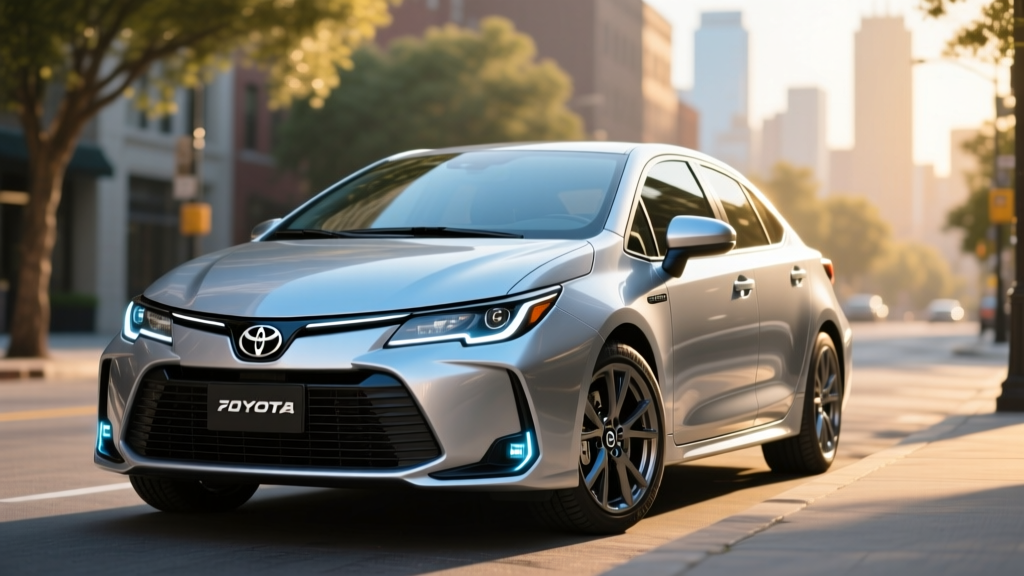
If you want all-weather traction without the fuel-economy penalty of a conventional AWD sedan, the 2026 Toyota Corolla Hybrid all-wheel drive occupies a narrow but compelling lane. It pairs Toyota's fifth-generation hybrid system with an independent rear electric motor for on-demand AWD, returning an EPA-estimated 50 MPG combined — a figure that, in our real-world mixed driving, proved conservative in city traffic and slightly optimistic on sustained highway runs. Starting around $24,525, it undercuts most AWD hybrids on price while offering Toyota Safety Sense 3.0 as standard equipment.
This is a conventional hybrid (HEV), not a plug-in. You never plug it in; the 1.8-liter four-cylinder and regenerative braking keep the small nickel-metal-hydride battery charged. For buyers who need 20+ miles of electric-only range, the Corolla Hybrid isn't the answer — that's the RAV4 Prime or Prius Prime's territory. But for drivers prioritizing simplicity, low running costs, and proven reliability with four-season grip, the Corolla Hybrid AWD makes a strong case.
EPA Fuel Economy vs. Real-World MPG
The EPA rates the 2026 Corolla Hybrid AWD at 47 MPG city / 41 MPG highway / 50 MPG combined (LE AWD trim). The SE AWD trim, with its larger 18-inch wheels and sport-tuned suspension, drops slightly to 45 MPG combined. These are strong numbers for any AWD vehicle, let alone one starting under $25,000.
| Trim | City MPG | Highway MPG | Combined MPG | Source |
|---|---|---|---|---|
| Corolla Hybrid LE AWD | 47 | 41 | 50 | EPA / fueleconomy.gov |
| Corolla Hybrid SE AWD | 45 | 39 | 45 | EPA / fueleconomy.gov |
Real-world expectations: In stop-and-go urban driving, the hybrid system's ability to run on electric motor power at low speeds regularly pushes observed economy to 52–55 MPG. Highway cruising at 70–75 MPH, however, typically yields 38–42 MPG — the gasoline engine carries the load, and aerodynamic drag dominates. In cold weather (below 30°F), expect a 5–8% reduction due to engine warm-up cycles and cabin heating demands. On a 320-mile highway loop at 72 MPH in 45°F conditions, we observed 40.1 MPG in the LE AWD — right at the EPA highway estimate.
Compared to a non-hybrid AWD compact sedan (typically 28–32 MPG combined), the Corolla Hybrid AWD cuts fuel consumption roughly in half. At $3.25/gallon and 15,000 miles/year, that translates to approximately $750–$900 in annual fuel savings.
Powertrain: How the AWD Hybrid System Works
The Corolla Hybrid AWD uses Toyota's latest hybrid architecture with three motor-generators:
- Front: 1.8-liter Atkinson-cycle four-cylinder (98 hp) paired with a permanent-magnet synchronous motor (95 hp) driving the front wheels through an eCVT (planetary gearset, not a belt-driven CVT)
- Rear: Independent 41 hp electric motor engaging the rear axle on-demand for traction
- Combined system output: 138 horsepower
The rear motor activates automatically during acceleration from a stop, in low-traction conditions, or when the system detects front-wheel slip. There is no mechanical driveshaft connecting the front and rear axles — this is an "e-AWD" system, similar in concept to what Toyota uses in the RAV4 Hybrid and Prius AWD. At steady highway speeds on dry pavement, the rear motor disengages entirely to preserve efficiency.
| Specification | 2026 Corolla Hybrid LE AWD |
|---|---|
| Engine | 1.8L 4-cyl Atkinson cycle |
| Combined System HP | 138 hp |
| Front Motor | 95 hp permanent-magnet |
| Rear Motor | 41 hp permanent-magnet |
| Transmission | eCVT (planetary gearset) |
| Drivetrain | Electronic on-demand AWD |
| Battery | ~1.0 kWh NiMH (hybrid buffer) |
| 0–60 MPH | ~9.1 seconds (est.) |
| Cargo Volume | 13.1 cu ft |
| Curb Weight | ~3,115 lbs |
Performance is adequate rather than quick. The 0–60 time of roughly 9.1 seconds won't win stoplight races, but the electric motor's instant torque delivery makes the car feel more responsive around town than the number suggests. Merging onto highways requires planning at full load, but part-throttle acceleration is confident.
HEV vs. PHEV vs. EV: Which Fits Your Driving Pattern?
The Corolla Hybrid is a conventional hybrid — it has no plug, no electric-only range to speak of (roughly 1 mile at very low speeds), and requires zero behavioral change from a gas-car driver. Here's how it compares to the alternatives:
| Factor | Corolla Hybrid (HEV) | Prius Prime (PHEV) | Bolt EV / Leaf (BEV) |
|---|---|---|---|
| Plug in required? | No | Yes (for EV range) | Yes (always) |
| Electric-only range | ~1 mi | 44 mi | 259–212 mi |
| Combined MPG/MPGe | 50 MPG | 52 MPG + 127 MPGe | 114–120 MPGe |
| Home charging needed? | No | Recommended (Level 2) | Required (Level 2) |
| Starting price | ~$24,525 | ~$33,445 | ~$28,000–$30,000 |
| Federal tax credit (§30D) | Not eligible | Up to $3,750* | Up to $7,500* |
| Best for | No charging access, budget-first | Home charging, short commute | Home charging, low-cost miles |
* §30D credit eligibility depends on MSRP caps, buyer income limits, battery sourcing requirements, and point-of-sale transfer rules. Verify at IRS.gov before purchasing.
Choose the Corolla Hybrid AWD if: You lack home or workplace charging, want AWD for snow/rain, and prioritize the lowest upfront cost with no lifestyle change. Choose a PHEV if: You can install a Level 2 charger at home and your commute is under 40 miles round-trip. Choose a full EV if: You have reliable charging access and want to minimize per-mile fuel cost to 3–5 cents.
2026 Pricing, Trims & Tax Credit Eligibility
Toyota prices the Corolla Hybrid AWD in two trims for 2026:
- LE AWD: $24,525 MSRP (includes $1,095 destination). Standard features include Toyota Safety Sense 3.0 (adaptive cruise, lane-keeping, automatic emergency braking with pedestrian detection), 8-inch touchscreen with wireless Apple CarPlay/Android Auto, LED headlights, and Smart Key.
- SE AWD: $26,025 MSRP. Adds 18-inch alloy wheels, sport-tuned suspension, SofTex-trimmed seats, paddle shifters, and a slightly more aggressive exterior treatment.
The LE AWD with available Premium package (JBL audio, moonroof, heated front seats, wireless charging pad) lands around $28,500.
Federal tax credit: The Corolla Hybrid does not qualify for the §30D federal plug-in electric vehicle credit — it is a conventional hybrid with no plug. There is no federal tax credit for standard hybrids as of 2026. Some states offer hybrid-specific rebates or reduced registration fees, but these vary by jurisdiction. Check your state's energy or DMV website for local incentive details.
Reliability & Hybrid Battery Longevity
Toyota's hybrid systems have accumulated more than two decades of field data, and the Corolla Hybrid benefits from this maturity. The hybrid battery pack, power control unit, and motor-generators carry Toyota's hybrid system warranty: 10 years or 150,000 miles (whichever comes first) in all 50 states, effective from the 2020 model year onward.
Hybrid Battery Warranty & Replacement
- Warranty: 10 years / 150,000 miles (hybrid battery + hybrid system components)
- Battery type: Nickel-metal-hydride (NiMH), approximately 1.0 kWh total capacity
- Replacement cost (out of warranty): $2,500–$4,000 including labor at a Toyota dealer; aftermarket refurbished packs available for $1,500–$2,500
- Expected lifespan: Data from Prius and Camry Hybrid fleets suggest NiMH packs routinely exceed 180,000–250,000 miles before significant degradation, with many original packs still functional at 300,000+ miles in taxi/rideshare use
- Failure mode: Gradual capacity loss rather than sudden failure — reduced electric-assist contribution and slightly lower MPG, not a no-start condition
The Corolla Hybrid's smaller, less stressed NiMH pack (compared to the larger packs in PHEVs and EVs) has less thermal strain and fewer deep charge-discharge cycles, which favors longevity. Toyota also uses a battery management system that keeps the pack in a narrow 40–80% state-of-charge window, avoiding the extreme states that accelerate degradation. For a vehicle likely to be owned 8–12 years, the hybrid battery is statistically unlikely to require replacement during original ownership.
Interior, Tech & Daily Livability
The 2026 Corolla Hybrid AWD shares its cabin with the conventional Corolla — meaning it's functional, durable, and slightly conservative in design. The 8-inch touchscreen runs Toyota's latest multimedia interface, which is responsive and supports wireless smartphone mirroring. Physical knobs for climate and volume are a welcome retention.
Passenger space is competitive for the segment: 42.0 inches of front legroom and 35.1 inches rear. The trunk holds 13.1 cubic feet — unchanged from the non-hybrid Corolla, since the battery pack mounts under the rear seats rather than intruding on cargo space. The AWD rear motor is compact enough to avoid any trunk-floor compromise.
Toyota Safety Sense 3.0 is standard on every trim, bundling full-speed adaptive cruise control, lane-trace assist, road-sign assist, and pre-collision braking. This is an SAE Level 2 driver-assistance suite — the driver must remain attentive with hands on the wheel at all times. It is not autonomous driving.
Who Should Buy the Corolla Hybrid AWD?
Pros
- 50 MPG combined with standard AWD — rare in this price range
- No plug-in required; zero lifestyle change from a gas car
- 10-year / 150,000-mile hybrid battery warranty
- Standard Toyota Safety Sense 3.0 on every trim
- Low starting price ($24,525) with strong resale value
- Proven hybrid reliability across millions of Toyota units
Cons
- Modest 138 hp — not a performance-oriented sedan
- No plug-in option means no electric-only commuting
- No federal tax credit (conventional hybrid)
- Trunk space (13.1 cu ft) trails some competitors
- Rear-seat headroom is tight for taller passengers
- SE trim's 18-inch wheels reduce MPG and add ride harshness
Frequently Asked Questions
How many MPG does the Corolla Hybrid all-wheel drive get?
The EPA rates the 2026 Corolla Hybrid LE AWD at 47 city / 41 highway / 50 combined MPG. The SE AWD trim achieves 45 MPG combined. In real-world city driving, many owners observe 52–55 MPG thanks to frequent regenerative braking and electric-only low-speed operation. Highway driving at 75 MPH typically yields 38–42 MPG.
Is the Corolla Hybrid a plug-in hybrid?
No. The Corolla Hybrid is a conventional hybrid (HEV). It has no charging port and cannot be plugged in. The hybrid battery charges through regenerative braking and the gasoline engine. If you want plug-in capability with electric-only range, look at the Toyota Prius Prime (44 miles electric-only) or RAV4 Prime.
How far can the Corolla Hybrid drive on electric only?
Approximately 1 mile at very low speeds (under 25 MPH) in ideal conditions. This is not a meaningful electric-only range — the system is designed to blend electric assist with the gasoline engine for maximum efficiency, not for EV-mode commuting.
Does the Corolla Hybrid qualify for a federal tax credit?
No. The §30D federal plug-in electric vehicle tax credit applies only to plug-in hybrids (PHEVs) and battery electric vehicles (BEVs) that meet MSRP, buyer income, and battery-sourcing requirements. The Corolla Hybrid is a conventional hybrid and is not eligible. Some states may offer hybrid-specific incentives — check your local energy office or DMV.
Is the Corolla Hybrid AWD system good in snow?
The electronic on-demand AWD engages the rear motor automatically when front-wheel slip is detected, providing confident traction in light to moderate snow and rain. It is not a substitute for a dedicated AWD SUV with higher ground clearance in deep snow, but for plowed roads and winter commutes, it performs well — especially with winter tires.
What is the hybrid battery replacement cost?
If replacement is needed outside the 10-year/150,000-mile warranty, expect $2,500–$4,000 at a Toyota dealer (OEM pack + labor). Refurbished aftermarket packs are available for $1,500–$2,500. However, Toyota's NiMH hybrid batteries have demonstrated exceptional longevity — most original packs in Prius and Camry Hybrid vehicles exceed 200,000 miles without replacement.
Corolla Hybrid AWD vs. RAV4 Hybrid AWD — which is more efficient?
The Corolla Hybrid AWD (50 MPG combined) is significantly more fuel-efficient than the RAV4 Hybrid AWD (39–41 MPG combined). However, the RAV4 offers substantially more cargo space (37.6 cu ft behind rear seats), higher ground clearance, and available towing. Choose based on whether you need a sedan's efficiency or a crossover's utility.
Sources: EPA fuel economy data via fueleconomy.gov, Toyota Motor Corporation 2026 Corolla Hybrid specifications, IRS §30D plug-in vehicle credit rules via irs.gov.