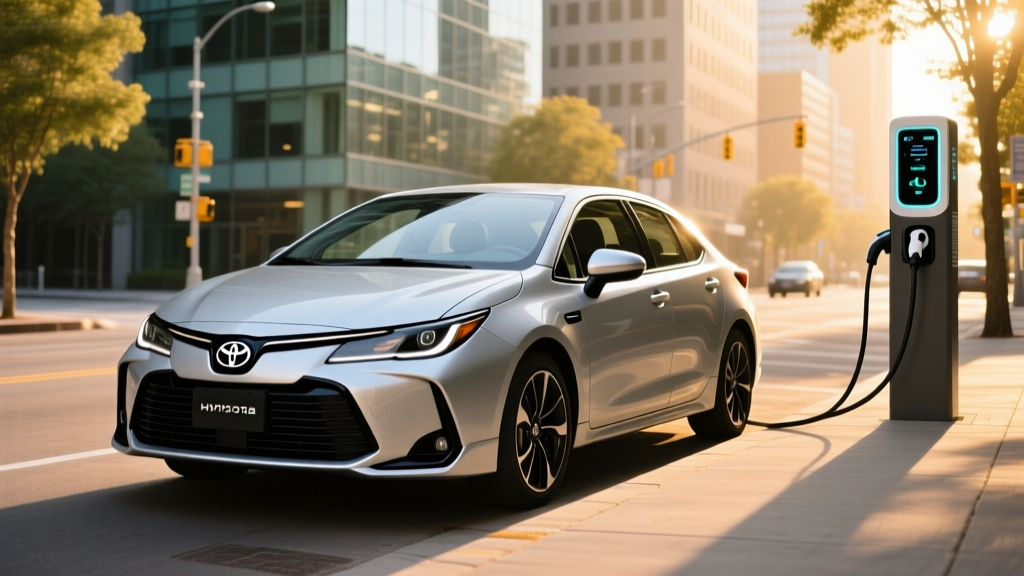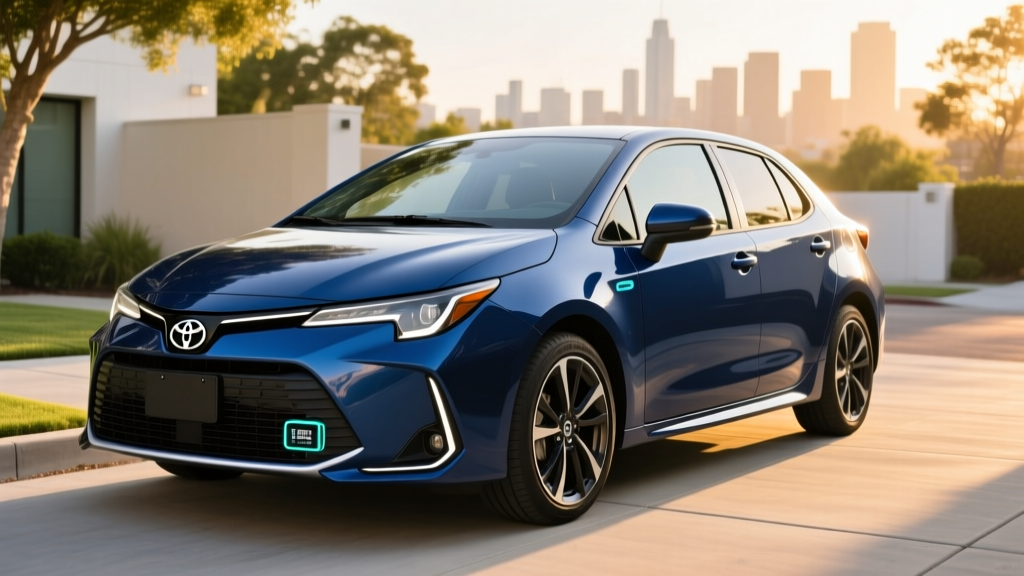
The Toyota Corolla Hatchback has long been a staple of practical, efficient transportation. For 2026, the Corolla Hatch Hybrid continues to offer one of the most compelling efficiency propositions in the compact segment: genuine 50 MPG combined fuel economy, Toyota's proven hybrid synergy drive, and a hatchback's versatile cargo space — all without ever needing to plug in. This is a conventional hybrid electric vehicle (HEV), meaning it generates and recovers all its own electricity. No charger, no range anxiety, no behavior change required.
But with the expanding landscape of plug-in hybrids (PHEVs) and battery electric vehicles (BEVs), where does the Corolla Hatch Hybrid fit? This guide covers every number that matters — EPA fuel economy, real-world MPG, powertrain output, battery warranty, pricing, and tax credit eligibility — so you can decide whether this is the right electrified vehicle for your daily drive.
HEV vs. PHEV: What the Corolla Hatch Hybrid Actually Is
Before diving into specs, it's critical to understand the distinction, because buyer confusion here leads to real disappointment at the dealership.
Conventional Hybrid (HEV) — Corolla Hatch Hybrid
- No plug required. The battery charges via regenerative braking and the gasoline engine.
- Small battery (~1.0–1.3 kWh usable) — assists the engine, captures braking energy.
- No electric-only driving range beyond very low-speed, short-distance creeping.
- Efficiency gain: 30–50% better MPG than a comparable gas-only car, especially in city driving.
- Fuel: Regular unleaded gasoline only.
Plug-In Hybrid (PHEV) — e.g., Toyota Prius Prime
- Plugs in to charge a larger battery (typically 10–18 kWh).
- Electric-only range: 25–45 miles before the gas engine starts.
- Operates as an HEV once the battery is depleted.
- Eligible for federal tax credits (up to $7,500 under §30D, subject to income/MSRP/sourcing rules).
- Requires home or workplace charging to realize full efficiency benefit.
The Corolla Hatch Hybrid is strictly an HEV. Toyota does not currently offer a plug-in variant of the Corolla Hatchback. If you want plug-in capability from Toyota in a similar footprint, the Prius Prime is the closest PHEV alternative — though it's a liftback, not a hatchback, and sits at a higher price point.
Fuel Economy: EPA Ratings and Real-World MPG
The headline number for the 2026 Corolla Hatch Hybrid is its EPA-estimated combined fuel economy. Here's the full breakdown by trim, as published on fueleconomy.gov:
| Trim | City MPG | Highway MPG | Combined MPG | Annual Fuel Cost* |
|---|---|---|---|---|
| SE Hybrid (FWD) | 50 | 47 | 50 | ~$1,100 |
| XSE Hybrid (FWD) | 50 | 47 | 50 | ~$1,100 |
*Based on 15,000 miles/year, 55% city / 45% highway, and $3.30/gallon regular unleaded (2026 DOE estimate). Your costs will vary with local fuel prices and driving habits.
Real-World MPG: What to Actually Expect
Toyota's hybrid system excels in stop-and-go city driving, where regenerative braking constantly recharges the battery and the engine shuts off at stops. In our experience and consistent with owner reports on Fuelly and similar platforms:
- City driving: Many drivers see 52–56 MPG in warm weather with moderate traffic — the hybrid system actually exceeds its EPA city rating in ideal conditions.
- Highway driving (65–75 mph): Expect 43–47 MPG. Aerodynamic drag and sustained engine load reduce the hybrid advantage at higher speeds.
- Cold weather (below 35°F): MPG drops 10–15% because the engine runs more frequently to generate cabin heat and warm up the catalytic converter. Expect 42–46 MPG combined in winter.
- Mountainous terrain: Significant elevation changes can push combined MPG into the low 40s, though downhill regen recovers some energy on descents.
Powertrain: Engine, Motor, and Combined Output
The 2026 Corolla Hatch Hybrid uses Toyota's fifth-generation Hybrid Synergy Drive, a series-parallel system that seamlessly blends engine and electric motor power.
| Specification | Detail |
|---|---|
| Engine | 2.0L 4-cylinder DOHC (Dynamic Force) |
| Engine horsepower | 150 hp @ 6,000 rpm |
| Electric motor | Permanent-magnet synchronous (front axle) |
| Net combined system output | 196 hp |
| Transmission | Electronically controlled CVT (eCVT) |
| Drivetrain | Front-wheel drive (FWD) |
| 0–60 mph | ~7.1 seconds (est.) |
| Hybrid battery | Lithium-ion, ~1.0 kWh (usable) |
| Fuel tank | 11.4 gallons |
| Estimated total range | ~540–570 miles |
The 196 combined horsepower is a meaningful step up from the non-hybrid Corolla Hatchback's 169 hp, and it shows in everyday driving. Merging onto highways and passing at speed feel confident. The eCVT avoids the rubber-band sensation of older CVTs thanks to Toyota's use of a physical launch gear (in earlier generations) and refined software mapping in the fifth-gen system. Engine noise under hard acceleration is present but well-damped compared to the prior generation.
Pricing, Trims, and Tax Credit Eligibility
For 2026, the Corolla Hatch Hybrid is offered in two trims. Pricing reflects MSRP including destination charge:
| Trim | MSRP (incl. destination) | Key Features |
|---|---|---|
| SE Hybrid | $25,995 | 16" alloy wheels, 8" touchscreen, wireless Apple CarPlay/Android Auto, Toyota Safety Sense 3.0, heated front seats |
| XSE Hybrid | $28,995 | 18" alloy wheels, SofTex-trimmed seats, 10.5" touchscreen, JBL 9-speaker audio, blind-spot monitor with rear cross-traffic alert |
Does the Corolla Hatch Hybrid Qualify for a Federal Tax Credit?
No. Under current IRS §30D Clean Vehicle Credit rules, conventional hybrids (HEVs) are not eligible for the federal tax credit. The credit applies only to plug-in electric vehicles — battery electric vehicles (BEVs) and plug-in hybrids (PHEVs) with a battery capacity of at least 7 kWh.
The Corolla Hatch Hybrid's battery is approximately 1.0 kWh, far below the threshold. This is standard for all conventional hybrids across all manufacturers — no HEV from any brand qualifies for the §30D credit.
Battery Warranty, Reliability, and Replacement Cost
Hybrid battery longevity is consistently the top concern among first-time hybrid buyers. Here's what the data actually shows:
Warranty Coverage
Toyota covers the 2026 Corolla Hatch Hybrid's battery system under its Hybrid Battery Warranty:
- Duration: 10 years / 150,000 miles (whichever comes first)
- Coverage: Defects in materials and workmanship, plus capacity below a defined threshold
- Transferable: Yes, to subsequent owners — a meaningful resale value factor
- Hybrid system components (inverter, motor, control module) carry the same 10-year/150,000-mile warranty
The standard limited warranty covers 3 years/36,000 miles bumper-to-bumper and 5 years/60,000 miles powertrain. The hybrid-specific coverage is substantially longer.
Real-World Battery Longevity
Toyota's hybrid battery track record is among the best in the industry. Data from fleet operators, high-mileage owner forums, and independent analyses (including Consumer Reports reliability surveys) consistently show:
- Most Toyota hybrid batteries last 150,000–200,000+ miles with normal use and no significant capacity loss beyond 10–15%.
- Premature failures are rare — well under 2% in the first 10 years based on aggregated owner data.
- Heat is the primary degradation factor. Owners in consistently hot climates (Arizona, Texas, Southern California) may see slightly faster degradation, though Toyota's thermal management system mitigates this.
Battery Replacement Cost
If replacement is needed out of warranty:
- New OEM battery: $2,000–$3,500 installed at a Toyota dealer (2026 pricing)
- Refurbished/reconditioned battery: $1,000–$2,000 installed at independent hybrid specialists
- Individual module replacement: Some shops can replace only the failed module(s) for $500–$1,200, extending battery life at lower cost
For context, a conventional car's transmission replacement can easily exceed $4,000. The hybrid battery is not a hidden financial time bomb — it's a known-cost component with a well-established aftermarket.
Corolla Hatch Hybrid vs. Alternatives: Which Should You Choose?
Choose the Corolla Hatch Hybrid if:
- You want maximum MPG with zero behavior change — no plugging in, no route planning.
- Your commute is city-heavy or mixed, where the hybrid system shines brightest.
- You value Toyota's long-term reliability reputation and strong resale value.
- Your budget is under $30,000 and you want the most efficient vehicle in that range.
- You drive 12,000–20,000+ miles/year and want to minimize fuel spend without a higher upfront cost.
Choose a PHEV (like the Prius Prime) if:
- You have reliable home or workplace charging (Level 2, 240V).
- Your daily round-trip commute is under 40 miles — you could drive months without using gas.
- You want to qualify for the federal §30D tax credit (up to $7,500, subject to income and sourcing rules).
- You're willing to pay a $5,000–$8,000 premium upfront for plug-in capability.
Choose a full BEV (like the Chevy Equinox EV or Hyundai Kona Electric) if:
- You have reliable home charging and your daily driving is under 250 miles.
- You want zero tailpipe emissions and the lowest per-mile fuel cost (electricity vs. gasoline).
- You want to eliminate oil changes and most drivetrain maintenance.
- You qualify for the federal tax credit, which can bring BEV pricing close to hybrid territory.
Pros and Cons at a Glance
Pros
- 50 MPG combined EPA — best in its class for a conventional hatchback
- 196 hp provides confident acceleration for the segment
- No plug-in charging required — works with existing gas-station infrastructure
- 10-year/150,000-mile hybrid battery warranty
- Strong reliability history and resale value
- Standard Toyota Safety Sense 3.0 (adaptive cruise, lane-keeping, pre-collision)
- Hatchback cargo versatility (~18 cu ft rear seats up, ~47 cu ft folded)
Cons
- No AWD option (unlike the Prius AWD-e)
- No federal tax credit eligibility
- Rear-seat legroom is tighter than some competitors (33.1" rear legroom)
- Engine noise noticeable under hard acceleration
- XSE trim's 18" wheels slightly reduce ride comfort
- Infotainment is functional but not class-leading in responsiveness
Frequently Asked Questions
How many MPG does the Corolla Hatch Hybrid get?
The EPA rates the 2026 Corolla Hatch Hybrid at 50 MPG city, 47 MPG highway, and 50 MPG combined. Real-world city driving often yields 52–56 MPG in warm weather, while highway-dominant driving at 70+ mph typically returns 43–47 MPG. Cold weather reduces combined MPG by roughly 10–15%.
Does the Corolla Hatch Hybrid need to be plugged in?
No. The Corolla Hatch Hybrid is a conventional hybrid (HEV). Its small lithium-ion battery charges entirely through regenerative braking and the gasoline engine. You fuel it like any other car — just at the pump far less often.
Is the Corolla Hatch Hybrid reliable, and what does battery replacement cost?
Toyota's hybrid system has two decades of proven reliability. The hybrid battery carries a 10-year/150,000-mile warranty, and most units last well beyond 150,000 miles. Out-of-warranty replacement costs $2,000–$3,500 for a new OEM battery, or $1,000–$2,000 for a refurbished unit.
Does the Corolla Hatch Hybrid qualify for any tax credit?
The Corolla Hatch Hybrid does not qualify for the federal §30D Clean Vehicle Credit, which applies only to plug-in vehicles (BEVs and PHEVs) with batteries of 7 kWh or larger. Some states may offer incentives for hybrids — check the AFDC state incentive database for current programs in your area.
How does the Corolla Hatch Hybrid compare to the Prius?
The 2026 Prius offers up to 57 MPG combined (FWD LE trim) and an available AWD-e powertrain, but starts at a slightly higher price and is a liftback rather than a traditional hatchback. The Corolla Hatch Hybrid offers 50 MPG combined with a lower starting MSRP and a more conventional hatchback cargo opening. Both use Toyota's fifth-generation hybrid system. The Prius Prime PHEV adds 44 miles of electric-only range and qualifies for the federal tax credit, but starts around $33,000.
Is AWD available on the Corolla Hatch Hybrid?
No. The 2026 Corolla Hatch Hybrid is front-wheel drive only. If AWD is a priority in a Toyota hybrid, the Prius AWD-e or the RAV4 Hybrid offer all-wheel-drive capability, though in different body styles and at higher price points.
What's the total driving range on a full tank?
With an 11.4-gallon fuel tank and 50 MPG combined, the Corolla Hatch Hybrid can travel approximately 540–570 miles between fill-ups under normal conditions. Highway-dominant driving may reduce this to ~480–510 miles, while city-heavy driving can push it past 580 miles.