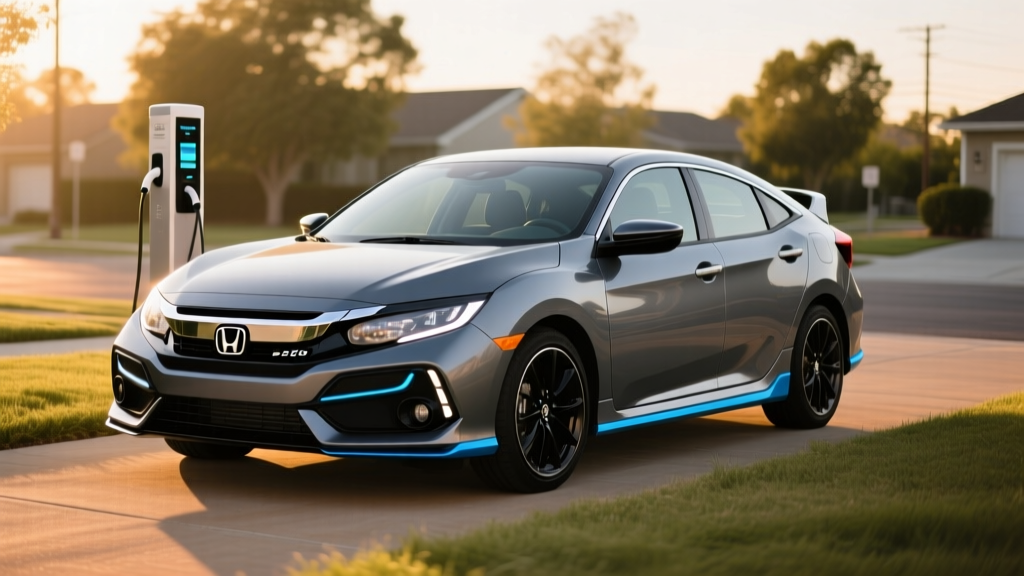
The compact hatchback segment rarely rewards enthusiasts who also prioritize fuel economy, but the Honda Civic Hybrid Hatchback threads that needle convincingly. With a combined 200 horsepower from its two-motor hybrid system and an EPA-estimated 50 MPG combined, it occupies a narrow lane: a practical, engaging-to-drive hatch that sips fuel without the compromises of a dedicated eco-box. For 2026, Honda continues to offer the hybrid powertrain exclusively in the Sport Touring trim for the hatchback body style, keeping the lineup simple but loaded.
This guide covers everything a prospective buyer needs — from exact EPA figures and real-world MPG expectations to battery longevity, warranty coverage, and whether any tax credits apply. We'll also clarify the HEV vs. PHEV distinction, since confusion between conventional hybrids and plug-in hybrids remains one of the most common mistakes shoppers make.
HEV vs. PHEV: What the Civic Hybrid Hatch Actually Is
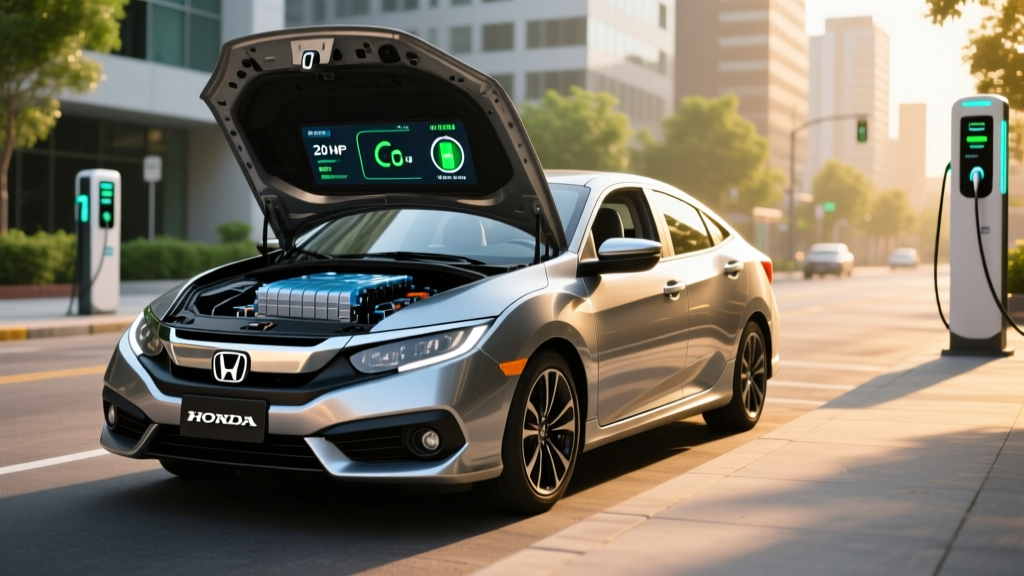
The Civic Hybrid Hatchback is a conventional hybrid electric vehicle (HEV). It does not have a plug, it does not offer electric-only driving for any meaningful distance, and it cannot be charged from a wall outlet. Instead, its 1.3-kWh lithium-ion battery pack charges exclusively through regenerative braking and the gasoline engine.
This is fundamentally different from a plug-in hybrid (PHEV) like the Toyota Prius Prime or Chrysler Pacifica Hybrid, which carries a larger battery (typically 12–20 kWh), offers 25–45 miles of electric-only range, and requires plugging in to realize its full efficiency benefit.
HEV vs. PHEV at a Glance
| Feature | Civic Hybrid Hatch (HEV) | Typical PHEV (e.g., Prius Prime) |
|---|---|---|
| Plug-in charging | No — never plugs in | Yes — Level 1/Level 2 |
| Electric-only range | ~1 mile at low speed | 25–45 miles |
| Battery size | 1.3 kWh | 13–19 kWh |
| Federal tax credit (§30D) | Not eligible | Up to $7,500 (if eligible) |
| Driving experience | Seamless gas/electric blend | EV-like until battery depletes |
The Civic Hybrid's advantage: zero behavior change. You fuel it like any gas car and the hybrid system handles the rest.
Fuel Economy: EPA Ratings and Real-World MPG
According to fueleconomy.gov, the 2026 Honda Civic Hybrid Hatchback (Sport Touring trim) carries the following EPA estimates:
| Cycle | EPA MPG |
|---|---|
| City | 53 MPG |
| Highway | 46 MPG |
| Combined | 50 MPG |
Real-World MPG: What to Actually Expect
Honda's two-motor hybrid system excels in stop-and-go city driving, where regenerative braking recovers energy and the electric motor handles low-speed propulsion. In real-world city commuting, owners consistently report meeting or slightly exceeding the 53 MPG city estimate — a rarity among vehicles of any powertrain type.
Highway driving tells a different story. At sustained 70–80 mph speeds, the gasoline engine does most of the work, and aerodynamic drag increases significantly. Expect 42–45 MPG on the highway in normal conditions. In cold weather (below 35°F), the engine runs more frequently to maintain cabin heat and operating temperature, which can drop combined economy to the mid-to-high 40s.
Powertrain and Performance Specs
The Civic Hybrid uses Honda's fourth-generation two-motor hybrid system, which pairs a 2.0-liter Atkinson-cycle four-cylinder engine with two electric motors — one for propulsion and one primarily functioning as a generator. There is no traditional geared transmission; instead, the system operates mostly in series-hybrid mode (engine generates electricity, motor drives wheels) with a direct-drive clutch that engages at higher highway speeds for efficiency.
| Specification | 2026 Civic Hybrid Hatch |
|---|---|
| Combined system output | 200 hp / 232 lb-ft torque |
| Gasoline engine | 2.0L Atkinson-cycle I4 (141 hp) |
| Propulsion motor | 181 hp / 232 lb-ft |
| Battery capacity | 1.3 kWh (lithium-ion) |
| 0–60 mph | ~7.5 seconds |
| Drivetrain | Front-wheel drive |
| Transmission | e-CVT (single-speed direct drive clutch) |
| Cargo volume (rear seats up) | 24.3 cu ft |
| Cargo volume (rear seats folded) | ~47 cu ft |
The 200 combined horsepower and instant electric torque (232 lb-ft available from near zero RPM) give the Civic Hybrid Hatch genuine punch off the line. It feels noticeably quicker than its EPA numbers suggest, particularly in the 0–40 mph range where the electric motor dominates. Honda's hybrid system is also remarkably smooth — the engine start/stop transitions are among the least intrusive in the segment.
Pricing and Tax Credit Eligibility
For 2026, the Civic Hybrid Hatchback is offered in a single, well-equipped trim:
| Trim | MSRP (incl. destination) |
|---|---|
| Sport Touring Hybrid | $32,350 |
That price includes Honda Sensing (adaptive cruise, lane-keeping, automatic emergency braking), a 9-inch touchscreen with wireless Apple CarPlay and Android Auto, a 12-speaker Bose audio system, wireless phone charging, heated front seats, a heated steering wheel, leather-trimmed seats, and a power moonroof. There are no additional packages — only color choices affect the final price.
Does the Civic Hybrid Hatch Qualify for a Federal Tax Credit?
No. The federal §30D Clean Vehicle Credit applies exclusively to plug-in electric vehicles — battery-electric vehicles (BEVs) and plug-in hybrids (PHEVs) with a minimum battery capacity of 7 kWh. The Civic Hybrid's 1.3 kWh battery and lack of a charge port disqualify it entirely from the federal credit.
A handful of states offer rebates or reduced registration fees for conventional hybrids, but these are uncommon and vary by jurisdiction. Check your state's energy office or department of environmental quality for current programs. The IRS maintains the definitive federal credit eligibility rules if you're considering a PHEV or BEV instead.
Battery Warranty, Reliability, and Replacement Costs
Hybrid battery longevity is consistently the top concern for first-time hybrid buyers. Here's what Honda covers:
Honda Hybrid Battery Warranty
- Hybrid battery: 8 years / 100,000 miles (10 years / 150,000 miles in CARB states including CA, NY, MA, CT, and others)
- Hybrid system components (inverter, motor, control unit): 8 years / 100,000 miles
- Powertrain warranty: 5 years / 60,000 miles
- Bumper-to-bumper: 3 years / 36,000 miles
How Long Will the Battery Actually Last?
Honda's hybrid batteries are designed to last the life of the vehicle. The 1.3 kWh pack is small and operates within a narrow state-of-charge window (roughly 40–80%), which dramatically reduces stress on the cells. Third-generation Civic Hybrids (2006–2015) and early Insight models have demonstrated 200,000+ mile lifespans with original batteries as the norm, not the exception.
If replacement is eventually needed out of warranty, a new OEM hybrid battery for the Civic Hybrid currently costs between $2,500 and $3,800 including labor. Refurbished/remanufactured units are available for $1,500–$2,200. Given the battery's track record, most owners will never face this expense.
Overall Reliability
Honda's hybrid system is one of the most proven in the industry, with over two decades of real-world deployment. The e-CVT design eliminates the traditional transmission — no gears, bands, or torque converter to fail. According to long-term reliability data from sources including Consumer Reports and J.D. Power, Honda's hybrid powertrains consistently rank among the most dependable. The Civic platform itself carries strong IIHS safety ratings, adding to the ownership confidence.
Who Should Buy the Civic Hybrid Hatch — and Who Shouldn't
Pros
- 50 MPG combined with no behavior change required
- 200 hp and instant electric torque feel genuinely quick
- Sport Touring trim is comprehensively equipped at $32,350
- 24.3 cu ft cargo space with hatchback practicality
- Proven hybrid system with excellent reliability record
- Strong resale value relative to segment
Cons
- Only one trim available — no base hybrid option
- No federal tax credit eligibility
- Highway MPG drops to low-to-mid 40s at sustained speed
- AWD not available on the hybrid hatchback
- 1.3 kWh battery means no meaningful electric-only mode
- Road noise on coarse pavement remains a Civic weakness
The Decision Framework
Choose the Civic Hybrid Hatch if:
- You want maximum MPG without ever plugging in
- Your commute is city-heavy or mixed (not 90%+ highway)
- You need hatchback cargo flexibility but don't want a crossover
- You value a responsive, engaging driving experience alongside efficiency
- You plan to own the car 8+ years and want proven reliability
Consider a PHEV instead if:
- You have home charging and a short commute (<30 miles) — a PHEV could eliminate most gas use
- You want federal tax credit eligibility to offset a higher purchase price
Consider a full EV (BEV) instead if:
- You have reliable home Level 2 charging
- Your daily driving is under 200 miles and you rarely take long road trips
- You want to eliminate gasoline costs and maintenance entirely
- You qualify for the full $7,500 federal credit on an eligible BEV
Stick with the gas Civic Hatch if:
- Your budget is strictly under $28,000 (the gas LX starts ~$26,000)
- You drive predominantly highway miles where the hybrid advantage narrows
Ownership Costs: 5-Year Fuel Savings
At 50 MPG combined and an average gas price of $3.40/gallon, the Civic Hybrid Hatch uses approximately $816 in fuel per year (assuming 12,000 miles/year). The non-hybrid Civic Hatchback (2.0L, ~33 MPG combined) costs roughly $1,236 per year in fuel. That's a savings of about $420 per year, or $2,100 over five years, which partially offsets the hybrid's higher MSRP.
Maintenance costs are comparable to the gas Civic — the hybrid system adds no additional scheduled maintenance items. There's no transmission fluid to change (the e-CVT is sealed), and regenerative braking extends brake pad life significantly, often to 80,000+ miles.
Frequently Asked Questions
How many MPG does the Civic Hybrid Hatch actually get?
The EPA rates it at 53 city / 46 highway / 50 combined. Real-world results vary: city-heavy drivers often see 50–54 MPG combined, while highway-dominant driving yields 43–47 MPG. Cold weather reduces efficiency by roughly 5–8%.
Does the Civic Hybrid Hatch need to be plugged in?
No. It is a conventional hybrid (HEV), not a plug-in hybrid (PHEV). The battery charges through regenerative braking and the gasoline engine. You simply fill it with gas like any other car.
How far can the Civic Hybrid drive on electric power alone?
Effectively zero miles in practical terms. The 1.3 kWh battery can propel the car at very low speeds (parking lots, creeping in traffic) for brief stretches, but the engine engages almost immediately under normal acceleration. If electric-only range is a priority, you need a PHEV.
Is the hybrid battery reliable, and what does replacement cost?
Honda's hybrid batteries have an excellent long-term reliability record, commonly lasting 200,000+ miles. The warranty covers 8 years/100,000 miles (10 years/150,000 miles in CARB states). Out-of-warranty replacement runs $2,500–$3,800 for a new OEM unit, or $1,500–$2,200 for a refurbished pack.
Does the Civic Hybrid Hatch qualify for any tax credit?
No federal tax credit applies — the §30D Clean Vehicle Credit requires a plug-in vehicle with at least 7 kWh of battery capacity. Some states may offer minor hybrid incentives, but these are uncommon. Check your state's energy office for details.
Is AWD available on the Civic Hybrid Hatchback?
No. The 2026 Civic Hybrid Hatchback is front-wheel drive only. If all-wheel drive is essential, the Toyota Prius (which offers AWD on hybrid trims) is the closest competitor, though it sacrifices some cargo versatility as a liftback rather than a true hatchback.
How does the Civic Hybrid Hatch compare to the Toyota Prius?
The Prius achieves slightly higher EPA numbers (up to 57 MPG combined on the LE trim) and offers AWD, but the Civic Hybrid delivers more horsepower (200 vs. 196 on AWD Prius), a more engaging driving experience, and superior cargo space (24.3 cu ft vs. 20.3 cu ft). The Prius is the efficiency pick; the Civic Hybrid is the driver's pick.