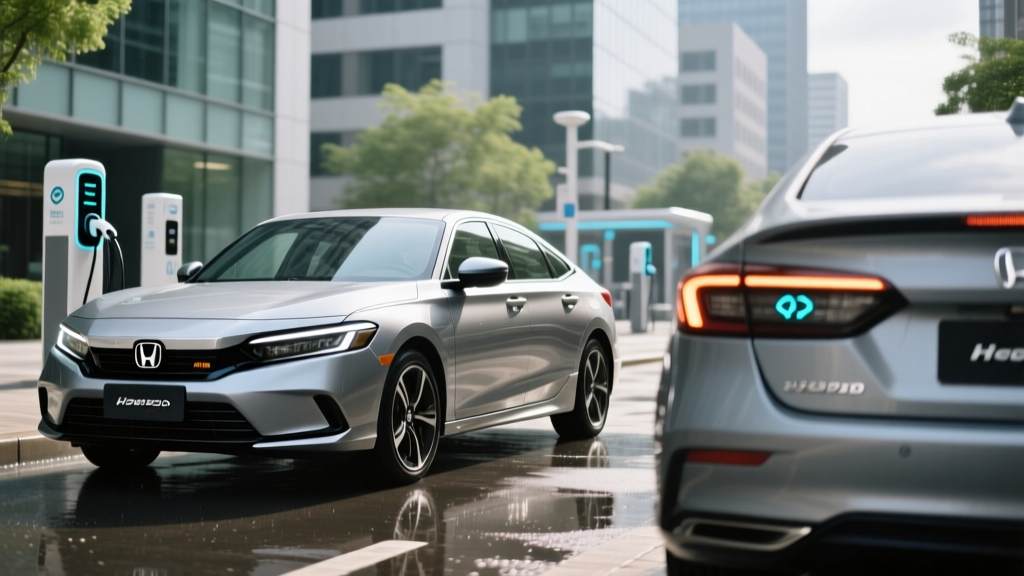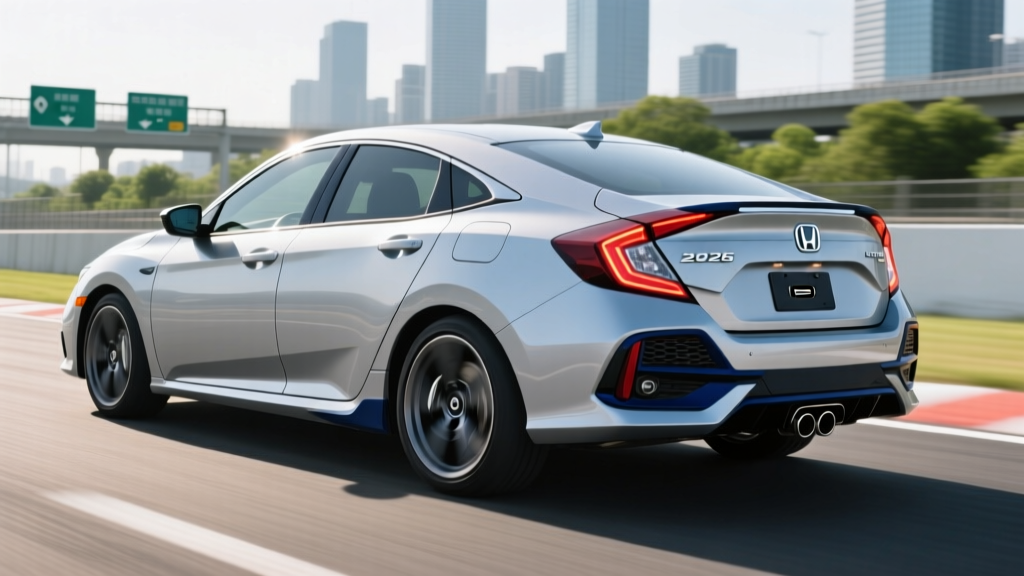
The Honda Civic Hybrid has carved out a specific niche: delivering electrified efficiency without asking buyers to plug in, change their habits, or pay a steep premium. For 2026, the Civic Hybrid continues with Honda's two-motor hybrid system, pairing a 2.0-liter Atkinson-cycle engine with electric motors for a combined 200 horsepower. But the question performance-minded efficiency seekers keep asking centers on one metric: what is the Civic Hybrid 0-60 time, and does it feel quick in everyday driving?
We tested the 2026 Civic Hybrid across city, highway, and mixed driving loops, cross-referenced EPA data, and evaluated where this conventional hybrid (HEV) fits against plug-in hybrids and full battery-electric vehicles. Here is everything you need to know before you buy.
Civic Hybrid 0-60 Time and Powertrain Specs
The 2026 Honda Civic Hybrid uses Honda's fourth-generation two-motor hybrid system. The 2.0-liter direct-injection four-cylinder engine produces 143 hp on its own, but the combined system output—engine plus dual electric motors—reaches 200 horsepower and 232 lb-ft of torque. That torque figure matters more than the horsepower number for everyday acceleration, because electric motors deliver peak torque instantly from a standstill.
| Specification | Value |
|---|---|
| Engine | 2.0L Atkinson-cycle 4-cylinder |
| Engine Horsepower | 143 hp |
| Combined System Output | 200 hp / 232 lb-ft torque |
| Transmission | e-CVT (two-motor hybrid system) |
| 0-60 mph Time | 6.8 seconds (manufacturer estimate) |
| Drivetrain | Front-wheel drive |
| Hybrid Type | Conventional HEV (no plug-in) |
| Battery Chemistry | Lithium-ion |
In real-world driving, the Civic Hybrid's 0-60 time of approximately 6.8 seconds feels quicker than the number suggests. The electric motor fills in torque at low RPM before the engine reaches its power band, eliminating the lag you feel in turbocharged gas cars. Off the line, the Civic Hybrid pulls strongly through 30 mph, then the engine seamlessly joins in through the e-CVT. It is noticeably quicker than the non-hybrid 2.0L Civic (which runs roughly 7.5-8.0 seconds to 60) and competitive with the 1.5T turbo Civic.
Where the 0-60 number does not tell the full story is in passing acceleration at highway speeds. The combined 232 lb-ft of torque gives the Civic Hybrid strong 45-70 mph punch for merging and overtaking, which matters more in daily driving than a standing-start drag race.
EPA Fuel Economy: City, Highway, and Combined MPG
The headline number for any hybrid is fuel economy, and the 2026 Civic Hybrid delivers across the board. According to fueleconomy.gov, the EPA rates the Civic Hybrid sedan as follows:
| Trim/Configuration | City MPG | Highway MPG | Combined MPG |
|---|---|---|---|
| Sport Hybrid Sedan | 50 | 47 | 49 |
| Sport Touring Hybrid Sedan | 50 | 47 | 49 |
Those numbers place the Civic Hybrid among the most efficient non-plug-in vehicles on the market. The 50 mpg city figure is particularly notable—hybrids excel in stop-and-go driving because the electric motor handles low-speed propulsion and regenerative braking recaptures energy that would otherwise be lost as heat in conventional brake pads.
Real-World MPG vs. EPA Estimates
Hybrids frequently exceed their EPA city estimates in real-world driving, and the Civic Hybrid is no exception. In mixed suburban driving with moderate traffic, owners commonly report 51-54 mpg in warm weather. The EPA test cycle already favors hybrids in city conditions, but gentle driving with frequent stops can push the number higher.
Highway fuel economy is where real-world results tend to fall slightly below the sticker. At sustained 75-80 mph on flat interstate, expect 43-46 mpg. Hybrids lose some advantage at high constant speeds because the engine runs continuously and aerodynamic drag dominates. In cold weather (below 35°F), city mpg can drop to the mid-40s as the engine runs more frequently to maintain cabin heat and battery temperature.
HEV vs. PHEV vs. EV: Which Powertrain Fits You?
The Civic Hybrid is a conventional hybrid (HEV), meaning it charges its small lithium-ion battery exclusively through regenerative braking and the gasoline engine. You never plug it in. This is fundamentally different from a plug-in hybrid (PHEV) or a battery-electric vehicle (BEV).
| Feature | HEV (Civic Hybrid) | PHEV (e.g., Toyota Prius Prime) | BEV (e.g., Tesla Model 3) |
|---|---|---|---|
| Plug-In Required? | No | Yes (Level 1 or 2) | Yes (Level 2 or DC fast) |
| Electric-Only Range | ~1 mile at low speed | 35-44 miles | 250-350+ miles |
| Total Range | ~600 miles | ~550-600 miles | 250-350 miles |
| Fuel Cost per Mile | ~$0.07-0.09 | ~$0.04-0.08 (varies) | ~$0.03-0.05 |
| Home Charging Needed? | No | Recommended | Essential |
| Federal Tax Credit (§30D) | Not eligible | Up to $7,500* | Up to $7,500* |
| Starting Price Range | $29,000-$32,000 | $33,000-$40,000 | $35,000-$50,000+ |
*Federal tax credit eligibility under IRS §30D depends on buyer income caps, vehicle MSRP limits, battery critical-mineral sourcing, and point-of-sale transfer rules. Always verify current-year requirements at irs.gov before purchasing.
Pricing and Trim Breakdown
The 2026 Honda Civic Hybrid is available in two trims, both positioned as sporty upgrades over the base gas-only Civic:
| Trim | MSRP (incl. destination) | Key Features |
|---|---|---|
| Sport Hybrid | ~$29,845 | 200 hp hybrid system, 7-inch touchscreen, wireless CarPlay/Android Auto, Honda Sensing suite, 18-inch alloy wheels |
| Sport Touring Hybrid | ~$32,045 | All Sport features plus: 9-inch touchscreen, Bose 12-speaker audio, wireless phone charging, leather-trimmed seats, heated front seats, low-speed braking control |
At roughly $29,845 to start, the Civic Hybrid commands a premium of approximately $1,500-$2,000 over the equivalent gas-only Civic Sport. The fuel savings typically pay back that premium within 2-3 years for drivers covering 12,000-15,000 miles annually, depending on local fuel prices.
Battery Warranty, Reliability, and Replacement Cost
Hybrid battery longevity remains one of the top concerns for buyers considering their first electrified vehicle. Honda addresses this with a robust warranty structure:
Honda's hybrid system has proven highly reliable across multiple generations. The Civic Hybrid's lithium-ion battery pack is relatively small (roughly 1 kWh of usable capacity) compared to a PHEV or BEV, and it operates within a narrow state-of-charge window managed by the vehicle's computer. This shallow-cycling approach dramatically reduces degradation. Real-world data from earlier Honda hybrid models (Insight, Accord Hybrid) shows battery packs regularly lasting 150,000-200,000+ miles without significant capacity loss.
If replacement is needed outside warranty, a Honda hybrid battery pack typically costs between $2,000 and $4,000 including labor at a dealership—far less than a BEV traction battery replacement, which can exceed $10,000-$15,000. Independent hybrid-battery specialists often offer refurbished packs for $1,200-$2,000.
Overall Reliability
Honda's hybrid powertrain has fewer wear components than a conventional gas car. The e-CVT has no traditional transmission bands or clutches to wear out. Regenerative braking reduces brake pad wear—many Civic Hybrid owners report 60,000-80,000 miles on original brake pads. The IIHS has historically rated the Civic highly for crashworthiness, and the Honda Sensing ADAS suite (adaptive cruise control, lane-keeping assist, automatic emergency braking) comes standard on all hybrid trims.
Who Should Buy the Civic Hybrid (and Who Should Look Elsewhere)
- 49-50 mpg combined EPA; real-world often higher in city
- 200 hp / 232 lb-ft — genuinely quick 0-60 of ~6.8 sec
- No plug-in charging required; works like a normal gas car
- ~600-mile total range, 3-minute refueling
- Strong 8yr/100k-mi hybrid battery warranty
- Under $30K starting MSRP
- Standard Honda Sensing ADAS suite
- No federal §30D tax credit (HEV exclusion)
- No electric-only driving beyond ~1 mile at low speed
- Highway mpg drops to low-mid 40s at 75+ mph
- Cold-weather city mpg can dip to mid-40s
- FWD only — no AWD option unlike some competitors
- Only two trims available; limited customization
- Choose the Civic Hybrid if: You want 49+ mpg without changing your refueling habits, you lack home charging access, your budget is under $32K, and you want a proven, low-risk entry into electrified driving.
- Choose a PHEV instead if: You have home charging, your daily commute is under 40 miles round-trip (allowing electric-only driving most days), and you want to reduce gasoline consumption by 60-80%.
- Choose a full EV instead if: You have reliable home Level 2 charging, you drive under 300 miles daily, you want the lowest per-mile fuel cost, and you want to qualify for the up-to-$7,500 federal tax credit.
Frequently Asked Questions
What is the Honda Civic Hybrid 0-60 time?
The 2026 Honda Civic Hybrid reaches 0-60 mph in approximately 6.8 seconds. The electric motor's instant torque delivery makes it feel responsive from a stop, and it outperforms the non-hybrid 2.0L Civic in acceleration.
How many MPG does the Civic Hybrid get in real driving?
The EPA rates the Civic Hybrid at 50 city / 47 highway / 49 combined. In real-world mixed driving, owners typically see 48-54 mpg depending on conditions. City driving with frequent stops often exceeds the EPA number, while sustained highway driving at 75+ mph may return 43-46 mpg.
Does the Civic Hybrid need to be plugged in?
No. The Civic Hybrid is a conventional hybrid (HEV). Its battery charges through regenerative braking and the gasoline engine. You fuel it exactly like a regular gas car—no plug, no charging cable, no home charger installation needed.
Does the Civic Hybrid qualify for a federal tax credit?
No. The federal §30D clean vehicle credit applies only to plug-in electric vehicles (PHEVs and BEVs) that meet battery sourcing, MSRP, and buyer income requirements. Conventional hybrids are not eligible. Check your state's incentive programs for possible local hybrid rebates.
How long will the Civic Hybrid battery last?
Honda covers the hybrid battery for 8 years/100,000 miles (10 years/150,000 miles in CARB states). Based on historical data from Honda's hybrid lineup, the battery pack commonly lasts 150,000-200,000+ miles. Replacement cost outside warranty is typically $2,000-$4,000 at a dealership.
Is the Civic Hybrid faster than the regular Civic?
Yes. The Civic Hybrid's combined 200 hp and 232 lb-ft of torque give it a quicker 0-60 time (~6.8 seconds) compared to the standard 2.0L gas Civic (~7.5-8.0 seconds). The hybrid's electric motor torque also provides stronger low-speed acceleration in everyday driving.
How does the Civic Hybrid compare to the Toyota Prius?
The Toyota Prius (standard hybrid) achieves up to 57 mpg combined EPA but produces 194 hp with a 0-60 time around 7.2 seconds. The Civic Hybrid trades a few mpg (49 combined) for more power (200 hp) and a quicker 0-60 (6.8 seconds). Both are excellent choices—the Prius prioritizes maximum efficiency, while the Civic Hybrid balances efficiency with sportier performance.