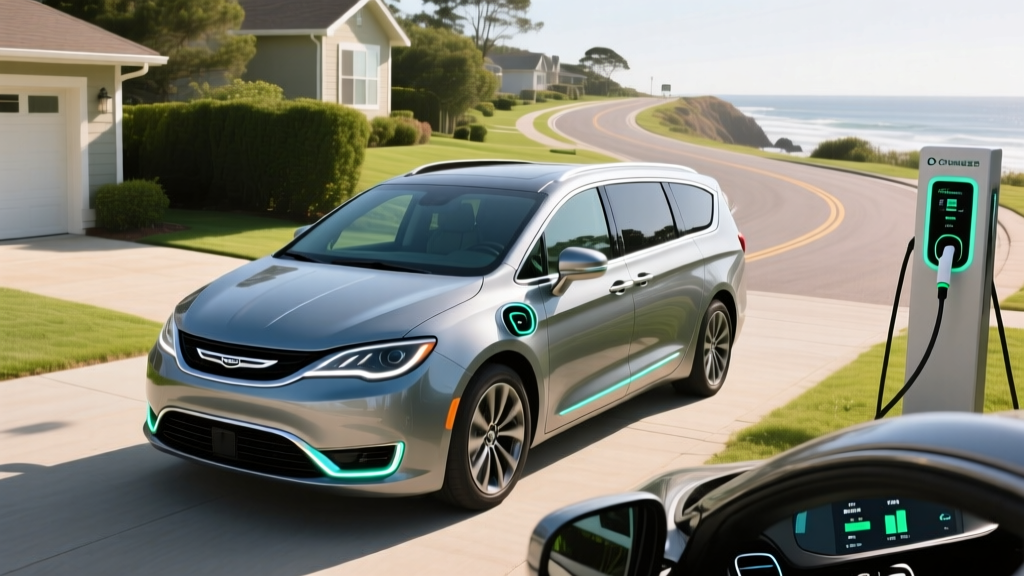
The Chrysler Pacifica Hybrid remains the only plug-in hybrid minivan on the US market, filling a niche no other automaker has touched. Families who want electric commuting during the week and gas-powered road-trip flexibility on weekends keep coming back to it. But the real question buyers ask us is straightforward: what kind of fuel economy does it actually deliver once you leave the dealership lot?
We've compiled the official EPA figures, real-world driving data, charging logistics, and total ownership costs for the current-generation Pacifica PHEV so you can decide whether it fits your household's driving pattern—or whether a conventional hybrid, full EV, or gas minivan makes more sense.
HEV vs PHEV: What the Pacifica Actually Is
Before getting into the numbers, it helps to clarify the Pacifica's powertrain identity. Chrysler sells the Pacifica exclusively as a plug-in hybrid electric vehicle (PHEV). There is no conventional hybrid (HEV) version of the current Pacifica, and Chrysler discontinued the gas-only Pacifica after the 2023 model year.
| Feature | Conventional Hybrid (HEV) | Plug-In Hybrid (PHEV) | Battery Electric (BEV) |
|---|---|---|---|
| Plug in to charge? | No — regenerative braking only | Yes — plug in for full EV range | Yes — only energy source |
| Electric-only driving | Very short, low-speed only | 32 miles (Pacifica) | 250–400+ miles typical |
| Gas engine | Yes — always available | Yes — kicks in after EV range | No |
| Battery size | 1–2 kWh | 16 kWh (Pacifica) | 60–100+ kWh |
| Federal tax credit | No | Varies by sourcing rules | Up to $7,500 if eligible |
The Pacifica PHEV pairs a 3.6-liter V6 engine with two electric motors and a 16 kWh lithium-ion battery pack. When the battery is charged, it operates as a pure electric vehicle for up to 32 miles. Once that electric range depletes, the gas engine engages and it functions like a conventional hybrid. You never have to plug it in to drive it—the gas engine and regenerative braking handle everything—but you lose the efficiency and cost advantage if you don't charge regularly.
Chrysler Pacifica Plug-In Hybrid MPG: The Full EPA Breakdown
| Mode | City | Highway | Combined |
|---|---|---|---|
| Electric (MPGe) | — | — | 82 MPGe |
| Gas-only hybrid (MPG) | 29 | 30 | 30 MPG |
The Pacifica PHEV's efficiency splits into two distinct figures depending on whether the battery has charge:
- 82 MPGe combined when operating in electric mode. MPGe (miles per gallon equivalent) converts electrical energy into a gasoline-equivalent figure for comparison. The Pacifica consumes roughly 41 kWh per 100 miles in EV mode.
- 30 MPG combined (29 city / 30 highway) once the battery is depleted and the V6 hybrid system takes over. This is the figure that matters on long road trips or if you never plug in.
In mixed suburban and city driving with regular charging, many Pacifica PHEV owners report exceeding the EPA city figure, seeing 33–36 MPG in gas-hybrid mode around town. That's because hybrid powertrains recapture more energy in stop-and-go traffic. On sustained highway trips at 75+ mph, expect the gas-only figure to drop to 26–28 MPG. Cold weather (below 30°F) reduces electric-only range by roughly 20–30%, bringing the EV range down to 22–26 miles before the gas engine fires up.
Electric-Only Range, Total Range, and Battery Specs
| Battery capacity | 16 kWh (lithium-ion, NMC chemistry) |
| Usable battery capacity | ~13 kWh (buffer protects longevity) |
| EPA electric-only range | 32 miles |
| Total combined range (EV + gas) | ~520 miles |
| Combined system horsepower | 260 hp |
| Engine | 3.6L V6 Atkinson-cycle + 2 electric motors |
| Transmission | SI-EVT (single-speed electrically variable) |
| 0–60 mph | ~7.1 seconds |
| Drivetrain | Front-wheel drive (no AWD option on PHEV) |
The 32-mile electric range is modest compared to rivals like the Toyota RAV4 Prime (42 miles) or the Hyundai Tucson PHEV (33 miles), but it covers the average American's daily round-trip commute. According to the EPA's fueleconomy.gov listing, the Pacifica PHEV achieves its 32-mile range at a consumption rate of 41 kWh/100mi.
For the school run, grocery trips, and local errands, most families can operate entirely on electricity if they charge nightly. The 16-gallon gas tank extends total range to over 520 miles, eliminating any range anxiety on longer trips.
Charging the Pacifica PHEV: Times, Levels, and Home Setup
One critical limitation: the Chrysler Pacifica PHEV cannot DC fast charge. It uses a J1772 connector for AC charging only. Here's what to expect:
| Charging Level | Power (kW) | 0–100% Time | Connector |
|---|---|---|---|
| Level 1 (120V household outlet) | ~1.4 kW | ~14 hours | J1772 (included cord) |
| Level 2 (240V home/public) | ~6.6 kW | ~2 hours | J1772 |
| DC Fast Charging | N/A — not supported | — | — |
A Level 2 home charger is practically essential for Pacifica PHEV ownership. The included Level 1 cord will technically recharge the battery overnight, but 14 hours is tight if you drive heavily during the day. A Level 2 wallbox at 6.6 kW refills the battery in about 2 hours—fast enough to top up during evening hours or even midday if you work from home.
Home Level 2 installation costs typically range from $500 to $1,500 depending on whether your electrical panel needs an upgrade. A dedicated 240V/40A circuit with a quality Level 2 charger (ChargePoint Home Flex, Emporia Vue, or Wallbox Pulsar Plus) runs $400–$700 for equipment plus $300–$800 for a licensed electrician's labor and permit. If your panel is already at capacity, a 200A service upgrade can add $1,500–$3,000.
2026 Pricing, Trims, and Federal Tax Credit Eligibility
For the 2026 model year, the Chrysler Pacifica PHEV is offered in two trims:
- Pacifica Hybrid Select — MSRP starting at approximately $51,095 (including destination)
- Pacifica Hybrid Pinnacle — MSRP starting at approximately $56,395 (including destination)
Both trims exceed the IRS §30D MSRP cap for vans/SUVs ($80,000), so price is not the disqualifier. However, federal tax credit eligibility for the Pacifica PHEV depends on battery component and critical mineral sourcing requirements that have tightened significantly under current IRS rules. As of early 2026, the Pacifica PHEV's credit eligibility is reduced or eliminated depending on the specific build's battery sourcing. Always verify current eligibility on the IRS clean vehicle credit page or through your dealer before purchase.
- Vehicle MSRP cap: $80,000 for vans/SUVs — Pacifica qualifies ✓
- Buyer income cap: $150,000 single / $300,000 joint MAGI
- Battery components must be manufactured/assembled in North America (phased % thresholds)
- Critical minerals must be US-sourced or from FTA partner countries
- Point-of-sale transfer available at participating dealers
- Verify VIN eligibility at fueleconomy.gov before purchasing
Some states offer additional PHEV rebates (California's CVRP, Colorado's state credit, New York's Drive Clean rebate), but amounts and eligibility vary by jurisdiction. Check your state energy office or DMV for current programs.
Battery Longevity, Warranty, and Replacement Cost
- High-voltage battery: 10 years / 100,000 miles (whichever comes first)
- Hybrid system components: 8 years / 80,000 miles
- Bumper-to-bumper: 3 years / 36,000 miles
- Powertrain (engine/transmission): 5 years / 60,000 miles
Warranty covers battery capacity dropping below approximately 70% of original capacity. Chrysler will repair or replace defective battery modules under warranty.
The Pacifica's 16 kWh battery is smaller and less stressed than a full EV pack, which generally translates to slower degradation. Most PHEV batteries retain 85–90% of original capacity after 8–10 years of normal use. Out-of-warranty battery replacement for the Pacifica PHEV currently runs $4,500–$7,000 including parts and labor, depending on dealership pricing and whether individual modules can be replaced versus the full pack.
In terms of overall reliability, the Pacifica PHEV has had a mixed track record. Early model years (2017–2019) saw some battery recall issues and electrical gremlins. Later years improved, though the minivan's complex powertrain—combining a V6, two electric motors, and an SI-EVT transmission—has more potential failure points than a simpler full EV or conventional hybrid. NHTSA and owner forums are worth monitoring for the latest service bulletins.
Who Should Choose the Pacifica PHEV vs. a Full EV or Gas Minivan?
- You need a 7-passenger minivan with Stow 'n Go seating flexibility
- Your daily driving is under 30 miles and you can charge at home
- You take regular road trips where EV charging infrastructure is sparse
- You want to reduce fuel costs without committing to a full EV
- You want zero tailpipe emissions and minimal maintenance
- You have reliable home charging and access to DC fast chargers for trips
- You want 250+ miles of range and the lowest per-mile fuel cost
- You cannot install a Level 2 charger at home
- You need AWD (not available on the Pacifica PHEV)
- Upfront cost is a primary concern (gas minivans start $10K–$15K lower)
The Pacifica PHEV occupies a very specific lane. It's the only plug-in hybrid minivan available, and its combination of 32 miles of electric range plus unlimited gas range makes it practical for families in transition—those who want to electrify daily driving but aren't ready to plan road trips around charging stops.
One important trade-off: the Pacifica PHEV's battery pack sits under the second-row floor, which means it loses Stow 'n Go seating for the second row. The second-row seats are removable but do not fold into the floor like the gas Pacifica or the third row. For families who regularly reconfigure cargo space, this is a meaningful compromise.
Pros and Cons at a Glance
- Only PHEV minivan on the market — no direct competition
- 32-mile EV range covers most daily family driving
- 30 MPG gas hybrid mode is efficient for a 5,000-lb minivan
- 260 hp combined provides confident highway merging
- 10-year/100,000-mile battery warranty
- Third-row Stow 'n Go still works
- No DC fast charging — Level 2 only
- Second-row seats don't fold into the floor (removed only)
- No AWD option on the PHEV variant
- MSRP starts above $51K — premium over gas minivans
- Federal tax credit eligibility uncertain under current sourcing rules
- Reliability track record is average, not class-leading
Frequently Asked Questions
How many MPG does the Chrysler Pacifica Plug-In Hybrid get?
The Pacifica PHEV achieves 82 MPGe combined in electric mode and 30 MPG combined (29 city / 30 highway) in gas-hybrid mode after the battery is depleted. In real-world city driving with regenerative braking, owners often see 33–36 MPG in gas mode. Highway driving at sustained speeds typically yields 26–28 MPG.
How far can the Pacifica PHEV go on electric only?
The EPA rates the Pacifica PHEV at 32 miles of electric-only range. In warm weather with gentle driving, you may see 34–36 miles. In cold weather (below 30°F) or with aggressive acceleration and climate control running, expect 22–26 miles before the gas engine engages.
Does the Chrysler Pacifica PHEV qualify for the $7,500 federal tax credit?
Eligibility depends on current IRS §30D battery sourcing and critical mineral rules, which have tightened significantly. The Pacifica's MSRP falls under the $80,000 van cap, but battery component sourcing may reduce or eliminate the credit. Verify your specific vehicle's VIN at fueleconomy.gov and consult a tax professional before relying on the credit.
How long does the Pacifica PHEV battery last and what does replacement cost?
Chrysler warranties the high-voltage battery for 10 years or 100,000 miles against capacity loss below ~70%. Real-world data suggests most PHEV batteries retain 85–90% capacity after a decade. Out-of-warranty replacement costs approximately $4,500–$7,000 including labor.
Can the Pacifica PHEV use DC fast chargers?
No. The Pacifica PHEV only supports AC charging via a J1772 connector. Level 1 (120V) takes about 14 hours for a full charge; Level 2 (240V at 6.6 kW) takes approximately 2 hours. DC fast charging is not available on this vehicle.
Is the Pacifica Hybrid the same as the Pacifica Plug-In Hybrid?
Yes. Chrysler markets the Pacifica PHEV under the "Pacifica Hybrid" name, but it is a plug-in hybrid that must be charged via a cable to access its full 32-mile electric range. There is no conventional (non-plug-in) hybrid Pacifica in the current lineup.
Sources: EPA fueleconomy.gov, IRS §30D Clean Vehicle Credit, NHTSA, Chrysler/Stellantis official specifications. Pricing and tax credit rules reflect 2026 model year data and are subject to change. Consult a tax professional for credit eligibility.