The Short Answer: Pacifica PHEV Towing Capacity Is Zero
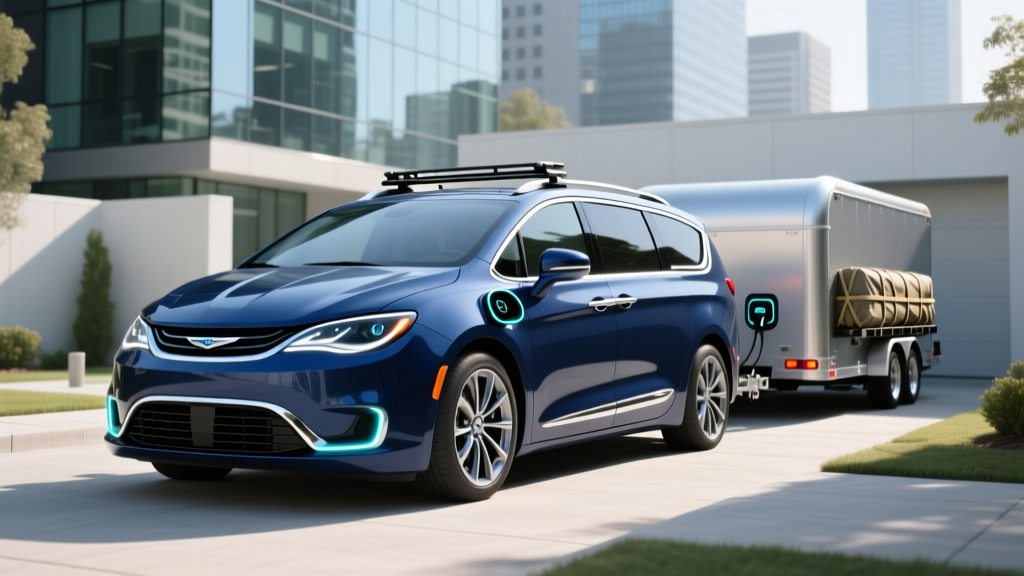
If you're researching the Chrysler Pacifica Plug-In Hybrid towing capacity, here's the critical fact upfront: Stellantis rates the Pacifica Hybrid at 0 pounds for towing. The plug-in hybrid variant is not approved for any trailer load — not even a lightweight bike rack or cargo tray attached to a hitch receiver. This is a hard manufacturer limitation, not a suggestion.
The gas-only Chrysler Pacifica, by contrast, is rated for up to 3,600 pounds when properly equipped with the factory towing package. That's a massive gap, and it stems from fundamental powertrain and thermal design differences between the two versions. Let's break down exactly why the PHEV can't tow, what the Pacifica Hybrid can do exceptionally well, and which alternatives make sense if you need both electrified efficiency and towing capability.
Why the Pacifica Hybrid Can't Tow: Engineering Explained
The Pacifica Plug-In Hybrid uses a 3.6-liter Pentastar V6 operating on the Atkinson cycle paired with a dual-motor eFlite electrically variable transmission (EVT). Combined system output is 260 horsepower. This is a sophisticated, efficiency-optimized powertrain — but it was engineered for a specific mission: moving people and cargo with minimal fuel consumption, not pulling dead weight uphill.
Three engineering constraints drive the zero-towing rating:
- Thermal management: Towing places sustained high-load demand on the engine, electric motors, and the 16 kWh lithium-ion battery pack. The Pacifica PHEV's cooling system is calibrated for passenger duty cycles, not the continuous heat generation that trailer loads produce.
- Transmission stress: The eFlite EVT uses two electric motors integrated into the transaxle to manage power blending. Adding 2,000+ pounds of trailer weight would push motor and gear temperatures beyond validated limits, risking premature degradation of both the electric drive components and the battery.
- Brake and suspension calibration: The Hybrid variant carries additional weight from the battery pack (roughly 400 lbs more than the gas model). Chrysler tuned the braking system and suspension for this specific curb weight. Adding tongue weight and trailer inertia would exceed the validated stopping capacity.
This isn't unique to Chrysler. The Toyota RAV4 Prime PHEV, for instance, is rated for only 1,750 pounds versus the gas RAV4's 3,500-pound rating. Electrified powertrains often sacrifice tow ratings because battery mass and thermal envelopes leave less margin for trailer loads.
Pacifica Hybrid Powertrain and Efficiency Specs
What the Pacifica Hybrid loses in towing, it makes up for in efficiency — especially if your daily routine involves short trips with home charging. Here are the full 2026-model-year specifications:
| Specification | Value |
|---|---|
| Powertrain | 3.6L V6 Atkinson-cycle + dual-motor EVT |
| Combined Horsepower | 260 hp |
| Battery (usable) | 16 kWh lithium-ion (NMC chemistry) |
| EPA Electric-Only Range | 32 miles |
| Total Combined Range | 430 miles |
| EPA MPGe (electric + gas) | 82 MPGe |
| EPA MPG (gas-only, combined) | 30 MPG combined |
| EPA MPG City / Highway | 29 city / 30 highway (gas mode) |
| Level 1 Charging (120V) | ~14 hours (0–100%) |
| Level 2 Charging (240V, 32A) | ~2 hours (0–100%) |
| DC Fast Charging | Not supported |
| Towing Capacity | 0 lbs (not rated for towing) |
| Cargo Volume (behind 3rd row) | 32.3 cu ft |
| Base MSRP (Limited trim) | $51,095 |
A few notes on interpreting these numbers. The 82 MPGe figure applies when you're driving on a mix of battery charge and gasoline — it's the EPA's way of equating electrical energy to gasoline energy. Once the battery is depleted, the minivan operates as a conventional hybrid and returns the 30 MPG combined figure. In real-world suburban driving with regular home charging, many owners report using gasoline only a few times per month.
Electric-Only Range: Is 32 Miles Enough?
The EPA rates the Pacifica Hybrid at 32 miles of pure electric driving on a full charge. According to fueleconomy.gov, that's sufficient to cover the average American's one-way commute with margin to spare — the U.S. Census Bureau pegs the mean commute at roughly 26 miles.
In practice, expect 26–30 miles of real-world electric range in moderate temperatures (50–80°F) with mixed city/highway driving. In cold weather (below 30°F), cabin heating and battery thermal management draw energy from the pack, reducing electric-only range to roughly 20–24 miles. Running the climate control on high, carrying a full load of passengers, or driving at sustained highway speeds will all compress the EV range further.
The Pacifica Hybrid does not support DC fast charging. This is standard for PHEVs — the 16 kWh battery is small enough that Level 2 charging at 7.2 kW refills it in about two hours, which is practical for overnight or workplace top-ups. If you need fast-charge capability for road trips, that's a feature found on battery-electric vehicles (BEVs) with much larger packs, not on plug-in hybrids.
HEV vs. PHEV vs. BEV: Which Minivan Fits Your Family?
The Chrysler Pacifica lineup actually gives buyers three distinct powertrain choices, and understanding the differences is essential before spending $50,000+:
| Factor | Pacifica Hybrid (PHEV) | Pacifica Gas (AWD/FWD) | Full-EV Minivan (e.g., Kia EV9 3-Row) |
|---|---|---|---|
| Plug-in Required? | Yes (for EV range benefit) | No | Yes (mandatory) |
| Electric-Only Range | 32 miles | 0 miles | 270–300+ miles |
| Towing Capacity | 0 lbs | Up to 3,600 lbs | Up to 5,000 lbs (EV9 AWD) |
| Combined Fuel Economy | 82 MPGe / 30 MPG gas | 22 MPG combined (FWD) | N/A — electricity only |
| Home Charging Needed? | Strongly recommended | No | Essential |
| Base MSRP (2026) | ~$51,095 | ~$39,645 | ~$54,900 (Kia EV9) |
| Federal Tax Credit | Not eligible (§30D) | Not eligible | Varies by sourcing |
Choose the Pacifica PHEV if: You have home Level 2 charging, your daily driving is under 35 miles, you want to minimize gasoline use without range anxiety on road trips, and you don't need to tow anything.
Choose the gas Pacifica if: You need towing capability (small boat, utility trailer, camper under 3,600 lbs), you lack reliable home charging access, or you want a lower purchase price and simpler maintenance profile.
Choose a full-electric 3-row SUV/minivan if: You want maximum towing with an electrified powertrain, you have robust home charging, your road trips can accommodate DC fast-charge stops, and you want the lowest per-mile fuel cost.
Tax Credit Eligibility: The Pacifica Hybrid Doesn't Qualify
Under current IRS §30D rules, the Chrysler Pacifica Plug-In Hybrid does not qualify for the federal clean vehicle tax credit. There are two reasons:
- Battery sourcing requirements: The §30D credit mandates that a specified percentage of critical minerals and battery components be sourced from the U.S. or free-trade-agreement partners. The Pacifica Hybrid's battery supply chain does not meet these thresholds for the 2026 tax year.
- Credit phase-out and MSRP caps: Even if sourcing were compliant, the Pacifica Hybrid must also meet buyer income caps ($150,000 single / $300,000 joint) and the van MSRP cap of $80,000. While the Pacifica Hybrid clears the MSRP cap, the sourcing disqualification is the binding constraint.
For the latest rules, always verify against the IRS clean vehicle credit page or consult a tax professional. Some states offer separate rebates for PHEVs — check your state energy office or AFDC's state incentive database for local programs.
Battery Replacement Cost and Long-Term Reliability
If the battery degrades beyond the warranty threshold or fails after coverage expires, out-of-pocket replacement costs for the Pacifica Hybrid's 16 kWh pack typically range from $6,500 to $9,000 including parts and labor at a dealership. Independent hybrid specialists may offer refurbished packs for $4,500–$6,000.
For context, PHEV battery degradation is generally modest because the system never fully depletes or fully charges the pack — the battery management system maintains a buffer at both ends. Most Pacifica Hybrid owners report losing 1–3 miles of electric range over the first 100,000 miles. This is a smaller pack experiencing shallower cycles than a full BEV, which helps longevity.
The Pacifica Hybrid's reliability record has been mixed across model years. Early 2017–2019 models experienced some electrical gremlins and a recall related to 12-volt battery issues. The 2021 refresh improved the infotainment system and addressed several build-quality concerns. As with any first-generation electrified powertrain in a segment, buying a certified pre-owned example with remaining powertrain warranty is the lower-risk path.
Alternatives If You Need Towing and Electrification
If the Chrysler Pacifica Plug-In Hybrid's zero-pound towing capacity is a dealbreaker, here are electrified family vehicles that can pull a trailer:
- Gas Pacifica with Tow Package (3,600 lbs): The simplest solution. You lose the electric-only commuting but gain legitimate light-trailer capability. AWD is available.
- Toyota Grand Highlander Hybrid (5,000 lbs): A conventional hybrid (no plug needed) with 362 hp, 35 MPG combined, and genuine towing chops. No electric-only range, but exceptional fuel economy for a three-row hauler.
- Ford F-150 PowerBoost Hybrid (12,700 lbs): If you need serious towing and want hybrid efficiency, the F-150 hybrid delivers 430 hp, 7,000-watt onboard power, and up to 25 MPG. Not a minivan, but solves both problems.
- Kia EV9 (up to 5,000 lbs with AWD): A fully electric three-row SUV with DC fast charging (up to 210 kW), 270+ miles of range, and legitimate towing. Higher purchase price, but lower operating costs.
Frequently Asked Questions
Can I install an aftermarket hitch on the Pacifica Hybrid for a bike rack?
Stellantis explicitly states the Pacifica Hybrid is not rated for towing or hitch-mounted accessories. Installing an aftermarket hitch and loading it may void portions of your powertrain warranty and could affect insurance coverage in the event of an incident. Light hitch-mounted cargo carriers (under 150 lbs loaded) are sometimes used by owners at their own risk, but this is not manufacturer-approved.
Does the Pacifica Hybrid tow less because of the battery weight?
Partially. The 16 kWh battery pack adds roughly 400 lbs to the vehicle's curb weight compared to the gas Pacifica. That additional mass reduces the payload and tongue-weight margins available for towing. Combined with the thermal limits of the electric motors and the EVT transmission, Chrysler chose to rate the PHEV at zero rather than certify a reduced tow figure.
How much does it cost to charge the Pacifica Hybrid at home?
At the U.S. average residential electricity rate of roughly $0.16/kWh, fully recharging the 16 kWh battery costs about $2.56. That buys you approximately 32 miles of electric driving — equivalent to about $0.08 per mile. Compare that to gasoline at $3.50/gallon and 30 MPG, which costs about $0.12 per mile. Daily electric commuting in the Pacifica Hybrid saves roughly $4–$5 per day versus gas-only driving.
Is the Pacifica Hybrid a good choice for a family that doesn't tow?
Absolutely — it's arguably the best plug-in hybrid minivan on the market, largely because it's the only plug-in hybrid minivan on the market. If you can charge at home, your daily school runs, grocery trips, and commutes will run almost entirely on electricity. The 430-mile total range eliminates road-trip anxiety, and the Stow 'n Go seating (though slightly compromised by the battery placement under the second row) still offers strong cargo flexibility.
Will future Pacifica Hybrid models gain towing capability?
Chrysler has not announced any plans to certify the Pacifica PHEV for towing. A next-generation platform with more advanced thermal management could theoretically support a limited tow rating, but nothing has been confirmed. If towing is a near-term need, plan around current specifications rather than speculation.