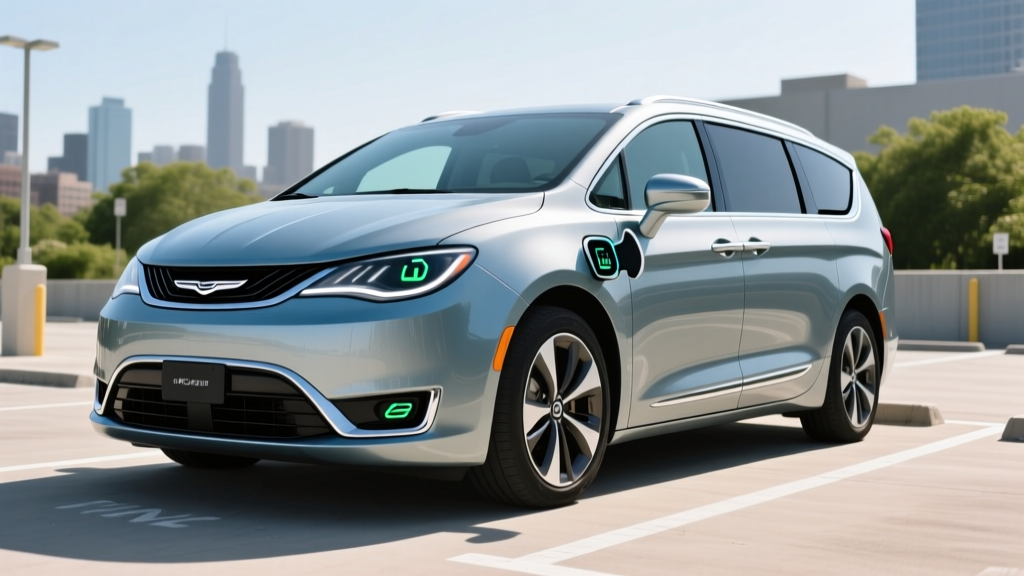
If you are searching for a hybrid van in the US market, the search begins and ends with a single vehicle: the Chrysler Pacifica Plug-In Hybrid. It remains the only electrified minivan available in North America for the 2026 model year, a status it has held since its introduction. For families needing three rows of seating, serious cargo space, and lower running costs than a full-size SUV, the Pacifica PHEV occupies a unique niche.
But being the only hybrid van on the lot doesn't automatically make it the right purchase. Below, we break down the exact EPA figures, real-world MPG observations, powertrain specifications, battery longevity data, and federal tax credit eligibility you need to make a sound decision.
HEV vs PHEV: Understanding What the Pacifica Actually Is
Conventional Hybrid (HEV): A small battery (typically 1–2 kWh) recharges through regenerative braking and the engine. You never plug it in. The electric motor assists the gas engine to improve MPG, but the vehicle cannot drive on electricity alone for meaningful distances. Think Toyota Sienna Hybrid.
Plug-In Hybrid (PHEV): A larger battery (16 kWh in the Pacifica) can be charged from a wall outlet or charger. It provides a meaningful electric-only range (32 miles EPA) before the gas engine starts. Once the battery is depleted, it operates as a conventional hybrid. You get EV-like commuting with gas-engine road-trip range.
The Chrysler Pacifica Hybrid is a PHEV. It pairs a 3.6-liter V6 engine with two electric motors and a 16 kWh lithium-ion battery pack. This matters because it means you can plug it in to unlock its efficiency potential — but you don't have to. Drive it without ever charging, and it still functions as a hybrid, though with lower MPG than its rated combined figure.
An important comparison point: the Toyota Sienna is a conventional HEV (not a PHEV). It gets excellent MPG without plugging in, but offers zero electric-only range. The Pacifica PHEV gives you both modes of operation.
2026 Chrysler Pacifica Hybrid: Complete Specification Table
| Specification | Detail |
|---|---|
| Powertrain | 3.6L V6 Atkinson-cycle + 2 electric motors, eCVT |
| Combined Horsepower | 260 hp |
| Battery Capacity | 16 kWh lithium-ion (usable) |
| EPA Electric-Only Range | 32 miles |
| Total Combined Range | 430 miles (EV + gas) |
| EPA MPG (gas-only after depletion) | 30 city / 30 highway / 30 combined |
| MPGe (combined, with charge) | 82 MPGe |
| Level 2 Charge Time (240V, 32A) | ~2 hours (0–100%) |
| Level 1 Charge Time (120V, 12A) | ~14 hours (0–100%) |
| DC Fast Charging | Not available |
| Charge Port | J1772 (Level 1 and Level 2 only) |
| 0–60 mph | ~7.1 seconds |
| Cargo Volume (behind 3rd row) | 32.3 cu ft |
| Seating Capacity | 7 passengers |
| Base MSRP (2026) | ~$51,095 (Select trim) |
| Battery Warranty | 10 years / 100,000 miles |
| Powertrain Warranty | 5 years / 60,000 miles |
Fuel Economy: EPA Numbers and Real-World MPG
| Driving Mode | City | Highway | Combined |
|---|---|---|---|
| Electric + Gas (charged daily) | 82 MPGe combined | ||
| Gas Only (battery depleted) | 30 MPG | 30 MPG | 30 MPG |
| Toyota Sienna Hybrid (HEV baseline) | 36 MPG | 36 MPG | 36 MPG |
| Honda Odyssey (gas-only baseline) | 19 MPG | 28 MPG | 22 MPG |
Real-world observations: The Pacifica Hybrid's 30 MPG combined rating in gas-only mode is conservative in city driving, where the hybrid system recaptures energy through regenerative braking. Owners who drive primarily in stop-and-go urban conditions frequently report 31–33 MPG on gas alone. Highway driving at sustained 70–75 mph speeds yields closer to 28–29 MPG, as the heavier PHEV battery adds weight the engine must carry.
If you charge nightly and your daily commute is under 32 miles round-trip, you may use almost no gasoline during the work week. On a 15-mile round-trip commute with daily Level 2 charging, many owners report using the gas engine only on weekend road trips — effectively operating as an EV for weekday driving.
The critical caveat: if you never plug the Pacifica in, you are carrying 16 kWh of battery weight for no electric benefit, and your MPG drops below the Toyota Sienna Hybrid's 36 MPG combined. The PHEV premium only pays off if you charge regularly.
Electric-Only Range, Real-World: The EPA rates the Pacifica Hybrid at 32 miles on electricity alone. In warm weather (65–80°F) at moderate speeds, expect 30–34 miles. In cold weather (below freezing), expect 22–26 miles due to battery chemistry limitations and cabin heating demand. Highway-speed electric driving (70+ mph) reduces range to approximately 24–27 miles.
Charging the Pacifica PHEV: What You Need to Know
The Pacifica Hybrid uses a J1772 connector for Level 1 (120V household outlet) and Level 2 (240V) charging. It does not support DC fast charging — a limitation shared with most PHEVs, whose smaller batteries don't justify the cost and weight of DC hardware.
Level 1 (120V, 12A standard outlet): Adds roughly 5–6 miles of electric range per hour of charging. A full 0–100% charge takes approximately 14 hours. This works if you park for extended periods (overnight at home, all day at work) and drive fewer than 30 miles daily.
Level 2 (240V, 32A): A full 0–100% charge takes approximately 2 hours. This is the recommended setup for daily home charging. Installation of a Level 2 home charger typically costs $500–$1,500 for the equipment and electrician labor, depending on your panel capacity and wiring run. A licensed electrician should evaluate whether your electrical panel has sufficient capacity (a 40A circuit is recommended for continuous 32A charging).
The onboard charger is rated at approximately 7.2 kW, which is the limiting factor on Level 2. Even if you plug into a 48A or 64A Level 2 station, the Pacifica will draw only what its onboard charger can accept.
Battery Longevity, Warranty, and Replacement Cost
Hybrid and PHEV battery longevity is consistently the top concern for buyers. Here is what the data shows for the Pacifica Hybrid's 16 kWh pack:
Warranty: Stellantis covers the high-voltage battery for 10 years or 100,000 miles (whichever comes first) in all 50 states. In CARB states (California, New York, Massachusetts, and others that follow California emissions rules), the warranty extends to 10 years / 150,000 miles. The warranty guarantees the battery will retain at least 70% of its original capacity. If degradation drops below this threshold within the warranty period, Stellantis will repair or replace the pack.
Real-world degradation: PHEV batteries tend to degrade more slowly than full EV batteries because they operate in a narrower state-of-charge window (the system never fully depletes or fully charges the pack to protect longevity). Pacifica Hybrid owners with 80,000+ miles commonly report 5–10% capacity loss, meaning electric range drops from 32 miles to approximately 28–30 miles. This is within normal expectations.
Replacement cost: Out-of-warranty replacement of the Pacifica Hybrid battery pack currently ranges from $5,500 to $8,000 including parts and labor, based on dealer quotes and aftermarket options. This is a significant expense, but the 10-year/100,000-mile warranty covers most owners through the vehicle's primary ownership period. Third-party hybrid battery repair shops are increasingly offering cell-level repairs for $2,000–$4,000 as these vehicles age.
Federal Tax Credit and Pricing for 2026
The 2026 Chrysler Pacifica Hybrid carries a starting MSRP of approximately $51,095 for the Select trim, rising to $55,000+ for the Limited and Pinnacle trims with options.
Federal §30D Tax Credit: Under current IRS rules, the Pacifica Hybrid qualifies for a partial federal tax credit — typically $3,750 — based on its battery capacity (16 kWh meets the minimum threshold) and critical mineral/battery component sourcing requirements. However, eligibility depends on several buyer-specific factors:
- MSRP cap: Vans/minivans must have an MSRP at or below $80,000. All Pacifica Hybrid trims qualify.
- Income cap: Modified adjusted gross income must not exceed $300,000 (married filing jointly), $225,000 (head of household), or $150,000 (single).
- Battery sourcing: A percentage of critical minerals and battery components must be sourced from the US or free-trade-agreement countries. This requirement tightens annually; verify current-year compliance on the IRS qualified vehicle list.
- Point-of-sale transfer: As of 2024, eligible buyers can transfer the credit to the dealer at purchase, reducing the out-of-pocket price directly rather than waiting for a tax refund.
Always verify eligibility against the current IRS qualified vehicle list before purchasing, as sourcing compliance can change mid-year. Consult a tax professional for your specific situation.
State incentives: Several states offer additional rebates for PHEVs. California's CVRP, for example, has offered rebates for PHEV purchases, though funding availability varies. Check your state energy office or fueleconomy.gov for current state-level programs.
Who Should Choose the Pacifica Hybrid vs a Full EV or Gas Van?
Choose the Chrysler Pacifica Hybrid if:
- You need three-row seating and minivan cargo space but want lower fuel costs
- You can charge at home (Level 1 or Level 2) and have a daily commute under 32 miles
- You take regular road trips where EV charging infrastructure is sparse or unreliable
- You want EV-like weekday commuting without range anxiety on weekends
- You are not ready to commit to a full EV but want to reduce gasoline consumption
Choose the Toyota Sienna Hybrid (HEV) instead if:
- You cannot charge at home or at work (no garage, no outlet access)
- You want higher gas-only MPG (36 combined vs 30) without the plug-in discipline
- You want a lower starting price (Sienna Hybrid starts around $38,000)
- You prefer Toyota's long-standing hybrid reliability track record
Choose a full EV (like the Kia EV9 or upcoming electric minivans) if:
- You want zero tailpipe emissions and the lowest per-mile fuel cost
- You have reliable home Level 2 charging and access to DC fast chargers for road trips
- You qualify for the full $7,500 federal EV tax credit
- You want minimal maintenance (no oil changes, no engine)
Pros and Cons at a Glance
Pros
- Only plug-in hybrid minivan on the US market
- 32 miles electric-only covers most daily commutes
- 430-mile total range eliminates road-trip charging worries
- Stow 'n Go second- and third-row seating (unique to Pacifica)
- 10-year / 100,000-mile battery warranty
- Qualifies for partial federal tax credit (~$3,750)
- Level 2 charges fully in ~2 hours
Cons
- No DC fast charging capability
- Starting MSRP above $51,000 — significant premium over Sienna Hybrid
- 30 MPG gas-only is lower than Sienna Hybrid's 36 MPG
- Electric range drops to ~22–26 miles in freezing temperatures
- Heavier than gas-only Pacifica, affecting tire wear and braking
- Stellantis reliability ratings trail Toyota and Honda historically
- No AWD option on the PHEV variant (AWD is gas-only)
Frequently Asked Questions
How many MPG does the Chrysler Pacifica Hybrid get?
The EPA rates the Pacifica Hybrid at 30 MPG combined (30 city / 30 highway) when operating on gasoline after the battery is depleted. When charged regularly and operating in blended electric-gas mode, it achieves 82 MPGe combined. Real-world city driving often yields 31–33 MPG on gas alone due to regenerative braking, while sustained highway driving may drop to 28–29 MPG.
How far can the Pacifica Hybrid go on electric only?
The EPA rates the Pacifica Hybrid at 32 miles of electric-only range. In warm weather at moderate speeds, expect 30–34 miles. In freezing temperatures or at sustained highway speeds, expect 22–27 miles. Once the battery depletes, the gas engine starts seamlessly and the vehicle operates as a conventional hybrid.
Hybrid vs PHEV vs EV — which minivan fits me?
If you can charge at home and commute under 32 miles daily, the Pacifica PHEV gives you the best of both worlds: electric weekday driving with gas-engine road-trip flexibility. If you cannot charge at home, the Toyota Sienna HEV (36 MPG, no plug needed) is more practical and affordable. If you have home charging, rarely drive over 250 miles in a day, and want the lowest operating costs, a full EV like the Kia EV9 (3-row electric SUV) may be a better fit — though no full-electric minivan is currently sold in the US as of 2026.
Is the Chrysler Pacifica Hybrid reliable, and what does battery replacement cost?
The Pacifica Hybrid's powertrain is generally reliable, though Stellantis does not match Toyota's hybrid reputation for long-term durability. The 16 kWh battery is covered by a 10-year / 100,000-mile warranty (10 years / 150,000 miles in CARB states). Out-of-warranty battery replacement costs approximately $5,500–$8,000 at a dealer, or $2,000–$4,000 at a third-party hybrid specialist. Most owners report 5–10% battery degradation at 80,000+ miles, which is within normal expectations for PHEV packs.
Does the Chrysler Pacifica Hybrid qualify for a tax credit?
Under current IRS §30D rules, the Pacifica Hybrid qualifies for a partial federal tax credit of approximately $3,750, contingent on battery sourcing compliance. Buyer eligibility also depends on income caps ($150,000 single / $300,000 married filing jointly) and the vehicle's MSRP (must be below $80,000 for vans, which all trims satisfy). The credit can be transferred to the dealer at point of sale. Always verify against the IRS qualified vehicle list and consult a tax professional.
Can I charge the Pacifica Hybrid at a DC fast charger?
No. The Pacifica Hybrid only supports Level 1 (120V) and Level 2 (240V) AC charging via a J1772 connector. It does not have DC fast charging capability. This is typical for PHEVs, whose smaller batteries charge quickly enough on Level 2 (~2 hours for a full charge) that DC hardware is unnecessary.
Does the Pacifica Hybrid have all-wheel drive?
No. AWD is available on the gas-only Pacifica but not on the PHEV variant. The hybrid system's packaging (battery and electric motors) precludes the rear driveshaft needed for AWD. If AWD is essential, you would need the gas-only Pacifica or the AWD-equipped Toyota Sienna Hybrid.
Sources: EPA fuel economy data from fueleconomy.gov; IRS clean vehicle credit eligibility from irs.gov; manufacturer specifications from Stellantis press materials.