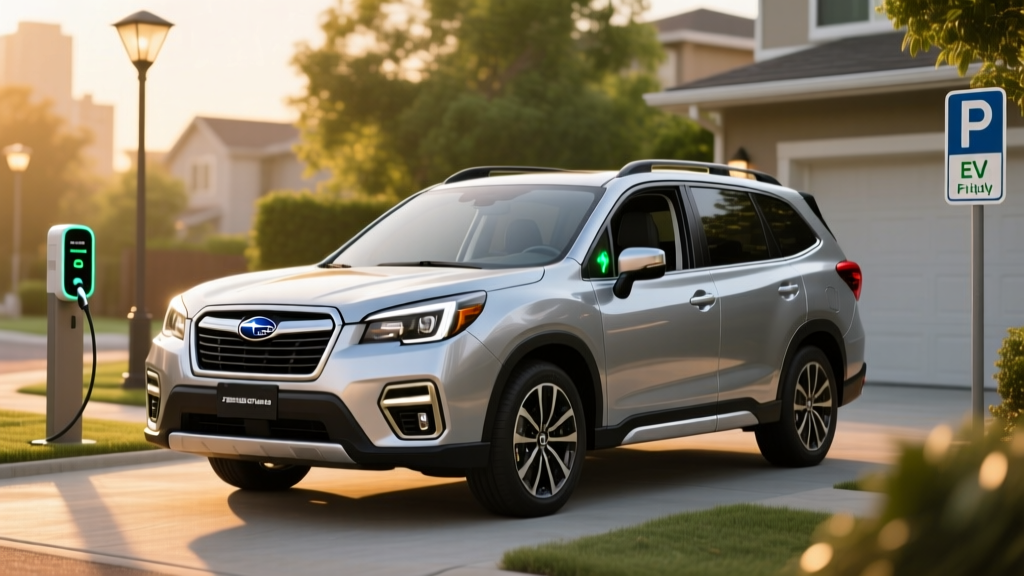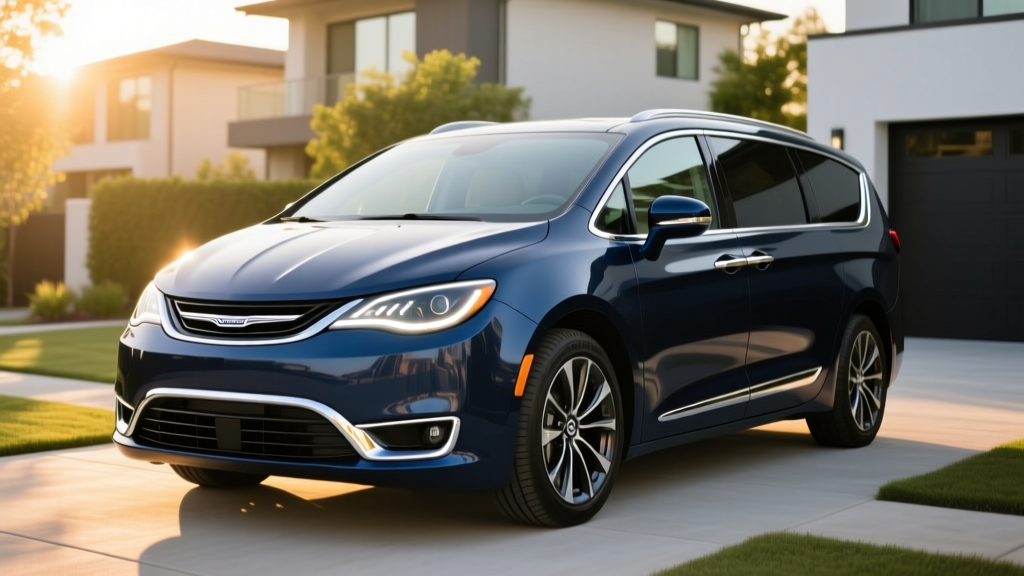
Quick Verdict: Is a Pacifica Hybrid Lease the Smart Move for Families?
If you need three rows, sliding doors, and the ability to do the school run on pure electricity, the Chrysler Pacifica Hybrid remains the only plug-in hybrid minivan sold in the United States. For 2026, Stellantis continues the Pacifica PHEV with a 16 kWh battery, an EPA-rated 32 miles of electric-only range, and 82 MPGe when blending electric and gas driving. Lease deals on the Pacifica Hybrid typically land between $499 and $649 per month depending on trim, down payment, and regional incentives — making it a compelling alternative to buying outright at an MSRP that starts around $51,095.
Leasing a PHEV sidesteps the biggest concern for hybrid buyers: long-term battery degradation risk. You drive it during the years when the 16 kWh battery is at peak health, hand it back at lease end, and let the next owner worry about it. But before you sign, you need to understand exactly what this van can and cannot do.
HEV vs PHEV: What the Pacifica Hybrid Actually Is
Chrysler sells the Pacifica in two electrified flavors, and confusing them is the most common buyer mistake:
Conventional Hybrid (HEV) — Not Offered
Chrysler does not currently sell a conventional (non-plug-in) hybrid Pacifica. Some competitors like the Toyota Sienna are HEV-only — they recharge their small battery through regenerative braking and the engine, never plug in, and deliver around 36 MPG combined. If you want a plug-free hybrid minivan, the Sienna is your option.
Plug-In Hybrid (PHEV) — Pacifica Hybrid
The Pacifica Hybrid has a larger 16 kWh battery you charge by plugging in (Level 1 or Level 2). It drives up to 32 miles on electricity alone before the 3.6L V6 engine kicks in. Once the battery depletes, it operates as a conventional hybrid, returning an EPA-estimated 30 MPG combined. This dual-mode operation is the PHEV advantage: short trips on electric, long trips without range anxiety.
Range, MPG, and Efficiency: The Numbers That Matter
Here is the complete efficiency picture for the 2026 Chrysler Pacifica Hybrid, sourced from EPA fueleconomy.gov data:
| Metric | Value |
|---|---|
| Electric-Only Range (EPA) | 32 miles |
| MPGe (Electric + Gas Combined) | 82 MPGe |
| Gas-Only MPG (Combined) | 30 MPG |
| Gas-Only MPG (City) | 29 MPG |
| Gas-Only MPG (Highway) | 30 MPG |
| Total Combined Range (EV + Gas) | ~520 miles |
| Fuel Tank Capacity | 14.0 gallons |
| Energy Consumption (EV Mode) | 41 kWh/100 mi |
In gas-only mode after the battery depletes, the Pacifica Hybrid's 30 MPG combined is respectable for a 5,000-pound minivan. Real-world testing shows this figure holds up well in mixed suburban driving, though sustained 75+ MPH highway runs with a full load of passengers and cargo can drop it to 26–27 MPG.
Powertrain, Battery, and Charging Specs
| Specification | 2026 Pacifica Hybrid |
|---|---|
| Engine | 3.6L Pentastar V6 (Atkinson cycle) |
| Electric Motors | Dual-motor eFlite CVT (integrated) |
| Combined System Horsepower | 260 HP |
| Battery Capacity (Gross / Usable) | 16 kWh / ~13.5 kWh usable |
| Battery Chemistry | NMC (Nickel Manganese Cobalt) |
| Level 1 Charging (120V) | ~14 hours (0–100%) |
| Level 2 Charging (240V, 32A) | ~2 hours (0–100%) |
| DC Fast Charging | Not supported |
| Charge Port | J1772 (driver-side front fender) |
| 0–60 MPH | ~7.1 seconds |
| Drivetrain | Front-wheel drive |
| Towing Capacity | Not rated (PHEV); gas Pacifica: 3,600 lbs |
A critical limitation: the Pacifica Hybrid does not support DC fast charging. The charge port accepts only J1772 AC charging (Level 1 and Level 2). This is standard for PHEVs with small batteries — a 2-hour Level 2 charge fully replenishes the pack, which is practical for overnight home charging or topping up during a workday. But if you're on a road trip, you cannot pull into a DC fast-charging station and add electric range in minutes. Once the battery depletes on the highway, you're running on gas until you plug in again.
The eFlite dual-motor transaxle is an engineering highlight. One motor primarily drives the wheels while the other manages regeneration and engine starting, with a one-way clutch allowing the V6 to seamlessly join the drivetrain when battery charge runs low or when you floor the accelerator for a highway merge.
2026 Lease Pricing and Tax Credit Considerations
Current 2026 Chrysler Pacifica Hybrid lease deals vary significantly by region, dealer, and trim level. Here is what we are seeing across major markets:
| Trim | MSRP | Typical Lease (36 mo / 10K mi/yr) | Due at Signing |
|---|---|---|---|
| Hybrid Select | $51,095 | $499–$549/mo | $3,500–$4,500 |
| Hybrid Limited | $54,695 | $549–$599/mo | $3,500–$4,500 |
| Hybrid Pinnacle | $58,490 | $599–$649/mo | $4,000–$5,000 |
Note: Lease pricing fluctuates monthly and varies by dealer, region, credit tier, and available Stellantis incentives. Always confirm current terms with your local dealer.
Tax Credit Rules for Leased PHEVs
The federal EV tax credit landscape for leased vehicles is distinct from purchasing. Under current IRS §30D rules, when you lease a qualifying vehicle, the $7,500 federal tax credit technically goes to the lessor (the leasing company), not to you. However, most automakers — Stellantis included — pass this savings through as a "lease cash" incentive that reduces your monthly payment or amount due at signing.
- Lease loophole advantage: Leased vehicles bypass the §30D buyer income caps ($150K single / $300K joint) and MSRP caps ($55K for sedans / $80K for SUVs, trucks, vans) that apply to purchases. The commercial clean vehicle credit (§45W) often applies to lease transactions.
- Battery sourcing requirements: For purchased vehicles, critical mineral and battery component sourcing rules apply. Lease transactions under §45W have different compliance thresholds.
- State incentives: Many states offer additional rebates for PHEVs. California's CVRP, Colorado's state credit, and utility company rebates can stack on top of federal incentives. Check your state's energy office for current programs.
- Consult a tax professional: Credit eligibility depends on individual circumstances. IRS rules change, and state programs vary — verify before signing.
Battery Warranty, Reliability, and Replacement Cost
Regarding reliability: the Pacifica Hybrid has a mixed track record. Early 2017–2019 models experienced battery recall campaigns related to potential fire risk when the battery was fully charged. Stellantis issued software updates and, in some cases, battery replacements to address this. The 2021 refresh brought updated battery management software and improved thermal monitoring. For the 2026 model year, these early issues appear resolved, though the Pacifica Hybrid's long-term reliability ratings from Consumer Reports and J.D. Power remain middling compared to the Toyota Sienna Hybrid.
If you're leasing, battery replacement cost is largely irrelevant — the warranty outlasts any typical 36- or 48-month lease term. But for context: out-of-warranty replacement of the 16 kWh pack currently runs between $7,500 and $9,500 including labor, based on dealer parts pricing. This is substantially less than a full EV battery replacement (which can exceed $15,000–$20,000) because the pack is much smaller.
Who Should Lease the Pacifica Hybrid — And Who Shouldn't?
Choose the Pacifica Hybrid Lease If:
- Your daily driving is under 30 miles round-trip (you'll run almost entirely on electricity)
- You have access to Level 2 home charging (a 240V outlet or installed charger in your garage)
- You need a minivan but want to reduce fuel costs and emissions for local driving
- You take 2–4 road trips per year and don't want to rely on public DC charging infrastructure
- You want to avoid long-term battery ownership risk by leasing
Look Elsewhere If:
- You can't charge at home — without regular plug-in, you're paying a premium for a 30 MPG hybrid that a $38K Sienna HEV matches without a plug
- Your daily commute exceeds 40+ miles — the electric range won't cover it, and you'll burn gas most days
- You need all-wheel drive — the Pacifica Hybrid is FWD only (AWD is available on the gas Pacifica, not the PHEV)
- You need to tow — the Pacifica Hybrid is not rated for towing; the gas model handles up to 3,600 lbs
- You want best-in-class reliability — the Toyota Sienna Hybrid has stronger long-term dependability ratings
Pros
- Only PHEV minivan in the US — no direct competitor
- 32 miles EV range covers most school/activity runs
- Stow 'n Go second-row seating (unique to Pacifica among minivans)
- Lease structure eliminates battery degradation worry
- 82 MPGe when regularly charged is outstanding for a minivan
- Available Uconnect 5 with 10.1-inch touchscreen
Cons
- No DC fast charging capability
- FWD only — no AWD option on the PHEV
- Not rated for towing
- MSRP pushes past $51K even at base Hybrid Select trim
- Middling reliability ratings vs. Toyota Sienna
- Third-row seat doesn't fold into the floor (battery occupies that space)
Hybrid vs PHEV vs Full EV: Which Minivan Fits Your Life?
The minivan market gives you three distinct electrification paths. Here is how they compare for a family buyer:
| Factor | Toyota Sienna (HEV) | Chrysler Pacifica Hybrid (PHEV) | Full-EV SUV (e.g., Kia EV9) |
|---|---|---|---|
| Powertrain Type | Conventional Hybrid | Plug-In Hybrid | Battery Electric |
| Plug In Required? | No | Yes (for EV benefit) | Yes (always) |
| EPA MPG / MPGe | 36 MPG combined | 82 MPGe / 30 MPG gas | ~270 mi range, 85 MPGe |
| Electric-Only Range | ~1 mile (low-speed) | 32 miles | 270 miles (full range) |
| Starting MSRP | ~$38,000 | ~$51,095 | ~$54,900 |
| AWD Available? | Yes | No | Yes |
| Best For | Plug-free simplicity | Short EV commutes + road trips | Full electric lifestyle |
If you have reliable home charging and your weekday driving stays under 30 miles, the Pacifica Hybrid's PHEV setup gives you EV-like daily costs with gas-engine road-trip freedom. If you never want to think about plugging in, the Sienna HEV's 36 MPG combined is hard to argue with at a lower price. And if you're ready to go fully electric, three-row EVs like the Kia EV9 offer more range and lower running costs — but at a higher entry price and with road-trip charging planning required.
Frequently Asked Questions
How many MPG does the Chrysler Pacifica Hybrid get?
The Pacifica Hybrid achieves an EPA-estimated 82 MPGe when operating in blended electric-gas mode with a charged battery. Once the 32-mile electric range depletes, it returns 30 MPG combined (29 city / 30 highway) as a conventional hybrid. Real-world city driving in hybrid mode often yields 31–33 MPG thanks to regenerative braking, while loaded highway driving at high speeds may drop to 26–28 MPG.
How far can the Pacifica Hybrid go on electric only?
The EPA rates the Pacifica Hybrid at 32 miles of electric-only range. In real-world conditions, expect 26–30 miles in warm weather mixed driving and 20–24 miles in cold weather (below freezing), where battery efficiency drops and the electric cabin heater draws significant energy. This range is sufficient for most daily school drops, grocery runs, and short commutes.
Does the Chrysler Pacifica Hybrid qualify for a tax credit?
When purchased, the Pacifica Hybrid may qualify for up to $7,500 under the federal §30D clean vehicle credit, subject to buyer income limits, MSRP caps (vans capped at $80,000), and battery component/critical mineral sourcing requirements. When leased, the credit typically passes through the lessor as lease cash, and the income and MSRP caps generally do not apply. Check IRS.gov for current rules and consult a tax professional.
Is the Pacifica Hybrid reliable, and what does battery replacement cost?
The Pacifica Hybrid's reliability has improved since early-model battery recalls (2017–2019), though it still trails the Toyota Sienna in long-term dependability surveys. The 16 kWh battery is warrantied for 10 years/100,000 miles. Out-of-warranty replacement costs approximately $7,500–$9,500. For lessees, this is largely a non-issue since the warranty far exceeds typical lease terms.
Can the Pacifica Hybrid DC fast charge?
No. The Pacifica Hybrid only supports AC charging via a J1772 port — Level 1 (120V, ~14 hours for a full charge) and Level 2 (240V, ~2 hours). This is standard for PHEVs with small battery packs. On road trips, once the electric range depletes, you continue driving on gasoline without needing to stop at charging stations.
How does the lease compare to buying?
A 36-month Pacifica Hybrid lease at ~$549/month with $4,000 due at signing costs roughly $23,764 over the term (vs. $51,095+ to purchase). Leasing lets you capture the federal lease cash incentive without worrying about income or sourcing restrictions, avoids long-term battery risk, and lets you upgrade to whatever minivan technology arrives in 2029. Buying makes more sense if you plan to keep the vehicle 7+ years and drive enough to recoup the higher upfront cost through fuel savings.
Should I get a Level 2 charger at home for the Pacifica Hybrid?
Strongly recommended. Level 1 (standard 120V outlet) takes roughly 14 hours to fully charge the 16 kWh battery — barely enough to replenish overnight if you arrive home nearly empty. A Level 2 (240V) home charger cuts that to about 2 hours, meaning you can easily top up during the day or guarantee a full battery every morning. A basic 32-amp Level 2 unit costs $300–$600 for the charger, plus $500–$1,500 for professional electrician installation depending on your panel capacity and run distance.