The 2025 Chevy Hybrid SUV Landscape: What's Actually Available
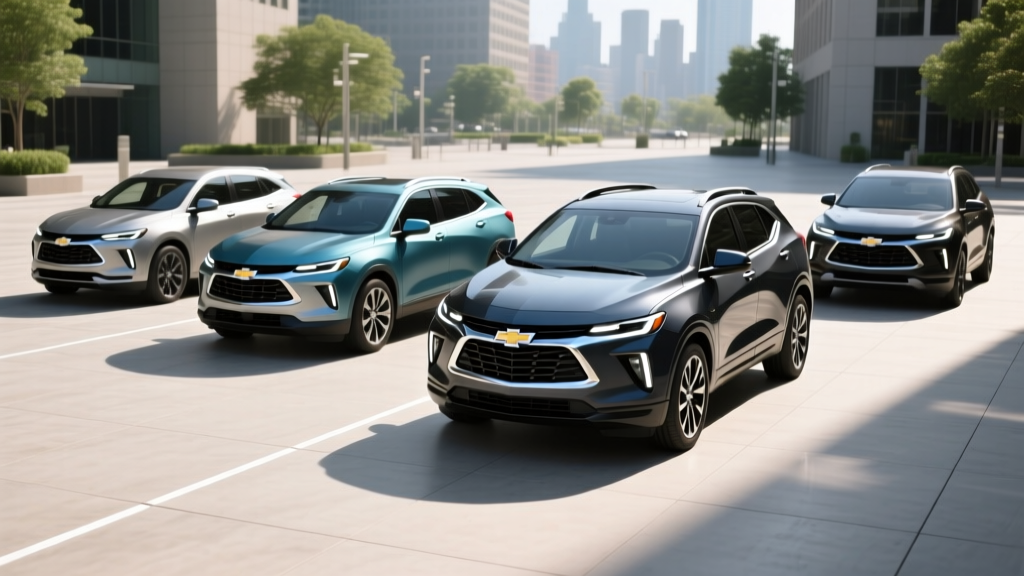
Chevrolet's hybrid SUV strategy for 2025 is narrower than many buyers expect. After discontinuing the Malibu Hybrid sedan and ending Volt production years earlier, GM has funneled its hybrid engineering into a focused set of crossover and SUV offerings. If you're searching for a Chevy hybrid SUV in 2025, here's the reality: the lineup centers on the Equinox hybrid (conventional HEV), the Blazer (which does not currently offer a plug-in hybrid variant in the U.S. market), and the Silverado 1500 hybrid for truck-oriented buyers. The full-size Tahoe and Suburban offer a mild-hybrid assist system, not a true full hybrid powertrain.
This matters because the distinction between a conventional hybrid (HEV), a plug-in hybrid (PHEV), and a mild hybrid (MHEV) determines everything from your fuel savings to your tax credit eligibility. Let's break down exactly what Chevy offers, what each powertrain delivers, and where the gaps are.
- HEV (Hybrid Electric Vehicle): Self-charging via regenerative braking and the gas engine. No plug, no electric-only driving beyond very low speeds. Think Toyota RAV4 Hybrid.
- PHEV (Plug-in Hybrid Electric Vehicle): Larger battery you plug in to charge. Delivers 20-40+ miles of electric-only driving before the gas engine kicks in. Think Toyota RAV4 Prime.
- MHEV (Mild Hybrid Electric Vehicle): Small 48V system that assists the gas engine during acceleration and enables smoother stop-start. Cannot drive on electric power alone. Minimal fuel savings (~1-2 MPG improvement).
2025 Chevy Equinox Hybrid: Specs, MPG, and Real-World Efficiency
The Equinox Hybrid is Chevy's volume hybrid SUV play. For 2025, it carries over the turbocharged 1.5-liter four-cylinder paired with a two-motor hybrid system that GM introduced with this generation. This is a conventional HEV — you never plug it in, and it recharges its small battery through regenerative braking and engine-driven generation.
| Spec | Value |
|---|---|
| Powertrain | 1.5L turbo I4 + two-motor hybrid system |
| Combined Horsepower | ~175 hp (combined system output) |
| EPA MPG (City / Highway / Combined) | ~37 / 34 / 35 MPG (FWD); AWD slightly lower |
| Hybrid Battery | ~1.5 kWh lithium-ion (small, self-charging) |
| Plug-In Charging | No — HEV only, no plug |
| Cargo Volume | ~29.9 cu ft (rear seats up) |
| Starting MSRP | ~$33,000 (LT trim) |
| Federal Tax Credit (§30D) | Not eligible — HEVs do not qualify |
Real-World MPG: What to Actually Expect
The EPA rates the Equinox Hybrid around 35 MPG combined, but real-world results depend heavily on your driving pattern. In stop-and-go city driving, hybrid systems shine — expect to meet or slightly exceed the EPA city figure, landing 36-38 MPG as the electric motor handles low-speed propulsion and the engine shuts off at stops. On the highway at 70-80 mph, the gas engine does most of the work, and you'll see figures closer to 32-34 MPG. In cold weather (below freezing), expect a 5-10% reduction across the board as the engine runs more frequently to provide cabin heat and maintain battery temperature.
Compared to the gas-only Equinox (approximately 28 MPG combined), the hybrid saves roughly 1.4 gallons per 100 miles — meaningful over a 15,000-mile annual commute, translating to roughly $400-$550 in annual fuel savings depending on local gas prices.
2025 Chevy Blazer and Larger SUVs: Hybrid Availability
Here's where Chevy's 2025 lineup reveals its limitations. The Chevy Blazer for 2025 is offered exclusively with conventional gas powertrains (2.0L turbo I4 and 3.6L V6). There is no Blazer Hybrid or Blazer PHEV in the current U.S. lineup. The Blazer EV exists as a separate battery-electric model, but that's a fully electric vehicle — not a hybrid.
The Chevy Traverse similarly lacks a hybrid option for 2025, relying on its 2.5L turbo four-cylinder for all trims. The Chevy Tahoe and Suburban offer GM's EcoTec3 V8 engines with a mild-hybrid assist system on some configurations — but this MHEV system provides only marginal efficiency gains (1-2 MPG) and cannot propel the vehicle on electric power alone.
If you need a three-row Chevy hybrid SUV in 2025, you're unfortunately out of luck within the current lineup. Competitors like the Toyota Grand Highlander Hybrid (36 MPG combined) and the Hyundai Santa Fe Hybrid fill this gap. GM has signaled future hybrid expansion, but nothing is confirmed for the 2025 model year.
As of the 2025 model year, Chevrolet does not offer a plug-in hybrid SUV in the United States. The Volt (a PHEV sedan) was discontinued after 2019. If you want a PHEV crossover with 30+ miles of electric range, you'll need to look at competitors — the Toyota RAV4 Prime (42 miles EV range), Hyundai Tucson PHEV (33 miles), or Ford Escape PHEV (37 miles). GM has focused its electrification investment on full BEVs (Equinox EV, Blazer EV, Silverado EV) rather than PHEVs.
Silverado 1500 Hybrid: The Truck Option
For buyers who need truck capability with hybrid efficiency, the 2025 Silverado 1500 continues to offer a hybrid variant. This pairs GM's 2.7L TurboMax four-cylinder or available V8 with an electric motor integrated into the transmission. The hybrid system primarily improves city fuel economy and provides electric assist during towing, rather than enabling electric-only driving.
| Metric | Value |
|---|---|
| EPA Combined MPG | ~22-24 MPG (varies by configuration) |
| Combined HP | ~310-420 hp (depending on engine choice) |
| Type | HEV (self-charging, no plug) |
| Towing Capacity | Up to ~9,300 lbs (properly equipped) |
| MSRP Premium Over Gas Model | ~$1,500-$2,500 |
Hybrid Battery Warranty and Replacement Costs
Battery longevity is the top concern for hybrid buyers, and it's where Chevy's coverage is solid. GM covers the hybrid battery pack and related hybrid-specific components (inverter, electric motors) under its powertrain warranty:
- Duration: 8 years / 100,000 miles (whichever comes first)
- California Emissions States: 10 years / 150,000 miles on hybrid components (applies in CA, CT, DE, MA, MD, ME, NJ, NY, OR, PA, RI, VT, WA — states that adopted CARB standards)
- Coverage Threshold: GM warrants the battery against failure and excessive capacity loss (typically defined as loss below ~60-70% of original capacity)
- Out-of-Warranty Replacement Cost: $2,500-$4,500 for an HEV battery pack (installed), depending on model. HEV batteries are much smaller than EV batteries, so replacement costs are far lower than the $10,000-$20,000+ EV battery replacements.
Source: Chevrolet Warranty Guide
In practice, modern HEV batteries from major manufacturers rarely fail within the warranty period. Toyota's hybrid battery track record (the industry benchmark) shows most units lasting 150,000-200,000+ miles before significant degradation. GM's lithium-ion hybrid packs use similar thermal management strategies, and real-world failure rates are low. The small battery size (~1-2 kWh) also means replacement is far less costly than a full EV battery swap.
Tax Credits and Incentives: What Qualifies?
This is where hybrid buyers often encounter disappointment. Under the current IRS §30D Clean Vehicle Credit rules, conventional hybrids (HEVs) do not qualify for any federal tax credit. The $7,500 credit applies only to plug-in electric vehicles — battery-electric vehicles (BEVs) and plug-in hybrids (PHEVs) with a battery capacity of at least 7 kWh. Since Chevy's 2025 hybrid SUVs are all HEVs with small self-charging batteries, none qualify.
- ❌ Chevy Equinox Hybrid — HEV, not eligible
- ❌ Chevy Blazer — No hybrid/PHEV variant offered
- ❌ Chevy Tahoe/Suburban MHEV — Mild hybrid, not eligible
- ❌ Chevy Silverado Hybrid — HEV, not eligible
- ✅ Chevy Equinox EV — BEV, potentially eligible (subject to MSRP cap of $80,000 for SUVs, buyer income limits, and battery sourcing requirements)
- ✅ Chevy Blazer EV — BEV, potentially eligible (subject to same §30D rules)
For current eligibility rules, including the MSRP caps, adjusted gross income limits ($150K single / $300K joint), and critical mineral/battery component sourcing requirements, consult the IRS Clean Vehicle Credit page. Rules are subject to change — verify eligibility before purchasing. Some states offer separate hybrid or EV incentives; check your state's energy office for details.
Hybrid vs PHEV vs Full EV: Which Chevy (or Competitor) Fits You?
Choosing between a conventional hybrid, a plug-in hybrid, and a full battery-electric vehicle comes down to three factors: your daily driving distance, your access to charging, and your budget.
| Factor | HEV (e.g., Equinox Hybrid) | PHEV (e.g., RAV4 Prime) | BEV (e.g., Equinox EV) |
|---|---|---|---|
| Daily Range Need | Any — gas station refueling | Under 30-40 mi for electric-only commuting | Under ~250-300 mi (or access to DC fast charging) |
| Home Charging Needed? | No | Recommended (120V works, 240V faster) | Essential (Level 2 strongly recommended) |
| Fuel Cost (annual, 15K mi) | ~$1,500-$1,800 (gas) | ~$600-$1,200 (mix of electricity + gas) | ~$500-$800 (electricity) |
| Federal Tax Credit | None | Up to $7,500 (if eligible) | Up to $7,500 (if eligible) |
| Upfront Cost | Lowest premium (~$1,500 over gas) | Higher ($5,000-$8,000 premium) | Highest (but dropping) |
| Maintenance | Standard (oil changes, etc.) | Standard + potential electric motor service | Lowest (no oil, fewer moving parts) |
Choose the Equinox Hybrid (HEV) if: You want better fuel economy without changing your habits. No garage or outlet access for charging, you drive more than 40 miles daily, and you want the lowest upfront cost with zero lifestyle adjustment.
Choose a competitor's PHEV (e.g., RAV4 Prime, Tucson PHEV) if: You have home charging access (even a standard 120V outlet), your daily commute is under 35 miles round-trip, and you want to drive mostly on electricity while keeping a gas engine for road trips. The $7,500 federal credit can offset the higher purchase price.
Choose the Equinox EV (BEV) if: You can install a Level 2 home charger, your daily driving is under 250 miles, you want the lowest operating cost and near-zero maintenance, and you qualify for the federal tax credit. The Equinox EV starts around $33,000 before incentives and offers an EPA-estimated 319 miles of range.
Reliability: What We Know About Chevy's Hybrid Systems
GM's hybrid technology in the 2025 Equinox is relatively mature, building on lessons from the Volt program and the brand's earlier eAssist mild-hybrid systems. The 1.5L turbo + two-motor setup is simpler than some competitors' planetary-gear hybrid transmissions (Toyota's e-CVT, for example), which can be an advantage for long-term serviceability.
According to NHTSA data and industry reliability trackers, Chevy's recent hybrid systems have not been flagged for widespread battery failures or motor defects. The primary maintenance items remain conventional: engine oil changes (less frequent than a gas-only car due to engine-off time), brake pad replacement (less frequent due to regenerative braking), and standard fluid service.
One honest caveat: Chevy does not have the decades-long hybrid reliability track record that Toyota has built with the Prius and RAV4 Hybrid families. If maximum long-term confidence is your priority, the Toyota RAV4 Hybrid (39 MPG combined, ~$31,000 MSRP) remains the segment benchmark. But the Equinox Hybrid is a credible alternative with competitive efficiency, a comfortable interior, and strong dealer support across the U.S.
Pros and Cons at a Glance
- 35+ MPG combined — ~25% improvement over gas Equinox
- No charging required — works with your existing routine
- 8-year/100,000-mile hybrid battery warranty
- Strong dealer network for service nationwide
- Regenerative braking extends brake pad life
- Competitive starting price (~$33,000)
- No federal tax credit eligibility (HEV, not PHEV/BEV)
- No PHEV option in the Chevy SUV lineup for 2025
- Highway MPG drops below city (common for hybrids)
- No three-row hybrid SUV option from Chevy
- Less proven hybrid track record vs. Toyota
- Mild-hybrid Tahoe/Suburban offers negligible MPG gains
Frequently Asked Questions
How many MPG does the 2025 Chevy Equinox Hybrid get?
The EPA estimates approximately 37 city / 34 highway / 35 combined MPG for the front-wheel-drive Equinox Hybrid. In real-world city driving, expect to meet or slightly exceed these numbers (36-38 MPG). Highway cruising at 75+ mph will yield closer to 32-34 MPG. Cold weather can reduce efficiency by 5-10%. Check fueleconomy.gov for the latest official EPA ratings as they're published.
Does Chevy make a plug-in hybrid SUV for 2025?
No. Chevrolet does not currently offer a plug-in hybrid (PHEV) SUV in the United States for the 2025 model year. The Equinox Hybrid and Silverado Hybrid are conventional HEVs (no plug). If you want a PHEV crossover, you'll need to look at the Toyota RAV4 Prime, Hyundai Tucson PHEV, Kia Sportage PHEV, or Ford Escape PHEV.
How far can a Chevy hybrid go on electric only?
The 2025 Chevy Equinox Hybrid cannot drive on electric power alone for any meaningful distance. As a conventional HEV, its battery is too small (~1.5 kWh) and is used to assist the gas engine and capture braking energy — not to propel the car independently. The electric motor operates at very low speeds (parking lots, stop-and-go creep) but the gas engine is always available and frequently active. Only a PHEV or BEV offers true electric-only driving.
Is the Chevy hybrid battery reliable, and what does replacement cost?
GM's hybrid battery packs are covered for 8 years/100,000 miles (10 years/150,000 miles in CARB states). Out-of-warranty replacement for a Chevy HEV battery typically costs $2,500-$4,500 installed — significantly less than a full EV battery replacement. Modern hybrid batteries from major OEMs rarely fail before 150,000+ miles. The small battery size and conservative charge/discharge cycles in an HEV contribute to long lifespan.
Does the 2025 Chevy hybrid SUV qualify for any tax credit?
No. Under the IRS §30D Clean Vehicle Credit, only plug-in electric vehicles (BEVs and PHEVs with 7+ kWh batteries) qualify for the federal tax credit of up to $7,500. Conventional hybrids like the Equinox Hybrid and Silverado Hybrid are not eligible. If you want a Chevy that may qualify, look at the Equinox EV or Blazer EV — both are battery-electric and potentially eligible depending on MSRP caps, buyer income, and battery sourcing requirements. Always verify current rules at IRS.gov before purchasing.
Should I buy a Chevy hybrid SUV or just go full electric?
If you have reliable home charging (a garage or driveway with a 240V outlet) and your daily driving stays under 250 miles, a BEV like the Equinox EV (319 miles EPA range, starting ~$33,000, potentially eligible for $7,500 credit) offers lower operating costs, less maintenance, and tax credit benefits. If you lack home charging, frequently drive long distances in areas with sparse charging infrastructure, or simply don't want to think about charging, the Equinox Hybrid delivers meaningful fuel savings without any lifestyle change. The hybrid is the pragmatic bridge; the EV is the long-term savings play — if your situation supports it.