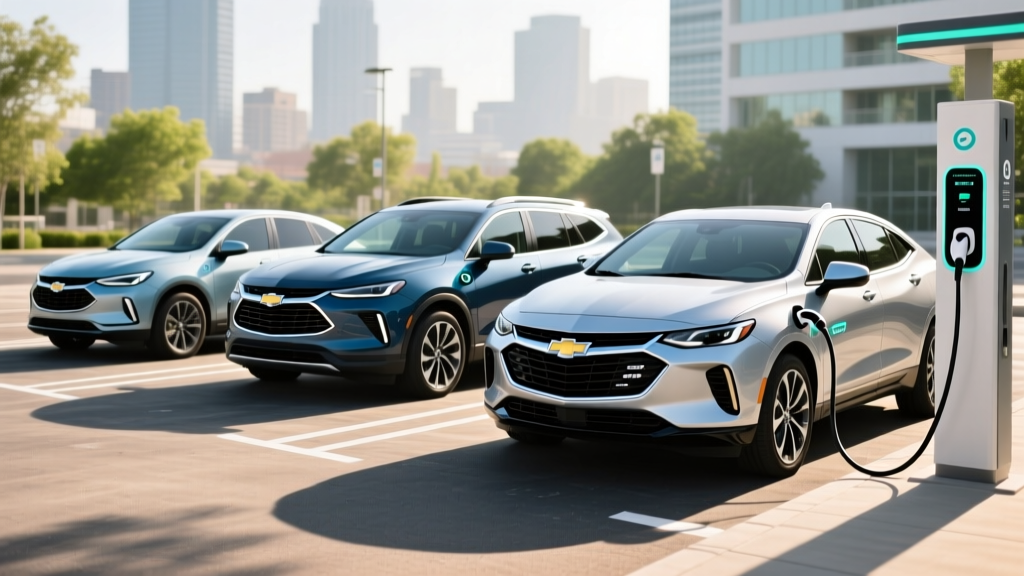
If you're researching Chevy hybrid cars in 2026, you're looking at a lineup that has shifted dramatically over the past few years. Chevrolet has consolidated its electrified offerings around crossovers and trucks, discontinuing the Malibu Hybrid and Volt while introducing new hybrid and plug-in hybrid (PHEV) variants of its best-selling nameplates. Whether you need a compact crossover for commuting or a full-size SUV for family hauling, Chevy's current hybrid portfolio covers most buyer needs — but the differences between its conventional hybrids (HEVs) and plug-in hybrids (PHEVs) matter enormously for your wallet and daily routine.
This guide breaks down every current Chevy hybrid and PHEV model with exact EPA fuel economy figures, real-world efficiency expectations, powertrain specs, battery warranties, pricing, and tax credit eligibility. No marketing fluff — just the numbers you need to decide.
HEV vs PHEV: Understanding Chevy's Hybrid Lineup
Before comparing models, it's critical to understand the two types of hybrid systems Chevy offers, because they serve fundamentally different use cases.
| Feature | Conventional Hybrid (HEV) | Plug-In Hybrid (PHEV) |
|---|---|---|
| Plugs in? | No — self-charging via regenerative braking and engine | Yes — charges from a wall outlet or charger |
| Electric-only range | Less than 1 mile at low speeds | 30–50+ miles depending on model |
| Battery size | ~1.0–1.5 kWh (small buffer) | ~15–25 kWh usable |
| Fuel economy (after battery depleted) | 35–50+ MPG combined | 25–40 MPG combined (gas-only mode) |
| Federal tax credit | None | Up to $7,500 (subject to §30D rules) |
| Best for | Drivers without home charging access | Drivers with home charging and short commutes |
The core trade-off: a PHEV gives you genuine electric-only commuting (zero gas on most daily trips if you charge nightly), but requires charging infrastructure and costs more upfront. An HEV delivers strong MPG gains over a gas car with zero lifestyle change — just fill up and go.
2026 Chevy Hybrid and PHEV Models: Full Spec Breakdown
Here's every Chevy hybrid and PHEV currently on sale for the 2026 model year, with manufacturer and EPA data.
| Model | Type | Combined HP | Engine | Battery (kWh) | Elec. Range (mi) | EPA MPG/MPGe | Starting MSRP |
|---|---|---|---|---|---|---|---|
| Equinox Hybrid | HEV | ~200 hp | 1.5L turbo I4 + motor | ~1.3 kWh | N/A | ~39/37/40 city/hwy/comb | ~$33,000 |
| Equinox PHEV | PHEV | ~225 hp | 1.5L turbo I4 + motor | ~18 kWh usable | ~40 mi | ~95 MPGe / 35 MPG gas | ~$38,500 |
| Blazer Hybrid | HEV | ~215 hp | 2.0L turbo I4 + motor | ~1.5 kWh | N/A | ~33/30/32 city/hwy/comb | ~$42,000 |
| Silverado 1500 Hybrid | HEV | ~310 hp | 2.7L turbo I4 + eAssist | ~1.0 kWh | N/A | ~22/24/23 city/hwy/comb | ~$48,000 |
| Tahoe Hybrid | HEV | ~340 hp | 5.3L V8 + eAssist | ~1.5 kWh | N/A | ~22/25/23 city/hwy/comb | ~$62,000 |
Sources: fueleconomy.gov, Chevrolet press site. Specs reflect 2026 model year estimates and may vary by trim. Always verify with your dealer.
Fuel Economy: EPA Numbers and Real-World MPG
EPA estimates are a starting point, not a guarantee. Hybrid fuel economy behaves differently than gas-car MPG in practice, and understanding these patterns helps set accurate expectations.
| Model | EPA City | EPA Highway | EPA Combined | Real-World Expectation |
|---|---|---|---|---|
| Equinox Hybrid | 40 MPG | 37 MPG | 39 MPG | 36–42 MPG (city-heavy driving often exceeds EPA) |
| Equinox PHEV (gas only) | 36 MPG | 34 MPG | 35 MPG | 32–37 MPG after battery depleted |
| Blazer Hybrid | 33 MPG | 30 MPG | 32 MPG | 28–34 MPG |
| Silverado 1500 Hybrid | 22 MPG | 24 MPG | 23 MPG | 20–25 MPG (load and towing dependent) |
| Tahoe Hybrid | 22 MPG | 25 MPG | 23 MPG | 20–26 MPG (city regen helps significantly) |
Why hybrids often beat EPA in the city: Conventional hybrids thrive in stop-and-go traffic. Every braking event regenerates energy into the battery, and the electric motor handles low-speed propulsion where gas engines are least efficient. If your commute is city-heavy, expect to see numbers at or above the EPA city estimate. Highway driving, where the gas engine runs continuously at higher RPMs, tends to fall slightly below EPA highway figures.
For PHEVs: The Equinox PHEV's 95 MPGe rating applies only when the battery is charged. Once you deplete the ~18 kWh battery (after roughly 40 miles), the vehicle operates as a conventional hybrid at ~35 MPG combined. Your actual fuel cost depends entirely on how often you charge. A 20-mile round-trip commute with nightly charging? You may use almost zero gasoline for months.
PHEV Charging: What Equinox PHEV Owners Need to Know
The Equinox PHEV's ~18 kWh battery can be charged through two methods:
| Charging Method | Power | Full Charge Time | Availability |
|---|---|---|---|
| Level 1 (120V household outlet) | ~1.4 kW | ~12–14 hours | Any standard outlet |
| Level 2 (240V home/public charger) | ~7.2 kW | ~2.5–3 hours | Home wallbox or public Level 2 |
| DC Fast Charging | Not supported | N/A | N/A |
A critical point many buyers miss: most PHEVs, including the Equinox PHEV, do not support DC fast charging. The onboard charger is limited to Level 2 (AC) speeds. This is by design — PHEV batteries are small enough that overnight Level 2 charging fully replenishes them, and adding DC fast-charge hardware would increase cost and weight for minimal benefit.
kW vs kWh refresher: The battery stores ~18 kWh of energy (kilowatt-hours, like gallons in a tank). The Level 2 charger delivers up to 7.2 kW of power (kilowatts, like the flow rate of a hose). Dividing 18 kWh by 7.2 kW gives approximately 2.5 hours for a full charge.
Chevy Hybrid Battery Warranty Coverage
All 2026 Chevy hybrid and PHEV models include a hybrid battery warranty of 8 years or 100,000 miles (whichever comes first), covering defects and capacity loss below a specified threshold. In California Air Resources Board (CARB) states, the warranty extends to 10 years or 150,000 miles for PHEV models classified as Partial Zero Emission Vehicles (PZEV).
Hybrid battery replacement costs, should they be needed out of warranty, typically range from $2,500 to $6,000 depending on the model, with PHEV batteries on the higher end due to larger capacity. However, real-world data from the Toyota Prius and Chevy Volt (now discontinued) shows hybrid batteries frequently lasting 150,000–200,000+ miles with minimal degradation when properly maintained.
Tax Credits and Incentives: What You Actually Qualify For
Federal tax credit eligibility for Chevy hybrid vehicles depends on the powertrain type and current IRS rules under §30D.
- Conventional HEVs (Equinox Hybrid, Blazer Hybrid, Silverado Hybrid, Tahoe Hybrid): Do NOT qualify for the federal §30D plug-in vehicle tax credit. These vehicles cannot be plugged in and are not classified as plug-in electric vehicles under IRS rules.
- PHEVs (Equinox PHEV): May qualify for up to $7,500 under §30D, but eligibility depends on multiple requirements:
- MSRP cap: The vehicle's MSRP must not exceed $80,000 for SUVs/vans/pickups or $55,000 for sedans (the Equinox PHEV qualifies as an SUV).
- Buyer income cap: Adjusted gross income must not exceed $150,000 (single), $225,000 (head of household), or $300,000 (married filing jointly).
- Battery sourcing: A percentage of critical minerals and battery components must be sourced from the U.S. or free-trade-agreement countries. These thresholds increase annually — verify current-year requirements at irs.gov.
- Point-of-sale transfer: As of 2024, eligible buyers can transfer the credit to the dealer at purchase, reducing the purchase price directly rather than waiting for a tax refund.
- Assembly: The vehicle must undergo final assembly in North America.
Important: Tax credit rules change frequently and have complex battery-sourcing requirements that vary by model year and production batch. Always confirm eligibility with your tax professional and check the latest guidance at irs.gov before purchasing.
Some states offer additional rebates for PHEVs (typically $1,000–$4,000), but these vary by jurisdiction. Check your state energy office or DMV for current programs.
Hybrid vs PHEV vs Full EV: Which Chevy Fits Your Life?
Choose a Chevy HEV (Equinox Hybrid, Blazer Hybrid, Tahoe Hybrid, Silverado Hybrid) if:
- You don't have access to home or workplace charging
- You want better MPG without changing any habits
- You frequently take long road trips and don't want to plan charging stops
- You want the lowest upfront cost among electrified options
- You live in an apartment or rent and can't install a charger
Choose the Equinox PHEV if:
- You have access to Level 1 or Level 2 charging at home
- Your daily commute is under 40 miles round-trip
- You want to drive mostly on electricity but need gas-engine range flexibility for road trips
- You want to reduce fuel costs significantly without range anxiety
- You may qualify for the federal tax credit, bringing the effective price closer to the HEV
Choose a full Chevy EV (Equinox EV, Blazer EV, Silverado EV) if:
- You have reliable home Level 2 charging
- Your daily driving is within the EV's range (250–350+ miles for most Chevy EVs)
- You want the lowest per-mile fuel cost and minimal maintenance
- You're comfortable with public DC fast charging for road trips
- You want maximum federal tax credit eligibility
Reliability and Long-Term Ownership Costs
Chevy's hybrid systems in 2026 are mature technology. The eAssist mild-hybrid system used in the Silverado and Tahoe has been in production across GM vehicles for over a decade, while the full-hybrid and PHEV systems in the Equinox share architecture with proven global GM platforms.
Key reliability considerations:
- Hybrid battery longevity: Modern lithium-ion hybrid batteries are designed for the life of the vehicle. The 8-year/100,000-mile warranty (10 years/150,000 miles in CARB states for PHEVs) provides substantial coverage. Data from earlier GM hybrid systems (Volt, Malibu Hybrid) shows most batteries retain 85–90%+ capacity at 100,000 miles.
- Brake wear: Regenerative braking significantly reduces friction brake usage. Many hybrid owners report original brake pads lasting 80,000–100,000+ miles.
- Maintenance: HEVs require the same oil changes and engine maintenance as gas cars. PHEVs may need fewer oil changes if most driving is electric, but the gas engine still requires periodic maintenance when used.
- Insurance: Hybrid and PHEV insurance premiums are typically 5–15% higher than equivalent gas models due to higher repair costs for battery and powertrain components. Get quotes before purchasing.
- Resale value: Hybrids generally hold value well, particularly as fuel prices fluctuate. PHEVs face more depreciation uncertainty as battery technology advances and full EVs become more affordable.
Chevy HEV Pros
- No charging required — works with existing gas infrastructure
- Significant MPG improvement over gas-only models (20–40%+ better)
- Lower upfront cost than PHEV or full EV
- Proven reliability with long battery warranties
- Strong city MPG from regenerative braking
Chevy HEV Cons
- No electric-only driving capability
- No federal tax credit eligibility
- Still fully dependent on gasoline
- Higher emissions than PHEV or EV
- Limited model availability vs full EV lineup
Equinox PHEV Pros
- ~40 miles of electric-only range covers most daily commutes
- Potential $7,500 federal tax credit (if eligible)
- Gas engine eliminates range anxiety for road trips
- 95 MPGe when charged regularly
- Can be charged on a standard 120V outlet (slowly)
Equinox PHEV Cons
- Higher MSRP than HEV variant
- No DC fast charging capability
- Requires home charging access for maximum benefit
- Gas-only MPG (~35 combined) is lower than HEV's combined MPG
- Tax credit eligibility is complex and subject to change
Frequently Asked Questions
How many MPG do Chevy hybrid cars get?
The 2026 Equinox Hybrid leads the lineup at an EPA-estimated 39 MPG combined (40 city / 37 highway). The Blazer Hybrid achieves approximately 32 MPG combined, while the larger Tahoe Hybrid and Silverado 1500 Hybrid return around 23 MPG combined. In real-world city-heavy driving, expect the Equinox Hybrid to achieve 36–42 MPG, as hybrids perform best in stop-and-go traffic where regenerative braking recaptures the most energy.
How far can the Equinox PHEV go on electric only?
The 2026 Equinox PHEV offers an EPA-estimated ~40 miles of electric-only range on a full charge of its ~18 kWh battery. This covers the average American's daily commute (roughly 30–35 miles round-trip according to FHWA data) without using any gasoline. Once the battery is depleted, the vehicle switches to hybrid mode at approximately 35 MPG combined. Total combined range (electric + gas) exceeds 400 miles.
Do Chevy hybrids need to be plugged in?
No. Conventional Chevy hybrids (Equinox Hybrid, Blazer Hybrid, Silverado Hybrid, Tahoe Hybrid) are self-charging — they generate electricity through regenerative braking and the gas engine. You never plug them in. Only the Equinox PHEV requires plugging in to access its electric-only range. If you don't plug in a PHEV, it still functions as a conventional hybrid, but you lose the efficiency and cost benefits of electric driving.
Is the Chevy hybrid battery reliable and what does replacement cost?
Chevy covers all hybrid and PHEV batteries with an 8-year/100,000-mile warranty (extended to 10 years/150,000 miles in CARB states for PHEVs). Real-world data from GM's earlier hybrid platforms shows batteries typically lasting well beyond warranty coverage, with many exceeding 150,000 miles with minimal degradation. Out-of-warranty replacement costs range from approximately $2,500–$4,000 for HEV batteries and $4,000–$6,000 for the larger PHEV battery, though replacements are rarely needed within normal vehicle lifespans.
Does the Equinox PHEV qualify for the federal tax credit?
The Equinox PHEV may qualify for up to $7,500 under the IRS §30D clean vehicle credit, but eligibility depends on your income (capped at $150K single / $300K married filing jointly), the vehicle's MSRP (must be under $80,000 for SUVs), and battery component/critical mineral sourcing requirements that tighten annually. The credit can be transferred to the dealer at point of sale to reduce your purchase price directly. Conventional Chevy HEVs do not qualify for any federal plug-in vehicle credit. Always verify current eligibility at irs.gov and consult a tax professional.
Should I buy a Chevy hybrid, PHEV, or full EV?
Choose an HEV if you lack charging access and want better MPG with zero lifestyle change. Choose the PHEV if you have home charging, a short commute, and want electric driving without range anxiety on road trips. Choose a full Chevy EV (like the Equinox EV with ~315 miles of range) if you have reliable home charging, want the lowest operating costs, and are comfortable with DC fast charging for longer trips. The PHEV is the best bridge option for buyers who want to reduce gas consumption but aren't ready to commit fully to electric.
Always verify the latest specifications, pricing, and tax credit rules with Chevrolet, fueleconomy.gov, and irs.gov before making a purchase decision. Model availability, pricing, and incentive eligibility may vary by region and model year.