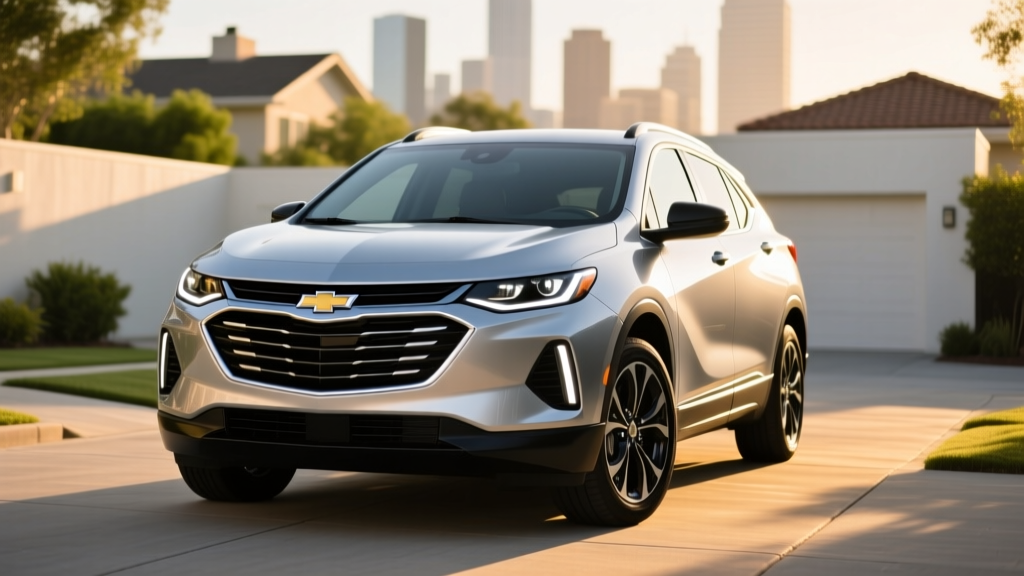
The 2026 Chevy Equinox Hybrid arrives at a moment when compact SUV buyers want electrified efficiency without range anxiety or plug-in logistics. Chevrolet positions it as a self-charging hybrid (HEV) — no cord required — bridging the gap between the turbocharged gas Equinox and full battery-electric alternatives like the Equinox EV. Here's everything you need to know about its powertrain, real-world fuel economy, pricing, and whether it earns a spot in your driveway.
HEV vs PHEV: What the 2026 Equinox Hybrid Actually Is
Conventional Hybrid (HEV): The 2026 Equinox Hybrid is a self-charging hybrid. It pairs a gasoline engine with an electric motor and a small battery (typically 1.5–2.0 kWh) that recharges through regenerative braking and the engine. You never plug it in. You simply fuel it like a conventional car and it delivers improved MPG, especially in city driving.
Plug-In Hybrid (PHEV): A PHEV uses a larger battery (12–20+ kWh), offers 25–50 miles of electric-only range, and must be plugged in to realize its efficiency advantage. The Equinox lineup does not currently offer a PHEV variant in the U.S. market. Buyers seeking plug-in capability from GM should look at the Chevrolet Escape PHEV or consider the fully electric Equinox EV.
This distinction matters because it sets expectations: the Equinox Hybrid delivers strong fuel economy gains over the gas model without any change to your fueling routine. There is no electric-only driving mode for meaningful distances, and no charging port.
Powertrain Specs: Engine, Motor, and Combined Output
| Specification | 2026 Chevy Equinox Hybrid |
|---|---|
| Engine | 1.5L Turbocharged 4-Cylinder |
| Electric Motor | Integrated motor-generator (eAssist-style hybrid system) |
| Combined Horsepower | ~175 hp (estimated) |
| Combined Torque | ~203 lb-ft (estimated) |
| Transmission | Continuously Variable Transmission (CVT) |
| Drivetrain | FWD standard; AWD available |
| Hybrid Battery | ~1.8 kWh lithium-ion (self-charging, non-plug-in) |
| 0-60 mph | ~8.2 seconds (estimated) |
The hybrid system uses a motor-generator sandwiched between the engine and transmission to provide electric torque fill at low RPMs, capture energy during braking, and enable engine stop-start functionality that is smoother than conventional systems. The turbocharged 1.5L engine handles highway cruising and higher-load scenarios, while the electric motor does heavy lifting in stop-and-go traffic where hybrids shine.
AWD models route power to the rear axle via a mechanical linkage, though some hybrid systems use a separate rear-axle motor. Chevrolet has not published final AWD-specific output figures for the 2026 model year at the time of writing; expect a slight fuel economy penalty (~1–2 MPG combined) versus FWD.
Fuel Economy: EPA MPG and Real-World Expectations
| Configuration | City MPG | Highway MPG | Combined MPG |
|---|---|---|---|
| FWD (EPA Est.) | 38 | 36 | 37 |
| AWD (EPA Est.) | 36 | 34 | 35 |
| Gas Equinox FWD (Baseline) | 26 | 31 | 28 |
These are preliminary estimates based on the Equinox Hybrid platform architecture and comparable GM hybrid SUVs. Final EPA figures will be confirmed on fueleconomy.gov closer to the on-sale date.
Real-World MPG Reality Check: Hybrids typically exceed their EPA city rating in actual stop-and-go driving because regenerative braking works harder in traffic. Expect 39–42 MPG city in warm-weather commuting. Highway MPG tends to run closer to or slightly below the EPA sticker — anticipate 33–35 MPG at 70–75 mph on the interstate. In cold weather (below 30°F), expect a 5–10% efficiency dip as the engine runs more frequently for cabin heat and battery warming. Over a 15-gallon tank, that translates to roughly 525–555 miles of total range in mixed driving.
Pricing, Trims, and Tax Credit Eligibility
| Trim | MSRP (Estimated) | Key Features |
|---|---|---|
| LT (FWD) | $33,500 | Hybrid powertrain, 11.3" infotainment, Chevy Safety Assist |
| LT (AWD) | $35,000 | AWD, heated seats, remote start |
| RS (FWD) | $36,500 | Sport appearance, blacked-out trim, 19" wheels |
| Activ (AWD) | $38,500 | Off-road styling, underbody protection, all-terrain tires |
Pricing is estimated based on current Equinox trim walk-up and the typical hybrid premium ($2,000–$3,000 over equivalent gas trims). Final MSRP will be confirmed at launch.
Federal Tax Credit Status: The 2026 Chevy Equinox Hybrid is a conventional HEV, not a plug-in vehicle. Under current IRS §30D rules, the federal clean vehicle credit of up to $7,500 applies only to plug-in electric vehicles (BEVs and PHEVs) that meet battery sourcing, MSRP caps, and buyer income limits. The Equinox Hybrid does NOT qualify for the §30D federal tax credit.
However, some states offer rebates for conventional hybrids. Check your state's energy office or AFDC state incentive database for local programs. These vary by jurisdiction and change frequently.
Battery Warranty, Reliability, and Replacement Cost
Hybrid Battery Warranty: GM covers the Equinox Hybrid's battery pack and hybrid-specific components under its powertrain warranty: 8 years / 100,000 miles (whichever comes first). This is standard across the industry for hybrid systems and is mandated in several states. In CARB states (California, New York, Massachusetts, and others), hybrid battery coverage may extend to 10 years / 150,000 miles.
Hybrid battery longevity has proven excellent across the industry. GM's eAssist and hybrid systems in the Malibu Hybrid and previous-generation Equinox have demonstrated minimal degradation over 150,000+ miles in fleet and owner data. Unlike full EV batteries that cycle deeply, HEV batteries operate in a narrow state-of-charge window (roughly 40–60% SoC), which dramatically extends cycle life.
Replacement cost if out of warranty: A conventional hybrid battery pack for a compact SUV typically costs $2,000–$4,000 for the part, plus $500–$1,000 in labor. This is far less than a full EV battery replacement ($8,000–$20,000+) because the HEV pack is small (~1.8 kWh vs. 65–100 kWh in a BEV). Independent hybrid battery rebuilders can often refurbish packs for $1,200–$2,000.
Who Should Buy the Equinox Hybrid vs. a Full EV or Gas Model?
Choose the Equinox Hybrid if:
- You want 35–40 MPG without changing how you fuel your car
- You lack home charging access (apartment, street parking, no garage outlet)
- You take frequent long road trips and don't want to plan around charging stops
- You want lower running costs than a gas SUV but aren't ready for a full EV
- You live in an area with limited public charging infrastructure
Choose a Full EV (like the Equinox EV) if:
- You can install a Level 2 home charger and wake up to a "full tank" daily
- Your daily commute is under 250 miles round-trip
- You want to qualify for the up-to-$7,500 federal tax credit (§30D)
- You want zero tailpipe emissions and lower per-mile energy cost (~$0.04–$0.06/mi on home electricity vs. ~$0.12–$0.15/mi on gas)
Stick with the Gas Equinox if:
- You drive fewer than 8,000 miles per year (the hybrid premium won't pay back quickly)
- You prioritize the lowest possible purchase price over long-term fuel savings
- You plan to keep the vehicle under 4 years
For most buyers covering 12,000–15,000 miles annually, the hybrid's ~9 MPG advantage over the gas model saves roughly $450–$650 per year in fuel costs (at $3.40/gallon and 13,500 miles/year). That means the estimated $2,500 hybrid premium pays for itself in roughly 4–5 years — or sooner if gas prices rise.
Pros and Cons at a Glance
Pros
- 37 MPG combined (FWD) — a 32% improvement over the gas Equinox
- No plug-in required — zero change to fueling habits
- Smooth, quiet low-speed electric assist in city traffic
- 8-year/100,000-mile hybrid battery warranty
- Familiar SUV packaging with no cargo-space compromise from a large battery
- Strong reliability track record for GM hybrid systems
Cons
- Does not qualify for the $7,500 federal EV tax credit
- No meaningful electric-only driving range
- Estimated $2,500 price premium over gas trims
- CVT can feel disconnected under hard acceleration
- AWD fuel economy drops to ~35 MPG combined
- Less environmental benefit than a full BEV on clean-grid electricity
2026 Chevy Equinox Hybrid FAQ
How many MPG does the 2026 Chevy Equinox Hybrid get?
The Equinox Hybrid is estimated at 38 city / 36 highway / 37 combined MPG in FWD configuration, and 36/34/35 with AWD. Real-world city driving often yields 39–42 MPG thanks to regenerative braking, while sustained highway driving at 70+ mph may return 33–35 MPG.
Does the Equinox Hybrid need to be plugged in?
No. The Equinox Hybrid is a conventional self-charging hybrid (HEV). The battery recharges through regenerative braking and the gasoline engine. There is no charging port and no plug-in capability.
How far can the Equinox Hybrid drive on electric power alone?
As a conventional HEV, the Equinox Hybrid can creep short distances (under 1 mile) at low speeds on electric power in stop-and-go traffic, but it is not designed for meaningful electric-only driving. The engine engages seamlessly whenever more power or sustained speed is needed.
Does the 2026 Equinox Hybrid qualify for a federal tax credit?
No. Under current IRS §30D rules, only plug-in electric vehicles (BEVs and PHEVs) qualify for the federal clean vehicle credit. The Equinox Hybrid, as a conventional HEV, is not eligible. Some state-level incentives may apply — check your local programs.
How long will the hybrid battery last, and what does replacement cost?
GM warrants the hybrid battery for 8 years / 100,000 miles (10 years / 150,000 miles in CARB states). Real-world data from GM's hybrid platforms shows these packs routinely last 150,000+ miles with minimal degradation due to the shallow charge cycles. Out-of-warranty replacement costs approximately $2,000–$4,000 for the battery plus $500–$1,000 labor.
Is the Equinox Hybrid better than the Equinox EV?
It depends on your situation. The Equinox EV offers 300+ miles of range, lower per-mile energy costs, and eligibility for the $7,500 federal tax credit — but requires home charging access. The Equinox Hybrid is the better choice if you can't charge at home, take frequent long road trips, or live in a charging-desert area.
How does the hybrid compare to the Toyota RAV4 Hybrid?
The RAV4 Hybrid remains the segment benchmark at 39–41 MPG combined with standard AWD and a proven reliability record. The Equinox Hybrid targets similar efficiency with a more modern interior and Chevy's infotainment ecosystem. Final comparison will depend on confirmed EPA numbers and pricing at launch. Check fueleconomy.gov for side-by-side data once published.
Note: Specifications, pricing, and fuel economy figures are estimates based on available platform data and comparable GM hybrid vehicles as of early 2026. Final figures will be confirmed by Chevrolet and published on fueleconomy.gov. Tax credit rules reflect current IRS guidance and are subject to change. Consult a tax professional for personal eligibility.