Quick Verdict: A Practical Bridge Between Gas and Electric
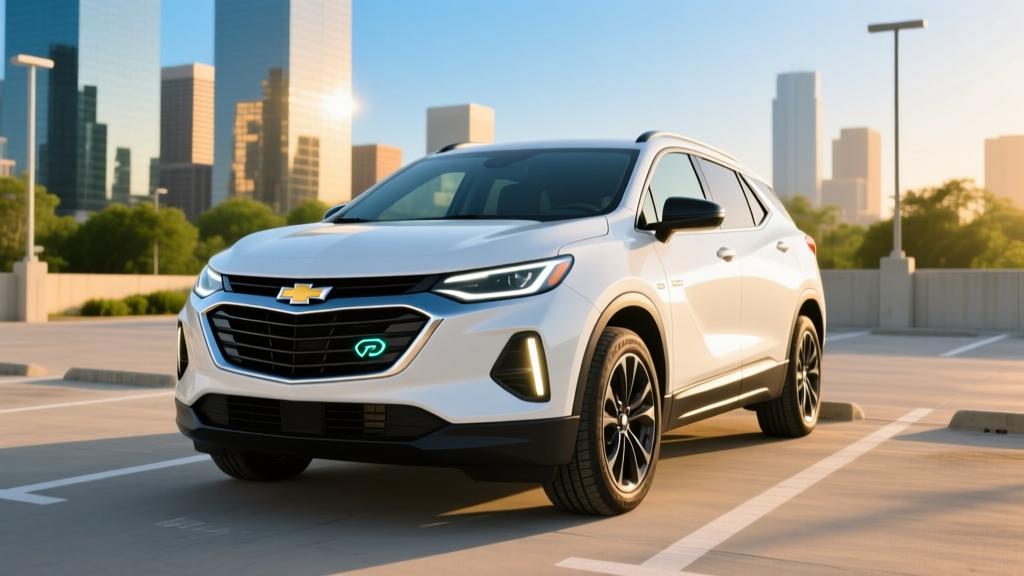
The 2025 Chevy Equinox Hybrid arrives at a moment when many compact-SUV shoppers are torn between the familiarity of gasoline and the promise of electrification. Chevrolet's answer is a conventional hybrid (HEV) — not a plug-in — that pairs a turbocharged 1.5-liter four-cylinder engine with an electric motor system to deliver meaningful fuel savings without requiring any change in driving habits or home electrical upgrades.
After reviewing the powertrain specs, EPA data, and ownership economics, the Equinox Hybrid makes a strong case for buyers who want better fuel economy, lower emissions at the tailpipe, and zero charging logistics. But it also has clear limitations versus both a full battery-electric vehicle (BEV) and a plug-in hybrid (PHEV). Here's exactly what you're getting.
HEV vs. PHEV: What the Equinox Hybrid Actually Is
Conventional Hybrid (HEV) — This is the Equinox Hybrid: The battery recharges through regenerative braking and the gasoline engine. You never plug it in. The electric motor assists the engine during acceleration and low-speed driving, reducing fuel consumption. Electric-only driving is limited to very low speeds and short distances (typically under 1 mile).
Plug-in Hybrid (PHEV) — This is NOT the Equinox Hybrid: A PHEV has a larger battery (typically 12–20 kWh) that you plug in to recharge, offering 25–50 miles of pure electric driving before the gas engine kicks in. The Chevrolet Equinox does not currently offer a PHEV variant in the U.S. market for the 2025 model year. If plug-in capability is a priority, competitors like the Toyota RAV4 Prime or Hyundai Tucson PHEV fill that niche.
This distinction matters because conventional hybrids like the Equinox HEV are simpler to own — no home charger needed, no range anxiety about depleted batteries, and a lower purchase price. The trade-off is that you can't drive on electricity alone for meaningful distances, so you'll always burn some gasoline.
EPA Fuel Economy and Real-World MPG
The headline number for any hybrid buyer is fuel economy. According to fueleconomy.gov, the 2025 Chevrolet Equinox Hybrid with front-wheel drive achieves the following EPA estimates:
| Drivetrain | City MPG | Highway MPG | Combined MPG |
|---|---|---|---|
| FWD | 36 | 33 | 35 |
| AWD | 34 | 31 | 33 |
For context, the gas-only 2025 Equinox with its 1.5L turbo and CVT returns roughly 26 city / 31 highway / 28 combined (FWD). That's a roughly 25% improvement in combined driving with the hybrid system — substantial for a compact SUV.
Real-World MPG: What to Actually Expect
Hybrids tend to outperform their EPA city estimates in stop-and-go traffic because regenerative braking recaptures energy that a gas car wastes as heat. In mixed suburban driving with moderate traffic, owners of similar GM hybrid systems report 35–38 MPG in the FWD Equinox Hybrid. On sustained highway trips at 70–75 mph, expect the numbers to settle closer to 30–32 MPG — the electric motor provides less benefit at steady high speeds where aerodynamic drag dominates.
Cold weather will reduce efficiency by roughly 5–10% due to increased engine load for cabin heating and reduced battery efficiency. In sub-freezing conditions, plan for 30–32 MPG combined rather than the EPA's 35.
Powertrain Specs: Engine, Motor, and Combined Output
| Specification | 2025 Equinox Hybrid |
|---|---|
| Engine | 1.5L turbocharged inline-4 |
| Electric Motor | Integrated motor-generator (two-motor hybrid system) |
| Combined Horsepower | ~212 hp (estimated, system net) |
| Transmission | Hybrid-specific CVT (eCVT) |
| Battery Type | Lithium-ion (under 2 kWh, self-charging) |
| Drivetrain Options | FWD or AWD |
| 0–60 mph (estimated) | ~7.5 seconds |
| Towing Capacity | 1,500 lbs (when properly equipped) |
The two-motor hybrid system is a familiar architecture from GM's broader hybrid lineup. One motor primarily assists with propulsion while the other handles regeneration and engine starting. The result is seamless transitions between electric assist and gasoline power — most drivers won't notice when the engine cycles on and off at stoplights.
The ~212 hp combined output gives the Equinox Hybrid adequate passing power and confident highway merging. It's not a performance SUV, but it's noticeably more responsive than the gas-only Equinox, particularly in the 0–30 mph range where electric torque fills in before the turbo spools up.
Hybrid Battery: Warranty, Degradation, and Replacement Cost
Battery Warranty: Chevrolet covers the Equinox Hybrid's lithium-ion battery pack for 8 years or 100,000 miles (whichever comes first), consistent with the industry standard for hybrid battery systems. In states that follow California Air Resources Board (CARB) emissions standards, hybrid battery coverage may extend to 10 years or 150,000 miles.
Expected Lifespan: Modern hybrid batteries from GM are engineered to last the life of the vehicle under normal use. Unlike BEV batteries that cycle through large energy swings daily, hybrid batteries operate within a narrow state-of-charge window (typically 40–80% SoC), which dramatically reduces degradation. Most hybrid batteries outlast 150,000+ miles without issue.
Replacement Cost (Out of Warranty): If a hybrid battery does fail after warranty expiration, replacement costs for compact-SUV hybrid batteries typically range from $2,000 to $4,000 including labor — far less than a full BEV battery replacement. Individual cell or module repairs may cost even less.
This is one of the strongest arguments for a conventional hybrid over a PHEV or BEV for risk-averse buyers. The smaller battery means lower replacement cost and less degradation concern over a 10–15 year ownership period.
Pricing, Trims, and Tax Credit Eligibility
The 2025 Chevy Equinox Hybrid starts at approximately $33,000 MSRP for the base LT trim with FWD. Key trim pricing:
| Trim | MSRP (FWD) | MSRP (AWD add ~$1,800) |
|---|---|---|
| LT | ~$33,000 | ~$34,800 |
| RS | ~$36,000 | ~$37,800 |
| Activ | ~$37,500 | ~$39,300 |
Federal Tax Credit: Does the Equinox Hybrid Qualify?
No. Under current IRS §30D Clean Vehicle Credit rules, conventional hybrids (HEVs) do not qualify for the federal $7,500 tax credit. That credit is reserved for battery-electric vehicles (BEVs) and plug-in hybrids (PHEVs) that meet battery-sourcing, critical-mineral, MSRP cap ($80,000 for SUVs), and buyer income requirements.
Some states offer their own incentives for hybrid vehicles, though these are increasingly rare and typically much smaller ($500–$1,500) than federal EV credits. Check your state's energy or environmental agency website for current programs.
The silver lining: the Equinox Hybrid's lower starting price (versus comparable PHEVs at $40,000+ and BEVs at $38,000+) means the out-of-pocket cost may be competitive even without a tax credit — especially for buyers who don't itemize deductions or whose income exceeds the §30D caps ($150K single / $300K joint for new vehicles).
Equinox Hybrid vs. Gas vs. Full EV: Which Fits You?
Choose the Equinox Hybrid If:
- You want 25%+ better fuel economy without changing any habits
- You don't have access to home or workplace charging
- You take frequent long road trips and don't want to plan around chargers
- You want a lower purchase price than a PHEV or BEV
- You plan to keep the vehicle 10+ years and want minimal battery risk
- You live in an area with limited public charging infrastructure
Look at a BEV or PHEV Instead If:
- You can install a Level 2 home charger and want near-zero fuel costs
- You want to qualify for the $7,500 federal tax credit
- Your daily commute is under 40 miles (a PHEV covers this on electric alone)
- You want zero tailpipe emissions for local air quality
- You want access to HOV lane stickers (available for PHEVs/BEVs in many states)
- You prioritize lowest cost-per-mile over lowest purchase price
The 5-Year Cost Snapshot
Assuming 15,000 miles/year, $3.50/gallon gas, and the Equinox Hybrid at 35 MPG combined vs. the gas Equinox at 28 MPG combined:
- Gas Equinox annual fuel cost: ~$1,875
- Hybrid Equinox annual fuel cost: ~$1,500
- Annual savings: ~$375
- 5-year fuel savings: ~$1,875
Compare that to the Chevrolet Equinox EV, which at roughly 3.5 miles/kWh and $0.14/kWh national average electricity costs, runs about $600/year in fuel — saving ~$900/year or $4,500 over five years. The math favors a BEV if you can charge at home, but the hybrid still delivers meaningful savings over a gas-only vehicle with none of the charging infrastructure requirements.
Reliability and Ownership Considerations
GM's hybrid systems have proven reliable across multiple model lines. The eCVT transmission used in the Equinox Hybrid has no traditional gears or belts — it uses a planetary gearset managed by the two electric motors, which eliminates many of the failure points found in conventional automatics.
According to NHTSA, the Equinox platform carries standard safety features including automatic emergency braking, lane-keeping assist, and adaptive cruise control. The hybrid variant shares the same structural safety ratings as the gas model.
Insurance costs for the Equinox Hybrid are typically comparable to the gas version — unlike BEVs, which often carry 15–25% higher premiums due to higher repair costs after collisions. This is an underappreciated ownership advantage of conventional hybrids.
Frequently Asked Questions
How many MPG does the 2025 Chevy Equinox Hybrid get?
The EPA rates the FWD Equinox Hybrid at 36 city / 33 highway / 35 combined MPG. The AWD version drops slightly to 34/31/33. In real-world city driving, many owners report matching or slightly exceeding the EPA city figure thanks to regenerative braking.
Can I plug in the Equinox Hybrid to charge?
No. The Equinox Hybrid is a conventional hybrid (HEV), not a plug-in hybrid. Its small lithium-ion battery recharges automatically through regenerative braking and the gasoline engine. There is no charging port and no electric-only driving range to speak of.
Is there a Chevy Equinox plug-in hybrid (PHEV)?
As of the 2025 model year, Chevrolet does not offer a plug-in hybrid version of the Equinox in the United States. If PHEV capability is important to you, the Toyota RAV4 Prime (42 miles electric-only), Hyundai Tucson PHEV (33 miles), or Mitsubishi Outlander PHEV (38 miles) are the leading compact-SUV alternatives.
Is the hybrid battery reliable, and what does replacement cost?
Yes. The hybrid battery is covered by an 8-year/100,000-mile warranty (10 years/150,000 miles in CARB states). Modern hybrid batteries are designed to outlast 150,000+ miles because they operate within a narrow charge window that minimizes degradation. Out-of-warranty replacement typically costs $2,000–$4,000 — substantially less than a BEV battery.
Does the Equinox Hybrid qualify for any tax credit?
The Equinox Hybrid does not qualify for the federal §30D Clean Vehicle Credit ($7,500), which is reserved for BEVs and PHEVs meeting specific battery-sourcing and income requirements. Some states may offer small incentives for hybrid vehicles — check your state's energy department for current programs.
How does the Equinox Hybrid compare to the Equinox EV?
The Equinox EV is a fully electric SUV with an EPA-estimated range of up to 319 miles (depending on trim), qualifies for the $7,500 federal tax credit, and costs significantly less to "fuel" per mile. However, it starts at a higher MSRP (~$33,000–$43,000 depending on trim), requires home charging access for optimal ownership, and demands route planning on long trips. The Hybrid is the simpler, lower-commitment option; the EV is the lower-operating-cost option if charging access isn't a barrier.