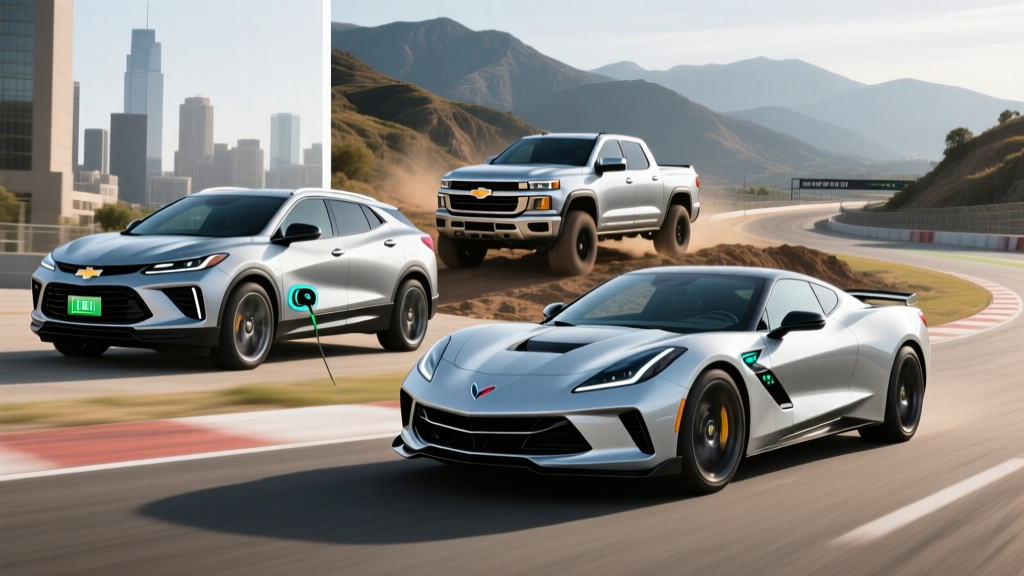
Chevrolet's plug-in hybrid strategy in 2026 spans three very different vehicles — the compact Equinox PHEV crossover, the full-size Silverado PHEV pickup, and the performance-oriented Corvette E-Ray. Each targets a distinct buyer, and each handles the balance between electric-only commuting and gas-engine range in its own way. This guide breaks down the exact EPA figures, battery specs, pricing, and real-world ownership considerations you need before choosing a Chevrolet PHEV over a conventional hybrid, a full battery-electric vehicle, or a gas-only alternative.
HEV vs PHEV: What Chevrolet Actually Sells in 2026
Before diving into specific models, it's critical to distinguish between a conventional hybrid (HEV) and a plug-in hybrid (PHEV). Chevrolet offers both, and the difference affects your daily routine, fuel costs, and tax-credit eligibility.
| Feature | Conventional Hybrid (HEV) | Plug-In Hybrid (PHEV) |
|---|---|---|
| Battery Size | 1.0–1.5 kWh (small buffer) | 15–25 kWh usable |
| Electric-Only Range | None (motor assists engine only) | 25–50+ miles |
| Plugs In? | No — charges via regenerative braking and engine | Yes — Level 1 (120V) or Level 2 (240V) |
| Federal Tax Credit | None (Clean Vehicle Credit expired for non-PHEVs) | Up to $7,500 under §30D if eligible |
| Best For | Drivers without home charging access | Drivers who can charge at home and want EV-like commuting |
In Chevrolet's 2026 lineup, the Equinox PHEV and Silverado PHEV are true plug-in hybrids with meaningful electric-only range. The Corvette E-Ray uses a smaller battery and is technically a performance hybrid with limited electric-only capability — more on that distinction below.
2026 Chevrolet Equinox PHEV: The Commuter-Friendly Crossover
The Equinox PHEV is Chevrolet's volume play in the plug-in segment. It pairs a 1.5L turbocharged four-cylinder engine with an electric motor and a lithium-ion battery pack designed for daily electric commuting with gas-engine backup for longer trips.
| Specification | 2026 Equinox PHEV |
|---|---|
| Battery (usable) | 17.7 kWh (NMC lithium-ion) |
| Electric-Only Range (EPA) | 38 miles |
| Total Combined Range | ~420 miles |
| Combined Horsepower | 218 hp (engine + motor) |
| EPA MPG (charge-sustaining) | 38 city / 35 highway / 37 combined |
| MPGe (electric mode) | 92 MPGe |
| Level 2 Charge Time (0–100%) | ~2.5 hours at 7.2 kW |
| DC Fast Charging | Not available |
| 0–60 mph | 7.6 seconds |
| Starting MSRP | $36,900 (LT trim) |
Real-World MPG vs. EPA Estimates
The EPA rates the Equinox PHEV at 37 MPG combined once the battery is depleted (charge-sustaining mode). In real-world testing, PHEVs like the Equinox tend to exceed their EPA city rating in stop-and-go traffic because regenerative braking recaptures energy the gas engine alone would waste. Expect 40–43 MPG in city driving and closer to 32–34 MPG at sustained 75 mph highway speeds. In cold weather (below 30°F), the engine runs more frequently for cabin heat, reducing electric-only range to roughly 28–32 miles.
2026 Chevrolet Silverado PHEV: Electric Commuting Meets Truck Capability
The Silverado PHEV targets truck buyers who want zero-emission daily commuting without sacrificing towing capacity or range for job-site hauls. It uses a larger battery and a more powerful powertrain than the Equinox to handle full-size truck duties.
| Specification | 2026 Silverado PHEV (LTZ) |
|---|---|
| Battery (usable) | 22.0 kWh (NMC lithium-ion) |
| Electric-Only Range (EPA) | 42 miles |
| Total Combined Range | ~510 miles |
| Combined Horsepower | 375 hp / 470 lb-ft torque |
| EPA MPG (charge-sustaining) | 23 city / 22 highway / 22 combined |
| MPGe (electric mode) | 68 MPGe |
| Level 2 Charge Time (0–100%) | ~3.0 hours at 7.7 kW |
| DC Fast Charging | Not available |
| Max Towing Capacity | 9,200 lbs (gas mode) |
| 0–60 mph | 6.1 seconds |
| Starting MSRP | $58,400 (LTZ trim) |
The Silverado PHEV's 42-mile electric range covers most daily commutes and errands without burning fuel. For truck owners who drive 30–40 miles round-trip and come home to a Level 2 charger, the Silverado can operate as a de facto EV on weekdays while retaining full gas-engine capability for weekend towing or long hauls. Towing capacity drops significantly in electric-only mode — plan to use the gas engine for any trailer work.
2026 Chevrolet Corvette E-Ray: Performance Hybrid, Not a Traditional PHEV
The Corvette E-Ray deserves a caveat: it is not a plug-in hybrid in the commuter sense. Chevrolet classifies it as an electrified all-wheel-drive performance vehicle. Its 1.9 kWh battery charges exclusively through regenerative braking and the 6.2L V8 engine — there is no plug. Electric-only range is approximately 4–5 miles at low speeds, primarily for stealth-mode neighborhood exits.
| Specification | 2026 Corvette E-Ray |
|---|---|
| Battery | 1.9 kWh (NMC lithium-ion) |
| Electric-Only Range | ~4–5 miles (low speed, Stealth mode) |
| Combined Horsepower | 655 hp (495 V8 + 160 front e-motor) |
| EPA MPG | 19 city / 24 highway / 21 combined |
| Plugs In? | No — self-charging hybrid |
| 0–60 mph | 2.5 seconds |
| Starting MSRP | $106,695 (1LZ trim) |
The E-Ray's electrification exists for performance augmentation — instant torque from the front-mounted electric motor enables all-wheel-drive launches that the standard Stingray cannot match. Buyers evaluating the E-Ray should not compare it to the Equinox or Silverado PHEV on efficiency grounds. It does not qualify for the §30D federal tax credit because it cannot be plugged in.
Pricing, Tax Credits, and Total Cost of Ownership
Federal tax credit eligibility is where the Equinox and Silverado PHEVs gain a meaningful advantage over both conventional hybrids and some competing PHEVs. Under current IRS §30D rules, qualifying buyers can claim up to $7,500 — but eligibility depends on several factors that change annually.
- MSRP Cap: SUVs/pickups must have an MSRP at or below $80,000; sedans at or below $55,000. Both the Equinox PHEV and Silverado PHEV fall under their respective caps at base trims.
- Income Limits: Modified adjusted gross income must not exceed $150,000 (single), $225,000 (head of household), or $300,000 (joint filers).
- Battery Sourcing: A percentage of critical minerals and battery components must be sourced from the U.S. or free-trade-agreement countries. This threshold increases each year — verify current-year compliance on the IRS Clean Vehicle Credits page.
- Point-of-Sale Transfer: As of 2024, eligible buyers can transfer the credit to the dealer at purchase, reducing the out-of-pocket price immediately rather than waiting for tax filing.
- Assembly Requirement: Final assembly must occur in North America. Both the Equinox PHEV and Silverado PHEV are assembled in U.S. plants.
The Corvette E-Ray, as a non-plug-in hybrid, does not qualify for §30D. Conventional Chevrolet hybrids (if available in your market) also do not qualify.
5-Year Cost Comparison: Equinox PHEV vs. Equinox Gas
| Cost Factor | Equinox PHEV ($36,900) | Equinox Gas ($28,600) |
|---|---|---|
| Purchase Price (after $7,500 credit) | $29,400 | $28,600 |
| Fuel/Electricity (5 yrs, 15k mi/yr) | ~$4,200 | ~$9,800 |
| Maintenance (5 yrs) | ~$2,100 | ~$3,400 |
| Insurance (5 yrs avg) | ~$7,800 | ~$7,200 |
| Estimated Depreciation | ~$12,500 | ~$13,800 |
| 5-Year Total | ~$56,000 | ~$62,800 |
Source: Estimates based on fueleconomy.gov data, national average electricity rate of $0.16/kWh, and gas at $3.40/gallon. Actual costs vary by driving pattern, charging access, and local rates.
Battery Warranty, Reliability, and Replacement Costs
Chevrolet's hybrid and PHEV powertrains have demonstrated solid reliability in recent model years. The Equinox PHEV's 17.7 kWh pack uses NMC (nickel-manganese-cobalt) chemistry, which offers high energy density but is more sensitive to sustained high states of charge. Best practice: set your charge limit to 80–90% for daily use and avoid leaving the vehicle at 100% for extended periods in hot weather.
If a battery replacement is needed out of warranty, expect the following ranges:
- Equinox PHEV battery replacement: $6,500–$8,500 (parts + labor)
- Silverado PHEV battery replacement: $9,000–$12,000 (parts + labor)
- Corvette E-Ray battery replacement: $4,000–$5,500 (smaller pack, simpler integration)
For context, most PHEV batteries last well beyond their warranty period. Data from earlier-generation Chevy Volt owners (18.4 kWh packs) showed average degradation of 10–15% over 100,000+ miles — meaning a 38-mile electric range might become 32–34 miles after a decade of use. See IIHS and owner forums for long-term durability reports as they accumulate for these newer platforms.
Who Should Choose a Chevrolet PHEV vs. a Full EV or Gas Car?
Choose the Equinox PHEV if: You commute 25–40 miles daily, have access to Level 2 charging at home, want to eliminate most weekday fuel use, but still need gas-engine range for road trips or apartment-dwelling weekends where charging isn't guaranteed.
Choose the Silverado PHEV if: You need a full-size truck for work or towing but want to commute emissions-free on weekdays. The 42-mile electric range covers most job-site commutes, and the gas engine handles heavy hauling without range anxiety.
Choose a full Chevrolet EV (Blazer EV, Silverado EV, Equinox EV) instead if: You have reliable home charging, rarely drive more than 250 miles in a single day, and want to eliminate oil changes and engine maintenance entirely. Full EVs also have lower per-mile fuel costs.
Choose a conventional gas or HEV model instead if: You cannot install a Level 2 charger at home, live in an apartment without charging access, or drive mostly long highway routes where the PHEV's electric range provides minimal benefit.
- 38-mile electric range covers most commutes
- Eligible for up to $7,500 federal tax credit
- No range anxiety — gas engine for long trips
- Smooth, quiet electric-only driving
- Lower maintenance than gas-only vehicles
- No DC fast charging capability
- Higher base price than gas Equinox
- Cargo space slightly reduced vs. gas model
- Electric range drops significantly in cold weather
- Requires home charging to maximize value
Frequently Asked Questions
How many MPG does the Chevrolet Equinox PHEV get?
The EPA rates the 2026 Equinox PHEV at 38 city / 35 highway / 37 combined MPG in charge-sustaining (gas-only) mode. In real-world city driving with frequent regenerative braking, owners commonly report 40–43 MPG. Highway driving at 75+ mph drops to approximately 32–34 MPG.
How far can the Chevrolet Silverado PHEV go on electric only?
The EPA rates the Silverado PHEV at 42 miles of electric-only range. In real-world conditions, expect 35–40 miles in warm weather and 28–33 miles in freezing temperatures. Highway speeds above 65 mph reduce electric range by roughly 15–20%.
Does the Chevrolet Equinox PHEV qualify for a tax credit?
Yes, the Equinox PHEV can qualify for up to $7,500 under IRS §30D, provided the buyer meets income limits ($150K single / $300K joint), the vehicle MSRP is under $80,000 (it is), and battery sourcing requirements are met for the model year. The credit can be transferred to the dealer at point of sale. Always verify current eligibility on the IRS website before purchasing.
Is the Chevrolet PHEV battery reliable, and what does replacement cost?
Chevrolet warranties the PHEV battery for 8 years / 100,000 miles against defects and capacity loss below 60%. Historical data from Chevrolet's Volt PHEV program shows 10–15% degradation over 100,000+ miles, which is within acceptable range. Out-of-warranty replacement costs $6,500–$8,500 for the Equinox PHEV and $9,000–$12,000 for the Silverado PHEV.
Can I charge the Chevrolet PHEV at a DC fast charger?
No. Neither the Equinox PHEV nor the Silverado PHEV supports DC fast charging. Both use a standard J1772 connector for Level 1 (120V, ~12 hours for full charge) and Level 2 (240V, ~2.5–3 hours for full charge). For daily use, a home Level 2 charger is strongly recommended to fully replenish the battery overnight.
Hybrid vs. PHEV vs. EV — which Chevrolet is right for me?
A conventional hybrid (HEV) suits drivers without home charging who want better MPG without changing habits. A PHEV suits drivers with home charging who commute under 40 miles daily but need gas-engine flexibility for longer trips. A full EV (like the Equinox EV or Silverado EV) suits drivers with reliable home charging who rarely exceed 250 miles in a day and want the lowest per-mile operating cost with zero tailpipe emissions.