If you've been searching for a Chevrolet Malibu hybrid, here's the honest truth up front: as of the 2025 model year, Chevrolet discontinued the Malibu sedan entirely — hybrid and gas versions alike. The Fairfax, Kansas assembly plant shifted to second-generation Chevrolet Equinox EV production. That means there is no new 2026 Chevrolet Malibu hybrid on sale today.
But the used and certified pre-owned (CPO) market still has plenty of Malibu Hybrids from the 2016–2019 generation, and they remain one of the most fuel-efficient midsize sedans ever sold in the U.S. If you're considering a used Malibu Hybrid — or weighing it against a modern PHEV or full EV — this guide gives you the exact numbers, real-world efficiency data, battery longevity expectations, and a clear decision framework.
Chevrolet Malibu Hybrid: What Actually Exists
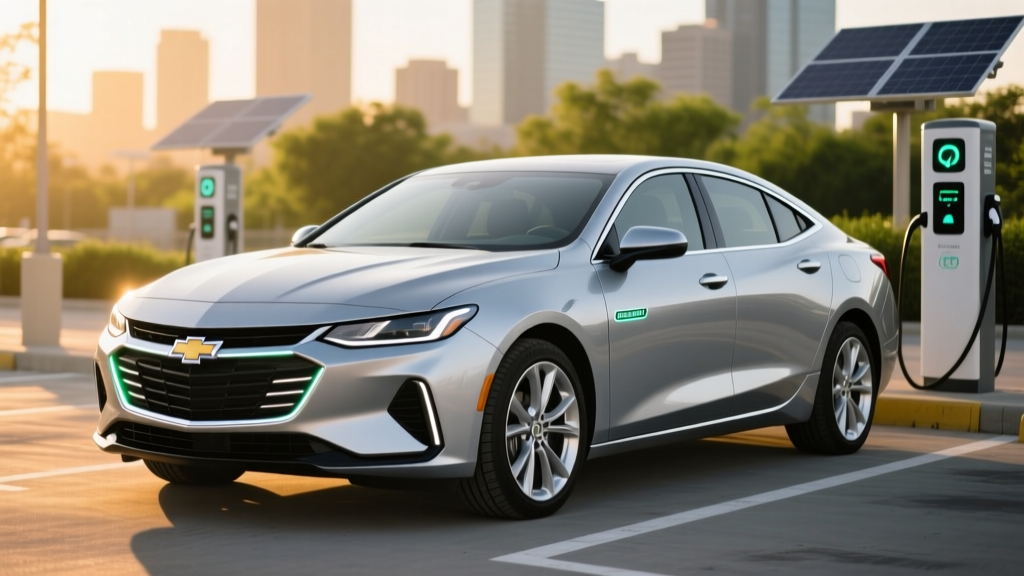
The Chevrolet Malibu Hybrid was produced for the 2016 through 2019 model years as a conventional hybrid electric vehicle (HEV). It was not a plug-in hybrid. You never plug it in. The gasoline engine and regenerative braking charge the small battery pack automatically.
Chevrolet also sold a Malibu-based plug-in hybrid in limited form — technically the Chevrolet Volt shared the Voltec platform architecture, but the Volt was a distinct EREV (extended-range electric vehicle), not a Malibu PHEV. The Malibu badge never carried a plug-in variant.
HEV vs. PHEV — Why the Malibu Is an HEV
| Feature | Malibu Hybrid (HEV) | Plug-In Hybrid (PHEV) |
|---|---|---|
| Plug in to charge? | No — self-charging via regen + engine | Yes — plug in for electric-only miles |
| Electric-only range | 0 miles (motor assists engine only) | Typically 20–45 miles |
| Battery size | 1.5 kWh (gross) | 13–20+ kWh |
| DC fast charging | No | Rare; some PHEVs offer it |
| Federal tax credit (new) | None | Up to $7,500 (§30D, if eligible) |
EPA MPG Ratings and Real-World Fuel Economy
The 2016–2019 Chevrolet Malibu Hybrid was rated by the EPA at 49 MPG city / 43 MPG highway / 46 MPG combined. Those numbers were best-in-class for a midsize sedan when the car launched and remain impressive today.
| Metric | EPA Rating | Real-World Expectation |
|---|---|---|
| City MPG | 49 | 48–52 (hybrids often exceed EPA in stop-and-go) |
| Highway MPG | 43 | 39–44 (sustained 75+ mph reduces regen benefit) |
| Combined MPG | 46 | 43–48 |
| Fuel tank | 13.0 gallons | — |
| Total range | ~598 miles | ~520–620 miles |
Hybrids like the Malibu tend to beat their EPA city rating in real-world urban driving because regenerative braking recaptures energy in stop-and-go traffic. Highway driving is the opposite — sustained speeds above 70 mph reduce the hybrid system's advantage, and you'll see numbers closer to 39–41 MPG on flat interstate at 75 mph.
In cold weather (below 30°F), expect a 5–10% efficiency drop. The engine runs more frequently to provide cabin heat and maintain battery temperature, reducing the electric motor's contribution. This is far less severe than the 20–30% range loss a full EV experiences in winter, but it's measurable.
Powertrain: Engine, Motor, and Combined Output
The Malibu Hybrid uses a two-motor hybrid system mated to a 1.8-liter direct-injection four-cylinder engine. Here's the breakdown:
| Specification | Detail |
|---|---|
| Engine | 1.8L I4 direct injection |
| Engine output | 122 hp / 129 lb-ft torque |
| Electric motors | Two-motor drive unit (combined 114 kW / ~153 hp peak) |
| Combined system output | 182 hp |
| 0–60 mph | ~7.1 seconds |
| Transmission | Continuously variable (eCVT — two-motor planetary) |
| Drivetrain | Front-wheel drive |
| Battery (gross / usable) | 1.5 kWh / ~0.9 kWh (lithium-ion, 80-cell) |
The two-motor eCVT is the same architecture used in the second-generation Chevrolet Volt. It's smooth, quiet, and avoids the rubber-band feel that older belt-driven CVTs produce. Acceleration is adequate for merging and passing — 182 combined horsepower in a ~3,400 lb sedan gives it reasonable punch.
Battery Longevity, Warranty, and Replacement Cost
Hybrid Battery Warranty
Original coverage: 8 years / 100,000 miles (whichever comes first) for the hybrid battery and hybrid-specific components. This was Chevrolet's standard hybrid powertrain warranty.
Current status (2026): A 2016 Malibu Hybrid's factory battery warranty has expired or is expiring. A 2019 model's warranty expires in 2027 or at 100,000 miles. If you're buying used, verify remaining warranty with a Chevrolet dealer using the VIN.
The 1.5 kWh lithium-ion pack in the Malibu Hybrid is small and lightly stressed — it never fully charges or fully depletes, which is the key to longevity. The battery management system keeps the state of charge in a narrow middle window (roughly 40–60%), minimizing degradation.
Real-world battery lifespan: Most Malibu Hybrid owners report no significant battery degradation even past 120,000–150,000 miles. Toyota Prius and Honda Accord Hybrid data from similar-era packs shows 10–15+ year service life is common when the battery is kept in its optimal SoC window.
Replacement cost if it fails: A new OEM hybrid battery from Chevrolet runs approximately $2,500–$3,800 (parts only). With dealer labor, expect $3,500–$5,000 total. Independent hybrid-specialty shops and refurbished/reconditioned packs can bring the cost down to $1,500–$2,500. Given the battery's track record, this is a low-probability expense for most buyers.
Pricing: Used Market and What You'll Pay in 2026
Since the Malibu Hybrid is no longer sold new, pricing depends entirely on the used and CPO market. Here's what typical listings look like as of early 2026:
| Model Year | Mileage Range | Typical Price |
|---|---|---|
| 2016 | 80,000–120,000 | $10,000–$14,000 |
| 2017 | 70,000–100,000 | $12,000–$16,000 |
| 2018 | 50,000–85,000 | $14,000–$18,000 |
| 2019 | 40,000–70,000 | $16,000–$21,000 |
A certified pre-owned (CPO) example from a Chevrolet dealer will command a $1,000–$2,000 premium but comes with an extended powertrain warranty — worth considering if the original 8-year/100,000-mile hybrid warranty is close to expiring.
Tax Credit Eligibility
The Malibu Hybrid does not qualify for the federal §30D new clean vehicle credit — it was never eligible even when new, as conventional HEVs are excluded from the credit. Under current IRS rules, only plug-in electric vehicles (BEVs and PHEVs with at least 7 kWh of battery capacity) qualify.
If you buy a used Malibu Hybrid, you also cannot claim the used clean vehicle credit (§25E, up to $4,000), because that credit is limited to used BEVs and PHEVs — not conventional hybrids.
Some states offer their own incentives for fuel-efficient vehicles, but most state-level EV/hybrid rebates have shifted exclusively to plug-in vehicles. Check your state's energy office or DMV for any remaining HEV incentives, but don't count on them.
Malibu Hybrid vs. PHEV vs. Full EV: Which Fits You?
The Malibu Hybrid occupies a specific niche. Here's a decision framework to determine whether it's the right electrified choice — or whether you should look at a PHEV or full BEV instead.
Choose the Malibu Hybrid (used HEV) if:
- You want maximum MPG with zero behavior change — no plugging in, no route planning
- Your budget is under $18,000 and you need a roomy midsize sedan
- You lack access to home or workplace charging (apartment, street parking)
- You drive 10,000–15,000 miles/year and want fuel costs around $800–$1,000/year at $3.20/gallon
- You want proven, simple hybrid tech with low maintenance costs
Choose a PHEV (e.g., Toyota Prius Prime, Hyundai Tucson PHEV) if:
- You can charge at home (Level 1 or Level 2) and want 25–44 miles of electric-only commuting
- Most of your daily driving is under 40 miles round-trip
- You want the gas engine as a backup for road trips without range anxiety
- You may qualify for the §30D federal tax credit on a new PHEV (up to $7,500, subject to MSRP caps, income limits, and battery sourcing rules)
Choose a full EV (BEV) if:
- You have reliable home Level 2 charging
- You want the lowest per-mile fuel cost (~$0.04–$0.06/mile vs. ~$0.07–$0.09/mile for the Malibu Hybrid)
- You want zero tailpipe emissions and minimal drivetrain maintenance
- Your daily driving is predictable and within the vehicle's EPA range
Pros and Cons of the Chevrolet Malibu Hybrid
Pros
- 46 MPG combined EPA — still competitive with 2026 hybrid sedans
- No plug-in required — zero lifestyle adjustment
- Spacious midsize cabin with 15.8 cu ft trunk
- Smooth eCVT with no gear hunting or turbo lag
- Low used-market pricing ($10K–$21K)
- Proven Voltec-derived hybrid system with strong reliability record
Cons
- Discontinued — no new models, no factory support for future updates
- Factory hybrid battery warranty expiring or expired on most examples
- No electric-only driving capability
- No federal or state tax credit eligibility (new or used)
- Infotainment and driver-assist tech is 2016–2019 era (no wireless CarPlay on early years, basic ADAS)
- Highway MPG drops noticeably above 70 mph
Frequently Asked Questions
How many MPG does the Chevrolet Malibu Hybrid get?
The EPA rates the 2016–2019 Malibu Hybrid at 49 MPG city / 43 MPG highway / 46 MPG combined. In real-world driving, city mileage often exceeds the EPA estimate (48–52 MPG), while sustained highway driving above 70 mph typically yields 39–44 MPG. Expect 43–48 MPG combined in mixed driving.
Can you plug in the Chevrolet Malibu Hybrid?
No. The Malibu Hybrid is a conventional HEV, not a plug-in hybrid. It charges its 1.5 kWh battery through regenerative braking and the gasoline engine. There is no charge port and no electric-only driving range.
Is the Malibu Hybrid reliable, and what does battery replacement cost?
The Malibu Hybrid's Voltec-derived two-motor system has a strong reliability record. The hybrid battery is small and lightly cycled, contributing to long life — most packs last 120,000+ miles without significant degradation. If replacement is needed, expect $3,500–$5,000 at a dealer or $1,500–$2,500 at an independent hybrid shop with a refurbished pack.
Does the Chevrolet Malibu Hybrid qualify for any tax credit?
No. The Malibu Hybrid is a conventional HEV and does not qualify for the federal §30D new vehicle credit or the §25E used vehicle credit. These credits are reserved for plug-in vehicles (BEVs and PHEVs). Some states may offer minor incentives for high-MPG vehicles, but most have shifted to plug-in-only programs.
Should I buy a used Malibu Hybrid or a new hybrid like the Toyota Camry Hybrid?
It depends on budget. A new 2026 Toyota Camry Hybrid starts around $30,000 and gets 52 MPG combined with a full factory warranty (10-year/150,000-mile hybrid battery coverage). A used Malibu Hybrid costs $10,000–$21,000 with 46 MPG combined. If you can afford the new car, the Camry Hybrid offers better tech, warranty, and efficiency. If budget is the priority, the Malibu Hybrid is excellent value per dollar.
Why did Chevrolet discontinue the Malibu Hybrid?
Chevrolet ended Malibu production after the 2024 model year as part of a broader shift toward SUVs, crossovers, and electric vehicles. Sedan sales had declined across the industry, and GM chose to allocate manufacturing capacity to higher-demand vehicles like the Equinox EV. The Malibu Hybrid's Voltec-derived system lives on in spirit through GM's current hybrid and PHEV offerings in other markets.