The 2026 Chevrolet Hybrid Landscape: Performance Meets Efficiency
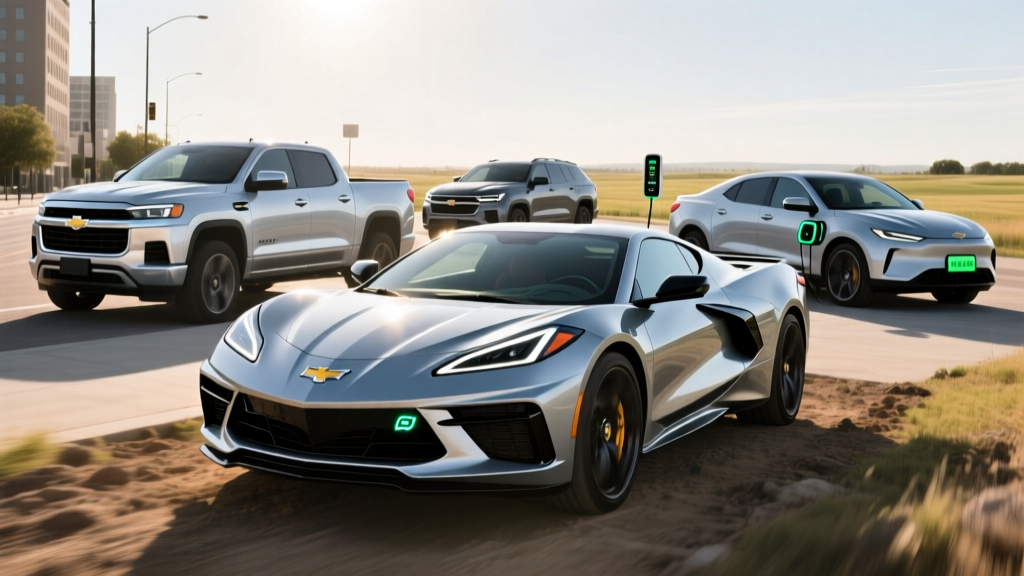
Chevrolet's approach to the Chevrolet hybrid market in 2026 splits into two distinct philosophies: performance-oriented hybridization with the Corvette E-Ray, and truck-based efficiency gains with the Silverado 1500 hybrid powertrain. Unlike Toyota's broad hybrid rollout across its entire lineup, Chevy has been selective — focusing electrification investment primarily on its Ultium-based EVs (Equinox EV, Blazer EV, Silverado EV) while deploying hybrid tech where it makes the strongest case.
For buyers searching "Chevrolet hybrid" in 2026, the options are narrower than competitors but purposeful. The Corvette E-Ray pairs a 6.2L V8 with an electric front axle for all-wheel-drive performance. The Silverado 1500 offers a mild-hybrid system for stop-start efficiency and low-speed torque fill. And for those willing to plug in, the Equinox PHEV (available in select markets) provides genuine electric-only commuting range.
Before diving into specs, let's clarify the fundamental difference between these systems — because confusing a conventional hybrid (HEV) with a plug-in hybrid (PHEV) leads to bad purchase decisions.
HEV vs PHEV: Which Chevrolet Hybrid System Fits You?
| Feature | HEV (Conventional Hybrid) | PHEV (Plug-In Hybrid) |
|---|---|---|
| Plug-in charging | No — charges via regenerative braking & engine | Yes — plugs into Level 1 or Level 2 charger |
| Electric-only range | Typically under 1 mile at low speed | 20–40+ miles on battery alone |
| Battery size | 1–2 kWh (small buffer) | 15–25 kWh usable |
| Federal tax credit (§30D) | Not eligible | Up to $7,500 (if sourcing & income rules met) |
| Best for | Drivers without home charging; highway-heavy commutes | Drivers with home Level 2; short daily commutes on electric |
| Chevy 2026 example | Corvette E-Ray, Silverado mild-hybrid | Equinox PHEV (select markets) |
The Corvette E-Ray and Silverado hybrid are HEVs — you never plug them in. They recover energy during braking and deceleration, storing it in a small battery that assists the gasoline engine. The Equinox PHEV, by contrast, has a much larger battery you charge at home or work, enabling genuine zero-tailpipe-emission commuting before the gas engine kicks in.
2026 Chevrolet Corvette E-Ray: The Performance Hybrid
The Corvette E-Ray is Chevrolet's most compelling hybrid product — a 655-horsepower all-wheel-drive sports car that uses electrification for performance, not just economy. The system pairs the familiar 6.2L LT2 V8 (495 hp, 470 lb-ft) driving the rear wheels with a 160-hp electric motor powering the front axle. A 1.9 kWh lithium-ion battery pack sits in the center tunnel, charged entirely by regenerative braking.
| Specification | 2026 Corvette E-Ray |
|---|---|
| Combined horsepower | 655 hp |
| Powertrain | 6.2L V8 (495 hp) + front electric motor (160 hp) |
| Drivetrain | eAWD (electric front axle, mechanical rear) |
| Battery | 1.9 kWh lithium-ion (no plug-in) |
| 0-60 mph | 2.5 seconds |
| EPA MPG (city/hwy/combined) | 16 / 24 / 19 |
| Electric-only mode | Stealth Mode: up to ~4 miles at low speed |
| Base MSRP (1LZ coupe) | $112,995 |
| Federal tax credit | Not eligible (HEV, not PHEV) |
Fuel Economy: Real-World vs EPA
With an EPA combined rating of 19 MPG, the E-Ray does not exist to save fuel — it exists to make 655 horsepower tractable in daily driving. In real-world mixed use, owners report 17–20 MPG depending on driving style. Highway cruising at 70 mph yields the best results (22–24 MPG), while aggressive canyon driving drops it to 12–14 MPG. The electric front axle provides the most benefit during low-speed maneuvers and launch, where the instant torque eliminates the lag before the V8 hits its powerband.
Stealth Mode allows pure electric driving at speeds up to about 45 mph for short distances — useful for leaving a neighborhood quietly. However, the 1.9 kWh battery depletes rapidly; expect 3–4 miles maximum before the V8 fires up.
2026 Chevrolet Silverado 1500 Hybrid: Truck Efficiency Gains
The Silverado 1500's hybrid system takes a different approach. Rather than a full hybrid powertrain like the Ford F-150 PowerBoost (which pairs a 3.5L V6 with a 47-hp electric motor in the transmission), Chevy's mild-hybrid system uses a 48-volt belt-driven starter-generator integrated with the 2.7L TurboMax four-cylinder or 5.3L V8. This system doesn't provide meaningful electric-only driving — instead, it enables smoother stop-start, torque fill during acceleration, and modest efficiency gains.
| Silverado 1500 Config | City MPG | Highway MPG | Combined MPG |
|---|---|---|---|
| 2.7L TurboMax + mild-hybrid (2WD) | 20 | 23 | 21 |
| 2.7L TurboMax + mild-hybrid (4WD) | 19 | 22 | 20 |
| 5.3L V8 + mild-hybrid (4WD) | 16 | 20 | 17 |
| Baseline: 5.3L V8 no hybrid (4WD) | 15 | 19 | 16 |
The efficiency gains are real but incremental — typically 1–2 MPG combined over the non-hybrid equivalent. The bigger benefit is refinement: the 48V system makes stop-start nearly imperceptible and provides a small torque bump (roughly 20 lb-ft) during initial acceleration. If you're a fleet buyer or high-mileage truck owner, the fuel savings compound over years. For a personal-use truck driven 10,000 miles annually, the payback period on any hybrid premium is long.
According to fueleconomy.gov, the Silverado mild-hybrid's combined 21 MPG (2WD) trails the Ford F-150 PowerBoost hybrid's 23 MPG combined but beats the standard V8 Silverado by a meaningful margin in city driving, where stop-start and low-speed electric assist matter most.
Equinox PHEV: The Plug-In Option (Select Markets)
For buyers who want a Chevrolet hybrid they can actually plug in, the Equinox PHEV — available in select global markets and fleet channels — offers a compelling bridge between gas and electric. With approximately 22–28 miles of electric-only range from a ~17 kWh usable battery, it covers most daily commutes without burning gasoline.
| Specification | 2026 Equinox PHEV |
|---|---|
| Battery (usable) | ~17 kWh lithium-ion |
| Electric-only range (EPA est.) | 22–28 miles |
| Total range (electric + gas) | ~400+ miles |
| Combined horsepower | ~220 hp (1.5L turbo + electric motor) |
| Level 1 charging (120V) | ~8 hours (full charge) |
| Level 2 charging (240V, 3.6 kW) | ~4.5 hours (full charge) |
| DC fast charging | Not available |
| EPA combined (gas only after depletion) | ~35–38 MPG |
| Base MSRP (est.) | $38,000–$42,000 |
The Equinox PHEV does not support DC fast charging — a common limitation in this class. Charging is limited to Level 2 (240V) at 3.6 kW, which is adequate for overnight home replenishment but means you won't top up quickly on a road trip. For PHEV buyers, this is rarely a dealbreaker: the use case is charge at home overnight, drive on electricity all day, and use the gas engine for longer trips.
Battery Warranty & Replacement Cost
Chevrolet covers hybrid and PHEV battery packs under its standard electrified powertrain warranty: 8 years / 100,000 miles (whichever comes first), with a capacity retention threshold typically set at 60–70% of original capacity. If the battery degrades below this threshold within the warranty period, Chevrolet will repair or replace it at no cost.
Out-of-warranty replacement costs vary: mild-hybrid 48V batteries (Silverado) run $1,500–$3,000; the Corvette E-Ray's 1.9 kWh pack is estimated at $3,000–$5,000; and a full PHEV traction battery (Equinox) can range from $6,000–$9,000. In practice, hybrid battery failures before 150,000 miles are uncommon based on long-term data from Toyota and Honda hybrid fleets, though Chevy's hybrid volume is lower and long-term data is still accumulating.
Federal Tax Credit: What Qualifies?
Under current IRS §30D rules for 2026, only plug-in hybrids (PHEVs) with at least 7 kWh of battery capacity qualify for the federal tax credit — and even then, eligibility depends on a matrix of requirements:
- MSRP cap: Vans/SUVs/pickups must be under $80,000; sedans under $55,000
- Buyer income cap: Modified AGI must not exceed $150,000 (single), $225,000 (head of household), or $300,000 (joint)
- Battery sourcing: Critical minerals and battery components must meet escalating domestic-sourcing percentages (2026 thresholds are stricter than 2024)
- Point-of-sale transfer: You can apply the credit as a down-payment reduction at the dealer rather than waiting for tax filing
The Corvette E-Ray and Silverado mild-hybrid are not eligible — they are conventional HEVs without plug-in capability. The Equinox PHEV may qualify for up to $7,500 depending on battery sourcing compliance and your income. Always verify current eligibility on irs.gov before purchasing, as component-sourcing rules tighten annually and can change a model's eligibility mid-year.
Hybrid vs PHEV vs EV: Which Chevrolet Fits Your Life?
Choose a Chevrolet HEV (Corvette E-Ray, Silverado mild-hybrid) if:
- You cannot charge at home (apartment, street parking, no garage)
- You drive predominantly highway miles where hybrids show less advantage
- You want zero behavior change — no plugging in, no range planning
- You're buying for performance (E-Ray) or truck capability (Silverado)
Choose a Chevrolet PHEV (Equinox PHEV) if:
- You have Level 2 charging at home or work
- Your daily commute is under 25 miles round-trip
- You want electric commuting but need gas-engine flexibility for road trips
- You want to reduce fuel costs without full EV commitment
Choose a full Chevrolet EV (Equinox EV, Blazer EV, Silverado EV) if:
- You have reliable home Level 2 charging
- Your typical trips fall within 250–300 miles (or you're comfortable with DC fast charging on road trips)
- You want the lowest per-mile fuel cost and minimal maintenance
- You want to maximize federal tax credit eligibility
Reliability and Long-Term Ownership
Chevrolet's hybrid systems are less proven than Toyota's two-decade track record, but the component technology is mature. The mild-hybrid 48V systems in the Silverado use a belt-driven starter-generator — a relatively simple addition with few failure points. The Corvette E-Ray's electric front axle is a performance-oriented system shared conceptually with other AWD hybrid supercars; early reliability data from the 2024–2025 model years shows no systemic issues, though sample sizes remain small.
For the Equinox PHEV, the larger battery pack and more complex powertrain introduce more variables. However, GM's Ultium-derived battery management systems and thermal controls are well-tested across the EV lineup. The 8-year/100,000-mile battery warranty provides meaningful protection, and NHTSA complaint databases show no widespread hybrid battery failure patterns for recent GM products.
Insurance costs for hybrid Chevrolets vary: the E-Ray commands sports-car premiums ($3,500–$5,000+ annually depending on profile), while the Silverado hybrid and Equinox PHEV typically run 5–10% higher than their gas-only counterparts due to higher repair costs for electrified components.
Pros and Cons: Chevrolet Hybrid Lineup at a Glance
Pros
- Corvette E-Ray delivers supercar performance (2.5s 0-60) with AWD all-weather capability
- Silverado mild-hybrid provides smoother stop-start and modest MPG gains without behavior change
- Equinox PHEV offers genuine electric-only commuting with gas-engine backup
- 8-year/100,000-mile battery warranty across all hybrid models
- No range anxiety — gas engine always available on HEVs and PHEVs
- Regenerative braking reduces brake wear in stop-and-go traffic
Cons
- Narrow hybrid lineup compared to Toyota/Honda — most Chevy models are gas-only or full EV
- Silverado mild-hybrid MPG gains are modest (1–2 MPG combined)
- Corvette E-Ray is a $113K+ performance car, not an efficiency play
- Equinox PHEV lacks DC fast charging
- HEVs do not qualify for federal tax credit — only PHEVs are eligible
- Long-term Chevy hybrid reliability data is thinner than Toyota's
- Hybrid premium on Silverado may take 5+ years to recoup via fuel savings
Frequently Asked Questions
How many MPG does a Chevrolet hybrid get?
It depends on the model. The 2026 Corvette E-Ray gets 19 MPG combined (16 city / 24 highway). The Silverado 1500 mild-hybrid with the 2.7L TurboMax achieves 21 MPG combined (20 city / 23 highway) in 2WD. The Equinox PHEV returns approximately 35–38 MPG combined after the electric range is depleted. In real-world city driving, hybrids often slightly exceed their EPA city ratings because stop-and-go traffic maximizes regenerative braking.
How far can the Equinox PHEV go on electric only?
The Equinox PHEV delivers an estimated 22–28 miles of electric-only range on a full charge, depending on driving conditions. Cold weather (below 40°F) reduces this by roughly 20–30% due to cabin heating demands and reduced battery efficiency. Highway-speed electric driving depletes the battery faster than city driving.
Do Chevrolet hybrids need to be plugged in?
Conventional hybrids (HEVs) like the Corvette E-Ray and Silverado mild-hybrid do not plug in — they charge their small batteries through regenerative braking and the gasoline engine. Only the Equinox PHEV requires plug-in charging to access its electric-only range. If you never plug in a PHEV, it operates as a conventional hybrid with reduced efficiency (due to carrying dead battery weight).
Is a Chevrolet hybrid reliable, and what does battery replacement cost?
Chevrolet's hybrid systems use mature technology with 8-year/100,000-mile battery warranties. Out-of-warranty replacement costs range from $1,500–$3,000 (Silverado 48V mild-hybrid) to $3,000–$5,000 (Corvette E-Ray) to $6,000–$9,000 (Equinox PHEV traction battery). Widespread premature battery failures are uncommon in modern hybrid systems, though Chevy's hybrid-specific track record is shorter than Toyota's.
Does any Chevrolet hybrid qualify for the federal tax credit?
Only plug-in hybrids (PHEVs) are eligible under IRS §30D rules. The Corvette E-Ray and Silverado mild-hybrid are conventional HEVs and do not qualify. The Equinox PHEV may qualify for up to $7,500 depending on battery component sourcing, your income level, and the vehicle's MSRP falling under the applicable cap. Check fueleconomy.gov and irs.gov for the latest eligibility details before purchasing.
Should I buy a Chevrolet hybrid or a full EV?
If you have home Level 2 charging, drive under 250 miles daily, and want the lowest operating cost, a full Chevrolet EV (Equinox EV, Blazer EV) is the stronger choice. If you lack home charging, regularly drive long distances, or need truck/sports-car capability, the hybrid options make more sense. The PHEV (Equinox) splits the difference — electric commuting with gas-engine range extension for road trips.