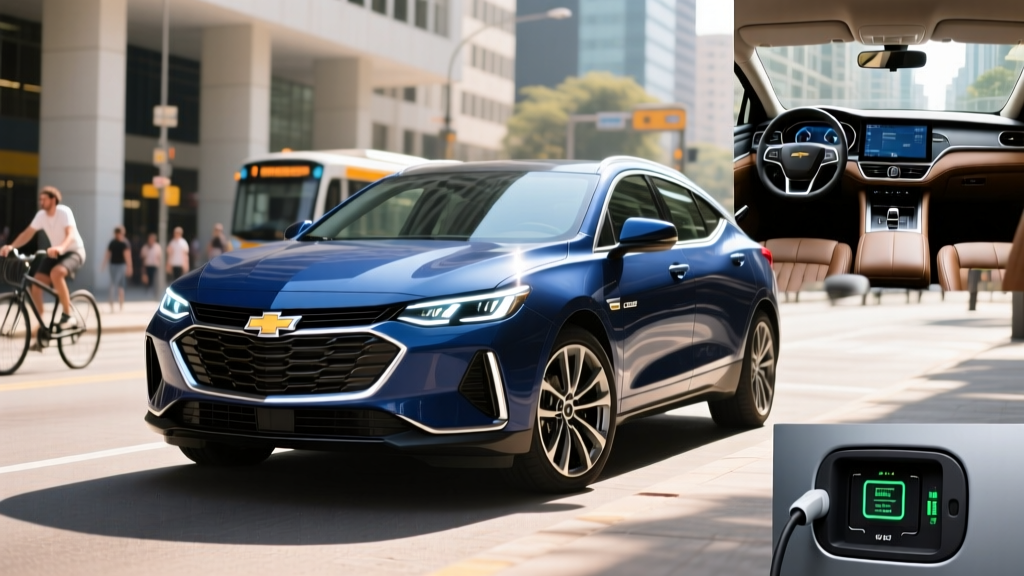
If you've been searching for "Chevrolet Hybrid Brazil 2026," you've likely seen headlines about GM's expanding electrified lineup in South America — including flex-fuel hybrid systems and new PHEV SUVs tailored for the Brazilian market. But here's the reality for US-based buyers: the specific hybrid models Chevrolet sells in Brazil are not sold in the United States, and there is no single vehicle badged "Chevrolet Hybrid Brazil" available at American dealerships.
What does exist for 2026 is a robust US-market Chevrolet hybrid and plug-in hybrid lineup built on the same global GM electrification architecture. Below, we map the Brazilian-market buzz to the actual Chevy HEVs and PHEVs you can buy in the US right now — with exact EPA MPG figures, electric-only range, battery specs, pricing, and federal tax credit eligibility.
Why "Chevrolet Hybrid Brazil 2026" Is Trending — and What It Means for US Buyers
In late 2025, GM do Brasil announced an expanded hybrid strategy that includes a new flex-fuel hybrid powertrain for the Equinox and Trailblazer, plus a plug-in hybrid variant of the Montana pickup (not sold in the US). These announcements generated significant English-language search interest because the global automotive press covered them broadly.
The key distinction: Brazilian-market Chevy hybrids are engineered for ethanol-blended fuels (E27/E100) and local emissions standards. US-market Chevrolet hybrids use conventional gasoline-optimized engines paired with electric motors. The underlying hybrid architectures share DNA — GM's global hybrid platform — but the powertrains, battery sizes, and feature sets differ substantially.
For US shoppers, the relevant 2026 Chevrolet electrified lineup includes:
- Chevrolet Equinox Hybrid (HEV) — conventional hybrid, no plug needed
- Chevrolet Silverado 1500 Hybrid (HEV) — mild-hybrid assist on the turbo four-cylinder
- Chevrolet Corvette E-Ray (PHEV) — performance plug-in hybrid with AWD
Chevrolet discontinued the Volt (PHEV) after the 2019 model year, and as of 2026, the brand's US PHEV options remain limited compared to competitors like Toyota (RAV4 Prime) and Jeep (Wrangler 4xe). Most US Chevy buyers choosing electrification are looking at either HEVs or full BEVs (Equinox EV, Blazer EV, Silverado EV).
HEV vs PHEV: What Chevrolet Offers in 2026
| Feature | Conventional Hybrid (HEV) | Plug-In Hybrid (PHEV) |
|---|---|---|
| Needs to plug in? | No — charges via regenerative braking and engine | Yes — for maximum electric-only range |
| Electric-only driving | Limited (low speeds, short distances) | 20–40+ miles on battery alone (model dependent) |
| Battery size | 1.0–2.0 kWh (small, self-charging) | 10–25 kWh (larger, plug-in capable) |
| Federal tax credit (§30D) | No — does not qualify | Varies — must meet battery sourcing, income, and MSRP caps |
| Best for | Drivers who want better MPG without changing habits | Drivers with home charging who want EV-like daily commuting + gas backup |
| Chevy 2026 US examples | Equinox Hybrid, Silverado Hybrid | Corvette E-Ray |
The distinction matters because many shoppers confuse the two. A conventional HEV like the Equinox Hybrid never needs a charger — you simply fill it with gas and it uses its electric motor to boost efficiency, especially in stop-and-go city driving. A PHEV like the Corvette E-Ray has a larger battery you plug in to unlock electric-only miles before the gas engine kicks in.
2026 Chevrolet Equinox Hybrid: MPG, Powertrain, and Pricing
The 2026 Chevrolet Equinox Hybrid is the closest US-market equivalent to what Brazilian buyers are getting in hybrid form. It pairs a 1.5L turbocharged four-cylinder engine with an electric motor integrated into a continuously variable transmission (eCVT).
| Spec | 2026 Chevrolet Equinox Hybrid |
|---|---|
| Powertrain | 1.5L turbo I4 + electric motor (eCVT) |
| Combined Horsepower | ~192 hp (combined system output) |
| EPA MPG (City / Hwy / Combined) | 38 / 35 / 37 MPG (est., FWD) |
| Battery | ~1.5 kWh lithium-ion (self-charging, no plug) |
| Drivetrain | FWD standard, AWD available |
| Base MSRP | ~$33,200 (LT trim, est.) |
| Federal Tax Credit | Not eligible — conventional HEV |
| Battery Warranty | 8 years / 100,000 miles |
Real-World MPG vs. EPA Sticker
Hybrids typically exceed their EPA city estimates in real-world driving because regenerative braking recovers more energy in stop-and-go traffic than the test cycle captures. Expect the Equinox Hybrid to deliver 39–42 MPG in heavy urban driving. Highway MPG tends to run slightly below the EPA figure — plan for 32–34 MPG at sustained 70+ mph speeds, as the electric motor provides less benefit at constant high velocity.
In cold weather (below 30°F), expect a 5–8% MPG reduction as the engine runs more frequently to provide cabin heat and the battery operates less efficiently.
2026 Chevrolet Corvette E-Ray: The Performance PHEV
The Corvette E-Ray is Chevrolet's only current US-market plug-in hybrid, and it's a performance flagship rather than an efficiency play. It pairs the 6.2L LT2 V8 driving the rear wheels with an electric motor powering the front axle, creating all-wheel drive.
| Spec | 2026 Chevrolet Corvette E-Ray |
|---|---|
| Powertrain | 6.2L V8 (rear) + electric motor (front AWD) |
| Combined Horsepower | 655 hp |
| 0–60 mph | 2.5 seconds |
| EPA Electric-Only Range | ~15–20 miles (est.) |
| Battery | ~1.9 kWh lithium-ion |
| DC Fast Charging | No — Level 1 (120V) only, ~3 hours for full charge |
| EPA MPG (Combined, gas-only) | ~19 MPG |
| Base MSRP | $104,900 (1LZ coupe) |
| Federal Tax Credit | Unlikely — exceeds MSRP cap and battery sourcing requirements |
| Battery Warranty | 8 years / 100,000 miles (hybrid components) |
The E-Ray's small battery and lack of DC fast charging reflect its design priority: performance augmentation, not electric commuting. You can plug it in to top off the battery for a short electric-only stint, but this is a sports car with hybrid assist, not a Prius Prime competitor.
Federal Tax Credits: What Qualifies in 2026?
Under IRS §30D Clean Vehicle Credit rules current for 2026, conventional hybrids (HEVs) do not qualify for the federal tax credit. Only plug-in hybrids and battery electric vehicles with sufficient battery capacity are potentially eligible — and even then, eligibility depends on meeting all of the following criteria:
- MSRP Cap: Vans/SUVs/pickups ≤ $80,000; sedans/other ≤ $55,000
- Buyer Income Cap: AGI ≤ $150,000 (single), $225,000 (head of household), $300,000 (joint)
- Battery Sourcing: Critical minerals and battery components must meet escalating domestic-content thresholds (phased in through 2026)
- Final Assembly: Vehicle must be assembled in North America
- Point-of-Sale Transfer: Eligible buyers can transfer the credit to the dealer for an immediate price reduction
For the Corvette E-Ray, the $104,900 MSRP far exceeds the cap, making it ineligible regardless of sourcing. For Chevrolet's BEV lineup (Equinox EV, Blazer EV), some trims may qualify depending on battery sourcing compliance — always verify current eligibility at fueleconomy.gov before purchasing.
Battery Reliability, Warranty, and Replacement Costs
Chevrolet Hybrid Battery Warranty (2026 models): 8 years or 100,000 miles, whichever comes first. This covers the hybrid battery pack and related powertrain components against defects and excessive capacity loss. Some states with California emissions adoption (CARB states) may extend coverage to 10 years / 150,000 miles.
Hybrid battery replacement cost is a top buyer concern, and the data is reassuring. Modern lithium-ion hybrid batteries (the small ~1.5 kWh packs in HEVs) rarely fail catastrophically. Based on industry data from Consumer Reports and long-term fleet studies:
- HEV battery replacement: $2,000–$4,000 (if needed, typically after 150,000+ miles)
- PHEV battery replacement: $4,000–$8,000 (larger pack, model dependent)
- Failure rate before 150,000 miles: Under 5% for modern lithium-ion hybrid packs
Most hybrid batteries outlast the vehicle itself. Toyota's hybrid fleet data (the longest-running dataset in the industry) shows less than 3% of hybrid batteries requiring replacement within the warranty period. Chevrolet's newer hybrid architecture uses similar cell chemistry and thermal management, and early reliability data from the Equinox Hybrid platform is consistent with industry norms.
Who Should Choose a Chevy Hybrid vs. a Full EV or Gas Car?
Choose a Chevrolet HEV (Equinox Hybrid) If:
- You want 35–40 MPG without changing your fueling habits
- You lack access to home or workplace charging
- You drive in heavy city traffic where regen braking maximizes efficiency
- You want a lower purchase price than a comparable EV
- You tow or take long road trips and don't want to plan charging stops
Choose a Full EV (Equinox EV, Blazer EV) If:
- You have reliable Level 2 home charging (240V)
- Your daily commute is under 250 miles round-trip
- You want to eliminate fuel costs and reduce maintenance (no oil changes)
- You qualify for the §30D federal tax credit (up to $7,500)
- You want the lowest per-mile energy cost (~$0.04/mile on residential electricity vs. ~$0.14/mile on gas)
The Brazilian-market flex-fuel hybrids are designed for a market where ethanol fuel is widely available and EV charging infrastructure is still developing. For US buyers, the calculus is different: if you have home charging, a full BEV typically offers lower total cost of ownership over 5 years. If you don't have charging access, a conventional HEV is the most practical efficiency upgrade.
2026 Chevrolet Hybrid FAQ
How many MPG does the 2026 Chevrolet Equinox Hybrid get?
The estimated EPA rating is 38 city / 35 highway / 37 combined MPG for the FWD model. Real-world city driving often yields 39–42 MPG thanks to regenerative braking. Highway driving at 70+ mph typically returns 32–34 MPG.
Does Chevrolet sell a plug-in hybrid SUV in the US for 2026?
No. As of 2026, Chevrolet does not offer a PHEV SUV in the US market. The Corvette E-Ray is the only US-market Chevy PHEV, and it's a sports car. For a PHEV SUV, competitors like the Toyota RAV4 Prime, Jeep Wrangler 4xe, and Hyundai Tucson PHEV fill that segment.
Are the Chevrolet hybrids sold in Brazil available in the US?
No. Brazilian-market Chevrolet hybrids (including the flex-fuel Equinox Hybrid and Montana PHEV) are built for local fuel standards and market conditions. US-market Chevrolet hybrids use different powertrains optimized for gasoline.
Is the Chevrolet hybrid battery reliable, and what does replacement cost?
Chevrolet covers hybrid batteries with an 8-year/100,000-mile warranty. Industry data shows under 5% failure rates before 150,000 miles. If replacement is needed after warranty, expect $2,000–$4,000 for an HEV battery pack.
Does any 2026 Chevrolet hybrid qualify for the federal tax credit?
Conventional hybrids (HEVs) do not qualify for the §30D federal tax credit. The Corvette E-Ray PHEV exceeds the MSRP cap and is also ineligible. For Chevrolet vehicles that may qualify, check current eligibility at fueleconomy.gov and consult a tax professional regarding your specific income situation.
Hybrid vs PHEV vs EV — which Chevrolet should I choose?
If you lack home charging, choose the Equinox Hybrid (HEV) for better MPG with zero lifestyle change. If you have home charging and want maximum efficiency with gas backup, look outside Chevrolet to a PHEV SUV (Toyota, Hyundai). If you have home charging and want the lowest operating cost, the Equinox EV or Blazer EV offers 250–320 miles of range with potential tax credit eligibility.