Quick Verdict: The Most Affordable Hybrid SUV in 2025
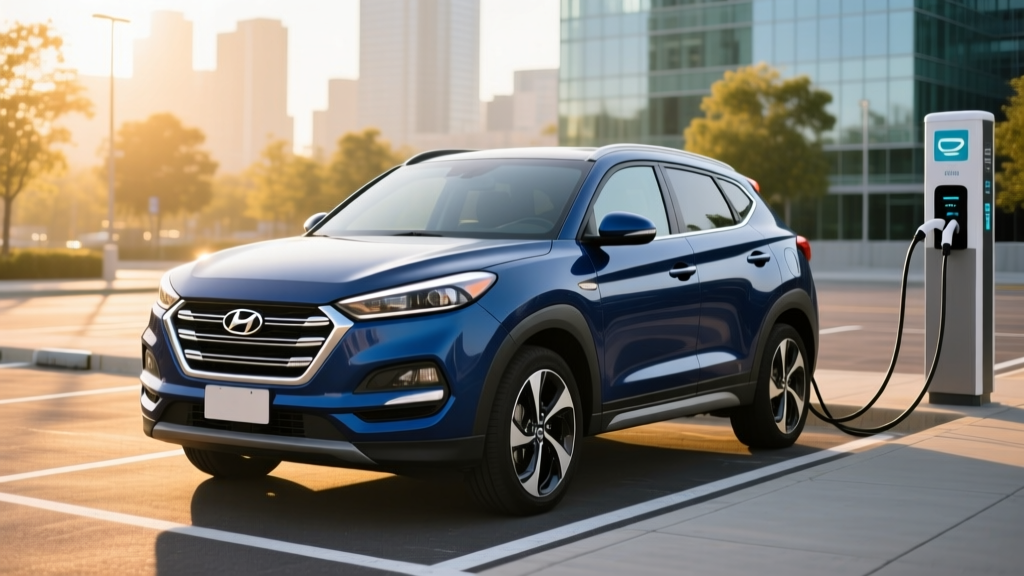
If you're hunting for the cheapest hybrid SUV 2025 has to offer, the Hyundai Tucson Hybrid Blue trim lands at $32,975 MSRP — undercutting the Toyota RAV4 Hybrid by roughly $1,000 and the Honda CR-V Hybrid by over $2,000. But low price doesn't matter if the powertrain disappoints. Fortunately, the Tucson Hybrid delivers 38 MPG combined, a 226-horsepower turbocharged powertrain, and one of the best battery warranties in the segment. Here's the full data-driven breakdown.
| Spec | Value |
|---|---|
| Base MSRP (Blue trim) | $32,975 |
| EPA MPG (City / Hwy / Combined) | 38 / 38 / 38 |
| Combined Horsepower | 226 hp |
| Powertrain | 1.6L turbo I4 + electric motor |
| Drivetrain | AWD (standard on all trims) |
| 0–60 mph | 7.1 seconds |
| Cargo Volume | 38.7 cu ft (rear seats up) |
| Hybrid Battery Warranty | 10 years / 100,000 miles |
| Federal Tax Credit Eligible | No (HEV, not PHEV) |
Hyundai Tucson Hybrid vs. Tucson Plug-In Hybrid: Which Is Which?
Hyundai sells two electrified Tucsons, and confusing them is easy. Here's the critical difference:
| Feature | Tucson Hybrid (HEV) | Tucson Plug-In Hybrid (PHEV) |
|---|---|---|
| Plug-in Required? | No — regenerative braking charges battery | Yes — plug in to access EV range |
| EPA Combined MPG / MPGe | 38 MPG | 80 MPGe (35 MPG gas-only) |
| Electric-Only Range | None (motor assists engine) | 33 miles EV-only |
| Battery Capacity | 1.49 kWh (small buffer) | 13.8 kWh usable |
| DC Fast Charge? | No | No (Level 2 AC only, ~2 hours) |
| Combined HP | 226 hp | 261 hp |
| Starting MSRP | $32,975 | $39,990 |
| Federal §30D Tax Credit | Not eligible | Not eligible (MSRP cap + sourcing) |
The conventional HEV never plugs in. It captures energy through regenerative braking and uses a small battery to assist the gas engine during acceleration, cruising, and low-speed driving. Think of it as a gas SUV that's simply much more efficient — no charging infrastructure required.
The PHEV has a larger battery you charge via a wall outlet or Level 2 station. It can drive 33 miles on electricity alone before the gas engine kicks in. If your commute is under 33 miles and you charge nightly, you'll burn almost zero gasoline on weekdays.
Fuel Economy: EPA Numbers vs. Real-World MPG
| Trim | City MPG | Highway MPG | Combined MPG |
|---|---|---|---|
| Blue | 38 | 38 | 38 |
| SEL Convenience / Limited | 37 | 36 | 37 |
The Blue trim's 38 MPG combined is the headline, and it's genuinely achievable. Hybrids excel in stop-and-go city driving because the electric motor handles low-speed propulsion while regenerative braking recaptures energy. According to the EPA, the Tucson Hybrid Blue achieves identical city and highway figures — a rarity that reflects Hyundai's well-tuned hybrid system.
Real-world expectations: Owner-reported data on Fuelly clusters around 34–37 MPG combined, with some drivers hitting 40+ in warm-weather city driving. Highway-heavy commutes at 75+ mph typically yield 33–35 MPG. Cold weather (below 30°F) reduces efficiency by roughly 5–8% because the engine runs more frequently to provide cabin heat.
For comparison, the gas-only Tucson AWD gets 26 MPG combined. That 12 MPG gap translates to roughly $450–$550 in annual fuel savings for a driver covering 15,000 miles per year at $3.40/gallon.
Powertrain Performance: 226 HP and Turbo Torque
The Tucson Hybrid pairs a 1.6-liter turbocharged four-cylinder engine (178 hp, 195 lb-ft) with a 47.7 kW electric motor integrated into a 6-speed automatic transmission. Combined output is 226 horsepower and 258 lb-ft of torque.
That torque figure matters: it hits immediately from the electric motor, giving the Tucson Hybrid punchy off-the-line acceleration that the gas-only model can't match. The 0–60 mph time of 7.1 seconds is quicker than the RAV4 Hybrid (7.4 seconds) and competitive with the CR-V Hybrid (7.6 seconds).
All-wheel drive is standard on every Tucson Hybrid trim — a HTRAC system that uses the rear-mounted electric motor to power the rear axle when slip is detected. There's no mechanical driveshaft connecting front and rear, which reduces weight and parasitic loss.
Pricing, Trims, and Tax Credit Reality
The 2025 Tucson Hybrid starts at $32,975 for the Blue trim, making it one of the most affordable compact hybrid SUVs available. Here's the trim ladder:
- Blue: $32,975 — 38 MPG, 18-inch wheels, basic infotainment
- SEL Convenience: $35,625 — 37 MPG, panoramic sunroof, leatherette seats
- Limited: $39,625 — 37 MPG, ventilated front seats, premium audio, highway driving assist
Federal tax credit: The conventional Tucson Hybrid (HEV) does not qualify for the §30D federal clean vehicle credit. That credit applies only to plug-in electric vehicles (BEVs and qualifying PHEVs). The Tucson PHEV also currently fails to qualify due to battery component and critical mineral sourcing requirements under the Inflation Reduction Act. Always verify current eligibility on IRS.gov before purchasing, as sourcing rules update periodically.
Some states offer rebates for conventional hybrids — check your state energy office or Alternative Fuels Data Center for local programs.
Battery Warranty and Long-Term Reliability
Hyundai Hybrid Battery Warranty
10 years / 100,000 miles — whichever comes first. If the hybrid battery drops below approximately 70% of original capacity within that window, Hyundai replaces it at no cost. This is transferable to the second owner for the powertrain portion (5 years/60,000 miles for the non-hybrid components).
Hyundai's hybrid battery warranty is among the longest in the industry, matched only by Kia (same corporate parent). Toyota covers its hybrid battery for 10 years/150,000 miles, slightly longer on mileage.
Real-world longevity: Hyundai's hybrid system uses a lithium-ion polymer battery pack that's relatively small (1.49 kWh) and operates in a narrow state-of-charge window — typically between 40% and 80%. This shallow cycling dramatically reduces degradation stress. Most hybrid batteries in modern vehicles last 150,000–200,000+ miles before requiring replacement.
Replacement cost: If you're out of warranty, a Tucson Hybrid battery replacement runs approximately $2,500–$4,000 including labor. However, out-of-warranty hybrid battery failures before 200,000 miles are statistically uncommon in modern systems. Individual cell modules can sometimes be replaced rather than the entire pack, reducing cost.
Hyundai's overall reliability has climbed in recent years. The Tucson earned a Top Safety Pick+ rating from the IIHS for the 2025 model year.
Who Should Buy the Tucson Hybrid — and Who Shouldn't?
Choose the Tucson Hybrid (HEV) If:
- You want maximum fuel efficiency without ever plugging in
- You lack access to home or workplace charging
- Your budget tops out around $35,000–$40,000
- You drive 12,000–18,000 miles/year and want lower fuel costs
- You want AWD standard in a compact SUV
Choose the Tucson PHEV If:
- You can install a Level 2 charger at home
- Your daily commute is under 33 miles round-trip
- You want EV-like daily driving with gas backup for road trips
- You're willing to pay ~$7,000 more upfront for the plug-in system
Choose a Full BEV (e.g., Ioniq 5, Tesla Model Y) If:
- You want zero tailpipe emissions and minimal maintenance
- You have reliable home charging and access to DC fast chargers
- You qualify for the $7,500 federal tax credit (income/MSRP/sourcing rules apply)
- You drive mostly under 250 miles between charges
Pros
- 38 MPG combined is best-in-class for the price point
- AWD standard on every trim — no FWD compromise
- 226 hp and 258 lb-ft feels genuinely quick
- 10-year/100,000-mile hybrid battery warranty
- IIHS Top Safety Pick+ rating
- Undercuts RAV4 Hybrid and CR-V Hybrid on price
Cons
- Blue trim is basic — you'll want SEL or higher for features
- No DC fast charging (HEV doesn't need it, PHEV lacks it)
- Cargo space slightly less than RAV4 Hybrid (38.7 vs 41.0 cu ft)
- Turbo engine requires premium fuel for max performance (regular is acceptable)
- No federal tax credit for either HEV or current PHEV
Frequently Asked Questions
How many MPG does the 2025 Tucson Hybrid actually get?
The EPA rates the Blue trim at 38 MPG city, 38 highway, and 38 combined. Real-world driving typically yields 34–37 MPG combined, with city-heavy routes in warm weather occasionally exceeding 40 MPG. Highway driving above 75 mph drops efficiency to roughly 33–35 MPG.
Is the Tucson Hybrid a plug-in vehicle?
No. The Tucson Hybrid (HEV) is a conventional hybrid — you never plug it in. The battery charges through regenerative braking and the gas engine. If you want plug-in capability with electric-only range, look at the Tucson Plug-In Hybrid (PHEV), which offers 33 miles of EV range on a full charge.
Does the Tucson Hybrid qualify for a federal tax credit?
No. The §30D federal clean vehicle credit applies only to plug-in vehicles (BEVs and qualifying PHEVs). The conventional Tucson Hybrid is not eligible. The Tucson PHEV also currently does not qualify due to battery sourcing requirements. Check IRS.gov for the latest eligibility rules.
How long will the Tucson Hybrid battery last?
Hyundai covers the hybrid battery for 10 years or 100,000 miles. In practice, modern hybrid batteries operating in shallow charge cycles routinely last 150,000–200,000+ miles. Out-of-warranty replacement costs approximately $2,500–$4,000, though full replacements are rare before 200K miles.
Is the Tucson Hybrid better than the RAV4 Hybrid?
The Tucson Hybrid Blue starts about $1,000 lower than the RAV4 Hybrid LE ($32,975 vs ~$33,975) and matches its 38 MPG combined rating. The RAV4 Hybrid offers slightly more cargo room (41.0 vs 38.7 cu ft) and Toyota's longer 10-year/150,000-mile battery warranty. Both are strong choices — the Tucson wins on price and power (226 hp vs 219 hp), while the RAV4 wins on cargo and warranty mileage.
Can the Tucson Hybrid run on electric power alone?
Only at very low speeds (under ~25 mph) for short distances, such as creeping through a parking lot. The 1.49 kWh battery isn't large enough for sustained electric-only driving. For meaningful EV-only range, you need the PHEV model with its 13.8 kWh battery and 33-mile electric range.