The Real Budget Hybrid Contender for 2025
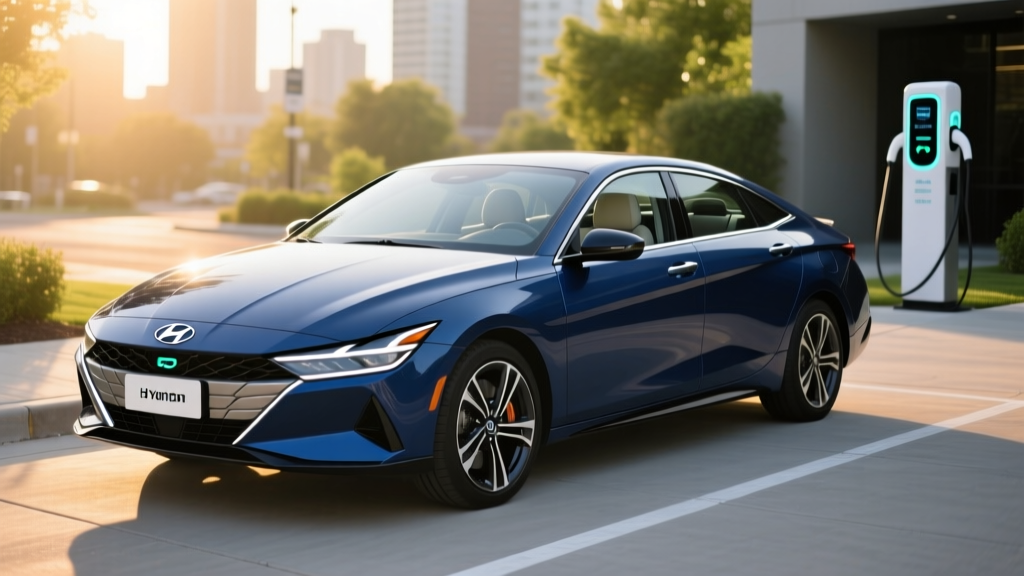
When buyers search for the cheapest hybrid car in 2025, the conversation usually narrows to two nameplates: the Toyota Prius and the Hyundai Elantra Hybrid. Both hover near $26,000 before incentives, but the Elantra Hybrid edges ahead on base MSRP and delivers one of the highest EPA fuel-economy ratings of any non-plug-in vehicle sold in the United States. For 2025, Hyundai carries over the Elantra Hybrid essentially unchanged from the refreshed 2024 model, preserving the 54 MPG combined rating that makes it a standout for cost-conscious commuters.
This guide focuses on the conventional hybrid (HEV) Elantra — not the plug-in variant, which Hyundai discontinued in the U.S. market after 2023. If you need plug-in electric-only range, we address that distinction below and point you toward alternatives.
HEV vs PHEV: Which Elantra Are We Talking About?
Conventional Hybrid (HEV) — 2025 Elantra Hybrid
- No plug required. The 1.32 kWh lithium-ion battery recharges via regenerative braking and the gasoline engine.
- Electric-only driving: Limited to very low-speed, short-distance creeping (under ~1 mile). The electric motor assists the engine; it does not replace it for meaningful distances.
- Best for: Drivers without home-charging access, apartment dwellers, or anyone who wants hybrid efficiency with zero behavioral change from a gas car.
Plug-In Hybrid (PHEV) — No Longer Offered in the U.S.
- The previous Elantra PHEV paired a 1.6L engine with a 12.9 kWh battery for ~33 miles of electric-only range.
- Hyundai pulled the PHEV from U.S. showrooms after the 2023 model year. If you want a Hyundai PHEV in 2025, look at the Tucson PHEV (33 mi electric range, ~$38,000 MSRP) or the Santa Fe PHEV.
The takeaway: the 2025 Elantra Hybrid discussed in this article is strictly a self-charging HEV. You will never plug it in, and it will never drive more than a few hundred yards on battery alone. Its job is to slash fuel consumption, not to replace gasoline with grid electricity.
Fuel Economy: 54 MPG Combined — and Real-World Results
| Trim | City MPG | Highway MPG | Combined MPG |
|---|---|---|---|
| Blue | 51 | 58 | 54 |
| SEL Sport / Limited | 49 | 52 | 50 |
Source: fueleconomy.gov
The Blue trim's 54 MPG combined figure places the Elantra Hybrid within one MPG of the Toyota Prius LE (57 combined) and well ahead of the Honda Civic Hybrid (49 combined). The higher SEL Sport and Limited trims sacrifice a few MPG to larger 17-inch alloy wheels, additional sound insulation, and more standard equipment.
Real-World MPG: Expect to Beat the Sticker in Town
Hybrids almost always exceed their EPA city rating in stop-and-go driving because regenerative braking recovers kinetic energy that a gas car wastes as heat. In warm-weather city loops at speeds under 45 mph, owners and testers routinely report 55–62 MPG in the Blue trim. Highway driving at 75 mph is a different story: the gasoline engine does most of the work, and real-world figures settle to 44–48 MPG. Cold weather (below 30°F) reduces battery efficiency and increases engine warm-up time, dropping combined numbers to roughly 44–47 MPG.
For an annual driver covering 15,000 miles at a blended 50 MPG, fuel cost at $3.30 per gallon works out to approximately $990 per year — roughly half what a comparable 28-MPG gas-only compact sedan would cost.
Powertrain Specs: What Moves the Elantra Hybrid
| Engine | 1.6L GDI 4-cylinder (104 hp / 109 lb-ft) |
|---|---|
| Electric Motor | Permanent-magnet synchronous (36 kW / 48 hp / 125 lb-ft) |
| Combined System Output | 139 hp / 195 lb-ft |
| Transmission | 6-speed dual-clutch automatic (DCT) |
| Hybrid Battery | 1.32 kWh lithium-ion polymer |
| Drivetrain | Front-wheel drive |
| 0–60 mph | ~8.5 seconds (independent testing) |
| Curb Weight | ~3,017 lbs (Blue trim) |
| Cargo Volume | 14.2 cu ft (trunk) |
| Base MSRP | $26,250 (Blue) / $28,100 (SEL Sport) / $30,150 (Limited) |
Hyundai uses a 6-speed dual-clutch transmission rather than the continuously variable transmission (CVT) found in the Prius. The result is more natural-feeling acceleration and less of the "rubber-band" drone common to CVT hybrids. The trade-off: slightly less seamless low-speed electric-to-gas handoff, though most drivers won't notice it.
The 139 combined horsepower figure is modest — this is an efficiency-first sedan, not a performance car. The 8.5-second 0–60 time is adequate for merging and passing, but the Elantra Hybrid is not quick by any sporting standard.
Pricing, Tax Credits, and Total Cost of Ownership
The 2025 Elantra Hybrid Blue starts at $26,250 including destination charge. That positions it roughly $1,000–$2,000 below the 2025 Toyota Prius LE ($28,550) and makes it the cheapest hybrid sedan available from a mainstream brand in the U.S. market for 2025.
Does the Elantra Hybrid Qualify for a Federal Tax Credit?
No. Under IRS §30D rules, the federal clean vehicle credit applies only to plug-in electric vehicles (BEVs and PHEVs) with a battery capacity of at least 7 kWh. The Elantra Hybrid's 1.32 kWh battery and lack of a charging port make it ineligible for the $7,500 federal credit. This is the case for all conventional (non-plug-in) hybrids sold in the United States.
However, some states and utilities offer their own incentives for hybrids. Check your state energy office or local utility for rebates — these vary widely and change frequently, so consult official sources rather than relying on dealer claims.
Five-Year Cost Snapshot
Assuming 15,000 miles per year, $3.30/gallon fuel, and the Blue trim's 50 MPG real-world combined average:
- Annual fuel cost: ~$990
- 5-year fuel cost: ~$4,950
- Comparable gas-only sedan (30 MPG): ~$8,250 over 5 years
- 5-year fuel savings vs gas: ~$3,300
Insurance premiums for the Elantra Hybrid are typically in line with the gas-only Elantra — sometimes slightly lower due to Hyundai's strong safety ratings. Check your insurer for a specific quote, as hybrid insurance costs vary by provider and region.
Battery Warranty, Reliability, and Replacement Cost
Hyundai Hybrid Battery Warranty
- Hybrid/EV battery: 10 years / 100,000 miles (whichever comes first)
- Hybrid system components: 10 years / 100,000 miles
- Capacity retention threshold: Hyundai warrants against defects and abnormal degradation; specific percentage thresholds are defined in the warranty booklet
- Transferability: The 10-year/100,000-mile hybrid battery warranty is not transferable to second owners (the powertrain warranty drops to 5-year/60,000-mile for subsequent owners)
Hyundai's 10-year/100,000-mile hybrid battery warranty is among the best in the industry and matches Toyota's coverage. The 1.32 kWh battery is small and operates within a narrow state-of-charge window (typically 40–80%), which minimizes stress and extends cycle life. Real-world data from earlier Hyundai hybrid models (Ioniq Hybrid, Sonata Hybrid) shows minimal measurable degradation over 100,000+ miles.
What Does a Hybrid Battery Replacement Cost?
If you do need a replacement outside warranty — rare but possible — expect to pay $2,000–$3,500 for a new OEM hybrid battery pack plus labor. Refurbished packs from third-party suppliers can reduce this to $1,200–$2,000. The small battery size keeps costs far below full EV battery replacements, which can exceed $10,000.
Hyundai's hybrid system has proven reliable in IIHS and long-term owner surveys. The 6-speed DCT is a known component with established service procedures, unlike the more complex planetary gearsets in some competitors.
Pros, Cons, and the Bottom Line
Pros
- Lowest MSRP of any mainstream hybrid sedan (~$26,250)
- 54 MPG combined EPA (Blue trim) — near the top of the segment
- 10-year/100,000-mile hybrid battery warranty
- Natural-feeling 6-speed DCT (no CVT drone)
- Spacious rear seat and 14.2 cu ft trunk
- Strong standard safety suite (forward collision, lane-keeping, blind-spot)
Cons
- No electric-only driving range (HEV, not PHEV)
- Modest 139 hp — not quick off the line
- Higher trims lose 4 MPG to wheels and weight
- No all-wheel-drive option (Prius offers AWD)
- Road noise is noticeable on coarse pavement
- No federal tax credit eligibility
Who Should Choose the Elantra Hybrid vs a PHEV or Full EV?
The right vehicle depends on your driving pattern, charging access, and budget. Here's a practical decision framework:
Choose the Elantra Hybrid (HEV) if:
- You cannot charge at home (apartment, street parking, no garage outlet).
- Your budget is firm at $26,000–$28,000 and you want the cheapest hybrid car available.
- You drive a mix of city and highway miles and want consistent 45–55 MPG without any plug-in routine.
- You plan to keep the car 8–10 years and want the security of a long hybrid battery warranty.
Choose a Plug-In Hybrid (PHEV) if:
- You can install a Level 2 charger at home and want 25–40 miles of daily electric-only commuting.
- You want to reduce gasoline use by 60–80% on typical commutes while keeping gas for road trips.
- You're willing to pay $35,000–$42,000 (e.g., Toyota Prius Prime, Hyundai Tucson PHEV).
- You may qualify for the $7,500 federal tax credit under IRS §30D (subject to income caps, MSRP limits, and battery-sourcing rules).
Choose a Full EV (BEV) if:
- You have reliable home Level 2 charging and your daily driving is under 250 miles.
- You want zero tailpipe emissions and the lowest per-mile "fuel" cost (electricity at $0.12/kWh costs roughly $0.04/mile vs $0.10/mile for a 50-MPG hybrid).
- You're willing to invest $35,000–$55,000 upfront (before credits) and plan charging infrastructure into your routine.
Frequently Asked Questions
How many MPG does the 2025 Hyundai Elantra Hybrid get?
The Blue trim achieves an EPA-rated 51 city / 58 highway / 54 combined MPG. The SEL Sport and Limited trims are rated at 49 city / 52 highway / 50 combined. Real-world city driving often exceeds the EPA city figure; highway driving at sustained high speeds typically falls 4–6 MPG below the EPA highway number.
Can I plug in the 2025 Elantra Hybrid to charge it?
No. The Elantra Hybrid is a conventional hybrid (HEV) with no charging port. Its 1.32 kWh battery recharges automatically through regenerative braking and the gasoline engine. If you want a plug-in Hyundai, consider the Tucson PHEV.
How far can the Elantra Hybrid drive on electric power alone?
Less than one mile, and only at very low speeds (under ~25 mph). The electric motor's primary role is to assist the gasoline engine during acceleration and to enable engine-off coasting — not to provide meaningful electric-only range. For 25+ miles of electric driving, you need a PHEV or BEV.
Is the Elantra Hybrid reliable, and what will battery replacement cost?
Hyundai's hybrid powertrain has a strong reliability record, and the 10-year/100,000-mile battery warranty is among the industry's best. Out-of-warranty battery replacement typically costs $2,000–$3,500 for a new OEM pack, or $1,200–$2,000 for a refurbished unit. Given the battery's small size and conservative charge management, replacement is rarely needed within the vehicle's normal lifespan.
Does the 2025 Elantra Hybrid qualify for any tax credit?
It does not qualify for the federal §30D clean vehicle credit, which requires a plug-in vehicle with at least 7 kWh of battery capacity. Some states and utilities offer separate hybrid incentives — check your state energy office or utility provider for current programs. Federal and state incentive rules change regularly, so always verify with official sources like irs.gov.
How does the Elantra Hybrid compare to the Toyota Prius?
The Prius LE delivers slightly better fuel economy (57 combined vs 54) and offers available all-wheel drive, but its base MSRP is roughly $2,300 higher ($28,550 vs $26,250). The Prius also uses a CVT, which some drivers find less engaging than the Elantra's 6-speed DCT. If absolute lowest price is your priority, the Elantra Hybrid Blue wins. If maximum MPG and AWD availability matter more, the Prius is the stronger pick.