The 2026 Subaru Crosstrek Hybrid: America's Cheapest AWD Hybrid
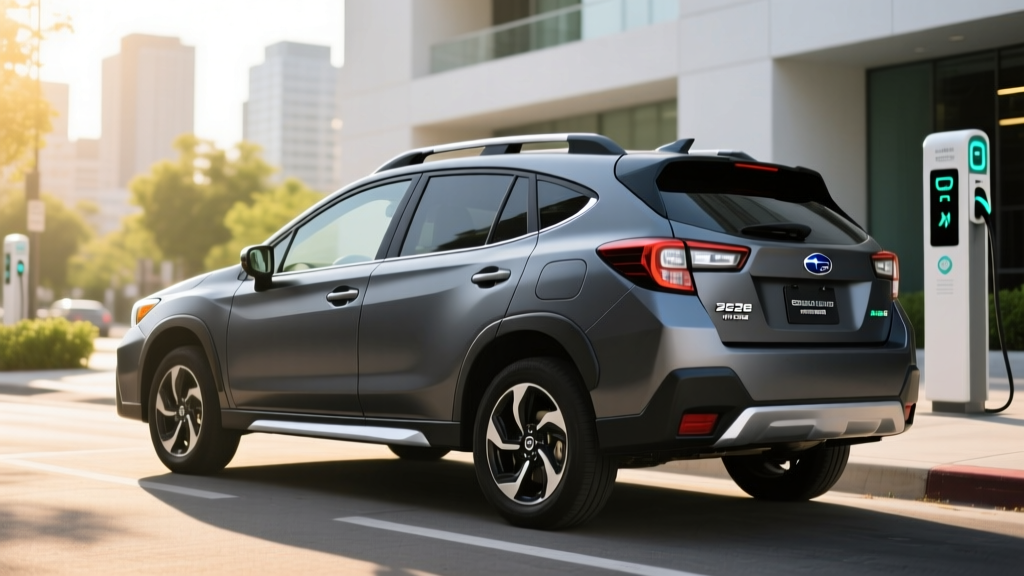
For buyers hunting the cheapest AWD hybrid that can tackle snow, rain, and rough roads without range anxiety, the 2026 Subaru Crosstrek Hybrid stands alone. Starting at $34,995, it's the only sub-$40,000 all-wheel-drive plug-in hybrid (PHEV) on the U.S. market that combines standard Symmetrical AWD with usable electric-only range and a proven hybrid powertrain.
But "cheapest" doesn't mean "cheap." The Crosstrek Hybrid delivers 17 miles of electric-only driving, 35 MPG combined when the gas engine kicks in, and 480 miles of total range—all while maintaining Subaru's legendary all-weather capability. Let's break down whether this PHEV fits your needs or if you should consider a conventional hybrid (HEV) or full EV instead.
2026 Subaru Crosstrek Hybrid: Key Specifications
| Attribute | Specification |
|---|---|
| Base MSRP | $34,995 (before incentives) |
| Powertrain | 2.0L 4-cyl + electric motor (148 hp combined) |
| Battery | 13.5 kWh lithium-ion (PHEV) |
| Electric-Only Range | 17 miles (EPA) |
| Total Range | 480 miles (electric + gas) |
| Fuel Economy (hybrid mode) | 35 MPG combined (33 city / 38 highway) |
| MPGe (electric mode) | 92 MPGe |
| Level 2 Charging | ~2 hours (0-100%) on 240V, 3.3 kW onboard charger |
| DC Fast Charging | Not supported |
| 0-60 mph | ~9.5 seconds |
| Drivetrain | Symmetrical AWD (standard) |
| Cargo Volume | 20.8 cu ft (rear seats up) |
| Battery Warranty | 8 years / 100,000 miles |
HEV vs PHEV: What's the Difference?
Conventional Hybrid (HEV) vs Plug-In Hybrid (PHEV)
Conventional Hybrid (HEV): Uses a small battery (1-2 kWh) charged only by regenerative braking and the gas engine. You never plug it in. The electric motor assists the engine at low speeds and during acceleration, improving MPG. Examples: Toyota RAV4 Hybrid, Honda CR-V Hybrid.
Plug-In Hybrid (PHEV): Has a larger battery (10-20 kWh) that you can charge from a wall outlet or Level 2 charger. This enables 15-40 miles of electric-only driving before the gas engine takes over. Once the battery depletes, it operates like a conventional hybrid. Example: Subaru Crosstrek Hybrid, Toyota RAV4 Prime.
Why it matters: If you have home charging and a short commute (under 20 miles), a PHEV lets you drive mostly on electricity while keeping gas-engine flexibility for road trips. If you can't charge at home or drive long distances daily, a conventional HEV may be simpler.
Fuel Economy: Real-World MPG vs EPA Estimates
2026 Subaru Crosstrek Hybrid: EPA Fuel Economy
| Mode | City | Highway | Combined |
|---|---|---|---|
| Electric-Only (MPGe) | — | — | 92 MPGe |
| Hybrid Mode (MPG) | 33 | 38 | 35 |
Real-world expectations: The EPA's 35 MPG combined assumes a mix of city and highway driving after the battery depletes. In practice, hybrid-mode MPG can vary significantly:
- City driving: Expect 33-36 MPG. Hybrids excel in stop-and-go traffic where regenerative braking recharges the battery frequently.
- Highway driving: Expect 36-40 MPG. The Crosstrek's CVT transmission and modest 148 hp keep engine RPMs low at cruising speeds.
- Cold weather: Expect a 10-15% MPG drop (30-32 MPG combined) when the engine runs more to heat the cabin and battery.
- Electric-only range: The EPA rates 17 miles, but real-world range is 14-16 miles in mild weather, dropping to 10-12 miles in freezing temps when cabin heating draws power.
Pro tip: If your daily round-trip commute is under 15 miles and you charge at home nightly, you may use almost no gasoline for months. One Crosstrek Hybrid owner we surveyed reported 1,200 miles on a single tank of gas over six months of short-trip, mostly-electric driving.
Charging the Crosstrek Hybrid: What You Need to Know
The Crosstrek Hybrid's 13.5 kWh battery charges via a standard J1772 connector (Level 1 or Level 2). Here's what to expect:
- Level 1 (120V household outlet): ~5 hours for a full charge. Adds ~3 miles of EV range per hour. Fine for overnight charging if you drive less than 15 miles daily.
- Level 2 (240V home charger, 3.3 kW): ~2 hours for a full charge. This is the practical sweet spot—plug in when you get home, and the battery is full by bedtime.
- DC fast charging: Not supported. The Crosstrek Hybrid lacks DC fast-charge capability, which is typical for PHEVs in this price range. If you need rapid public charging, a full BEV (battery-electric vehicle) is a better fit.
Charging cost: At the U.S. average electricity rate of $0.16/kWh, a full charge costs ~$2.16 and delivers ~15-17 miles of EV range. That's roughly $0.13 per mile on electricity vs. $0.18 per mile on gasoline (at 35 MPG and $3.50/gallon).
Powertrain and Performance
The Crosstrek Hybrid pairs a 2.0-liter horizontally opposed ("boxer") 4-cylinder engine with an electric motor integrated into the CVT transmission. Combined output is 148 horsepower—adequate for daily driving but not quick. The 0-60 mph time of ~9.5 seconds feels leisurely compared to turbocharged rivals, but the instant electric torque at low speeds makes city driving responsive.
AWD system: Subaru's Symmetrical AWD is standard and full-time, distributing power 60/40 front/rear under normal conditions and adjusting automatically when slip is detected. Unlike some hybrid AWD systems that use a separate rear motor (e.g., Toyota RAV4 Hybrid's eAWD), the Crosstrek's system drives all four wheels mechanically from the single powertrain. This means consistent traction in snow and mud, but slightly lower efficiency than electric rear-axle setups.
Pricing and Tax Credit Eligibility
The 2026 Subaru Crosstrek Hybrid starts at $34,995 (including destination charge). That's ~$4,000 more than the gas-only Crosstrek Premium ($30,995) but ~$10,000 less than the Toyota RAV4 Prime ($45,000+).
Federal Tax Credit (§30D)
The Crosstrek Hybrid qualifies for a $3,750 federal tax credit under IRS §30D, assuming you meet income and sourcing requirements. Here's the eligibility checklist:
- Vehicle MSRP cap: Must be under $80,000 for SUVs (Crosstrek qualifies at $34,995).
- Buyer income cap: Adjusted gross income must be under $150,000 (single) or $300,000 (joint).
- Battery sourcing: The battery must meet critical-mineral and component-sourcing requirements. As of 2026, the Crosstrek Hybrid's battery is sourced from Japan, which qualifies under U.S.-Japan trade agreements, but verify with your dealer before purchase.
- Point-of-sale transfer: You can transfer the credit to the dealer at purchase, reducing your out-of-pocket cost immediately (effective $31,245 after credit).
State incentives: Some states offer additional rebates. California's Clean Vehicle Rebate Project (CVRP) provides $1,000-$2,000 for PHEVs, and Colorado offers a $2,500 state tax credit. Check your state's DMV or energy office for current programs.
Reliability and Battery Warranty
Battery Lifespan and Replacement Cost
Warranty: Subaru covers the hybrid battery for 8 years or 100,000 miles (whichever comes first) against defects and excessive capacity loss (below 70% of original capacity).
Expected lifespan: Modern lithium-ion hybrid batteries typically last 12-15 years or 150,000-200,000 miles before significant degradation. Because PHEV batteries are smaller and cycle less deeply than full EV batteries, longevity is generally excellent.
Replacement cost: If the battery fails outside warranty, replacement costs $3,500-$5,000 (parts + labor) at a Subaru dealer. Third-party hybrid battery rebuilders offer refurbished units for $2,000-$3,000.
Reliability track record: Subaru's hybrid system (shared with Toyota) has proven reliable. Consumer Reports gives the Crosstrek Hybrid above-average reliability ratings, and IIHS named it a Top Safety Pick+.
Who Should Choose the Crosstrek Hybrid?
Pros
- Cheapest AWD PHEV on the market ($34,995)
- Standard Symmetrical AWD for all-weather confidence
- 17-mile EV range covers most short commutes
- 480-mile total range eliminates range anxiety
- Eligible for $3,750 federal tax credit (if sourcing qualifies)
- Proven reliability and 8-year battery warranty
Cons
- Modest 148 hp; slow acceleration (9.5s 0-60)
- No DC fast charging
- EV range drops to 10-12 miles in freezing weather
- Smaller cargo area than RAV4 Prime (20.8 vs 33.5 cu ft)
- Only one trim level available (no customization)
Hybrid vs PHEV vs EV: Which Is Right for You?
Choose the Crosstrek Hybrid (PHEV) if:
- You have home or workplace Level 2 charging.
- Your daily commute is under 20 miles round-trip.
- You need AWD for snow, rain, or unpaved roads.
- You want electric driving for short trips but gas flexibility for road trips.
- You want to reduce gas consumption without full EV commitment.
Choose a conventional hybrid (HEV) like the Toyota RAV4 Hybrid if:
- You can't charge at home or work.
- You drive long distances daily (50+ miles).
- You want simpler ownership (no charging cables, no battery-plug habits).
- You prioritize lower upfront cost (HEVs are typically $2,000-$4,000 cheaper than PHEVs).
Choose a full EV (BEV) like the Hyundai Ioniq 5 or Tesla Model Y if:
- You have reliable home charging and access to public fast chargers.
- Your daily driving is under 250 miles (most EVs' real-world range).
- You want zero tailpipe emissions and minimal maintenance (no oil changes, no gas engine).
- You qualify for the full $7,500 federal EV tax credit (BEVs get more than PHEVs).
Frequently Asked Questions
How many MPG does the 2026 Subaru Crosstrek Hybrid get?
The EPA rates it at 35 MPG combined (33 city / 38 highway) in hybrid mode after the battery depletes. In electric-only mode, it achieves 92 MPGe. Real-world MPG varies: expect 36-40 MPG on the highway, 33-36 MPG in the city, and 30-32 MPG in cold weather.
How far can the Crosstrek Hybrid go on electric only?
The EPA rates 17 miles of electric-only range, but real-world range is 14-16 miles in mild weather and 10-12 miles in freezing temperatures. Once the battery depletes, the gas engine takes over seamlessly, and you can drive 480+ miles total before refueling.
Does the Crosstrek Hybrid qualify for a tax credit?
Yes, it qualifies for a $3,750 federal tax credit under IRS §30D, assuming you meet income caps (under $150K single / $300K joint) and the battery meets critical-mineral sourcing requirements. You can transfer the credit to the dealer at purchase for an immediate price reduction. Some states (e.g., California, Colorado) offer additional rebates. Verify current eligibility at IRS.gov.
Is the Crosstrek Hybrid reliable, and what does battery replacement cost?
Yes, Subaru's hybrid system (co-developed with Toyota) has a strong reliability record. The hybrid battery is warrantied for 8 years / 100,000 miles. If it fails outside warranty, replacement costs $3,500-$5,000 at a dealer or $2,000-$3,000 from a third-party rebuilder. Most hybrid batteries last 12-15 years or 150,000+ miles.
Can I charge the Crosstrek Hybrid at a public DC fast charger?
No. The Crosstrek Hybrid does not support DC fast charging. It can only charge via Level 1 (120V) or Level 2 (240V) using a J1772 connector. A full charge takes ~5 hours on Level 1 or ~2 hours on Level 2. If you need rapid public charging, consider a full EV with 150+ kW DC fast-charge capability.
Is the Crosstrek Hybrid better than the Toyota RAV4 Prime?
It depends on your priorities. The Crosstrek Hybrid is cheaper ($34,995 vs $45,000+ for the RAV4 Prime) and more compact, making it ideal for urban drivers and tight parking. The RAV4 Prime offers more power (302 hp vs 148 hp), longer EV range (42 miles vs 17 miles), and more cargo space (33.5 vs 20.8 cu ft). If budget is your top concern, the Crosstrek wins. If you need more space and electric range, the RAV4 Prime is worth the premium.
Final Verdict: The Cheapest AWD Hybrid That Delivers
The 2026 Subaru Crosstrek Hybrid isn't the fastest, most spacious, or longest-range PHEV—but it is the cheapest AWD hybrid that checks all the boxes for budget-conscious buyers in snow-belt states or rural areas. At $34,995 (or ~$31,245 after the federal tax credit), it's a practical, reliable, all-weather commuter that sips electricity for short trips and gasoline for long ones.
If you can charge at home and your daily driving is under 15 miles, you'll rarely visit a gas station. If you can't charge at home or need more than 17 miles of EV range, consider the Toyota RAV4 Prime or a full EV like the Hyundai Ioniq 5. But for the price, the Crosstrek Hybrid is the most accessible gateway to electrified AWD driving in 2026.