The Camry Hybrid's Performance and Efficiency Case in 2026
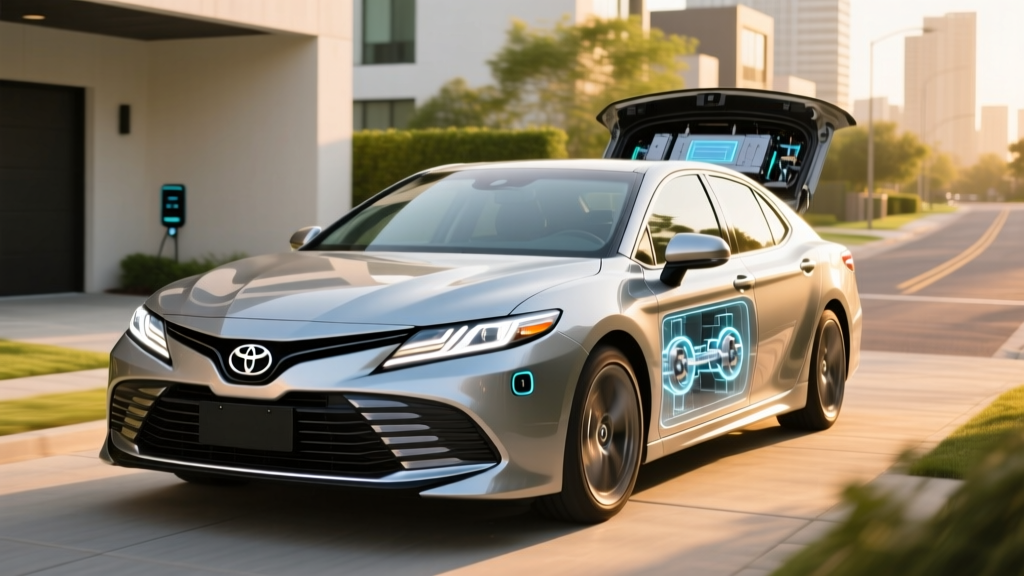
The Toyota Camry has been America's best-selling sedan for years, and since the 2025 redesign, it has been offered exclusively as a hybrid. For 2026, the Camry Hybrid carries forward with Toyota's fifth-generation hybrid system — a 2.5-liter four-cylinder paired with electric motors — delivering a compelling mix of acceleration and fuel economy that few midsize sedans can match. If you've been searching for the Camry Hybrid 0 to 60 time and real-world efficiency data, this guide covers every number that matters.
The 2026 Camry is a conventional hybrid (HEV), not a plug-in hybrid (PHEV). That means it never needs to be plugged in; its small traction battery recharges through regenerative braking and the gasoline engine. This distinction matters because buyers sometimes confuse the two, expecting plug-in electric-only range that simply isn't part of the Camry's design. If you need electric-only miles, you'll want to look at a PHEV like the Toyota RAV4 Prime or a full battery-electric vehicle (BEV).
Camry Hybrid 0 to 60: Acceleration and Powertrain Specs
The 2026 Camry Hybrid uses Toyota's latest hybrid synergy drive, combining a 2.5-liter Dynamic Force inline-four engine with one or two electric motors depending on drivetrain configuration. Here is the full powertrain breakdown:
| Spec | FWD Models | AWD Models |
|---|---|---|
| Engine | 2.5L I4 + 1 electric motor | 2.5L I4 + 2 electric motors |
| Combined Horsepower | 225 hp | 232 hp |
| Camry Hybrid 0 to 60 mph | ~7.1 seconds | ~6.9 seconds |
| Drivetrain | Front-wheel drive | Electronic AWD (rear motor) |
| Transmission | eCVT | eCVT |
| Hybrid Battery Type | Lithium-ion (approx. 1.1 kWh, sealed Ni-MH in prior gens replaced) | |
The AWD model's quicker 0-to-60 time comes from the additional rear-mounted electric motor, which provides extra launch torque and all-weather traction. In real-world driving, the difference between 6.9 and 7.1 seconds is subtle, but the AWD variant's ability to put power down in rain or snow is a tangible advantage. The eCVT (electronically controlled continuously variable transmission) keeps the engine in its most efficient RPM range, which means acceleration is smooth and linear rather than the stepped feel of a traditional automatic.
Compared to the outgoing V6 Camry (which Toyota discontinued after 2024), the hybrid gives up roughly a second in the sprint to 60 but gains nearly double the fuel efficiency. The 232 hp AWD figure is more than adequate for highway merging and passing, and the instant torque from the electric motors makes the car feel quicker off the line than the horsepower number alone suggests.
Fuel Economy: EPA MPG and Real-World Results
Fuel economy is where the Camry Hybrid earns its keep. The EPA rates the 2026 model as follows:
| Trim / Drivetrain | City MPG | Highway MPG | Combined MPG |
|---|---|---|---|
| LE (FWD) | 53 | 50 | 51 |
| SE / XLE / XSE (FWD) | 48 | 47 | 47 |
| SE / XLE / XSE (AWD) | 46 | 46 | 46 |
The LE trim's 51 MPG combined figure is exceptional for a midsize sedan and is achieved through lighter weight, smaller wheels (16-inch), and lower rolling-resistance tires. Moving up to SE, XLE, or XSE trims with 18- or 19-inch wheels costs you roughly 4-5 MPG. AWD adds another 1-2 MPG penalty.
Real-World MPG: What Owners Actually See
Toyota's hybrid system excels in stop-and-go city driving, where regenerative braking and electric-motor assist reduce the engine's workload. Many owners report exceeding the EPA city estimate by 2-4 MPG in moderate climates, particularly on routes with frequent deceleration events. Highway driving at sustained speeds above 70 mph tends to yield results slightly below the EPA highway number, as aerodynamic drag increases and the engine carries more of the load.
According to aggregated owner data on fueleconomy.gov, real-world Camry Hybrid drivers average between 44 and 52 MPG combined, depending on driving style, climate, and terrain. Cold weather reduces efficiency by approximately 5-10% due to increased engine warm-up time and cabin heating demands — a factor that affects hybrids less severely than full EVs but is still noticeable.
HEV vs PHEV vs EV: Which Powertrain Fits Your Needs?
The Camry Hybrid is a self-charging HEV. Understanding how it compares to a PHEV and a full BEV helps clarify whether it's the right choice:
| Factor | HEV (Camry Hybrid) | PHEV (e.g., RAV4 Prime) | BEV (e.g., Tesla Model 3) |
|---|---|---|---|
| Plug-in Required? | No | Yes (Level 1 or 2) | Yes (Level 2 or DC fast) |
| Electric-Only Range | None (EV assist only) | 30-42 miles typical | 250-360 miles typical |
| Gasoline Engine? | Yes (primary) | Yes (backup) | No |
| Fuel Cost per Mile | ~$0.07-0.09 | ~$0.03-0.05 (electric), ~$0.08-0.10 (gas) | ~$0.03-0.05 |
| Home Charging Needed? | No | Recommended for max benefit | Essential |
| Federal Tax Credit (§30D) | Not eligible | Up to $7,500 (if eligible) | Up to $7,500 (if eligible) |
| Maintenance | Low (oil changes, less brake wear) | Moderate (engine + EV systems) | Minimal (no engine) |
Choose the Camry HEV if: You don't have access to home charging, drive more than 40 miles daily, want zero behavior change from a gas car, and prioritize low cost of ownership without plug-in logistics.
Choose a PHEV if: You can charge at home, your daily commute is under 40 miles, and you want electric-only driving for errands with gas backup for road trips.
Choose a BEV if: You have reliable home Level 2 charging, want the lowest per-mile fuel cost, and are comfortable planning around DC fast-charging on long trips.
Pricing, Trims, and Tax Credit Eligibility
The 2026 Toyota Camry Hybrid is offered across four primary trims. Pricing reflects Toyota's MSRP before destination charges:
| Trim | Drivetrain | MSRP (approx.) |
|---|---|---|
| LE | FWD | $29,495 |
| LE | AWD | $30,995 |
| SE | FWD / AWD | $31,995 / $33,495 |
| XLE | FWD / AWD | $34,495 / $35,995 |
| XSE | FWD / AWD | $35,495 / $36,995 |
Does the Camry Hybrid Qualify for a Federal Tax Credit?
No. The 2026 Camry Hybrid is a conventional HEV and does not qualify for the IRS §30D Clean Vehicle Credit. That credit applies only to plug-in electric vehicles (PHEVs and BEVs) that meet battery capacity, critical-mineral sourcing, MSRP caps, and buyer income thresholds. See the current rules at IRS.gov.
However, the Camry Hybrid's lower purchase price — typically $10,000 to $15,000 less than a comparable BEV — means the total cost of ownership can be competitive over a 5-year period, especially for drivers who lack home-charging access or who drive high annual mileage where the hybrid's strong MPG pays dividends. Some states and municipalities offer incentives for high-efficiency vehicles that may partially apply; check your local department of revenue or energy office for specifics.
Hybrid Battery Warranty, Lifespan, and Replacement Cost
Battery longevity is consistently the top concern among hybrid buyers. Toyota addresses this with one of the strongest hybrid battery warranties in the industry:
• Coverage: 10 years / 150,000 miles (whichever comes first)
• Applies to: Hybrid battery pack and hybrid system components
• Transferable: Yes, to subsequent owners
• Capacity threshold: Toyota covers the battery if it fails to hold sufficient charge to operate the hybrid system properly
• In California and states adopting CARB emissions standards: 10 years / 150,000 miles for hybrid battery; some hybrid components may carry extended coverage under emissions warranty
Real-World Hybrid Battery Longevity
Toyota's hybrid batteries have a strong track record. The previous-generation Camry Hybrid (2018-2024) used nickel-metal hydride (Ni-MH) packs in early years and transitioned to lithium-ion in later models. Owner reports and fleet data show these batteries routinely lasting 150,000 to 200,000+ miles before significant degradation. The 2026 model's lithium-ion pack is smaller (~1.1 kWh usable) than a PHEV or BEV battery, which means fewer cells, lower thermal stress, and a simpler replacement procedure if needed.
Hybrid Battery Replacement Cost
If your Camry Hybrid battery fails outside of warranty, replacement costs typically range from $2,000 to $4,000 for a new OEM pack, including labor. Refurbished or reconditioned packs are available from third-party suppliers for $1,000 to $2,000. Individual cell modules can sometimes be replaced for a few hundred dollars if only a portion of the pack has degraded. Compared to BEV battery replacements ($8,000 to $20,000+), the Camry Hybrid's small battery represents a far lower financial risk.
Reliability Ratings and Ownership Costs
Toyota's hybrid powertrain is among the most proven in the automotive industry, with over 25 years of continuous production since the original Prius. The Camry Hybrid benefits from this institutional knowledge, and the model consistently earns top marks from reliability trackers.
The Insurance Institute for Highway Safety (IIHS) typically rates the Camry as a Top Safety Pick, and Toyota Safety Sense 3.0 (standard on all 2026 trims) includes pre-collision braking, lane departure alert, dynamic radar cruise control, and lane tracing assist. These are SAE Level 1-2 driver-assistance features — the driver must remain fully engaged at all times.
Ownership costs are notably low for the segment. The hybrid system eliminates the traditional starter motor and alternator (the motor-generators handle those functions), and regenerative braking significantly extends brake pad life — many owners report 60,000 to 80,000 miles on original brake pads. Oil change intervals remain at 10,000 miles or 12 months with synthetic oil.
- 51 MPG combined (LE) — best in midsize sedan class
- 0-60 in 6.9s (AWD) is genuinely quick for the segment
- No plug-in required — zero behavior change from gas car
- 10-year / 150,000-mile hybrid battery warranty
- Standard AWD availability across all trims
- Low maintenance costs (no starter, alternator, extended brake life)
- Toyota Safety Sense 3.0 standard on all trims
- No federal tax credit (HEV, not PHEV/BEV)
- eCVT drone under hard acceleration (common to Toyota hybrids)
- Higher trims with 19" wheels drop to 46 MPG combined
- No electric-only driving mode
- Rear seat headroom slightly reduced vs prior generation
- Not eligible for HOV lane access in most states
Who Should Buy the 2026 Camry Hybrid?
The 2026 Camry Hybrid occupies a specific and well-defined niche. It is the right choice if you:
- Want maximum fuel economy without plugging in. The 51 MPG LE model saves roughly $800 to $1,200 per year in fuel costs compared to a 28 MPG gas-only midsize sedan (at 15,000 miles/year and $3.50/gallon).
- Live in an apartment or lack home-charging access. Without a garage or dedicated outlet, a PHEV or BEV loses much of its advantage. The Camry HEV needs no infrastructure.
- Drive high annual mileage. At 20,000+ miles per year, the fuel savings compound rapidly, and the hybrid system's reliability record means fewer surprises.
- Want AWD without the fuel penalty of an SUV. The electronic AWD system adds only 1-2 MPG of penalty versus FWD — a fraction of what a similarly equipped SUV would cost at the pump.
It is not the right choice if you want electric-only commuting, HOV lane access, or eligibility for the federal tax credit. For those needs, evaluate a PHEV like the Toyota Prius Prime (which offers ~40 miles of electric-only range and §30D eligibility) or a BEV like the Hyundai Ioniq 6.
Frequently Asked Questions
How fast is the Camry Hybrid from 0 to 60 mph?
The 2026 Camry Hybrid AWD reaches 0 to 60 mph in approximately 6.9 seconds, while the FWD model does it in about 7.1 seconds. The AWD model's rear electric motor provides additional launch torque for the quicker time.
How many MPG does the Camry Hybrid get?
The EPA rates the Camry Hybrid LE at 53 city / 50 highway / 51 combined MPG. Higher trims (SE, XLE, XSE) are rated at 48/47/47 MPG (FWD) or 46/46/46 MPG (AWD). Real-world results typically range from 44 to 52 MPG combined depending on driving conditions.
Does the Camry Hybrid need to be plugged in?
No. The Camry Hybrid is a conventional HEV. Its battery recharges through regenerative braking and the gasoline engine. You never plug it in — you simply refuel at a gas station as you would with any conventional car.
Is the Camry Hybrid reliable and what does battery replacement cost?
Toyota's hybrid system has over 25 years of proven reliability. The hybrid battery is warranted for 10 years or 150,000 miles. Out-of-warranty replacement costs $2,000 to $4,000 for a new OEM pack, significantly less than a BEV battery replacement. Real-world data shows these batteries routinely lasting 150,000 to 200,000+ miles.
Does the Camry Hybrid qualify for any tax credit?
The Camry Hybrid does not qualify for the federal §30D Clean Vehicle Credit because it is a conventional HEV, not a plug-in vehicle. Some state or local efficiency incentives may apply — check your state's energy or revenue department for current programs.
How does the Camry Hybrid compare to a PHEV or full EV?
The Camry HEV offers no electric-only range but requires no charging infrastructure, making it ideal for drivers without home charging. A PHEV (like the Prius Prime) provides ~40 miles of electric-only range plus tax credit eligibility but requires plugging in to realize those benefits. A full BEV eliminates gasoline entirely but requires reliable charging access and a higher upfront investment.