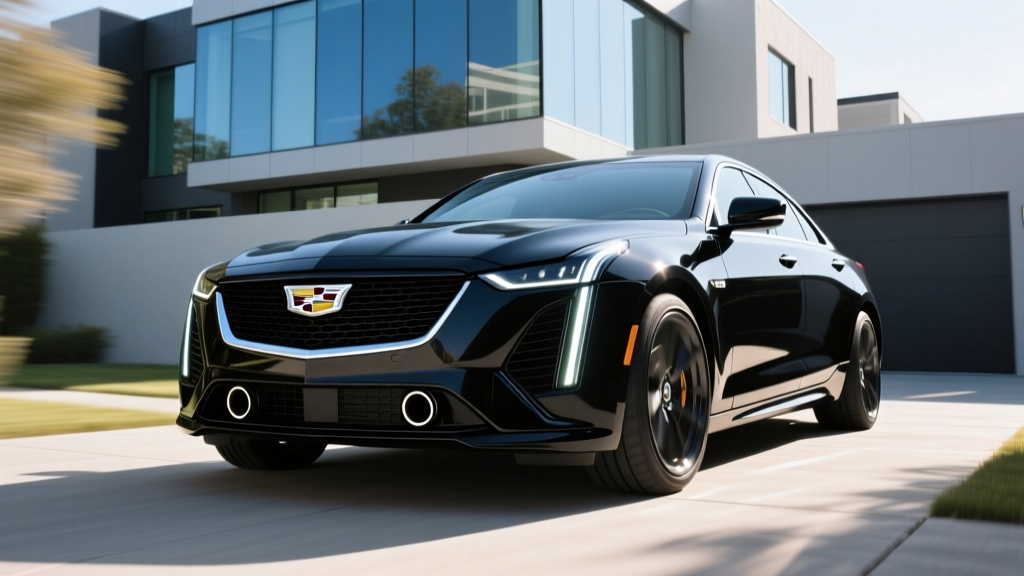
The Cadillac CT6 Plug-In was General Motors' most ambitious attempt to blend luxury sedan comfort with plug-in hybrid efficiency. Produced for the 2017–2019 model years (and sold into early 2020 in some markets), this full-size executive sedan paired a turbocharged four-cylinder engine with a two-motor electric drive system and an 18.4 kWh lithium-ion battery. For buyers exploring the used luxury PHEV market in 2026, the CT6 Plug-In remains a fascinating — if complicated — proposition.
This guide breaks down everything you need to know: real-world MPG versus EPA estimates, electric-only range, charging logistics, battery health considerations for a used vehicle, and whether this discontinued PHEV still makes sense against modern full EVs and current plug-in hybrids.
HEV vs. PHEV: Where the CT6 Plug-In Fits
Before diving into specs, it's important to distinguish the two hybrid categories, because the CT6 Plug-In sits firmly in the plug-in hybrid (PHEV) camp — and that distinction drives how you'll use it daily.
Conventional Hybrid (HEV)
- Small battery (1–2 kWh), charged by regenerative braking and the engine
- No plug — you never charge it externally
- Electric motor assists the gas engine; no meaningful electric-only driving
- Example: Toyota Camry Hybrid, Honda Accord Hybrid
Plug-In Hybrid (PHEV) — CT6 Plug-In
- Larger battery (18.4 kWh usable), charged by plugging in or regenerative braking
- Must be plugged in to unlock full electric range and efficiency benefits
- Can drive 31 miles on electricity alone before the gas engine engages
- After battery depletion, operates like a conventional hybrid
- Example: Cadillac CT6 Plug-In, BMW 530e, Chrysler Pacifica Hybrid
If you never plug in a PHEV, you're carrying around 400+ pounds of dead battery weight and getting worse fuel economy than a purpose-built HEV. The CT6 Plug-In rewards owners who charge regularly — and penalizes those who don't.
Powertrain and Performance Specs
| Specification | Cadillac CT6 Plug-In |
|---|---|
| Engine | 2.0L turbocharged inline-4 |
| Engine output | 265 hp / 295 lb-ft torque |
| Electric motors | Two-motor Voltec drive unit (integrated into transmission) |
| Combined system output | 335 hp / 432 lb-ft torque |
| 0–60 mph | 5.2 seconds |
| Battery capacity | 18.4 kWh (lithium-ion, NMC chemistry) |
| Usable battery capacity | ~14.4 kWh (buffer-protected) |
| Drivetrain | Rear-wheel drive (electric motors drive rear axle) |
| Transmission | Voltec EVT (electrically variable transmission) |
| Curb weight | ~4,600 lbs |
| Production years | 2017–2019 (discontinued) |
The two-motor Voltec system was shared with the Chevrolet Volt and Malibu Hybrid, but tuned for the CT6's rear-drive luxury platform. The result is smooth, linear acceleration with seamless transitions between electric and gas power. At 5.2 seconds to 60 mph, the CT6 Plug-In is genuinely quick — faster than most V6 competitors of its era.
Fuel Economy: EPA Ratings vs. Real-World MPG
| Mode | City | Highway | Combined |
|---|---|---|---|
| Electric + Gas (MPGe) | 62 MPGe | 62 MPGe | 62 MPGe |
| Gas Only (MPG) | 27 mpg | 31 mpg | 29 mpg |
Source: EPA Fuel Economy Guide
Real-World Expectations
EPA figures are laboratory estimates. In practice, CT6 Plug-In owners report a wider spread depending on charging habits and driving conditions:
- With daily charging (short commutes under 30 miles): Owners frequently report 50–80+ MPGe because most driving occurs in electric-only mode. If your round-trip commute is 20 miles and you charge at home, you may use gas only on weekends.
- Without regular charging (highway-dominant): Expect 25–28 mpg combined. The heavy battery pack and large sedan aerodynamics work against efficiency once the electric advantage is gone.
- Cold weather impact: Electric-only range drops 20–30% in freezing temperatures (to roughly 22–25 miles), and the engine engages sooner to provide cabin heat. Gas-only MPG also dips to around 24–26 mpg in winter.
- City vs. highway (gas-only mode): Like most hybrids, the CT6 Plug-In actually performs better on the highway in gas-only mode (31 mpg) than in stop-and-go city traffic (27 mpg), because the battery buffer is smaller than a conventional hybrid's optimized system.
How Many MPG Does the CT6 Plug-In Get?
The honest answer: it depends entirely on how often you charge. EPA-rated 29 mpg combined on gas alone, and 62 MPGe when factoring in electric driving. An owner who charges nightly and commutes 25 miles might average 70+ MPGe over a year. An owner who never plugs in will see 25–28 mpg — worse than a Toyota Camry Hybrid. The PHEV premium only pays off with charging discipline.
Electric-Only Range and Total Range
EPA Electric-Only Range: 31 miles
Real-World Electric Range: 25–33 miles (varies with temperature, speed, and terrain)
Total Combined Range (electric + full gas tank): ~440 miles
Gas tank capacity: 18.5 gallons
How Far Can the CT6 Plug-In Go on Electric Only?
The EPA rates the CT6 Plug-In at 31 miles of electric-only range. In moderate weather (60–80°F) at speeds under 50 mph, some owners report squeezing out 33–35 miles. On the highway at 70+ mph, expect 22–26 miles before the 2.0L turbo engine fires up.
For context, 31 miles was competitive in 2017–2019 but falls short of current PHEV benchmarks. The 2026 Toyota RAV4 Prime delivers 42 miles electric; the BMW 550e xDrive offers 40 miles. If your commute exceeds 35 miles round-trip, the CT6 Plug-In will run on gas for a portion of every drive.
Charging: Speed, Connectors, and Home Setup
| Charging Level | Power (kW) | Time to Full (0–100%) | Miles Added per Hour |
|---|---|---|---|
| Level 1 (120V household outlet) | 1.4 kW | ~12–14 hours | ~4–5 miles/hr |
| Level 2 (240V, 16A) | 3.6 kW | ~4.5 hours | ~12–14 miles/hr |
| Level 2 (240V, 32A) | 3.6 kW (vehicle-limited) | ~4.5 hours | ~12–14 miles/hr |
| DC Fast Charging | Not supported — no DC fast charge capability | ||
The CT6 Plug-In uses a standard J1772 connector for Level 1 and Level 2 AC charging. It does not support DC fast charging (CCS, CHAdeMO, or NACS). The onboard charger is limited to 3.6 kW, meaning even a 48-amp Level 2 home charger won't speed things up — the car caps intake at 3.6 kW.
Practical charging reality: Most PHEV owners charge overnight at home on Level 1 or Level 2. At 3.6 kW, a full charge takes about 4.5 hours on Level 2 — easily accomplished overnight. Level 1 (standard 120V outlet) takes 12+ hours, which works if you park for long periods but won't fully replenish the battery during an 8-hour workday.
Since DC fast charging is unavailable, public fast-charging networks (Electrify America, EVgo, Tesla Superchargers) are irrelevant to this vehicle. Your charging strategy is home-centric.
Battery Health, Warranty, and Replacement Costs
Original Battery Warranty: 8 years / 100,000 miles (whichever comes first), covering defects and capacity loss below ~60% of original capacity.
Current Status (2026): For 2017 model-year vehicles, the 8-year warranty has expired. 2018 models expire in 2026. 2019 models retain coverage through 2027.
Battery Replacement Cost: $6,000–$9,000 for a refurbished or new pack, plus $1,000–$2,000 in labor, based on GM dealer and independent hybrid-shop estimates.
Is the CT6 Plug-In Battery Reliable?
The Voltec battery system has a generally strong track record across GM's PHEV lineup (Volt, Malibu Hybrid, CT6 Plug-In). Lithium-ion NMC packs from this era typically show 10–15% degradation over 8–10 years under normal use. However, several factors matter for used buyers:
- Age-related degradation: Even with low mileage, a 2017 CT6 Plug-In battery is 9 years old in 2026. Calendar aging reduces capacity regardless of use. Expect real-world electric range of 24–28 miles on a well-maintained older pack, down from the original 31.
- Climate impact: Vehicles from hot-climate states (Arizona, Texas, Southern California) tend to show more battery degradation than those from moderate climates. The CT6 Plug-In has active thermal management (liquid cooling), which helps, but sustained heat exposure still accelerates cell aging.
- Pre-purchase battery check: Before buying a used CT6 Plug-In, request a battery State of Health (SoH) report from a GM dealer or use an OBD-II scanner with hybrid-compatible software to check current capacity versus original. Anything below 80% SoH means reduced electric range and potential future replacement cost.
- 12V auxiliary battery: Like all modern vehicles, the CT6 Plug-In also has a conventional 12V battery that powers electronics. This is separate from the traction battery and typically needs replacement every 4–5 years ($200–$350).
Pricing, Tax Credits, and Ownership Economics
Original MSRP and Current Used Market
When new, the CT6 Plug-In started at approximately $76,090 (2017 model year), with well-equipped examples exceeding $82,000. It was positioned as Cadillac's technology flagship.
As of 2026, used CT6 Plug-In sedans trade in the $22,000–$35,000 range depending on model year, mileage, condition, and battery health. Low-mileage 2019 models in excellent condition command the highest prices.
Federal Tax Credit Status
When purchased new, the CT6 Plug-In qualified for the full $7,500 federal tax credit under IRS §30D (the battery exceeded the 16 kWh threshold for maximum credit). However:
- New purchases: The CT6 Plug-In is discontinued — no new units are available, so the new-vehicle §30D credit is irrelevant.
- Used EV/PHEV credit (§25E): The IRS offers a used clean vehicle credit of up to $4,000 (30% of the sale price, capped at $4,000) for qualifying used PHEVs purchased from a dealer. Eligibility requirements include: sale price under $25,000, buyer income under $75,000 (single) / $150,000 (joint), vehicle model year at least 2 years old, and purchase from a licensed dealer (not private party). See IRS Used Clean Vehicle Credit for current rules.
- Practical impact: A CT6 Plug-In selling for $24,500 from a dealer could qualify a lower-income buyer for $4,000 off, effectively bringing the cost to ~$20,500. This is a meaningful incentive, but income and price caps disqualify many luxury-car buyers.
Total Cost of Ownership Considerations
Ownership economics for a used CT6 Plug-In involve trade-offs:
- Fuel savings: If you charge daily and drive under 30 miles, fuel costs drop dramatically — electricity at $0.14/kWh costs roughly $2.00 for 31 miles, versus $4.50+ for gas. Annual savings of $800–$1,500 versus a gas-only luxury sedan are realistic.
- Insurance: Luxury PHEVs carry higher insurance premiums. Expect $1,800–$2,800/year depending on your profile and state.
- Maintenance: The turbocharged 2.0L engine requires standard maintenance (oil changes, spark plugs). The hybrid system adds complexity but generally requires less brake maintenance (regenerative braking reduces pad wear).
- Depreciation: The CT6 nameplate suffered steep depreciation, which benefits used buyers but hurts if you plan to resell. Expect continued 10–15% annual depreciation.
- Battery risk: Post-warranty battery replacement at $7,000–$11,000 is the largest financial risk. Budget accordingly or purchase a vehicle with remaining warranty coverage.
Who Should Buy the CT6 Plug-In — and Who Shouldn't
Choose the CT6 Plug-In if:
- You want a spacious, quiet luxury sedan with genuine electric commuting capability
- Your daily round-trip commute is under 30 miles and you can charge at home
- You appreciate the CT6's ride quality, Super Cruise availability (on equipped 2018–2019 models), and interior materials
- You're comfortable buying a discontinued model with limited dealer support for hybrid-specific parts
- You find a well-maintained example with strong battery SoH at a compelling price
Look elsewhere if:
- You can't charge at home or at work — without plugging in, the PHEV advantage disappears
- You want current-model warranty coverage and the latest infotainment/safety tech
- You need AWD (the CT6 Plug-In is rear-wheel drive only)
- Your commute exceeds 40 miles and you want to drive mostly on electricity — consider a newer PHEV with 40+ miles of range or a full EV
- You're risk-averse about potential $8,000+ battery replacement costs on an out-of-warranty vehicle
Hybrid vs. PHEV vs. Full EV: Which Fits You?
The CT6 Plug-In occupies a specific niche. Here's how it compares to the alternatives:
- Conventional hybrid (HEV): Better for drivers who can't plug in. No range anxiety, no charging logistics. Less electric driving benefit. Examples: Toyota Camry Hybrid (52 mpg), Honda Accord Hybrid (48 mpg).
- Plug-in hybrid (PHEV) like the CT6: Best for drivers who can charge at home and have moderate commutes. Offers electric-only daily driving with gas-engine flexibility for road trips. Trade-off: higher complexity and weight.
- Full battery EV (BEV): Best for drivers with home charging who want zero gas use, lower maintenance, and 250+ miles of range. Higher upfront cost but lower running costs. Examples: Tesla Model 3, Hyundai Ioniq 6, BMW i5.
Pros and Cons
Pros
- Smooth, quiet electric driving for 25–31 miles
- Genuine luxury sedan comfort — excellent ride quality and cabin isolation
- Strong acceleration (335 hp combined, 5.2s to 60 mph)
- Super Cruise hands-free driving available on 2018–2019 models (SAE Level 2, driver must remain attentive)
- Low used-market pricing relative to original MSRP — steep depreciation benefits buyers
- Voltec powertrain has proven generally reliable across GM's PHEV fleet
Cons
- Discontinued — no new models, limited future parts support
- 31-mile electric range is modest by 2026 PHEV standards
- No DC fast charging — home-only charging strategy required
- Onboard charger limited to 3.6 kW — slower Level 2 charging than modern PHEVs
- Battery warranty expiring or expired on most examples — replacement cost risk
- Rear-wheel drive only — no AWD option for snow-belt buyers
- Trunk space reduced by battery pack placement
Frequently Asked Questions
How many MPG does the Cadillac CT6 Plug-In get?
The EPA rates the CT6 Plug-In at 62 MPGe combined (electric + gas operation) and 29 mpg combined on gas alone (27 city / 31 highway). Real-world results vary widely: owners who charge daily and commute short distances report 50–80+ MPGe, while those who rarely plug in see 25–28 mpg.
How far can the CT6 Plug-In drive on electric only?
The EPA rates it at 31 miles of electric-only range. Real-world results range from about 22 miles (highway speeds in cold weather) to 35 miles (moderate temperatures, city driving). After the battery depletes, the gas engine takes over seamlessly.
Does the Cadillac CT6 Plug-In qualify for a tax credit?
Not as a new vehicle — it's discontinued. However, qualifying used buyers may be eligible for the IRS §25E Used Clean Vehicle Credit of up to $4,000, subject to income limits ($75,000 single / $150,000 joint), a $25,000 maximum sale price, and purchase from a licensed dealer. Check IRS guidelines for current eligibility rules.
Is the CT6 Plug-In reliable, and what does a battery replacement cost?
The Voltec hybrid system has a solid reliability record. The main concern for 2026 buyers is battery age: 2017–2019 models are 7–9 years old, and calendar degradation reduces electric range over time. Battery replacement costs $7,000–$11,000 if needed. The original 8-year/100,000-mile battery warranty has expired on 2017 models and is expiring on 2018–2019 models. Always check battery State of Health before purchasing.
Can I DC fast charge the CT6 Plug-In?
No. The CT6 Plug-In only supports AC charging via a J1772 connector at up to 3.6 kW (Level 2). A full charge takes about 4.5 hours on a 240V Level 2 charger or 12–14 hours on a standard 120V outlet.
Should I buy a CT6 Plug-In or a full EV?
If you take frequent road trips, lack reliable charging infrastructure, or want gas-engine backup, the CT6 Plug-In offers flexibility. If you can charge at home, drive under 250 miles daily, and want lower running costs with zero gas use, a modern full EV (Tesla Model 3, BMW i5, Hyundai Ioniq 6) is likely a better long-term choice with current warranty coverage and faster charging.
Does the CT6 Plug-In have Super Cruise?
Super Cruise — GM's hands-free highway driving system — was available on properly equipped 2018 and 2019 CT6 models (including the Plug-In trim). It is an SAE Level 2 driver-assistance system that requires the driver to remain attentive and keep eyes on the road. It operates only on pre-mapped divided highways. Verify Super Cruise functionality and subscription status before purchasing a used example, as the service requires an active OnStar plan.